Category Archives: National

Saint Devasahayam to Be Declared Patron Saint of the Laity in India

Martyr Saint Devasahayam is set to be formally declared the Patron Saint of the Laity in India at a solemn ceremony on 14 January, to be held at the Devasahayam Mount Shrine in Aralvaimozhy, a historic site closely linked to the saint’s life and martyrdom. The declaration will be made during a Eucharistic celebration at the shrine, marking a significant moment for the Catholic community across the country. Archbishop Leopoldo Girelli, Apostolic Nuncio to India and Nepal, will formally proclaim the patronage, while Archbishop George Antonysammy of Madras–Mylapore will preside over the liturgy along with several senior church leaders. The celebration will bring together archbishops, bishops, priests, religious and lay representatives from different parts of India. The homily will be delivered by Archbishop Francis Kalist of Pondicherry–Cuddalore, with Archbishop Antonysamy Savarimuthu of Madurai and Bishop Eugene Joseph of Varanasi among the concelebrants. Bishop Eugene Joseph also serves as chairman of the Conference of Catholic Bishops of India Commission for Laity.

A key highlight of the event will be the launch of the ‘Devasahayam Spirituality Movement’, aimed at encouraging lay people to draw inspiration from the life, faith and sacrifice of Saint Devasahayam in their daily lives. Church leaders have described the declaration as a moment of national significance, recognising Saint Devasahayam as a model of faith and courage for lay Christians in India. The saint is widely remembered for his unwavering commitment to his beliefs, summed up in his well-known words: “I have decided to follow Jesus, and no one can turn me back.”

Mother Teresa Award Goes to Somaliland Health Advocate, Seven Others

The Mother Teresa Memorial Award for Social Justice 2025 has been conferred on Edna Adan Ismail of Somaliland and seven others in recognition of their contributions to social justice across fields including health care, women’s rights, environmental protection, and humanitarian service.

The awards were presented on December 21 at a ceremony in Mumbai. Instituted in 2005 by the Mumbai-based Harmony Foundation, the Mother Teresa Memorial Award is the only award officially recognised by the Missionaries of Charity, the congregation founded by Mother Teresa. The award includes a citation and a trophy bearing her image.

Indian environmentalist Swami Prem Parivartan was honoured for decades of work in tree conservation, while physician Ganesh Rakh received recognition for his “Save the Girl Child” initiative, which promotes gender equality in healthcare.

Additional recipients included social activists Safeena Husain, Rajendra Singh, Heba Elsewedy, and the Make-A-Wish Foundation. The ceremony, marking the 21st year of the awards, was held under the theme “Guardians of Humanity,” celebrating compassion and service in challenging global times.

A Silent Christmas for Families of 112 Jailed Indian Christians

For many Christian families across India, this Christmas has arrived with silence instead of celebration, as at least 112 Christians spend the festive season behind bars, according to Christian advocacy groups. Most of those detained have been charged under state anti-conversion laws, which community leaders say are increasingly used to target religious minorities.

Among them is Laxmi Yadav, a 35-year-old woman from Uttar Pradesh, who was arrested two months ago on allegations of illegal religious conversion — charges her family firmly denies. This Christmas, her husband Virendra Yadav and their teenage son are observing the season quietly, relying on prayer and hope as she remains in jail. “I came with nothing except prayer and encouragement,” Virendra said while waiting outside the Gorakhpur district jail for a brief visit. “I want her to know she is not alone.”

Christian groups estimate that at least 82 of those jailed are from Uttar Pradesh, where arrests have increased since amendments to the anti-conversion law in 2024. Bail, church leaders say, has become increasingly difficult, even in cases where no victims of alleged conversion are produced.

Community leaders argue that many arrests follow complaints filed during prayer meetings or Christmas gatherings, often without preliminary investigation. Legal aid volunteers assisting detainees claim that several cases lack even basic evidence. Despite the hardship, Christian organisations say efforts are underway to support affected families during the Christmas season. Volunteers are visiting homes with food, prayers, and messages of solidarity.

CBCI Condemns Hate Against Christians, Seeks Protection During Christmas

The Catholic Bishops’ Conference of India (CBCI) has expressed deep concern over what it described as a disturbing rise in attacks against Christians during the Christmas season, condemning incidents reported from several states and calling for urgent measures to ensure the safety of the community.

In a statement issued, the CBCI said reports of attacks on peaceful carol singers and congregations gathered for Christmas prayers posed a serious challenge to India’s constitutional guarantees of religious freedom and the right to live and worship without fear. The bishops’ body warned that such incidents threaten social harmony and undermine the country’s pluralistic fabric.

The CBCI said it was particularly shocked by a widely circulated video from Jabalpur in Madhya Pradesh, which allegedly showed a visually challenged woman attending a Christmas programme being verbally abused and physically harassed by Anju Bhargava, identified as a local political office-bearer. Terming the incident dehumanising, the CBCI demanded her immediate removal from the party and strict legal action.

The statement also raised concern over reports of disruptions to Christmas gatherings by groups described as hostile to religious minorities. Additionally, the CBCI flagged the circulation of hate-filled digital posters in Chhattisgarh that reportedly called for a bandh on December 24, warning that such messages could inflame communal tensions and provoke further violence. Condemning these acts in the strongest terms, the CBCI urged state governments and the Union government to take swift and visible action against individuals and organisations promoting hatred. The bishops also appealed to the Union Home Minister to ensure effective law enforcement and proactive protection for Christian communities, so that Christmas could be observed peacefully across the country in an atmosphere of safety, dignity, and harmony.

Modi Attends Christmas Service at Delhi Cathedral Amid Concerns Over Attacks on Christians

            Prime Minister Narendra Modi on December 25 attended the Christmas morning service at the Cathedral Church of the Redemption in New Delhi, joining members of the Christian community for prayers, carols, and hymns marking the festival.

A special prayer was offered for the Prime Minister during the service by the Bishop of Delhi. Following the visit, Mr. Modi extended Christmas greetings through a message on social media, wishing peace, compassion, and hope, and invoking the teachings of Jesus Christ as a source of harmony and goodwill in society. Officials said the message highlighted values of love, service, and brotherhood.

The Prime Minister’s visit comes at a time when Christian groups across the country have voiced concern over recent incidents involving disruptions of church services, prayer meetings, and Christmas-related events. In several states, carol programmes and community celebrations reportedly faced objections or were cancelled following protests, raising concerns about religious freedom and safety.

Reactions to the visit have been mixed among church leaders and civil society groups. While welcoming the symbolic outreach, many have stressed that gestures and greetings must be accompanied by concrete action. They have called for stronger assurances of protection, swift legal action against those involved in violence or intimidation, and clear public messaging against hate and vigilantism. Opposition leaders and minority rights activists have also urged authorities to ensure effective enforcement of the law and uphold constitutional guarantees of freedom of religion and equal citizenship for all communities.

United Christian Forum Writes to Prime Minister Flagging Surge in Anti-Christian Violence

          The United Christian Forum (UCF) has written an urgent letter to Prime Minister Narendra Modi, drawing attention to what it describes as a sharp rise in targeted violence and hostility against the Christian community across India. In the letter dated December 26, UCF acknowledged the Prime Minister’s recent outreach to Christians, including his visit to the Cathedral Church of the Redemption in New Delhi on Christmas and earlier engagements with Christian leaders and institutions. However, the organisation said these gestures stand in contrast to the ground reality of increasing attacks on Christians.

UCF highlighted repeated incidents in tribal regions where Christians were allegedly denied burial rights and forced to exhume bodies. Cases from Chhattisgarh, Odisha and Jharkhand were cited, including instances where families were attacked or compelled to abandon villages after burial disputes. The organisation also raised concerns over the implementation of anti-conversion laws in 12 states, arguing that while framed as safeguards, these laws disproportionately target religious minorities. UCF said Christians have been arrested based on third-party complaints, often without direct evidence of force or coercion. The letter detailed several recent incidents, including mob violence following a burial in Kanker district of Chhattisgarh, vandalism of Christmas decorations in Raipur, alleged attacks on a carol group in Kerala’s Palakkad, and the disruption of Christmas observances in Assam and Uttar Pradesh. It also cited inflammatory speeches allegedly followed by violence and harassment in Madhya Pradesh and Uttar Pradesh. The letter concluded by appealing for urgent action to safeguard minority rights and restore communal harmony, stating that decisive steps are essential to uphold justice, peace and equality in the country.

Cardinal Cleemis Flags Contradictions in Prime Minister’s Christmas Outreach, Cites Attacks on Christians

Major Archbishop Cardinal Baselios Cleemis of the Syro-Malankara Catholic Church on Christmas Day criticised what he described as a contradiction between the Prime Minister’s public outreach to Christians and the continued incidents of violence faced by the community in different parts of the country.

The Cardinal’s remarks came as Prime Minister Narendra Modi attended a Christmas service at the Cathedral Church of the Redemption in New Delhi. Referring to recent incidents, Cardinal Cleemis pointed to an alleged attack on a Christmas carol group in Palakkad district of Kerala, reportedly involving a worker affiliated with a right-wing organisation.

Highlighting the contrast between symbolic gestures and ground realities, the Cardinal said that while the Prime Minister’s participation in Christmas celebrations sends a positive message, such actions lose significance when Christians continue to face intimidation and violence elsewhere. He questioned the effectiveness of repeated assurances given by authorities, stating that they have not resulted in visible or lasting change.

The Major Archbishop noted that Church leaders have consistently raised concerns regarding attacks and harassment with those in power, but said that these representations have rarely translated into concrete action. He expressed frustration over what he described as a lack of accountability and follow-through.

The comments come at a politically sensitive moment, as the ruling party has sought to broaden its engagement with Christian communities, particularly in Kerala, ahead of upcoming elections. The Prime Minister’s presence at Christmas events has been viewed as part of this outreach.

However, Cardinal Cleemis’ intervention underscores persistent concerns within the Christian community that public gestures of goodwill must be matched by effective protection on the ground. His Christmas Day statement has added weight to the ongoing national discussion on minority safety, political responsibility, and the need to ensure that assurances of harmony are reflected in action.

Christians seek security in Indian state ahead of Christmas

Christian leaders in Chhattisgarh have appealed to authorities for police protection during Christmas and New Year celebrations, citing a sharp rise in violence and intimidation against the minority community. The state has emerged as a major hotspot of anti-Christian hostility, recording 165 attacks in 2024 — the second-highest in India, according to the United Christian Forum. Christian leaders say the situation has worsened since the Bharatiya Janata Party (BJP) returned to power in 2023, with many attacks allegedly carried out by Hindu nationalist groups targeting tribal Christians. “We met the district magistrate of Jashpur on Dec. 8 and requested security for churches and Christian families,” said Kamal Kujur, president of the Rashtriya Christian Morcha. He said delegations will approach officials in all districts to ensure peaceful Christmas celebrations.

Christian pastors report that house churches are frequently attacked, with mobs disrupting prayer meetings, abusing worshippers, and physically assaulting them. Many allege that police often refuse to register complaints from Christians while readily accepting accusations from Hindu groups claiming “forced conversions. “Instances of police pressure have increased, leaders say. In August, hundreds of Pentecostal congregations suspended Sunday services after police instructed them to seek prior permission for worship. In Raipur, nearly 100 pastors were reportedly asked to halt gatherings to “maintain law and order.” Concerns grew in November when the Chhattisgarh High Court upheld village hoardings restricting the entry of “converted Christians,” ruling that they protected tribal culture — a decision Christians say has deepened their sense of vulnerability. With Christians forming less than 2% of the state’s 30 million people, community leaders urge authorities to safeguard their right to celebrate peacefully amid escalating fears.

Thousands of Christians Rally in Delhi Against Rising Violence

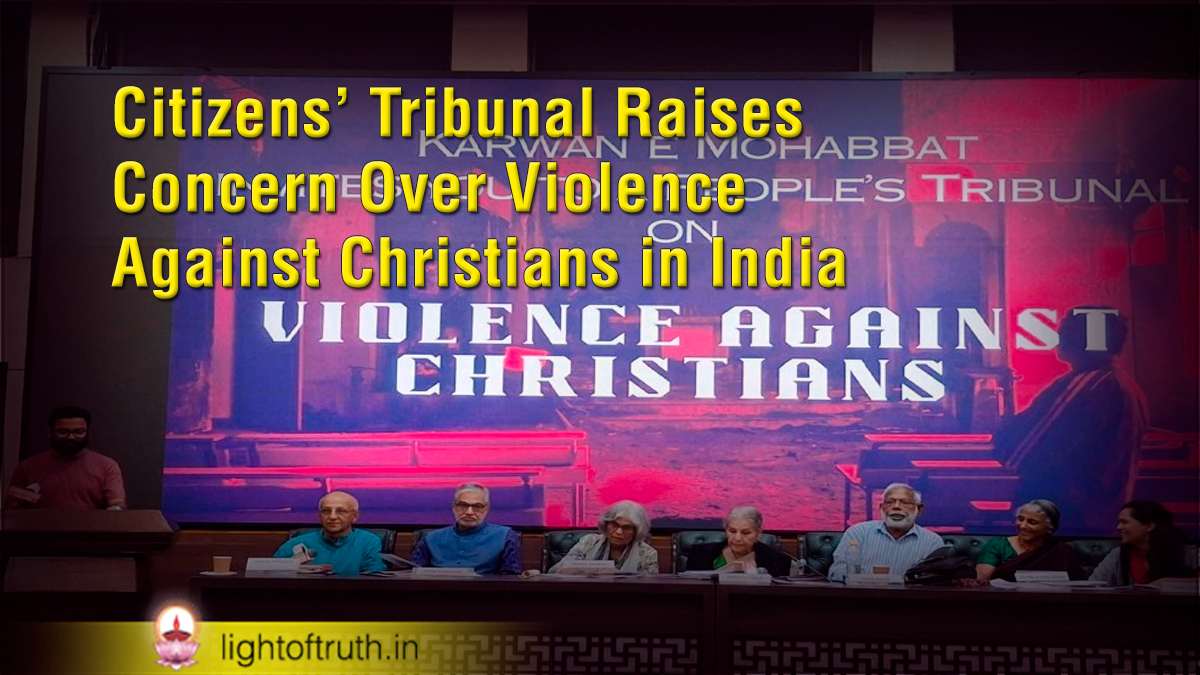
Around 2,000 Christians from across India gathered in New Delhi on 29 November 2025 to protest what organisers described as a rise in sustained and systematic violence against the Christian community, calling for justice, unity and constitutional protections amid rising incidents of attacks. The demonstration was held under the banner of the National Christian Convention, bringing together representatives from over 200 denominations, civil society groups and legal advocates to highlight concerns over increasing violence and impunity. Speakers at the rally pointed to data showing reported incidents of anti-Christian violence rising sharply over the past decade, with cases documented nationally by organisations such as the United Christian Forum. 

According to figures referenced by participants, reported incidents of violence against Christians rose from 139 in 2014 to 834 in 2024, with nearly 5,000 incidents documented over the past decade. Organisers called attention to what they described as a pattern of assaults, threats and discrimination that they say often goes unpunished. Protesters resolved to draft a national manifesto outlining demands for stronger protection of religious freedoms and justice for persecuted believers. The manifesto is intended to be submitted to key constitutional authorities including the President of India, the Prime Minister, the Chief Justice of India and relevant ministers. 

Participants shared accounts of violence that included killings, assaults and denials of burial rights. In one reported case from Chhattisgarh in May 2024, a Christian man was killed and his case was recorded as a land dispute, while in Odisha a mob blocked the burial of a young Christian man, forcing his family to exhume his body despite a formal complaint. Organisers said a key concern remains impunity, with reports indicating that a high proportion of violent incidents do not result in formal legal action, and urged the government and law enforcement to uphold constitutional guarantees of religious freedom and equal protection under the law.

Indian Church welcomes court allocating seats for women on legal bodies

Church leaders across India have welcomed a Supreme Court directive reserving 30 percent of seats on state bar councils for women, calling the ruling a major stride toward gender equality in the legal profession.

The order, issued on Dec. 8 by a bench led by Chief Justice Surya Kant, mandates that where elected representatives fail to meet the 30 percent quota, councils must fill at least 20 percent through voting and the remaining 10 percent by co-opting qualified women lawyers. The court said the measure aims to correct the severe underrepresentation of women in bar council bodies.

Petitioners informed the court that only 9 of the 441 elected members across 18 state bar councils — barely 2 percent — were women, and that 11 councils had no women at all. The bench held that such composition violates constitutional guarantees of equality and fails to reflect the steady increase in women entering the legal field.

Father Robinson Rodrigues, spokesperson for the Catholic Bishops’ Conference of India (CBCI), called the ruling “a wonderful order” that would help reduce gender discrimination and strengthen women’s participation in shaping legal institutions.

Supreme Court lawyer Sister Mary Scaria of the Sisters of Charity of Jesus and Mary said the move would introduce “unique perspectives” to legal governance and improve public trust. She added that women’s representation should eventually rise to 50 percent.

Holy Spirit Sister Julie George, who heads a national forum of Catholic priests and religious lawyers, described the directive as progressive but noted that men would still hold 70 percent of seats. Jesuit lawyer Father A. Santhanam from Tamil Nadu called the ruling “historic” and a vital step toward dismantling patriarchy within the legal system.