

Most Americans are open to a variety of denominations of Christian churches, including many people of other faiths or no faith at all.
Americans have a wide range of opinions and impressions about Christian denominations, but most won’t rule out a church based on its denomination, according to a new study from Lifeway Research. From a list of nine denominational terms — Assemblies of God, Baptist, Catholic, Lutheran, Methodist, Pentecostal, Presbyterian, Southern Baptist, and nondenominational —more Americans rule out Pentecostal than any other denomination. Just over half of Americans (51%) say a church with Pentecostal in the name is not for them. But for each of the other denominations in the study, most Americans say a specific religious label in the name of a church is not an automatic deterrent for them. Americans are most open to nondenominational and Baptist churches.
Category Archives: International

French Bishop Strips Seminarians of CassocK
The bishop of Toulouse has banned seminarians and deacons in his diocese from wearing cassocks because he does not want men in formation to “appear too clerical.” Bishop Guy de Kerimel wrote a letter to seminarians on Thursday noting that he had seen some of them wearing cassocks and surplices at a recent confirmation service in the diocesan basilica of Notre-Dame de la Daurade.
The bishop said he found that “the image presented to the basilica of these future clerics installed in stalls, away from the faithful (without being in service), gave a very clerical image not adjusted to the situation of seminarians who remain lay faithful.”
Bishop Kerimel lashed out at the seminarians for disregarding his previous instructions regarding the wearing of clerical garb and ordered that “the wearing of the cassock is not permitted in the seminary; it is the law in force.” “I, therefore, ask that this law be applied outside the seminary in the diocese of Toulouse, including for deacons,” he added.
Seminarians should prioritize their “relationship with Christ, in humility and truth, without trying to enter into a role so that He is accessible to all, particularly the poorest and most marginalized, before worrying about displaying a distinctive persona,” Kerimel stressed.
“The future priest must be identified and recognized by his holiness, his spirit of service and the quality of his pastoral relationship, above all,” the bishop wrote, pointing out that deacons may wear a Roman collar or single cross while priests may wear a habit.
“At one time, some thought that it was an obstacle to their apostolate. Today, many young priests believe the cassock is their best ally in a de-Christianized society,” reasons Fr. Marc-Olivier de Vaugiraud from Mantes-la-Jolie.

For Conservative Christians, the End of Roe Was a Spiritual Victory
For nearly 50 years, conservative Christians marched, strategized and prayed. And then, on an ordinary Friday morning in June, the day they had dreamed of finally came.
Ending the constitutional right to abortion by overturning Roe v. Wade took a decades-long campaign, the culmination of potlucks in church gymnasiums and prayers in the Oval Office. It was the moment they long imagined, an outcome many refused to believe was impossible, the sign of a new America.
For many conservative believers and anti-abortion groups grounded in Catholic or evangelical principles, the Supreme Court’s decision was not just a political victory but a spiritual one.
“It is more than celebration,” said Archbishop William E. Lori, chairman of the United States Conference of Catholic Bishops Committee on Pro-Life Activities. “It is a moment of gratitude to the Lord, and gratitude to so many people, in the church and beyond the church, who have worked and prayed so hard for this day to come.”
Even the timing of the decision had a spiritual overtone, coming on the day Catholics celebrate the Feast of the Sacred Heart of Jesus, honouring the love of Jesus for the world. It gave people “the opportunity to expand our hearts in love” for people at all stages of life, from before birth through death, Archbishop Lori said.
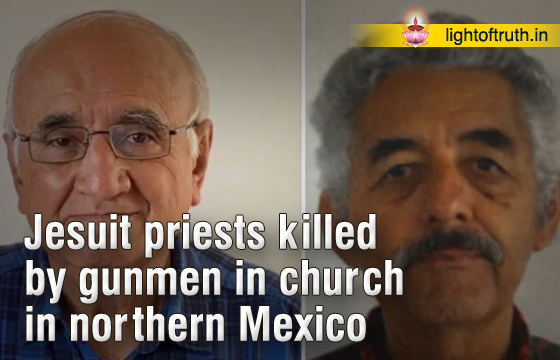
Jesuit priests killed by gunmen in church in northern Mexico
The Jesuits in Mexico have said two of their priests were murdered while trying to defend a man who was seeking refuge in a church while being being pursued by an armed person.
A statement from Jesuit provincial of Mexico Father Luis Gerardo Moro Madrid June 21 informed “with deep sorrow and a sense of anguish” about the murder of Fathers Fathers Javier Campos and Joaquín Mora in the afternoon of June 20 in Cerocahui, Tarahumara, a remote mountainous area of northern Mexico.
The murders took place in the context of the violence that Mexico has been experiencing for years, the message further explained.
The provincial said they are working with the federal and state authorities to ensure the safety of their other members – Esteban Cornejo, Jesús Reyes, and Jesús Zaglul along with the parish’s pastoral team.
“We publicly condemn this tragedy and demand a prompt investigation and safety for the community,” he further said. We will keep you informed about the next actions that we, as the Mexican Jesuit Province, will be taking.
Jesuit superior general Father Arturo Sosa said he was “shocked and saddened by this news” and that his thoughts and prayers are with the Jesuits in Mexico and the families of the men.
“We have to stop violence in our world and so much unnecessary suffering,” asserted the leader of the largest religious congregation for men in the Catholic Church.
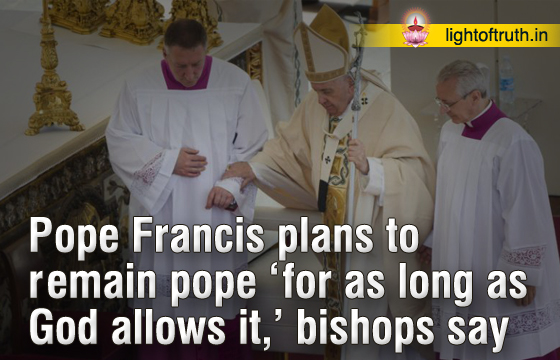
Pope Francis plans to remain pope ‘for as long as God allows it,’ bishops say
While concerns regarding Pope Francis’ health have fuelled rumours he might soon resign, Brazilian bishops told Vatican media outlets on monday 20th June that the pope intends to continue in his role as head of the Catholic Church “for as long as God allows it.”
Archbishop Roque Paloschi of Porto Velho said the pope reassured him during a visit at the Vatican on Monday that despite the many challenges the pope faces, resigning “does not cross his mind,” according to an article published by Vatican News.
Seventeen bishops from Brazil will meet with the pope this month for traditional “ad limina” visits, obligatory consultations that bishops from around the world make on a rotating five-year schedule.
“I want to live my mission as long as God allows me and that’s it,” Francis said when asked about his health by the bishops, according to Roque.
In the same Vatican article, Monsignor Lúcio Nicoletto, the administrator of Brazil’s Diocese of Roraima, said he was impressed by the “great strength” displayed by the aging pontiff, who during the meeting reinforced his commitment to protecting the Amazon rainforest and the Indigenous people who inhabit it.
In early June, Cardinal Óscar Andrés Rodríguez Maradiaga, one of the pope’s cardinal advisers, said the resignation rumors amounted to nothing more than “fake news” and compared media reports on the subject to “a cheap soap opera.”
Pope Francis greets the faithful as he leaves St. Mary Major Basilica after participating in a rosary prayer for peace, in Rome, May 31, 2022. Pope Francis canceled a planned July trip to Africa on doctors’ orders because of ongoing knee problems, the Vatican said June 10, 2022, raising further questions about the health and mobility problems of the 85-year-old pontiff.
Rumors of Pope Francis’ resignation have increased after the Vatican announced the cancellation of his planned July papal visit to Congo and South Sudan, citing knee pain. It’s unclear whether the pope will make his expected journey to Canada later next month.
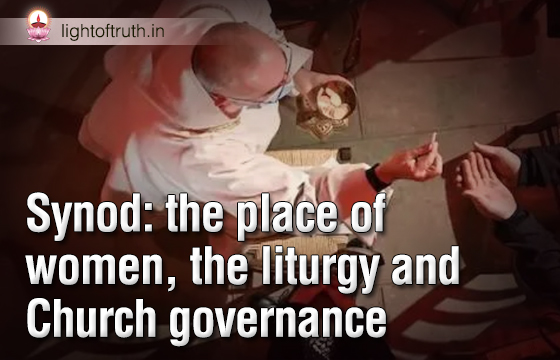
Synod: the place of women, the liturgy and Church governance
France has published its first synthesis of what Catholics who participated in the synodal process believe should be top priorities for their Church
“It is not only a question of women exercising much more responsibility in leadership, which must be done. Their place is also expected at the heart of sacramental life,” the document notes.
The exercise was tedious, given the magnitude of the expectations, dreams and regrets that more than 150,000 Catholics in France expressed over the last few months while participating in the synodal process.But Bishop Alexandre Joly of Troyes and his national team that is accompanying the Synod on Synodality were able to take the diocesan syntheses and turn them into a 10-page report, which was published on Thursday.The text is divided into three main chapters – the importance of “finding inspiration in the Word of God”, the urgency of “proposing meaningful and credible signs in society” and the need for “places of fraternal dialogue”. It is meant to help the bishops reflect further on the issues when they meet in an extraordinary plenary assembly June 14-15 in Lyon in the presence of lay invitees.The latter will have no decision-making power, but “for the first time” they will be able to participate “in all the working sessions of the assembly”, according to the French Bishops’ Conference (CEF).
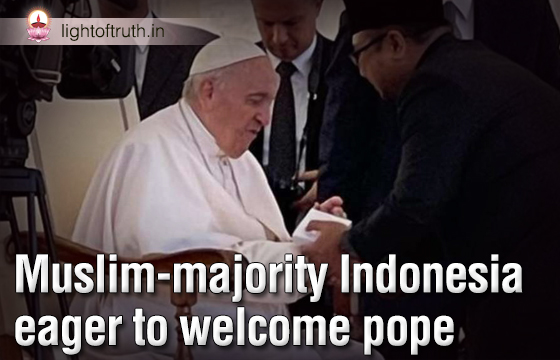
Muslim-majority Indonesia eager to welcome pope
Indonesia has officially invited Pope Francis to visit the world’s largest Muslim-majority nation. Country’s Religious Affairs Minister Yaqut Cholil Qoumas met Pope Francis at the Vatican on Wednesday and deli-vered the invitation letter on be-half of President Joko Widodo.
Archbishop Yohanes Harun Yuwono, chairman of the Indonesian bishops’ Commission for Ecumenical and Interreligious Affairs, said Catholics are elated about the invitation as they are eager to see the Pope.
Christians make up 24 million of Indonesia’s estimated population of more than 270 million. Catholics account for about 7 million. The country has six organized religions— Buddhism, Catholicism, Confucianism, Hinduism, Islam and Protestantism — and around 200 traditional beliefs.
Pope Paul VI visited Indonesia in 1970 and Pope John Paul II in 1989. Pope Francis was supposed to visit Indonesia, Timor-Leste and Papua New Guinea in 2020 but cancelled the trip due to the Covid19 pandemic.
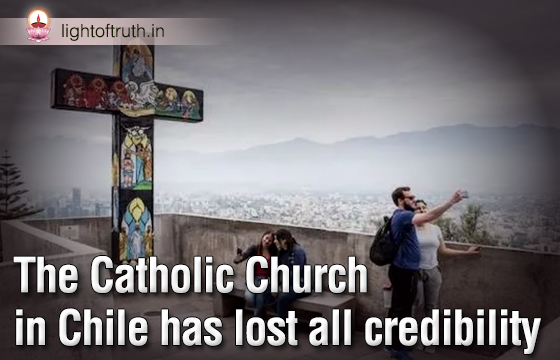
The Catholic Church in Chile has lost all credibility
When running an errand in the centre of Santiago, the capital of Chile, Gina always stops at the Catholic cathedral. She 67-year-old stays there for about 20 minutes, thanking the Lord for her health and entrusting her son who lives far away. She also prays every night at home. But she has not been to Mass for the past ten years.”After all that has happened, all the sexual abuse, we no longer trust. How can we go to Mass and confess before a priest?” she exclaims.” In Chile, all the indicators of trust in the Church are down, except for popular piety,” says Eduardo Valenzuela, a sociologist of religion at the Pontifical University of Chile.” What characterizes this piety is that it does not require the mediation of a priest,” he admits.
It is not a crisis of Christian faith, but a crisis of faith in the Catholic Church. A crisis with no end in sight Pope Francis’ visit to Chile in January 2018, and the weeks following it, caused an earthquake in the Chilean Church that really brought the sexual abuse crisis to light.
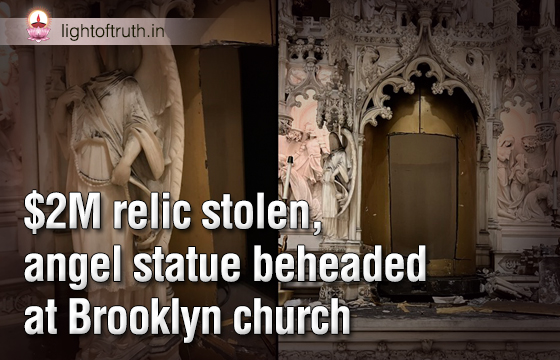
$2M relic stolen, angel statue beheaded at Brooklyn church
Police say someone busted into the altar at a New York City church, stole a $2 million gold relic and removed the head from a statue of an angel at some point late last week.
The incident happened between 6:30 p.m. Thursday and 4 p.m. on May 26th at St. Augustine’s Catholic Church, known as the “Notre Dame” of Brooklyn’s Park Slope neighbourhood.
The church was closed for construction at the time. Camera recordings from the church’s security system were also stolen, the church’s pastor said. The Diocese of Brooklyn called it “a brazen crime of disrespect and hate.”
The diocese said the thief or thieves cut through a metal protective casing and made off with a tabernacle dating to the church’s opening in the 1890s.
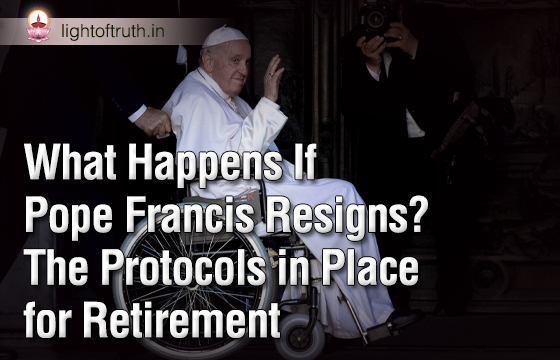
What Happens If Pope Francis Resigns? The Protocols in Place for Retirement
Speculation about Pope Francis’ future continues to grow as the Vatican announced June 10 he would not be going on a scheduled trip to the Democratic Republic of Congo and South Sudan this July.
“At the request of his doctors, and in order not to jeopardize the results of the therapy that he is undergoing for his knee, the Holy Father has been forced to postpone, with regret, his Apostolic Journey to the Democratic Republic of Congo and to South Sudan, planned for 2 to 7 July, to a later date to be determined,” said Matteo Bruni, the director of the Holy See Press Office, in a statement.
The knee problem has caused the pope, 85, to use a wheelchair at recent events. And, in July 2021, he underwent intestinal surgery, which kept him in the hospital for 10 days.
While rumours of the Pope being ill and ready to resign are common in Italian media, the speculations were renewed by the announcement that the Pope will travel to L’Aquila in central Italy in late August—similarly to previous (rare) popes who have retired.
But is that the protocol for a pontiff’s resignation News-week has found no protocols set in stone for such an occurrence as it is very rare. The only certai-nty if the Pope is to resign is that cardinals will gather together to name a successor. The College of Cardinals is made up of the Catholic Church’s most senior officials. They are appointed by the Pope and ordained by bishops.
The latest Pope to resign was Benedict XVI, who left the Holy See on February 28, 2013-the first pontiff to resign in around 600 years. He stated that his resignation came over concerns over his health. The Pope has not officially said that he will resign. As stated above, the rumours have been re-ignited due to the fact that Francis is set to visit the Italian city of L’Aquila in August for a feast.
The “Feast of Forgiveness” was inaugurated by Pope Celestine V, who abdicated in 1294.
Robert Mickens, editor of the English edition of La Croix, a Catholic daily newspaper, has stated: “it’s very odd to have a consistory in August, there’s no reason that he needs to call this [event] three months in advance and then go to L’Aquila in the middle of it.” Benedict XVI had also visited L’Aquila in 2009. He would retire four years later.