
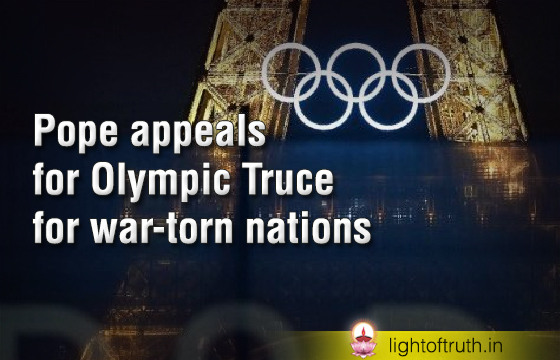
Pope Francis on 21 July expressed his hope that the Paris Olympic and Paralympic Games provide the opportunity for warring nations to respect an ancient Greek tradition and establish a truce for the duration of the Games. “According to ancient tradition, may the Olympics be an opportunity to establish a truce in wars, demonstrating a sincere will for peace,” he said.
Pope Francis was speaking after the recitation of the Angelus prayer in St Peter’s Square. He recalled that this week the Paris Olympic Games will begin, followed by the Paralympic Games, and noted that “Sport also has a great social power, capable of peacefully uniting people from different cultures.” “I hope that this event can be a sign of the inclusive world we want to build and that the athletes, with their sporting testimony, may be messengers of peace and valuable models for the young,” he said.
The tradition of the “Olympic Truce” originally aimed to allow safe participation in the ancient Olympic Games for all athletes and spectators from Greek city-states who were constantly engaged in conflict with each other. In the 1990s the International Olympic Committee decided to revive the concept of the Olympic Truce with a view to protecting the interests of the athletes and sport in general and to harness the power of sport to promote peace, dialogue and reconciliation more broadly.
Category Archives: International
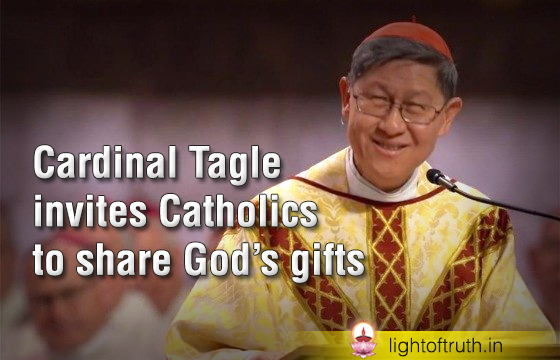
Cardinal Tagle invites Catholics to share God’s gifts
Reflecting on the theme of the National Eucharistic Congress, from the Gospel of John “Remain in Me,” Pope Francis’ special envoy to the event highlighted Jesus’ mission as a gift from the Father. “Jesus is sent to be given by the Father to others,” Cardinal Luis Antonio Tagle said during his homily, and he explained that the Eucharist encapsulates this gift, as Jesus offers His body and blood for the life of the world. The Cardinal, who is the Pro-Prefect for the Section of Evangelization of the Dicastery for Evangelization, celebrated Holy Mass at the National Eucharistic Con-gress in Indianapolis, Indiana, that concluded on Sunday, July 21.
He challenged the faithful to see their own lives and the world through the lens of gift rather than mere achievement.” Do we still look at ourselves, persons, objects, work, society, events, and creation within the horizon of gift?” he asked, warning that losing this perspective leads to self-absorption and a lack of missionary zeal.
Cardinal Tagle addressed the difficult reality of disciples who abandoned Jesus, as narrated in the Gospel of John, chapter 6, and he invited introspection on whether the Church’s actions some-times contribute to this departure.
“Is it possible that we disciples contribute to the departure of others from Jesus?” he asked, urging a deeper engagement with the Eucharist and its transformative power. He also highlighted the need to welcome those who feel marginalized, such as the poor, migrants, and the elderly, ensuring they feel part of the Church community. Cardinal Tagle said that those who choose to stay with Jesus must also be willing to be sent by Him. “We should not keep Jesus to ourselves. That is not discipleship. That is selfishness,” he stated, and he called on the faithful to share the love and compassion they have received from Jesus with the weary, the lost, and the divided.
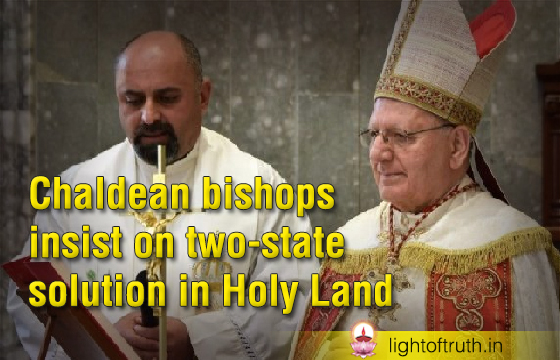
Chaldean bishops insist on two-state solution in Holy Land
As the war in Gaza threatens to further expand igniting the entire Middle East, with the Houthi rebels in Yemen and the Israeli Defence Forces (IDF) engaging in missile-strike ex-changes, the Chaldean bishops of Iraq have joined in insisting on a two-State solution in which Israel and Palestine can both live “in peace and security.” In a statement issued at the closing of their recent annual Synod presided by Patriarch Cardinal Raphael Sako in Baghdad, the Iraqi bishops expressed deep concern for the many conflicts raging in the Middle East, “especially in the Holy Land.” While condemning “all forms of violence”, they urged the international community to always uphold peace and actively engage to put an immediate end to this devastating war.
According to the Chaldean bishops, the only viable solution to the decades-long Israeli-Palestinian conflict is to create two neighbouring states that live “in peace, security, stability and mutual trust.” This stance is strongly advocated, amongst many others, by the Holy See, but is firmly opposed by the current Israeli government, especially after Hamas’ terrorist attacks of 7th October.
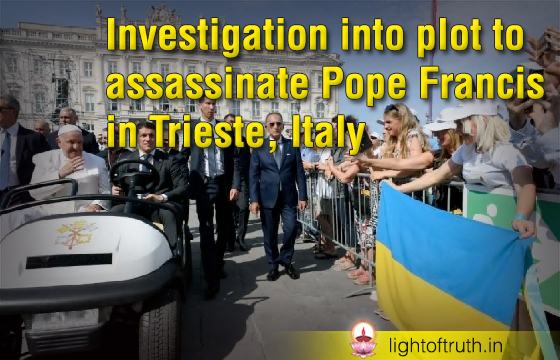
Investigation into plot to assassinate Pope Francis in Trieste, Italy
Italian authorities are investigating a potential assassination plot against Pope Francis following the discovery of a firearm in an abandoned suitcase at Trieste train station, just days before his scheduled visit on July 7. The incident unfolded when staff at a bar within the station noticed the suspicious luggage and alerted the authorities. Inside the suitcase, police found a Czech-made semi-automatic pistol, a magazine loaded with 14 bullets, and brand-new clothing of Turkish origin. The rapid response from Italian security agencies highlighted the seriousness of the threat. Despite the alarming discovery, Pope Francis adhered to his itinerary, attending the 50th Catholic Social Week in Trieste. He traveled through the city in an open electric vehicle and celebrated an outdoor mass in the main square, warmly greeted by the residents of Trieste. Monsignor Enrico Trevisi, the Bishop of Trieste, confirmed that the Pope was briefed on the situation but chose to proceed with his visit. “The people of Trieste welcomed the Pope with immense joy, and we didn’t want anything to mar this occasion,” Bishop Trevisi told the local newspaper Il Piccolo. Vatican spokesperson Matteo Bruni stated that the matter is under the jurisdiction of Italian authorities. He reassured the public that, despite the security scare, Pope Francis’s visit went ahead without any further issues, focusing on the promotion of Catholic social teachings.
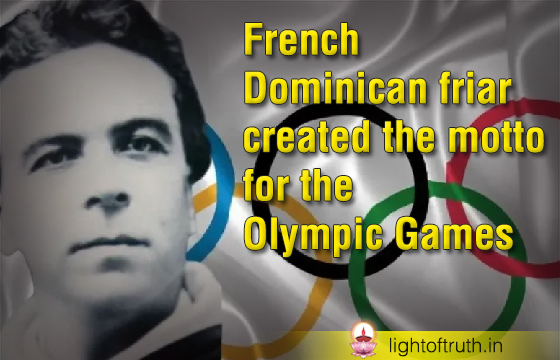
French Dominican friar created the motto for the Olympic Games
The motto of the modern Olympic Games, “Faster, Higher, Stronger,” was coined by French Dominican friar Louis Henri Didon, who became friends with the founder of the modern Olympic Games, Baron Pierre de Coubertin, five years before the 1896 Athens Games. The motto, originally formulated in Latin as “Citius, Altius, Fortius,” was used before the modern Olympic movement at St. Albert the Great School in Paris, where the Dominican friar was the principal.
Born in 1840, Didon entered the Rondeau Minor Seminary in Grenoble, France, begi-nning at the age of nine, and during his youth, he stood out for his ability as an athlete. After visiting the Carthusian monastery in Grenoble, he decided to follow a religious vocation and took the habit of the Order of Preachers (Dominicans) at the age of 16. Six years later, after a period of formation in Rome, he was ordained a priest at age 22.
Didon soon gained fame as a preacher. During the brief Franco-Prussian War, which broke out in July 1870, he was a military chaplain and for a time was held as a prisoner. When he fell ill, he ended up as a refugee in Geneva, Switzerland. From there he was sent to Marseille, where he resumed his sometimes controversial preaching activity, which led to his being sent to Corsica in 1880.
A decade later he was appointed principal of St. Albert the Great School in Paris where he established sports as part of the school’s educational program and promoted sports competition. This decision was the result of belief in the value of sports and the contact he had had with Pierre de Coubertin since 1891. In the first race they organized, the Dominican decided to embroider on the school flag the famous motto, which would become an Olympic motto in 1894, during the first Olympic Congress held in Paris in 1894.
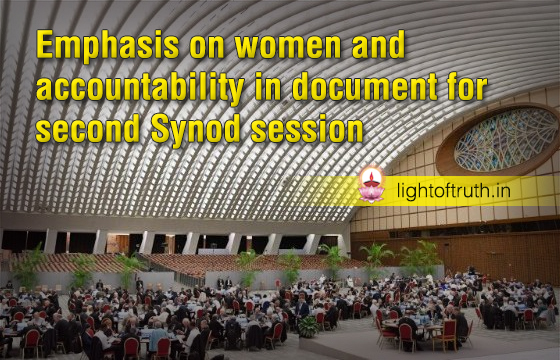
Emphasis on women and accountability in document for second Synod session
How to be a missionary synodal Church? That’s the question at the heart of the Instrumentum laboris (IL) for the upcoming session of the Synod of Bishops, which will take place from October 2 to 27. It will be the second session of the XVI Ordinary General Assembly, following the one in 2023. The IL – published on July 9, and presented at the Holy See Press Office – does not offer any “pre-packaged answers” but rather “indications and proposals”.
These regard how the Church, as a whole, can respond “to the need to be ‘synodal in mission.’” That is, to be a Church closer to people, less bureaucratic, where all the baptized are – within their different ministries and roles – co-responsible and participants in its life.
The document is structured in five sections: introduction, foundations, and three central parts. The introduction recalls the journey traveled so far and highlights the milestones already reached, such as the widespread use of the synodal methodology of the Spiritual Conversation. The foundations (nn. 1-18) then dwell on the understanding of synodality, seen as a path of conversion and reform. In a world marked by divisions and conflicts, it is emphasized, the Church is called to be a sign of unity, an instrument of reconciliation and listening for all, especially for the poor, the marginalized, and the minorities excluded from power. The foundations also give ample space (nn. 13-18) to reflection on the role of women in all areas of the Church’s life, highlighting “the need to give fuller recognition” to their charisms and vocation.” God chose women as the first witnesses and heralds of the Resurrection,” recalls the IL; therefore, “by virtue of Baptism, they enjoy full equality, receive the same outpouring of gifts from the Spirit, and are called to the service of Christ’s mission..”
In some cultures, the IL notes, “the presence of machismo remains strong”; therefore, the second synodal session calls for “a wider participation of women in the processes of ecclesial discernment and all stages of decision-making processes” along with “wider access to positions of responsibility in Dioceses and ecclesiastical institutions,” as well as in seminaries, institutes, theological faculties, and “an increase in the number of women judges in all canonical processes.” The suggestions also concern consecrated women.
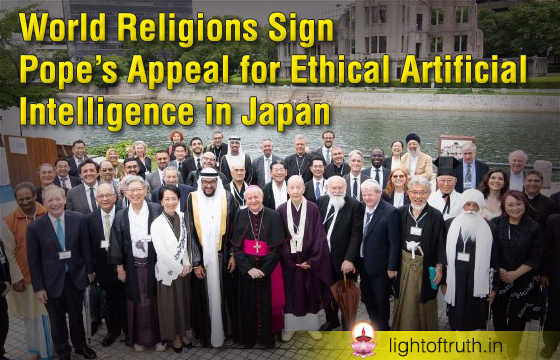
World Religions Sign Pope’s Appeal for Ethical Artificial Intelligence in Japan
Eleven World Religions, six-teen new signatories, thirteen nations in attendance, more than 150 participants: these are some of the numbers of AI Ethics for Peace, the historic multi religious event held in Hiroshima, Japan, on July 9th and 10th. The event was greeted by Pope Francis with a dedicated tweet and a message, which read, “Recognizing the contribution of the cultural riches of peoples and religions in the regulation of artificial intelligence is key to the success of your commitment to the wise management of technological innovation.”
July 10th, religious leaders representing various faiths of the Eastern world (such as Buddhism, Hinduism, Zoroastrianism, Bahá’í and many other), accompanied by leaders of the Abrahamic religions (Christians, Jews and Mu-slims), signed the Rome Call for AI Ethics in the evocative venue of Hiroshima’s Peace Memorial Park. The new signatories, in the presence of top representatives of the Japanese Government and of big tech Microsoft, IBM and Cisco, signed the Call which urges the application, in the field of AI, of algorethics, i.e., ethics by design.
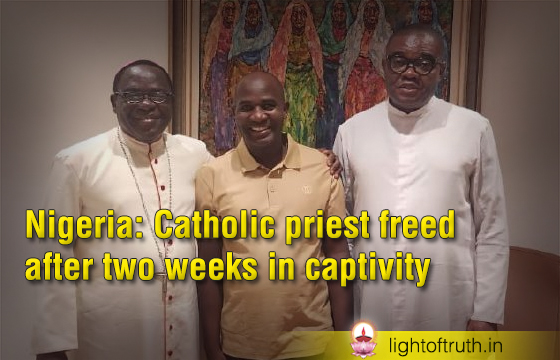
Nigeria: Catholic priest freed after two weeks in captivity
Nigerian priest Mikah Suleiman was released on Sunday night, July 7, after more than two weeks in captivity. The parish priest of St Raymond’s Catholic Church, in Damba, Zamfara State, had been abducted from his presbytery in Sokoto Diocese, north-west Nigeria, in the early hours of Saturday, 22nd June. In the days that followed, fears for his safety grew, especially after a video was released, in which the captive priest warned of threats to kill him. Announcing his release, Bishop Matthew Kukah of Sokoto thanked Catholic charity Aid to the Church in Need (ACN) for praying for Father Suleiman’s safety: “Thank you so much [to] the entire ACN family. Your love and support mean so much.” Speaking in a video message shared on Facebook yesterday, Father Suleiman stated he was in good health adding: “I want to thank you for your prayers and your support towards my rescue. “By the grace of God, I am out of the hands of the bandits. Thank you very much.” Sokoto Diocese communications director Father Pascal Salifu said: “We extend our heartfelt gratitude to God for his protection and to everyone who offered prayers and support during this challenging time.” He added: “Our thanks also go to the authorities and all involved in securing Father Mikah’s release.” About 10 days ago, a video message was released in which Father Suleiman stated: “[The bandits] told me that killing a person is not difficult for them.” He added: “Please save my life in the name of God. Look at my head, look at my legs. I was tied to a [rope] and I am the only one in this place. Normally, if they kidnap somebody, they don’t waste time.”
Pope Francis Decries Israeli Bombing of Catholic School in Gaza
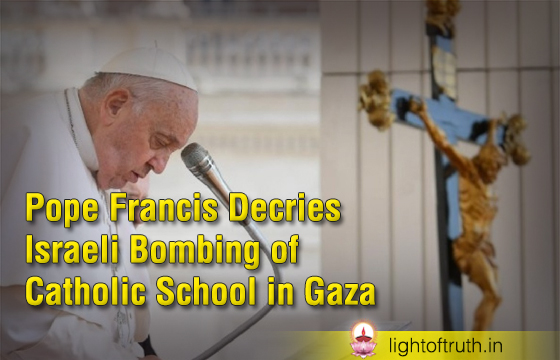
In a press release issued by the Holy See Press Office, Pope Francis expressed his pain over the recent bombings by Israel and Russia against innocent people. Israel attacked a Catholic school in Gaza and Russia attacked two medical centres in Kiev, one of them a children’s hospital. “With great sorrow the Holy Father has learnt the news of the attacks against two medical centres in Kiev, among them, the largest children’s hospital in Ukraine, as well as against a school in Gaza,” stated the press release, adding that “The Pope expresses his profound shock over the escalation of violence. At the same time, he expresses his closeness to the victims and the innocent wounded; he hopes and prays that soon concrete ways will be identified to put an end to the conflicts underway.” The Israeli attack against the Catholic school in Gaza, where previously the same Army killed innocents, occurred on Sunday, July 7, leaving four people dead. The Israeli Army attacked two classrooms on the ground floor, places where entire families are sheltered. The Israeli Government said the building was being used as a hiding place and housed a weapons manufacturing plant, something yet unproven. Up to now, the number of killings committed by the Israeli Government surpasses 35,000.
Pope will find ‘strong and multicultural’ Church in Papua New Guinea
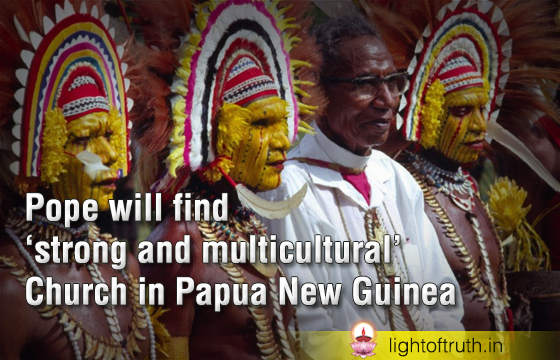
“Pope Francis will find a Church with a strong practice of faith, but in the style of Papua New Guinea. These are very ancient peoples with very ancient traditions. For them, the Pope’s presence is a confirmation of their journey as a Church, as the people of God.” Fr. Mario Abzalón Alvarado Tovar, Superior General of the Missionaries of the Sacred Heart (MSC), offered that assessment in an interview with Vatican News ahead of the Pope’s Apostolic Journey to Asia and Oceania, which will include a stop in PNG on September 6-9.
The Guatemalan-born missionary describes Papua New Guinea as a multicultural world and the Church there as multi-coloured, multilingual, and multi-ethnic in every sense. “There is a saying that describes Papua New Guinea,” Father Alvarado said, “as ‘the land of the unexpected’.” It is a country with a very ancient cultural tradition but with a way of life very different from the Western world. “Pope Francis will find a Church with a strong practice of faith, but in the style of Papua New Guinea, of the islands of New Guinea, of the mainland, of the highlands, and of the coastal areas,” he said. “These are very ancient peoples with very ancient traditions. We need to change the SIM card in our heads when we arrive in Papua New Guinea.”
Referring to the ecclesial reality that Pope Francis will encounter in Papua New Guinea, Father Alvarado indicated that it is a Church with many rituals and dances, born from a rural world of jungle, rivers, fishing, and hunting.
“We missionaries have a province with more than 115 missionaries, all natives, and there are several congregations in the Church of Papua New Guinea. It is a very simple people in that sense, but very multicultural, multilingual, multi-coloured. It is difficult to describe in words, but there is a rhythm of time where what we say in the missions becomes evident: the people have the time, and we have the clocks. For them, time is always present. That is the great people of New Guinea.”