
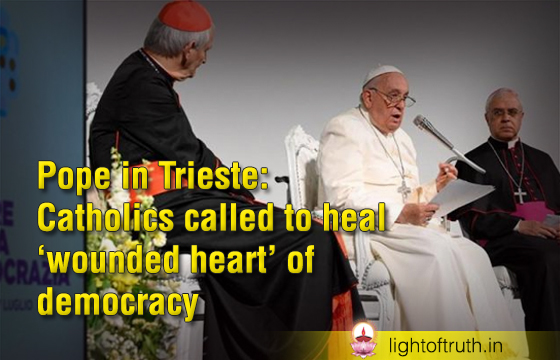
On the final day of the annual Italian Catholic Social Week, Pope Francis traveled to the northern Italian city of Trieste on July 7 to share his thoughts on the crisis of democracy. Speaking to over 900 delegates from dioceses and associations across Italy, the Pope appealed for a democratic process that engages personal and community involvement.
In his address, Pope Francis offered an image of the crisis of democracy as “a wounded heart,” in which corruption and social exclusion can abound and power becomes self-referential and incapable of serving its constituents.
“The very word ‘democracy’ does not simply coincide with the vote of the people but requires creating the conditions for everyone to express themselves and participate,” he said.
Democratic participation, he added, must be instilled at a young age, so that citizens embrace a critical sense “regarding ideological and populist temptations.” The Pope called on Christians to promote a fruitful dialogue between religion and society, while upholding the dignity of the person.
“The principles of solidarity and subsidiarity,” he said, help build the bonds of democracy, since they encourage participation and overcome indifference, which he said is “a cancer of democracy.”
The Pope went on to uphold the goal of democratic participation with the image of a “healed heart.” “If we look around,” he said, “we see many signs of the Holy Spirit’s action in the lives of families and communities, even in the fields of economics, technology, politics, and society.” Fraternity, added Pope Francis, “makes social relationships flourish,” and engenders a spirit of collective aspiration. “A democracy with a healed heart,” he said, “continues to cultivate dreams for the future, engages, and calls for personal and community involvement.”
Catholics, said the Pope, must look beyond quick fixes for democracy’s ills and never retreat into a “marginal or private faith.”
“This means not so much demanding to be heard,” he said, “but above all having the courage to make proposals on behalf of justice and peace in the public debate.” Christian engagement in politics must take on the aspects of “political love” or “political charity,” which allows politics to “rise to its responsibilities and move beyond polarizations”. “Let us train ourselves in this love to circulate it in a world short of civil passion,” concluded Pope Francis. “Let us learn to better walk together as God’s people, to be leaven of participation among the people to which we belong.”
Category Archives: International
The Catholic Church Will Have 14 New Saints Next October 20
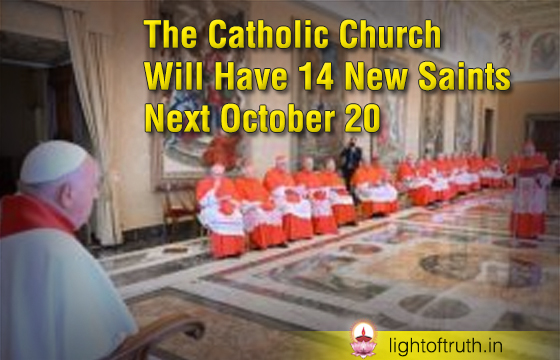
On July 1, in the Hall of the Consistory of the Vatican’s Apostolic Palace, Pope Francis presided over the celebration of the Canonical Hour of Terce of the Divine Office and the Ordinary Public Consistory for the Canonization of Blesseds. Manuel Ruiz López and Seven Companions of the Order of Friars Minor, and Francis Mooti and Raphael Massabki, lay faithful, martyrs.
Joseph Allamano, priest, Founder of the Institutes of Men Missionaries of the Consolata and Women Missionaries of the Consolata. Marie Léonie Paradis (born Virginia Alodie), Foundress of the Congregation of the Little Sisters of the Holy Family. Elena Guerra, Foundress of the Congregation of the Oblates of the Holy Spirit, known as the “Sisters of Saint Zita.” Carlo Acutis, lay faithful. In the course of the Consistory, the Holy Father decreed that Blessed Manuel Ruiz López and Seven Companions, and Blesseds Francis Mooti and Raphael Massabki, Blessed Joseph Allamano, Blessed Marie Léonie Paradis and Blessed Elena Guerra be inscribed in the Catalogue of Saints on Sunday, October 20, 2024, whereas Blessed Carlo Acutis will be inscribed in the Catalogue of Saints at a date yet to be determined.
Ethiopian Cardinal: Amidst the devastation and destruction there is hope
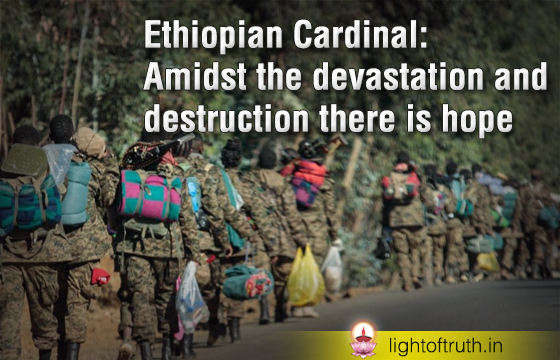
Card. Berhaneyesus Demerew Souraphiel, Metropolitan Archbishop of Addis Ababa, has always been involved in addressing the humanitarian crises that have risen in Ethiopia as a result of past and ongoing conflicts. In a recent interview with Fides News Agency, he stated that “there are various conflicts in Ethiopia, but we must never lose hope.”
Discussing the internal conflicts in the country, Cardinal Souraphiel spoke of the suffering caused to the population. He noted that the Tigray war has ended, with the signing of a peace treaty in Pretoria, but that even so, humanitarian needs are desperate. Likewise, humanitarian needs in Oromia are severe, affecting both the displaced and those who remain amidst the war. Similar situations are unfolding in the Amhara region, where recent conflicts between the federal government and the Fano militia have exacerbated the crisis.
Cardinal Souraphiel emphasised the Church’s efforts, through Caritas Internationalis, to provide aid to as many affected individuals as possible. He stated, “The Catholic Church is a small reality in Ethiopia, but it seeks to reach the largest number of displaced persons and those living in war zones to offer them aid.”
Addressing the psychological and spiritual “wounds” caused by the wars, Cardinal Souraphiel underscored the extremely vast and varied impact on the population, especially on women, children, the elderly, and those who have been forced to fight. “Every war leaves many people affected not only in the body but also in the soul and spirit,” he noted. The Church aims to offer assistance in social, psychological, and spiritual fields, with a particular focus on trauma care. The cardinal said special attention is given to children and their mothers, many of whom cannot attend school, and to women who have been victims of rape.
Irish Bishops underscore compassion and healing in end-of-life care
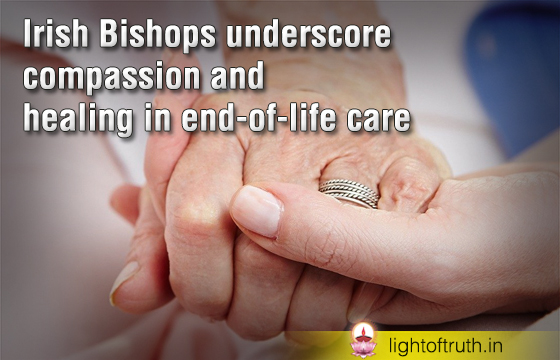
The Irish Catholic Bishops’ Conference has published a pastoral statement entitled “Freedom to Live Fully, Until Death Comes” to inform people of faith and goodwill who wish to protect and support human life with dignity and compassion, especially in the last weeks of terminal illness.
The pastoral letter came out at the end of June 2024, in view of national discussions following the Irish parliament’s “Final Report of the Joint Committee on Assisted Dying” published in March, in which the government introduces legislation allowing for assisted dying in certain circumstances.
The pastoral statement consists of a text, but also a 35-minute video that explains and illustrates the Church’s teachings on end-of-life care, and especially its focus on the compassionate care needs of the whole person. Bishop Kevin Doran of Elphin Diocese and Chair of the Irish Bishops’ Council for Life spoke to Vatican News, and said the aim of the video was to better convey the human reality of these issues.
The video is entitled “Through the Valley” and features a collection of reflections and conversations with the terminally ill, family members of people who have died with terminal illness, and healthcare professionals. Bishop Doran believes, “this medium of film helps to capture…a human story which is so important in getting across the message that it is actually possible to live fully and richly, even in terminal illness and even in palliative care.”
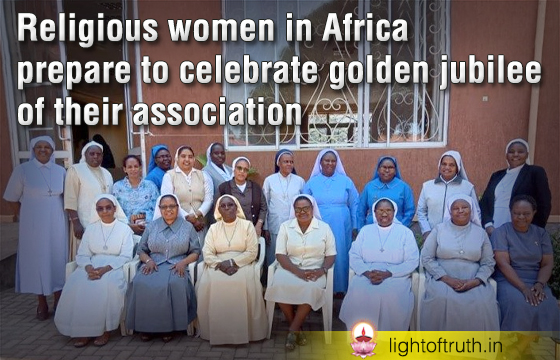
Religious women in Africa prepare to celebrate golden jubilee of their association
Malawi’s religious women will host golden celebrations of the Association of Consecrated Women in Eastern and Central Africa (ACWECA) from 19 August to 24 August 2024 in Lilongwe, Malawi. It will also be the 19th Plenary Assembly of the Association. ACWECA is the umbrella body of Catholic consecrated religious sisters in countries of the Eastern and Central Africa. The ACWECA region comprises 10 countries: Sudan, South Sudan, Malawi, Tanzania, Kenya, Uganda, Ethiopia, Eretria, and Zambia. Zimbabwe is an affiliate member.
ACWECA Secretary General, Sr. Bridgita Samba Mwawasi, says all is set for Malawi to host the long-awaited 19th Plenary Assembly at the Golden Peacock Hotel in Lilongwe. She said preparations for the two-tier celebrations are now at an advanced stage. Malawi will host at least 200 delegates during the Plenary. These include the ACWECA executive board, staff, and the council of delegates, which has voting rights.
A team of observers comprising representatives of the International Union of Superiors Generals (UISG), religious women from outside the ACWECA region, and donor partners are also expected at the Assembly.
“After a colourful official opening Mass on 19 August at Lilongwe’s CIVO Stadium, the major part of the Plenary Assembly shall be the discussions of the theme: ‘Transformative holistic formation for authentic living towards a deeper evangelization in the ACWECA region and beyond.’ Then, we will also celebrate the Golden Jubilee,” Sr. Mwawasi said.
Some of the topics to be discussed during the Plenary Assembly include revitalising consecrated life and religious identity today and holistic religious formation in view of living the congregations’ charism and gospel values. Other topics include mental health and self-care in religious congregations.
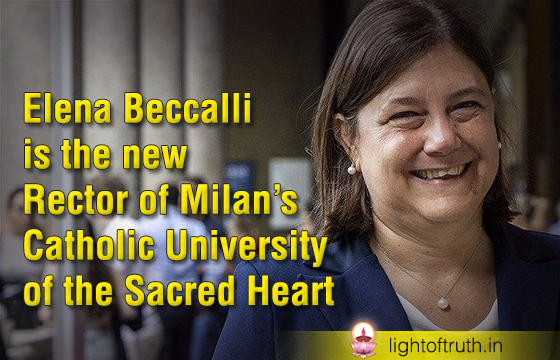
Elena Beccalli is the new Rector of Milan’s Catholic University of the Sacred Heart
For the first time in the history of the University of the Sacred Heart in Milan, a woman has been appointed Rector. Elena Beccalli will take over on 1 July, after the painful death on 23 May of her predecessor Franco Anelli. Beccalli was a student at the university that she is now preparing to lead for four years, from 2024 to 2028. She was appointed by the Board of Directors who met on 20 June. The decision of the Board of Directors follows the appointment of Professor Elena Beccalli, already serving as Dean of the School of Banking, Finance, and Insurance Sciences, by the University’s 12 Faculty Councils on 22 May, with 636 preferences out of a total of 685, corresponding to around 93% of those voting.
“Università Cattolica del Sacro Cuore is a ‘universal’ academic institution by vocation, where dialogue and confrontation are open, free, interdisciplinary, and oriented towards the creation of networks and strategic alliances. It is a University that can offer with accuracy, creativity, courage a forward-looking approach to contemporary challenges, thanks to the coordinated efforts of its vibrant academic community”, Professor Beccalli said in thanking the academic staff and the Board of Directors.
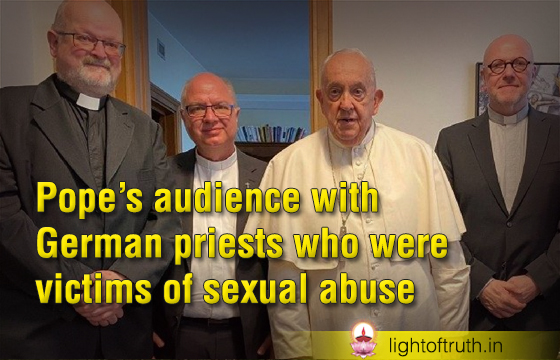
Pope’s audience with German priests who were victims of sexual abuse
Father Liudger Gottschlich, a priest from the Archdiocese of Paderborn, has dedicated over three decades to supporting survivors of abuse, drawing from his own experience as a victim of abuse by a priest at the age of eleven. On Tuesday, June 25, he was part of a special audience with Pope Francis at the Pope’s residence, Casa Santa Marta, in the Vatican. The meeting, described as occurring in a “unique atmosphere,” was a poignant moment for Fr Gottschlich and his fellow priests who have also experienced abuse. “As priests who have been victims ourselves, we are in a challenging position within the Church,” Gottschlich explained in an interview with Vatican Radio. He highlighted the isolation often felt by these priests, noting that their presence serves as a constant reminder of unresolved issues within the Church, which can make others uncomfor-table. Fr Gottschlich shared that the encounter with Pope Francis was unlike their usual experiences within the Church. “Generally, we don’t receive much support or backing. There is often a desire for us to be invisible,” he said.
However, this meeting was different. Conducted in the Pope’s private living room, the conversation was intimate and personal. “We found him very interested, very open, and also very encouraging and strengthening. This is something not commonly experienced with our superiors in the dioceses.”
Reflecting on the meeting, Fr Gottschlich emphasized the Pope’s strong encouragement for their work. “The Pope urged us to use our own wounds to aid in pastoral work and to act as healers wherever possible,” he said. The Pope’s encouragement was a significant takeaway, reinforcing the importance of not remaining silent and keeping the issue of abuse alive within the Church. Father Gottschlich also addressed the common assertion that abuse predominantly occurs within families, with the Church representing only a small percentage. He argued that this perspective is too narrow.
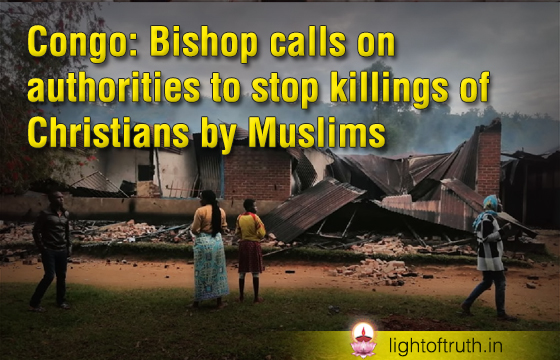
Congo: Bishop calls on authorities to stop killings of Christians by Muslims
A congolese bishop has made a fresh plea for the country’s leaders to stop the armed conflict following the massacre of around 150 people – including at least 80 Christians – by an Islamist rebel group earlier this month. Denouncing the “serious and ongoing violations of human dignity” on Tuesday (18th June), Bishop Melchisedec Sikuli Paluku of Butembo-Beni called on authorities to “put an end to the plight of the Congolese people”.
The terrorist group known as Allied Democratic Forces (ADF) – which is affiliated with Daesh (ISIS) – carried out the killings in villages in North Kivu Province in the eastern part of the Democratic Republic of Congo (DRC) between 4th and 8th June. Media outlets reported that an on-line post by Daesh indicated that one of the attacks specifically targeted Christians. In his statement, a copy of which was sent to Catholic charity Aid to the Church in Need (ACN), Bishop Paluku condemned the atrocities committed “against the peaceful population [which has been] left defenceless”. According to the bishop the extremists “raped girls and women; kidnapped people of whom there is no trace today, and killed many others”.
He added that ADF militants torched homes, medical facilities, businesses and vehicles, forcing survivors to flee the area. The bishop went on to call on “the authorities of the country to put an end to the Calvary of the Congolese people, in general, and of the population of the Diocese of Butembo-Beni, in particular.”
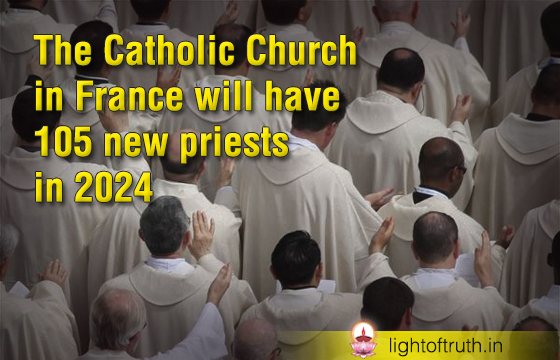
The Catholic Church in France will have 105 new priests in 2024
The French Bishops’ Conference (CEF) reported that, in 2024, 105 new priests will be ordained, 17 more priests than in 2023, when 88 new priests were ordained in the European country. An article published on the CEF website said the vast majority of priestly ordinations are celebrated during the month of June, particularly on the Sunday before the solemnity of Sts. Peter and Paul, which the Catholic Church celebrates every year on June 29.
Of the 105 new priests, 73 are diocesan, 16 belong to religious orders, 10 are members of communities, two belong to societies of apostolic life, while the remaining four “were ordained in the institutes under the former Ecclesia Dei commission, celebrating according to the Roman Missal of 1962 [before the reform of Vatican II].”
At a press conference, Bertrand Lacombe, the archbishop of Auch and a member of the council for ordained ministers and laypeople in ecclesial mission, highlighted two aspects to be considered regarding the new priests: “the essential mission of the priest in the Church and the meaning of this mission today within an increasingly secularized French society” and “the ongoing reflections of the bishops as well as the initiatives launched in the dioceses to raise up vocations.”
The French prelate wished a “beautiful ministry to the priests who are responding to the spiritual expectations of our time: The adventure is worth the effort and gives light to the world!”
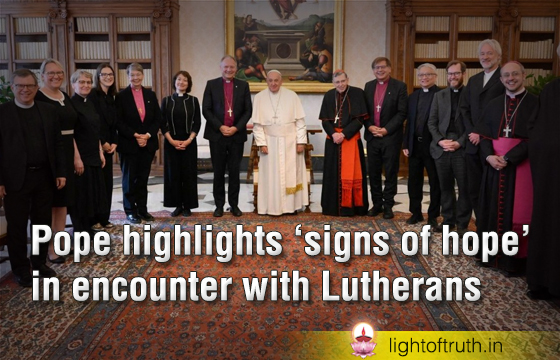
Pope highlights ‘signs of hope’ in encounter with Lutherans
Pope Francis welcomed a delegation of leaders from the Lutheran World Federation to the Vatican, describing their visit as “an important gesture of ecumenical fraternity.” Recalling an earlier meeting with Lutherans, in 2021, Pope Francis highlighted the upcoming anniversary of the First Council of Nicea as “an ecumenical event.” The Nicene Creed “is an ecumenical bond that has its centre in Christ”, the Pope said, quoting the Common Word issued by LWF General Secretary, Rev. Dr. Anne Burghardt and Cardinal Kurt Koch from the Dicastery for Promoting Christian Unity during the Federation’s recent General Assembly in Krakow. “In this context,” he said, “you rightly recalled a beautiful sign of hope, which has a special place in the history of reconciliation between Catholics and Lutherans.”
Pope Francis then turned to the earlier Joint Declaration on the Doctrine of Justifi-cation, signed 25 years ago, in which Catholics and Lutherans agreed on the common goal of “confessing Christ in all things.” “Jesus Christ is the heart of ecumenism,” the Pope said. “He is divine mercy incarnate, and our ecu-menical mission is to bear witness to this.” That Declaration is “another sign of hope in our history of reconciliation,” he said, as he invited Catholics and Lutherans to celebrate the anniversary of its signing “as a celebration of hope.”
Then, noting “our common spiritual ori-gin” in “one baptism for the forgiveness of sins” Pope Francis called on Lutherans and Catholics to “confidently continue as pilgrims of hope” in the ongoing dialogue “of truth and charity.” Concluding his remarks, the Holy Father recalled a story about Orthodox Bishop John Zizioulas, who would say, jokingly, that the union of Christians would be achieved only on the day of Judgment at the end of time. “But in the meantime,” Pope Francis said still quoting the late Bishop, “we have to walk together: journeying together, praying together, and performing works of charity together.”