
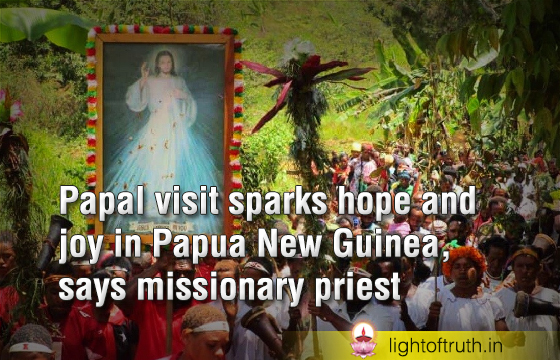
The anticipation is palpable for Pope Francis’ arrival in Papua New Guinea on September 6, especially in the coastal city of Vanimo, said Fr. Martín Prado of the Institute of the Incarnate Word. “Due to limited access to news and social media, not many people were aware that he was traveling. We are all very excited and working hard to be able to welcome the Pope as best as we can,” the priest said in an interview with the Aid to the Church in Need (ACN).
The local Catholic community is making extensive preparations, which include nightly prayers, organizing hymns, and culturally significant dances on the local football pitch, repurposed for the occasion. These gatherings have drawn large crowds, a testament to the vibrant faith and communal spirit in Vanimo, the priest said. “At some of the better attended evenings, we had thousands of people taking part.”
He also highlighted the unique blend of faith practices in the region, saying, “The faith of the Christians here is very much alive and very simple.”
“Many still interpret Christianity through the framework of their ancestral faiths, which makes it difficult for them to achieve a full understanding of Christianity,” he added.
The priest said missionary work in remote jungle locations has led to significant spiritual engagements, including baptisms and the introduction of the Gospel.
“In the jungle, for instance, we have had the opportunity to baptize entire families, to teach them to make the sign of the Cross, and to preach the Gospel for the first time,” he said.
Despite these successes, the melding of ancestral beliefs with Christian teachings presents ongoing challenges. Fr. Prado highlighted the community’s efforts to discern and educate.
“Our work, as missionaries, is to help Christians understand that these things do not go together and try to effect change,” he said.
Addressing the specific challenges faced by the youth, the priest highlighted the vague concepts of marriage and family life that diverge significantly from Western norms.
“Young people do not have models to follow or serve as inspiration, and only a few have the support and accompaniment of their parents to commit to their spouses for life,” he said.
The missionary priest called for global support through prayers and material aid. He stressed the importance of praying for vocations, noting the recent increase in local vocations.
“Since then, the number of priests has doubled. We have started to see local vocations, which we had never had before,” he said.
Category Archives: International

Pope Francis Promotes Sustainability with A New Solar Plant for The Vatican
In a significant movement towards climate sustainability and neutrality, Pope Francis announced the construction of a solar plant on the outskirts of Rime. The initiative’s objective is for Vatican City to function completely with renewable energy, which is a crucial step in the fight against climate change.
In an Apostolic Letter, Pope Francis highlighted the urgent need of a transition to a sustainable development model. According to the Holy Father, the new solar plant will significantly reduce greenhouse gas emissions and promote climate neutrality. The plant will be located in Santa Maria di Galeria, some 11 kilometers from Rome, where Vatican Radio’s broadcasting station is located. Not only will this project generate renewable electricity, but it will also be integrated with the land’s agricultural needs, combining modern technology with sustainable practices. The Pope has given full authority to two special Commissioners to supervise the plant’s construction, ensuring that the project is carried out efficiently and effectively. The energy generated by this solar plant will cover all the Vatican’s energy needs, eliminating dependence on non-renewable energy sources.
Solar energy plays an essential role in Pope Francis’ strategy to address climate change. Since his 2015 encyclical “Laudato Si’,” the Pope has been a firm defender of climate action and repeatedly appealed to the international community to take swifter and more decisive measures. In his writings, the Holy Father has pointed out the scientific consensus on global warming and extreme meteorological phenomena as key reasons to adopt cleaner energy sources. In addition to the solar plant, the Vatican is implementing other measures to reduce carbon footprint. For example, solar panels have been installed in several buildings and the fleet of official vehicles has been renovated with electric automobiles, including the famous Popemobile. These actions underscore the Vatican’s commitment to energy efficiency and the reduction of light consumption through renewable sources.
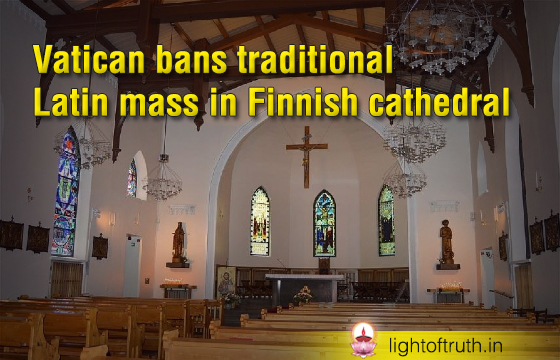
Vatican bans traditional Latin mass in Finnish cathedral
In a move that has sparked concern among traditionalist Catholics, the Vatican has ordered the relocation of Finland’s only Traditional Latin Mass (TLM) from its current location in the capital’s main cathedral to a smaller, more modern church. The Diocese of Helsinki announced on August 9 that, starting in September, the Latin Mass will no longer be celebrated at St. Henry’s Cathedral but will instead take place at St. Mary’s Church, following directives from the Vatican. The decision, as communicated by the Dicastery for Divine Worship, is rooted in the Vatican’s view of St. Henry’s Cathedral as a “model for the entire local church” and a “sign of unity.” This rationale implies that the cathedral, as a symbol of ecclesiastical cohesion, should not host the Traditional Latin Mass, which has been a point of contention within the broader Catholic Church. The Latin Mass had been celebrated at St. Henry’s Cathedral since 2007, following Pope Benedict XVI’s motu proprio Summorum Pontificum, which encouraged the wider use of the pre-Vatican II liturgy. St. Henry’s, a neo-Gothic structure built between 1858 and 1860, originally served the needs of Catholic soldiers in the Imperial Russian Army, at a time when Finland’s Catholic population was minimal. The cathedral’s exterior features statues of St. Henry, Finland’s patron saint, as well as St. Peter and St. Paul, underscoring its historical and spiritual significance.
The new venue, St. Mary’s Church, is located over five kilometers from the cathedral and was constructed in the 1950s with a modern architectural design.
The move is seen within the context of broader restrictions imposed on the Traditional Latin Mass following Pope Francis’s 2021 motu proprio Traditionis Custodes, which aimed to curtail the use of the old rite. Since the motu proprio’s release, the Vatican has been tightening regulations on diocesan Latin Masses globally. According to the Vatican’s liturgical office, only 57 parishes worldwide were granted permission to offer the Traditional Latin Mass in 2022. The Vatican’s reasoning for the relocation—citing the cathedral as a «sign of unity»—highlights the ongoing tensions between the Vatican under Pope Francis and segments of the Catholic community that favour the traditional liturgy.
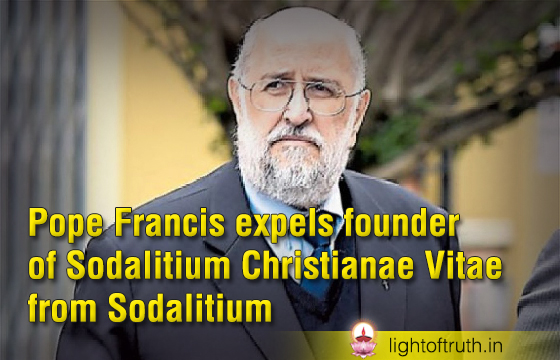
Pope Francis expels founder of Sodalitium Christianae Vitae from Sodalitium
The Sodalitium Christianae Vitae welcomes the decision of the Holy Father, Pope Francis, to expel Luis Fernando Figari Rodrigo from the Sodalitium, as announced by the Peruvian Con-ference of Bishops. This measure is a gesture of pastoral charity, justice, and reconciliation within our community and with all those who have been affected by the abuses committed by Mr. Figari. We are grateful for it with filial adherence as part of the path of renewal that our community has been pursuing for several years under the guidance and accompa-niment of the Holy See. With this measure, Mr. Figari is now dissociated from our community. The authorities of the Sodalitium have closely collaborated with the Holy See in the pursuit of truth and justice, following the investi-gation of various allegations reported since 2011.
In September 2014, the Sodalitium imposed disciplinary measures on Luis Fernando Figari after receiving testimonies of abuses, which were approved by the Holy See. In 2016, he was declared persona non grata by the Sodalitium. In 2017, the Holy See imposed new disciplinary mea-sures, which were confirmed in 2018 after dismissing the appeals that Mr. Figari submitted.
After much reflection and dialogue, in December 2019, I requested the Holy See to expel Mr. Figari from the Sodalitium.
In 2019, the V General Assembly of the Sodalitium in Brazil expressed an institutional apology to all the victims who have suffered any kind of abuse by Luis Fernando Figari and entrusted me, as Superior General, to assess the pertinence of initiating a canonical process for his expulsion.
As part of the mandate entrusted by the Holy Father to the Special Mission Scicluna-Bertomeu sent to our community and the collaboration we have been developing with it, the Dicastery for Institutes of Consecrated Life and Societies of Apostolic Life issued the decree of expulsion, which has the approval of Pope Francis. As we have stated previously, Luis Fernando Figari is the historical founder of the Sodalitium of Christian Life but is not a spiritual reference for our community or the Sodalite Family.

Pope Francis Receives in Private Audience Innocent Man Who Spent 33 Years in Prison
In an emotional private meeting, Pope Francis received Beniamino Zuncheddu, a Sardinian shepherd, who spent over three decades in prison for a crime he didn’t commit. The meeting, which took place in the Apostolic Palace’s Library, represents a powerful act of reconciliation and hope for a man who, after 33 years in prison, was finally exonerated early this year. Zuncheddu, who in 1991 was accused of committing a tripple murder when he was only 26, faced a long and torturous legal process that kept him behind bars until January 2024, when Italy’s Court of Appeal acknowledged his innocence. For years he endured inhuman conditions in various prisons, sharing crowded cells and facing great physical and emotional challenges. But his faith and love for his family gave him the necessary strength to surmount each day.
In his audience with the Holy Father, Zuncheddu presented his book entitled “Io Sono Innocente” [“I Am Innocent”], written together with his lawyer. In this work he talks not only about the injustice he suffered, but also about his internal journey of forgiveness and healing. Despite the profound pain caused by the false accusation, Zjuncheddu decided to forgive the one who erroneously singled him out as culpable, thus showing notable spiritual and moral strength.
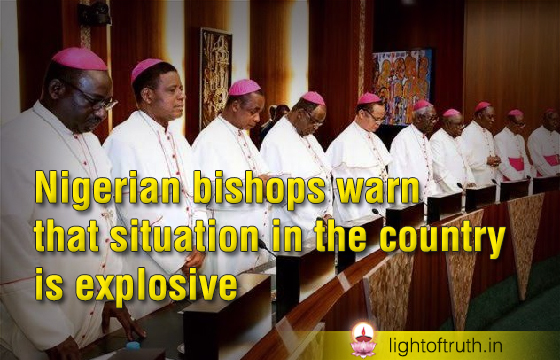
Nigerian bishops warn that situation in the country is explosive
The Catholic Bishops of Nigeria have warned that unless the government seriously addresses the issues of widespread poverty, hardship and corruption, the African nation should be ready to contend with more protests in the near future.
The alarm was launched on August 25 by Archbishop Lucius Ugorji of Owerri, the President of Catholic Bishops Conference (CBCN) as the bishops gathered in Auchi, Edo State, for their second general Assembly this year.
In recent weeks Nigeria has been facing significant unrest due to widespread protests against President Bola Tinubu’s economic reforms to address the nation’s growing debt burden and budget deficit.
The protests, that began in early August under the hashtag #EndBadGovernance, are driven by growing frustration over severe economic hardships, including soaring inflation, a weak currency, and the removal of fuel subsidies. These issues have led to a dramatic increase in the cost of living, with many Nigerians struggling to afford basic necessities like food and transportation. President Tinubu’s economic reforms, which were intended to stabilize the economy, have instead exacerbated the situation for many Nigerians, leading to widespread discontent.
The protests, however, have turned violent in some areas, particularly in northern states like Kaduna, where several demonstrators have been killed. Curfews have been imposed in various states, including Kano and Plateau, to curb the unrest.
Commenting these developments at the opening of the assembly, Archbishop Ugorji, condemned the violence by some rioters, but also the killing of some protesting youths by security forces. He remarked that: “As long as the nation is afflicted with poverty, hardship and corruption, and as long as the future of youths in our nation remains bleak, we continue to experience protest.”
He, therefore, criticized the federal government’s response, in particular that of some government officials who, “rather than address the ill”, are shifting their responsibility on others, “looking for a scapegoat”.

Pope Francis: Reading literature can enrich the Christian life, aid in priestly formation
In a new letter, Pope Francis touts the benefits of reading literature for priests and all those seeking to enrich their lives as Christian believers. Though he said his letter was originally intended for men receiving priestly formation, he said all Christians — not just those involved in ministry — would benefit from incorporating poetry and literature into their personal times of study or leisure.
“Time spent reading may well open up new interior spaces that help us to avoid becoming trapped by a few obsessive thoughts that can stand in the way of our personal growth,” he writes in his letter, which is dated July 17 and comes at the height of the summer when many people are taking time off to rest and recreate.
The 87-year-old pontiff believes reading literature enables individual people to learn the art of reflective personal discernment, empathy with others, as well as entering a dialogue with the culture of our times, in a more profound way than modern audiovisual media.
“We are enriched by what we receive from the author and this allows us in turn to grow inwardly, so that each new work we read will renew and expand our worldview,” he writes. In his letter, the Holy Father praises seminaries that incorporated times dedicated to the reading of literature and poetry, countering the current “obsession with ‘screens’ and with toxic, superficial, and violent fake news.”
Reading, the pope insists, should not be approached with an arduous or rigid “sense of duty” but rather with a flexibility, openness, and “readiness to learn.” “Everyone will find books that speak to their own lives and become authentic companions for their journey. There is nothing more counterproductive than reading something out of a sense of duty, making considerable effort simply because others have said it is essential,” he shares.
Drawing upon the example of St. Paul, who “gathered the seeds of pagan poetry,” the pope said Christians who are knowledgeable of the literary works of their times can bring others closer to God through the person of Jesus Christ.
“We must always take care never to lose sight of the ‘flesh’ of Jesus Christ: that flesh made of passions, emotions, and feelings, words that challenge and console, hands that touch and heal, looks that liberate and encourage, flesh made of hospitality, forgiveness, indignation, courage, fearlessness; in a word, love,” Pope Francis writes.
Through “listening to the voice of others” and “seeing through the eyes of others,” Pope Francis believes there is a kind of wisdom and richness instilled in readers of the literary word that seeks truth, broadens perspectives, and enhances critical and cognitive thinking.
“It opens our human words to welcome the Word that is already present in human speech, not when it sees itself as knowledge that is already full, definitive and complete,” he observes, “but when it becomes a listening and expectation of the One who comes to make all things new (cf. Rv 21:5).
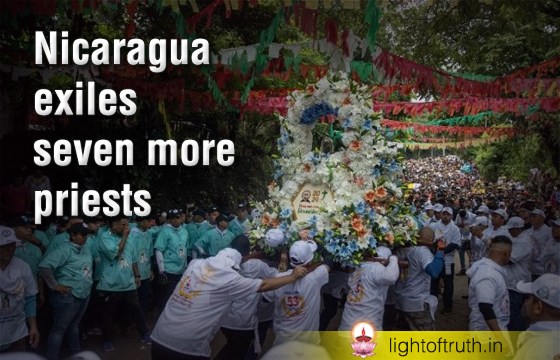
Nicaragua exiles seven more priests
Of the group of priests detained in Nicaragua, seven were exiled this Wednesday, 7 August, and sent to Rome, where they arrived Thursday afternoon. The priests are Víctor Godoy, Jairo Pravia, Silvio Romero, Edgar Sacasa, Harvin Torres, Ulises Vega, and Marlon Velázquez.
The information was confirmed the same day in the afternoon by Nicaragua’s government in a press release that stated, “Seven Nicaraguan priests have left Nicaragua for Rome, Italy”. The priests belong to the dioceses of Matagalpa and Estelí, and were being held at the Nuestra Señora de Fátima Seminary in Managua.
According to Nicaraguan media, the administrator of the Diocese of Estelí, Father Frutos Valle, who was detained on 26 July, was not among those expelled from the country.
This is the fifth time Nicaragua has exiled groups of priests: in October 2022 and February 2023 several priests were sent to the United States; in October 2023 and January 2024, two other groups of priests, along with two bishops – Rolando Álvarez and Isidoro Mora were sent to Rome.
Meanwhile, former Nicaraguan ambassador to the Organization of American States (OAS), Arturo McFields Yescas, confirmed on Wednesday that the government led by Daniel Ortega had ordered the expulsion of the Brazilian ambassador to Nicaragua, Breno de Souza Brasil Días da Costa, for not attending the celebration of the 45th anniversary of the Sandinista revolution on 19 July, to which he was invited. For its part, the Brazilian government decided this Thursday to expel the Nicaraguan ambassador, Fulvia Castro, in “reciprocity” to the step taken by the authorities in Managua.
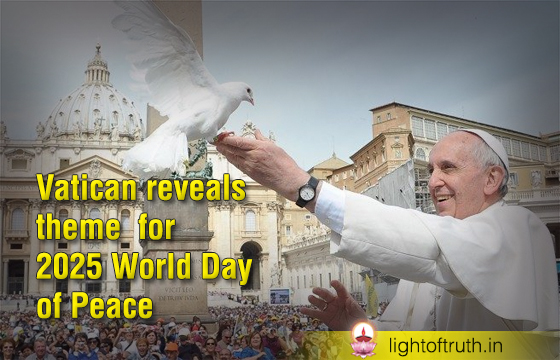
Vatican reveals theme for 2025 World Day of Peace
“Forgive us our trespasses: grant us your peace” is the theme chosen by Pope Francis for the next “World Day of Peace,” held on January 1, 2025. “Only from a genuine conversion on all levels – personal, local and international – will true peace be able to flourish,” says the Dicastery for Promoting Integral Human Development in its statement on the theme for the 2025 World Day of Peace.
In the statement, the Dicastery adds that peace comes not only from an end to conflicts, “but also in a new reality in which wounds are healed and each person’s dignity is recognized”.
The World Day of Peace is observed each year on January 1, the Solemnity of Mary, Mother of God. Since its establishment in 1967 by Pope St Paul VI, the Popes have taken the occasion to offer magisterial reflections in Messages for the day, dealing with topics such as the United Nations, human rights, diplomacy, and economic development. The theme chosen by the Holy Father for the World Day of Peace for 2025 is “Forgive us our trespasses: grant us your peace”, corresponding to “the biblical and ecclesial understanding of the Jubilee Year”.
In its statement, the Dicastery says the theme is inspired by Pope Francis’s encyclical letters Laudato sí and Fratelli tutti, “and above all by the concepts of Hope and Forgiveness, which are at the heart of the Jubilee, a time for conversion that calls us not to condemn, but instead to bring about reconciliation and peace”. The Dicastery goes on to note by “considering the reality of conflicts and social sins afflicting humanity today in light of the hope inherent in the Jubilee tradition of the forgiveness of sins and the cancellation of debts, together with the reflections of the Fathers of the Church in this regard, concrete principles emerge that can lead to a much needed spiritual, social, economic, ecological and cultural change”.
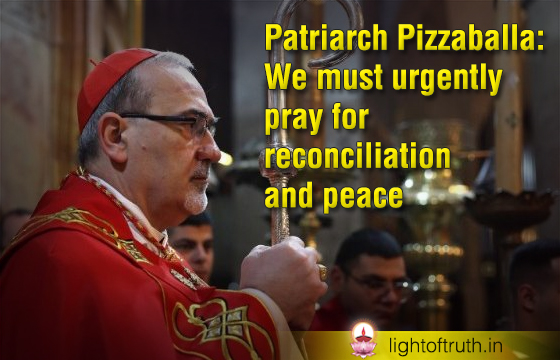
Patriarch Pizzaballa: We must urgently pray for reconciliation and peace
Cardinal Pierbattista Pizzaballa, the Latin Patriarch of Jerusalem, has addressed Christians in the Holy Land with a heartfelt message in view of the Solemnity of the Assumption of the Blessed Virgin Mary, celebrated on August 15. In his message, the Patriarch expresses his dismay over the “terrible war” that has caused immense suffering.
He laments that, despite months of war, the present situation is still filled with so much hatred, resentment, and violence, making it increasingly difficult to find solutions to the conflict raging in the Middle East. Patriarch Pizzaballa writes that it has become “increasingly difficult to envision a conclusion to this conflict, whose impact on the lives of our people is greater and more painful than ever before.”
He notes that it is “increasingly difficult to find people and institutions with whom a dialogue about the future and peaceful relations” can take place in the current situation, marked by “so much violence and, admittedly, anger.”
While the situation is desperate, the days ahead offer opportunities for turning the tide on the conflict, especially the Solemnity of the Assumption of the Blessed Virgin Mary into Heaven, Patriarch Pizzaballa points out.
He invites everyone to pray earnestly for reconciliation and peace, entrusting our prayers to the intercession of the Blessed Mother on the Feast of the Assumption, before or following the celebration of the Eucharist or any other suitable time.
Prayers for peace must accompany our efforts in helping and accompanying those suffering, Patriarch Pizzaballa notes.
In the face of the many words of hatred we hear spoken too often, he says, “we would like to offer our prayer, which consists of words of reconciliation and peace.”