On January 9, Pope Leo XIV stepped into an encounter with the Shroud of Turin unlike any experienced by his predecessors. Inside the Apostolic Palace, the Pontiff became the first person to explore a new digital reading of the Shroud, an initiative known as Avvolti, presented to him by Cardinal Roberto Repole, Archbishop of Turin and pontifical custodian of the relic. The moment marked a symbolic threshold: one of Christianity’s most studied and enigmatic images entering fully into the digital age. The initiative introduces a way of engaging with the Shroud that has never before been available to the general public. For the first time, the image can be explored online through a dedicated platform, accessible via the websites avvolti.org and sindone.org. The program works on smartphones, tablets, and computers, making the Shroud available globally without geographical or logistical barriers. What once required travel to Turin and access to rare exhibitions can now be approached from anywhere in the world. At the heart of the project lies an interactive digital reproduction that allows users to move across the surface of the Shroud as if tracing it with their own hands. Key details—the face, the marks associated with the crown of thorns, and other elements traditionally linked to the Passion—can be enlarged and examined closely. Each magnified section is accompanied by explanatory texts and direct references to Gospel passages describing the suffering and death of Jesus. The result is not a purely visual experience but a guided reading that combines image, Scripture, and interpretation. The architects of the project have been careful to define its audience. While the texts and images are grounded in scientific rigor and serious scholarship, the aim is not to produce a tool for specialists alone. Instead, the digital reading is designed to be intelligible to a broad public, including those with little prior familiarity with the Shroud. The ambition is catechetical as much as educational: to allow the image to speak beyond academic circles and reach ordinary believers, seekers, and the curious.
Category Archives: International
Cardinal encourages Mexicans to demand authorities bring criminals to justice
Cardinal José Francisco Robles Ortega, archbishop of Guadalajara, Mexico, said that authorities have a “mandate to protect us” from violence and therefore encouraged the population to “demand” that they fulfill their duty.
“Bringing to justice those who commit violence, those who commit homicides or injustices, that is the responsibility of the authorities,” he said at a Jan. 1 press conference, according to the Archdiocese of Guadalajara’s press office.
The cardinal also denounced the fact that small-business owners are being extorted, pointing out that they “now don’t earn” enough “even to pay the protection money” demanded by criminals, which is why “many are closing their small businesses.”
Furthermore, to confront the violence, the cardinal reminded everyone that “peace is born and nurtured in the heart of each and every person,” since all forms of violence have the same point of origin, “from those who commit violence with an offensive word to those who commit violence by firing a weapon at a brother.”
In this way, each citizen’s contribution to ending violence begins with “being at peace in our own hearts, in harmony with God and his loving and merciful plan.”
It is also important “that families pay attention to what their children are doing, who they are associating with, and what opportunities they are being offered,” said the archbishop, who considered it “distressing that organized crime is recruitingteenagers who often do not find acceptance, support, or protection within their families.”
Despite a significant decrease in homicides in 2025, reaching the lowest figure in a decade, Mexico remains a country heavily affected by violence, especially from organized crime. Impunity is one of the most serious factors in the fight against crime in Mexico. According to the National Institute of Statistics and Geography(INEGI), in 2024, “93.2% of the 33.5 million crimes that occurred were not reported, or the authorities did not open an investigation file. This underreporting is known as the dark figure of crime.”
In the list of the 50 most violent cities in the world in 2024, 20 cities were in Mexico.
Czech bishop declares Year of Reconciliation 80 years after World War II expulsions
Eighty years after the expulsion of ethnic Germans from Czechoslovakia, a Czech bishop has declared a local Year of Reconciliation to address wounds that remain from World War II and its aftermath. Bishop Stanislav Přibyl of Litoměřice announced the initiative in a pastoral letter dated Dec. 31, 2025, following the end of the Jubilee of Hope on Jan. 6. The year marks two anniversaries on Jan. 13: the 1866 healing of Magdalena Kade and the 1946 founding of Ackermann-Gemeinde, a Catholic reconciliation group established by expelled Germans.
“The end of World War II brought not just joy and relief but also reckoning with people and the past,” Přibyl wrote in his letter. The war’s aftermath caused displacement and resettlement of populations across Central Europe, leaving lasting scars on the region.
After Nazi Germany annexed the Sudetenland in 1938 and established the Protectorate of Bohemia and Moravia, the majority-German region became part of the Reich. Following Germany’s defeat, Czechoslovakia expelled approximately 3 million ethnic Germans between 1945 and 1946, primarily from the Sudetenland region that now forms part of the Diocese of Litoměřice.
The bishop acknowledged that the question of whether the expulsions were justified remains a matter for historical debate. However, the displacement remains visible in demolished houses without owners and in churches that are abandoned or slowly being rebuilt.
The bishop emphasized that collective guilt, anger, and desire for revenge accompanied the displacement, along with “the sudden acquisition of property without work and closer ties to the place.” Some departing Germans were robbed, raped, or humiliated, a few committed suicide, and there were several massacres, Přibyl wrote.
Following a meeting of the diocese’s priests’ council in November, Přibyl declared the local jubilee of forgiveness and reconciliation. Monthly gatherings will take place in locations where the deportation was particularly cruel, including Terezín (Theresienstadt), which hosted a Nazi transit camp during World War II. The events will include Christian-Jewish prayer services and Masses of reconciliation. The bishop hopes for “an ecumenical and interfaith spirit” at these gatherings, welcoming Christians, Jews, and Heimatsleute — Germans with deep historical ties to the region.
Venezuelan bishop calls for ‘maintaining serenity, peace, and above all, a climate of prayer’
“It is necessary, although difficult, to maintain serenity, peace, and above all, a climate of prayer” is the appeal of Bishop Juan Carlos Bravo Salazar of Petare, Venezuela, following the U.S. law enforcement and military operation that led to the capture of Venezuelan dictator Nicolás Maduro in the early hours of Saturday, Jan. 3.
In a statement released through the diocese’s Instagram account, Bravo said that in the country, “we are experiencing moments of confusion, uncertainty, and pain, in which we do not clearly understand what is happening. Our strength and hope are in the Lord of Life and Peace.”
The prelate requested, “for the good of our people,” that no “calls for street protests” be made and that “unverified and unconfirmed information, or information from unreliable or unofficial sources,” not be disseminated. “Let us stay in communication with one another, among pastoral zones and with our closest collaborators,” he urged. Bravo, who has served as bishop of Petare since January 2022, asked that “the Holy Spirit grant us the necessary graces to make a faithful interpretation of this historical moment and of our reality as disciples and shepherds of the faithful.”
Pope: Sense of belonging more important than numbers of people in Church
The January edition of the Italian magazine, Piazza San Pietro, is dedicated to the theme of peace and in it, Pope Leo XIV responds to Nunzia, a 50-year-old Swiss catechist who wrote him a letter detailing her struggle to get families involved in the parish. In her letter Nunzia – who lives in Laufenburg, a small municipality with 620 inhabitants – explains how “in Switzerland, it is difficult to get parents involved and, sometimes, even children and young people to trust in God.” “I sow seeds, but the seedlings struggle to grow. Children and families prefer sports and parties,” she writes, adding how families are often indifferent to religious practice and Churches seem to be increasingly emptier or populated by the elderly. Nunzia ends her letter by asking Pope Leo XIV to pray for the young people entrusted to her care and for herself, so that she may not be discouraged.
In the same edition, Pope Leo acknowledges Nunzia’s concerns and places them in a wider context: “The situation in which you live is no different from that of other countries with ancient Christian traditions.” The Pope invites us to look beyond the numbers of attendance: “The hours dedicated to catechesis are never wasted, even if there are very few participants.”
He also relaunches an ecclesial challenge: “The problem is not the numbers — which, of course, make one reflect — but the increasingly evident lack of awareness in feeling part of the Church, that is, of being living members of the Body of Christ, all with unique gifts and roles, and not merely users of the sacred, of the sacraments, perhaps out of mere habit.”
The Pope also offers an encouragement to Nunzia, and all who experience similar difficulties. “As Christians, we always need conversion. And we must seek it together,” he writes. He recalls that the true door of faith “is the Heart of Christ, always wide open.” Pope Leo’s concluding appeal is rooted in the legacy of Paul VI: “What we can do is bear witness to the joy of Christ’s Gospel, the joy of rebirth and resurrection.”
First Catholic school in Finland: The dream of Helsinki’s only Catholic bishop
A “dream” that could soon become a reality is how the bishop of Helsinki, Raimo Goyarrola, described the founding of the first Catholic school in Finland, where the Catholic Church practically disappeared after the state adopted Lutheranism in the 16th century as a consequence of the Protestant Reformation.
Placing his trust in God’s hands and in providence, Goyarrola plans to open the school in August on the second floor of a Lutheran church dedicated to St. James the Apostle and located on the island of Lauttasaari, just three miles from the Finnish capital. His intention, “if the finances allow,” is to acquire the building within three years.
The school will initially offer grades 1 through 3 and will begin as a home schooling model, a form of education recognized by the state. The Catholic character of the school will be reflected in its educational approach, in holistic formation based on Christian values, and in the celebrations of the main feasts of the liturgical calendar.
Although it will be open to children of any faith, the main challenge — as the bishop explained to ACI Prensa, CNA’s Spanish-language news partner — is to gather a sufficient number of students from Catholic families. “I am praying to start out with 12 children, like the apostles,” he explained.
“I’m excited, even though it’s a bit of a marathon, because in Finland you have to obtain many permits; it’s a country that operates on a lot of bureaucracy,” said Goyarrola, a Spaniard who is the pastor of a small Catholic community in a nation deeply marked by Lutheranism.
There are approximately 20,000 Catholics in Finland, which has a population of about 5.5 million. However, the Catholic Church in the country is growing year after year, not only due to the arrival of immigrants and refugees but also because of the increase in baptisms of children and the growing number of adults converting from other Christian denominations.
Central African Republic Bishops: Peace is a right, not a luxury
The Central African Bishops’ Conference made a forceful appeal for peace founded on justice, for political responsibility, and for the rejection of every form of violence, in a message released on January 11, at the end of their Plenary Assembly. This message follows the December 28 elections, which brought President Faustin-Archange Touadéra to power for a third consecutive term. President Touadéra’s reconfirmation came after a constitutional amendment approved through a controversial referendum in 2023, which removed the limit of two consecutive terms and extended their duration from five to seven years, strengthening the presidential character of the political and institutional system. For the first time in many years, the presidential vote was held together with local administrative elections—a historic development, considering that for nearly 40 years local authorities had not been elected.
Opposition groups have denounced electoral fraud and repression of dissent, while the government is negotiating with some armed groups for their disarmament in an effort to pacify the country. In this fragile and unstable context, further aggravated by a persistent humanitarian crisis and hundreds of thousands of internally displaced persons and refugees, the country’s Bishops addressed the “Church—family of God” and all men and women of good will in their message.
They stated that “the glory of God is peace” and that peace cannot be reduced to the mere absence of war and conflict. They acknowledged “the maturity of the Central African people,” who participated peacefully in the vote and monitored the electoral process, also bringing to light irregularities in some polling stations.
They stressed that this is a sign of a growing civic sense that must be preserved, strengthened, and passed on to future generations. At the same time, the Bishops recalled that peace remains a “deep aspiration” of the country marked by years of violence, displacement, poverty, and identity-based divisions.
“Peace is not a luxury,” the Bishops wrote, “but an inalienable right of every citizen and a duty for those who govern.” They clearly denounce abuse of power, corruption, nepotism, and impunity as “enemies of peace.”
Without strong, credible, and transparent institutions, they warned, “no true progress can be achieved.” In the delicate post-electoral period, the Central African Bishops’ Conference urges everyone to respect the political choices of others. “A political opponent is not an enemy,” they added.
The future of the Central African Republic, conclude the country’s Bishops, cannot be built on hatred and violence, but only on dialogue, fraternity, and the common good.
Lastly, they also call on religious denominations to intensify prayer and ecumenical and interreligious dialogue as authentic paths to reconciliation and peace.
Venezuelan Bishops: May schools be places of peace and justice
The President of the Venezuelan Bishops’ Conference Commission for Education, Bishop Carlos Enrique Curiel Herrera, urges all children, adolescents, young people, and other members of educational communities to use the tools of study and learning to build harmony for the country.
“As we return to our schools in this new calendar year, our Commission wishes to send a greeting filled with hope to every teacher, every student, every family, and every member who makes up the entire national educational community,” said the Bishop.
The Venezulan Bishops, he added, want education to be a “space where peace and justice are strengthened, recognizing that, despite difficulties, the educational setting continues to be the most sacred place to sow the seed of faith, commitment to the values of justice, and the freedom that guide our existence.”
Bishop Curiel Herrera expressed his hopes that the Lord may accompany students and teachers “in every step that you will take; that His light, revealed in the Epiphany just celebrated, may shine in your hearts; and that the joy of this encounter may renew your strength to serve with evangelical faithfulness.”
The Venezuelan Bishops invited children and teachers to approach study and learning as “tools for building peace in the country.” “May the start of the school year,” concluded Bishop Curiel Herrera, “be an opportunity to listen to one another, discern God’s will, ask for concord and peace for Venezuela, and renew our commitment to keep our schools as safe spaces for building citizenship, democracy, justice, and peace.”
Pope Leo XIV proclaims Franciscan Jubilee Year
Pope Leo XIV has proclaimed a “Special Year of St. Francis” to commemorate the 800th anniversary of the saint’s death. During this time of grace, which will extend until January 2027, the faithful are granted the opportunity to obtain a plenary indulgence.
This Franciscan Jubilee Year, considered a gift for the entire Church and an occasion for authentic spiritual renewal, was inaugurated on Jan. 10 with a decree issued by the Apostolic Penitentiary of the Holy See.
Until Jan. 10 of next year, the faithful can obtain this grace under the usual conditions — sacramental confession, Communion, and prayer for the intentions of the pope — by making a pilgrimage to any Franciscan conventual church or place of worship dedicated to St. Francis anywhere in the world.
Furthermore, the elderly, the sick, and those who, for serious reasons, cannot leave their homes can obtain the plenary indulgence by spiritually joining in the jubilee celebrations and offering their prayers, pains, or sufferings to God.
In a world where “the virtual takes over the real, disagreements and social violence are part of everyday life, and peace becomes more insecure and distant every day, this Year of St. Francis spurs all of us, each according to our possibilities, to imitate the poor man of Assisi, to form ourselves as far as possible on the model of Christ,” the decree states.
The Pope highlighted that St. Francis reminds us that “peace with God, peace among people, and peace with creation are inseparable dimensions of a single call to universal reconciliation.”
Pope Leo: Failure to welcome abuse victims is a scandal
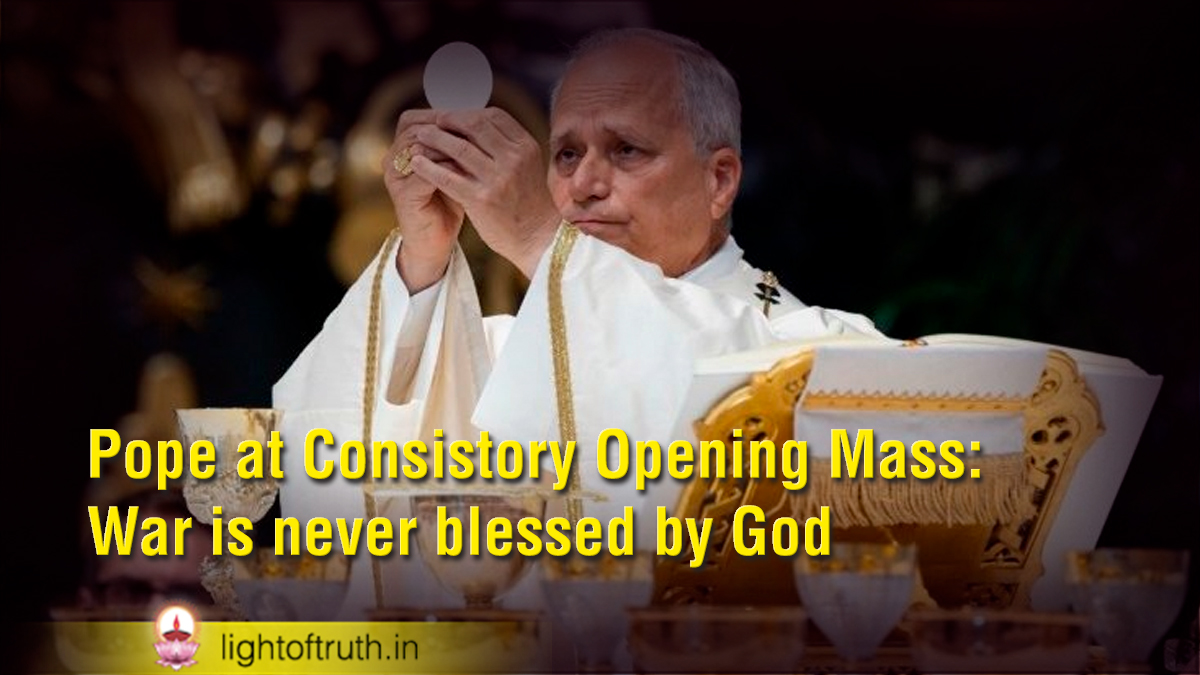
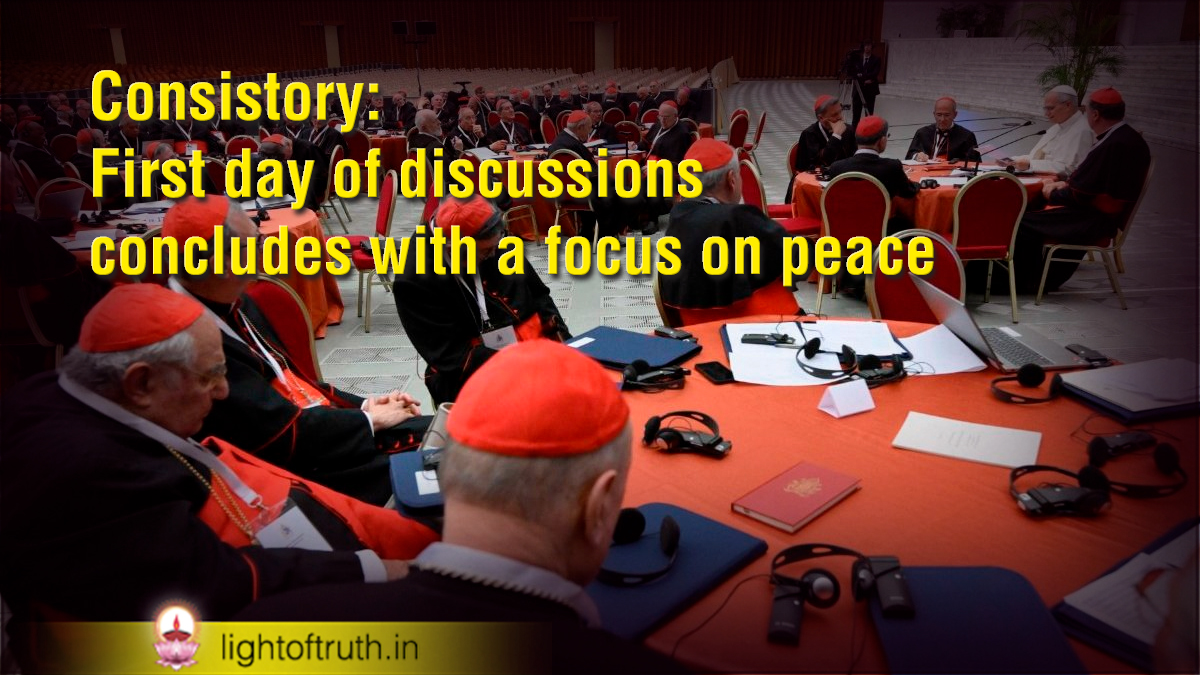
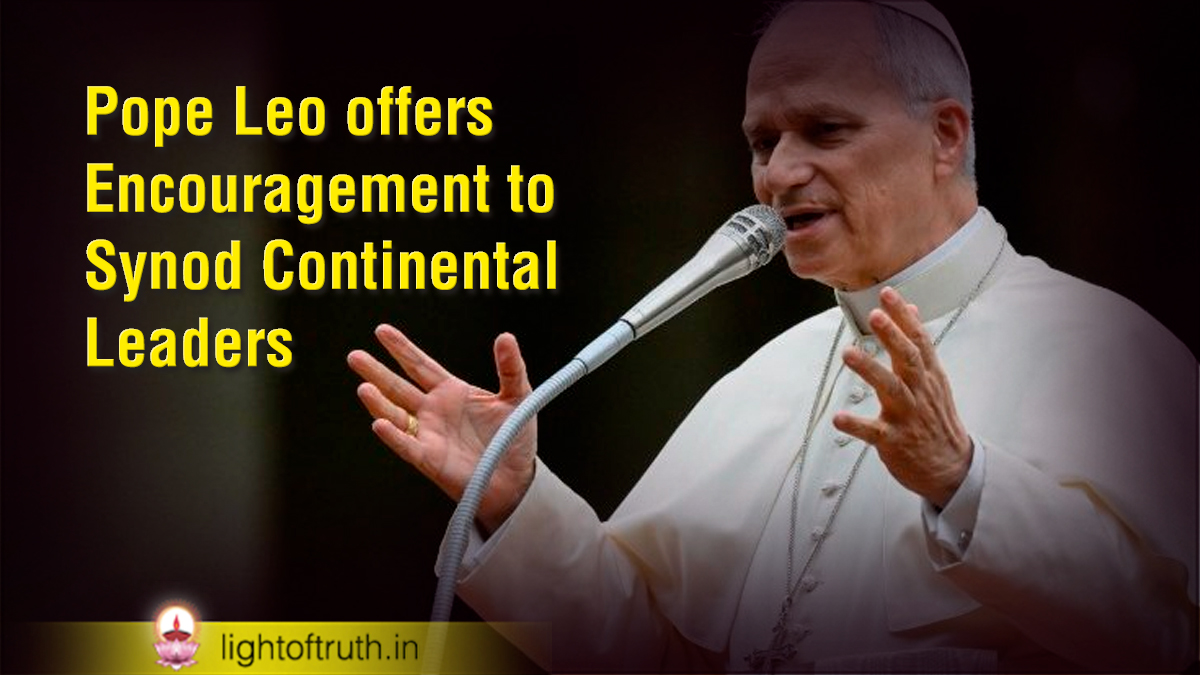
Although it was not a specific topic of the Extraordinary Consistory held on January 7–8, Pope Leo XIV took the opportunity to speak to the roughly 170 cardinals—both electors and non-electors—about a problem that “remains a real wound in the life of the Church in many places”: the sexual abuse crisis. This is a topic Pope Leo, like his predecessors, has repeatedly highlighted in recent months. Even in the Consistory—focused on the themes of synodality and mission, chosen by majority vote of the cardinals—he did not fail to mention this issue. He addressed it in his concluding speech after the two day meeting, the full text of which was published on January 10.
In his address, the Pope stressed that “abuse itself causes a deep wound, which may last a lifetime; but often the scandal in the Church is that the door was closed and victims were not welcomed or accompanied with the closeness of authentic pastors.”
The Holy Father shared the testimony of a victim he had spoken with recently: “She told me that the most painful part for her was that no bishop wanted to listen”. There, Pope Leo said, “listening is profoundly important.”
Listening is also a necessary practice between the Pope and the College of Cardinals. For this reason, the Holy Father asked the cardinals to continue the work begun at the Consistory, to deepen mutual understanding, strengthen dialogue, and implement synodality. Pope Leo announced plans to “continue the meetings” in the future, possibly extending them to three or four days once a year. As some groups suggested, the meetings could consist of a day of reflection, prayer, and encounter, followed by two or three days of work. For this year, he scheduled a second Consistory at the end of June, near the Solemnity of Saints Peter and Paul.