
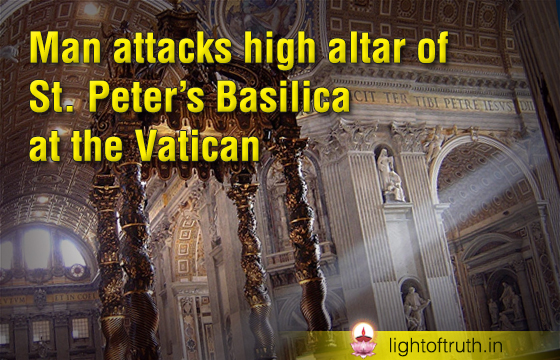
A man desecrated the main altar of St. Peter’s Basilica in the Vatican on February 07 by climbing on top of it and throwing six candelabras that were on the altar to the ground, according to the Italian news agen-cy ANSA. After throwing the candelabras, the man began to remove the altar cloth, as can be seen in a video posted on social media. The subject was then quickly detained by security agents.
According to ANSA, the suspect, of Romanian origin, was detained by the Vatican Police, after which he was identified and charged by agents of the Vatican Inspecto-rate. “This is an episode of a person with a serious mental disability, who has been detained by the Vatican Police and then placed at the disposal of the Italian authorities,” the director of the Holy See Press Office, Matteo Bruni, told ANSA.
According to the Spanish newspaper ABC, the man was arrested because the basilica’s alarm was activated when he stood on the altar. In 2023 a similar incident was recorded when a man climbed the high altar and undressed, after which he was also arrested. The Code of Canon Law, the law that regulates the Catholic Church, establishes in canon 1210 that “in a sacred place” such as St. Peter’s Basilica, “only those things which serve the exercise or promotion of worship, piety, or religion are permitted in a sacred place; anything not consonant with the holiness of the place is forbidden.”
Category Archives: International
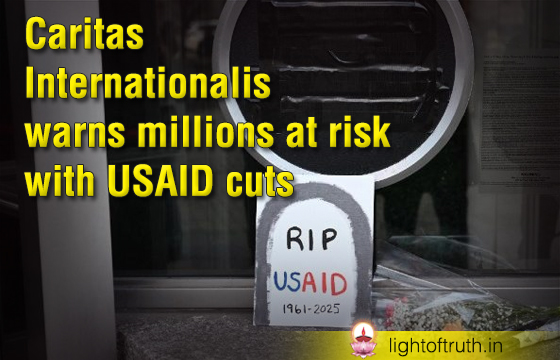
Caritas Internationalis warns millions at risk with USAID cuts
Caritas Internationalis’ Secretary General, Alistair Dutton, has warned against the decision to close USAID-funded programmes and offices around the world, saying the sudden shutdown “will kill millions of people and condemn hundreds of millions more to lives of dehumanising poverty.” With an annual budget of over 40 billion dollars, USAID has funded humanitarian and development aid in some 120 countries, especially the world’s poorest.
In a statement issued on Monday 10 February, Alistair Dutton said the decision marks a grave threat “to people’s God-given human dignity” and “will cause immense suffering.” He also noted the result “presents massive challenges for all of us in the global humanitarian community, who will have to completely reassess whom we can continue to serve and how.” He further warns “the resulting harm to people, particularly the poorest, will be catastrophic, threatening the lives and dignity of millions.”
Contacted by telephone while in Burkina Faso, Alistair Dutton deplored the very real consequences of this suspension of aid that is causing “complete uncertainty for the humanitarian system worldwide.” He explained how “ships are arriving in ports with cargo, but we can’t pay to unload them, store their contents or transport them to the people who need them.”
In West Africa, for example, over six million people will not receive their medi-cines. The same applies to the 750,000 people facing starvation in Sudan or refugees in camps in Syria, where essential supplies of water are provided, without which “critical health problems immediately arise, which can kill millions of people…the people who need help are going to suffer enormously, if they don’t simply die.”
USAID has been an “essential partner” of Catholic relief efforts for over 60 years. Faced with this financial but also human deficit in meeting the massive humanitarian needs worldwide, Caritas Internationalis has appealed for a reconsideration of the cuts and for governments, international agencies, and stakeholders to work together to concretely reaffirm the “commitment to compassion and peace by supporting the most vulnerable people around the world.” Immediate efforts are underway to reduce the impact of the freeze and ensure continued support for as many vulnerable people as possible since, as Alistair Dutton says, ”the lives and dignity of millions hang in the balance.”
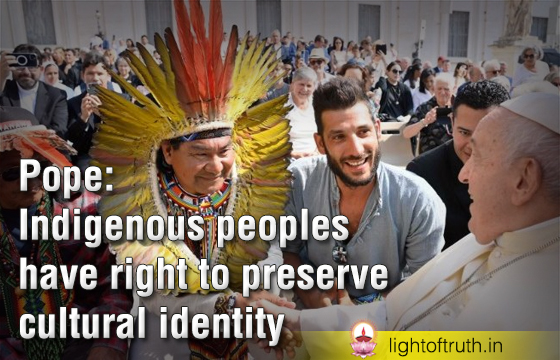
Pope: Indigenous peoples have right to preserve cultural identity
“Land, water, and food are not mere commodities but the very foundation of life and the bond of [indigenous] peoples with nature.” Pope Francis offered that remin-der in a message sent to the 7th Indigenous Peoples’ Forum orga-nized by the UN’s International Fund for Agricultural Develop-ment (IFAD). The forum takes place in Rome on February 10-11 under the theme: “Indigenous Peoples’ right to self-determina-tion: a pathway for food security and sovereignty.”
In his message, the Pope said indigenous peoples have the right to preserve their identity but noted that this right is severely threatened by the increasing sei-zures of farmland by multinational corporations and states. These seizures cause much harm to indigenous peoples and put at risk communities’ right to a dignified life, he lamented.
“The defense of the right to preserve one’s culture and identity requires the recognition of the value of their contribution to so-ciety, as well as the safeguarding of their existence and the natural resources essential for their livelihood,” he said.
Pope Francis added that de-fense of indigenous peoples’ rights is a matter of justice, as well as a way to guarantee a sustainable future for all humanity. “Driven by our sense of belonging to the human family,” he said, “we can ensure that future generations enjoy a world in harmony with the beauty and goodness that guided God’s hands in creation.” The Pope praised the heritage of indigenous peoples, saying their ancestral traditions reveal a “horizon of hope in our present time, marked by intense and complex challenges and numerous tensions.”
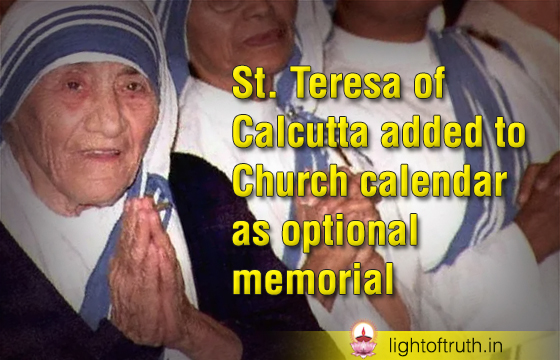
St. Teresa of Calcutta added to Church calendar as optional memorial
Pope Francis added the Sept. 5 feast of St. Teresa of Calcutta to the Catholic Church’s liturgical calendar as an optional memorial. The decree issued Feb. 11 by the Vatican noted the influence of St. Teresa’s spirituality around the world and said her name “continues to shine out as a source of hope for many men and women who seek consolation amid tribulations of body and spirit.”
The General Roman Calendar is the liturgical calendar of the Catholic Church, which denotes the dates of holy days and the feast days of saints commemorated annually. The Sept. 5 memorial of St. Teresa of Calcutta will now appear in the Church’s calendars and liturgical texts with specific prayers and readings to be used at Mass and the Liturgy of the Hours. Memorials rank third in the classification of feast days on the Catholic Church’s liturgical calendar. The memorial of St. Teresa of Calcutta will be an optional memorial, which means it is voluntary whether to observe it.
Irish Bishops: Healthcare should never lose sight of human dignity
As the Church marks the 33rd World Day of the Sick, on Feb-ruary 11, the Chair of the Irish Bishops’ Conference Council for Healthcare has reiterated that human dignity must remain at the core of healthcare practices. “Upholding the dignity and rights of each person is essential in healthcare,” remarked Bishop Michael Router, in a statement in which he expresses concern over the gradual erosion of this principle in Ireland.
Welcoming Pope Francis’ recent message for the observance of the Day, the Auxiliary Bishop of Armagh highlights the Jubilee theme of hope as a sustaining force in times of suffering. Pope Francis – he explains – calls for a renewed perspective on illness: not as an isolated struggle “but as an opportunity to encounter God, to receive His gifts, and to share His love with others.” The presence of caregivers, medical professionals, family members, or friends, says Bishop Router, is a tangible expression of that love showing that “suffering is not an isolated journey but one that unites us in faith, love, and solidarity.”
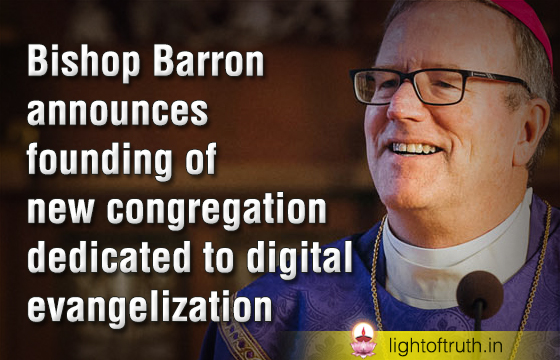
Bishop Barron announces founding of new congregation dedicated to digital evangelization
In an era where the digital world has become the new public square, Bishop Robert Barron is taking a bold step to ensure the Catholic Church not only has a voice in the conversation but leads it. On January 15, Word on Fire, Barron’s influential media apostolate, announced an ambitious new initiative: the founding of a religious order dedicated entirely to evangelizing through digital platforms.
This development is not just another expansion of Word on Fire–it represents a new model of priestly life, one that places digital mission work at its core. The move signals a recognition that the internet is not simply a tool for spreading the Gospel but a mission field in itself, one that demands a dedicated response from the Church.
Barron’s journey as a digital priest began modestly in the late 1990s with a series of Sunday Gospel reflections aired on a Chicago radio station at an inconvenient early morning hour. Realizing the limitations of radio, a friend suggested he post his homilies online. What began as a simple website soon evolved into Word on Fire, an international multimedia ministry that has reached millions.
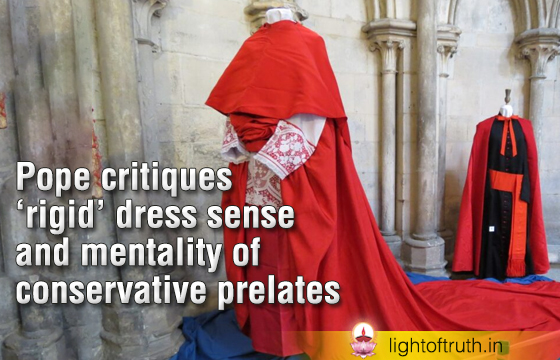
Pope critiques ‘rigid’ dress sense and mentality of conservative prelates
The Pope has taken conser-vative bishops and cardinals to task for the way they dress, suggesting their adherence to ostentatious styles reveals a “rigidity” of mind that in some cases may even reach a level of “mental instability” and “emotional deviation.”
The Pope made his criticism of the sartorial preferences of traditional-leaning prelates in his autobiography titled Hope, which was published on 14 January. Their “rigidity”, he writes, “is often accompanied by elegant and costly tailoring, lace, fancy trimmings, rochets”, which he described as amounting to “clerical ostentation.” The Pope then adds: “These ways of dressing up sometimes conceal mental imbalance, emotional deviation, behavioural difficulties, a personal problem that may be exploited.”
In his autobiography, Francis stresses how he avoided the tri-mmings and finery of papal tra-dition once he was elected in 2013. “They offered me a beautiful golden cross and I said: ‘I have this nickel silver one from my episcopal ordination, I’ve been carrying it for 20 years,’” he writes. He also notably turned down the papal red shoes favoured by his predecessor, Pope Benedict XVI. “The red shoes? No, I have orthopaedic shoes. I’m rather flat footed,” he said at the time, he recalls in his book. “Likewise, I didn’t want the velvet mozzetta, nor the linen rochet…They were not for me. Two days later they told me I would have to change my trousers, wear white ones. They made me laugh. ‘I don’t want to be an ice-cream seller,’ I said. And I kept my own,” he writes.
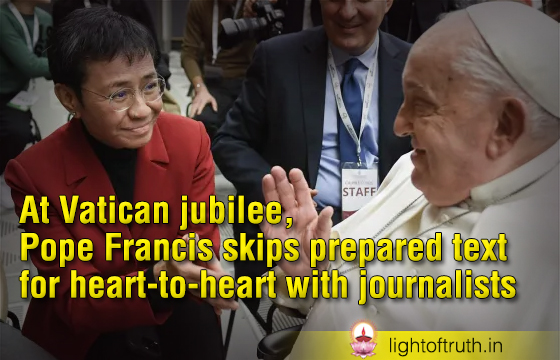
At Vatican jubilee, Pope Francis skips prepared text for heart-to-heart with journalists
“Communication means stepping outside ourselves a bit to give something of myself to another,” Pope Francis told hundreds of communications professionals on Jan. 25, speaking spontaneously after setting aside his prepared remarks at the Vatican’s Jubilee of the World of Communications.
“In my hands, I have a nine-page speech,” the pope said with a smile to participants gathered in the Vatican’s Paul VI Hall. He announced to an applauding audience that he would have this document distributed but only speak briefly, given the hour and the fact that everyone was hungry.
“To know how to communicate is a great wisdom, and I am happy that this jubilee of communicators is taking place. Your work is one that builds. It builds society and it builds the Church,” the pope said, provided journa-lists are truthful and “real” in their interior life.
The Jan. 25 encounter with communicators was one of several Saturday jubilee audiences of 2025, following a first meeting with pilgrims. The event began with a dialogue featuring Nobel Peace Prize laureate Maria Ressa and author Colum McCann, moderated by veteran Italian journalist Mario Calabresi.
The pope’s prepared message, later shared with participants, addressed several pressing concerns facing modern communications. The text called attention to journalists who died covering conflicts in the past year, noting that more than 120 media professionals lost their lives in 2024. The written remarks also warned against what the pope termed “brain rot” caused by constant social media scrolling, calling for greater media literacy and critical thinking, especially among young people. “We need courageous entrepreneurs, courageous information engineers, so that the beauty of communication is not corrupted,” the prepared text stated.
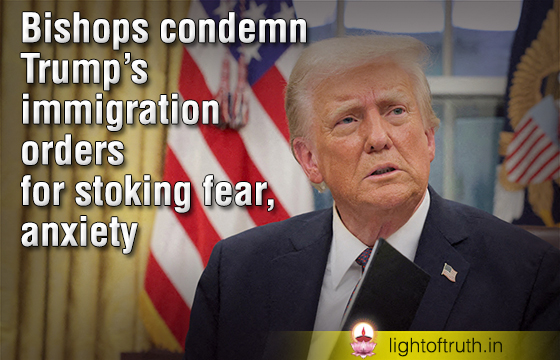
Bishops condemn Trump’s immigration orders for stoking fear, anxiety
Catholic advocacy groups, southern border dioceses and the U.S. Conference of Catholic Bi-shops are expressing deep concern after President Donald Trump signed a series of executive orders targeting immigration on his first week in the Oval Office.
Particularly troubling to these groups are his actions tied to the declaration of a national emer-gency at the southern border and his attempt to end birth right citizenship, a right long upheld under the 14th Amendment of the Constitution to anyone born on American soil, regardless of their parents’ immigration status.
Federal immigration autho-rities also will now be allowed to conduct enforcement actions in traditionally protected areas, including churches and schools, marking a sharp departure from previous policies, according to a Jan. 21 statement by the Depart-ment of Homeland Security, which said the move empowers agents to make arrests without restrictions tied to “so-called ‘sensitive’ areas.”
“Some provisions contained in the Executive Orders, such as those focused on the treatment of immigrants and refugees, foreign aid, expansion of the death penalty, and the environment, are deeply troubling and will have negative consequences, many of which will harm the most vulnerable among us,” said Abp Timothy Broglio, president of the U.S. bishops’ conference.
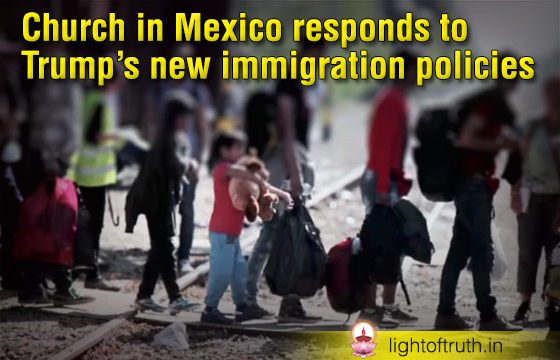
Church in Mexico responds to Trump’s new immigration policies
The Catholic Church in Mexi-co reiterated its commitment to supporting migrants in the country after U.S. President Donald Trump signed executive orders declaring a national emergency at the U.S. southern border and tightening immigration policies.
Among the measures announced are the reactivation of the “Remain in Mexico” policy, mass deportations, and an order seeking to eliminate U.S. citizen-ship by birth right. In this context, the bishops of Mexico, through a statement signed by Bishop Eugenio Lira Rugarcía, head of migration ministry, and Bishop Héctor Mario Pérez Villarreal, secretary-general of the Mexican Bishops’ Conference (CEM), expressed “solidarity, our pra-yers, and our determination to continue serving migrants.”
“In the midst of a harsh winter, many people and families on the move are experiencing moments of anguish, pain, fear, and uncertainty in the face of the provisions of the United States federal government related to migration,” the bishops lamented.
However, they assured that they will continue to strive “so that in our homes, shelters, and reception centers [migrants] find shelter and food; support in caring for their physical, emotional, and spiritual health; assistance in contacting their families and obtaining the documentation they need; [and] legal advice and support for the procedures they need to carry out.”
“We are convinced that, united, we can offer hope to every-one,” the bishops said, empha-sizing their willingness to colla-borate with authorities and civil organizations in the effort to “welcome, protect, promote, and integrate our migrant and deported brothers and sisters.” The bishops also called on society to support the works of the Catholic Church and migrants and deportees.