
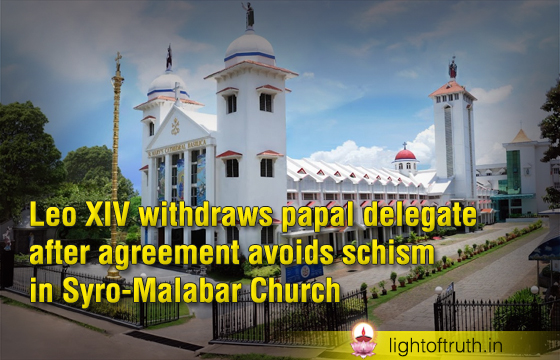
The specter of schism has hovered in recent years over the Metropolitan Archeparchy of Ernakulam-Angamaly of the Syro-Malabar Church in India—one of the 24 Eastern Churches in full communion with the Catholic Church. Parts of the clergy and faithful of Ernakulam-Angamaly, the largest Indian episcopal see in terms of the number of priests as well as the see presided over by the bishop in charge of the entire Syro-Malabar Church, did not accept the 1999 reform of the liturgical rite, which was later confirmed at the 2021 Synod of the Syro-Malabar Church.
Pope Leo XIV appears to have resolved the controversy by terminating the 2023 appointment of Archbishop Cyril Vasil’ as papal delegate to the Syro-Malabar Church to mediate the dispute. According to Vatican News, the official Vatican website, this decision by the pope “concludes the Holy See’s mediation work among the Syro-Malabars.”
Martin Bräuer, an expert at the Ecumenical Research Institute in Bensheim, Germany, told ACI Prensa, CNA’s Spanish-language news partner, that “Rome now considers the conflict over and therefore no longer needs a papal representative. Secondly, the agreement reached within the [Syro-Malabar] Church without the direct mediation of Archbishop Vasil’ is recognized.”
Indeed, the news comes after new measures to implement the liturgical reform approved by the 2021 Synod came into effect on July 3, the feast of St. Thomas the Apostle—patron saint of the Syro-Malabar Church. The compromise now reached allows the parishes of Ernakulam-Angamaly to celebrate the liturgy with the priest facing the faithful (versus populum), adhering to the practice of the Roman Rite, provided that at least one Sunday or feast day Mass is celebrated according to the traditional form, that is, with the priest facing the altar (ad orientem) during the consecration. According to the 2021 reform of the rite, during Mass the priest was required to address the people during the first part of the celebration, but the liturgy of the Eucharist was celebrated facing the altar.
This case has been, according to the expert, an acid test of the delicate balance between papal authority and the autonomy of the Eastern Churches. It was St. John Paul II who, in 1998, gave the Syro-Malabar bishops authority to resolve liturgical conflicts.
According to Bräuer, “the Syro-Malabar Church first attempted to resolve the conflict internally. When that failed, Rome intervened, but that too was unsuccessful.” The papal delegate, Archbishop Vasil’, who belongs to the Byzantine rite and had worked in the Dicastery for the Eastern Churches, was widely criticized for his authoritarian style. “He didn’t know how to find the right tone with the parties in conflict,” Bräuer commented.
In this regard, it was the metropolitan vicar, Archbishop Joseph Pamplany, successor to the apostolic administrator Bishop Bosco Puthur, who managed to move toward a solution thanks to a strategy of open communication and active listening.
Asked about the value of this experience for other liturgical conflicts in the Church, Bräuer said that the liturgy is “prayed dogma,” that is, an “expression of the Church’s faith” that can take many forms, as seen in the Catholic Church: for example, “in the West, with the ancient Mozarabic rite, and also with inculturated forms of the Mass in the Congo, Australia, or Mexico.” “Liturgical diversity enriches the Church, but fidelity to tradition does not mean stubbornly clinging to the past, but rather accepting change with discernment,” he stated.
Category Archives: International
Six million visitors to Notre Dame Cathedral in six months
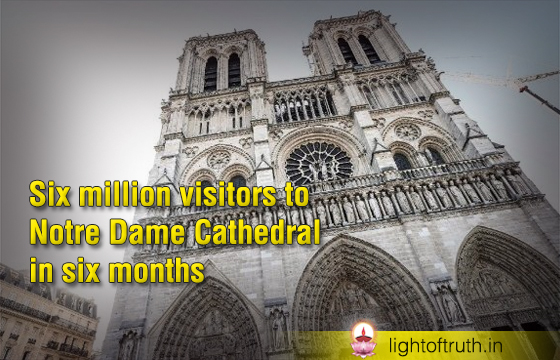
Five years after a fire destroyed the famed Parisian Cathedral of Notre Dame, its doors opened for pilgrims and visitors to once again marvel at its French Gothic architecture. Now, six months since the reopening on December 7, 2024, a total of 6,015,000 people have gone through the Cathedral’s doors, as of June 30, 2025. On July 6, the French newspaper, La Tribune Dimanche, reported that, on average, 35,000 people visit the Cathedral of Notre Dame each day.
If the numbers continue on this path, attendance could reach 12 million by the end of 2025, which means it would knock the Eiffel Tower out of the top spot for most visited monuments in France. This figure would also exceed the pre-fire numbers when 11 million people visited the Cathedral each year.
However, work on the Cathedral is far from complete. Prior to the fire, restoration was scheduled for the chevet, the flying buttresses, and the Viollet-le-Duc’s sacristy. Plans for new stained-glass windows to be installed are set for 2026 and the Cathedral’s forecourt, green spaces, and front walkway are all slated for renovation, which will be finished in 2027.
Pope: AI development must build bridges of dialogue and promote fraternity
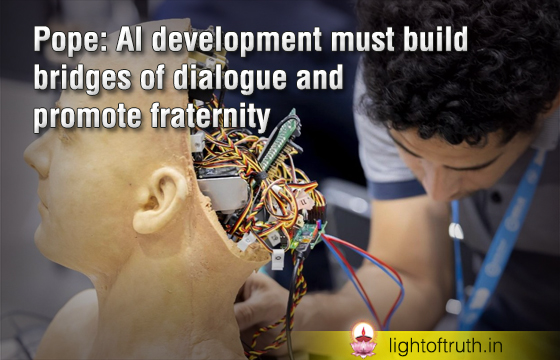
Pope Leo XIV encouraged nations to establish frameworks and regulations on AI so that it can be developed and used according to the common good, in a message sent on July 10 to the participants of the AI for Good Summit, taking place in Geneva, Switzerland, from July 8 to 11.
“I would like to take this opportunity to encourage you to seek ethical clarity and to establish a coordinated local and global governance of AI, based on the shared recognition of the inherent dignity and fundamental freedoms of the human person”, the message, signed by the Secretary of State, Cardinal Pietro Parolin, said.
The summit is organized by the United Nations’ International Telecommunication Union (ITU) and is co-hosted by the Swiss government. The event sees the participation of governments, tech leaders, academics and others who are interested and work with AI.
In this “era of profound innovation” where many are reflecting on “what it means to be human”, the world “is at crossroads, facing the immense potential generated by the digital revolution driven by Artificial Intelligence”, the Pope highlighted in his message.
“As AI becomes capable of adapting autonomously to many situations by making purely technical algorithmic choices, it is crucial to consider its anthropological and ethical implications, the values at stake and the duties and regulatory frameworks required to uphold those values”, the Pope underlined in his message.
He emphasized that the “responsibility for the ethical use of AI systems begins with those who develop, manage and oversee them” but users also need to share this mission. AI “requires proper ethical management and regulatory frameworks centered on the human person, and which goes beyond the mere criteria of utility or efficiency,” the Pope insisted.
Citing St. Augustine’s concept of the “tranquility of order”, Pope Leo highlighted that this should be the common goal and thus AI should foster “more human order of social relations” and “peaceful and just societies in the service of integral human development and the good of the human family”.
California Bishop dispenses migrants from Mass obligation due to raid fears
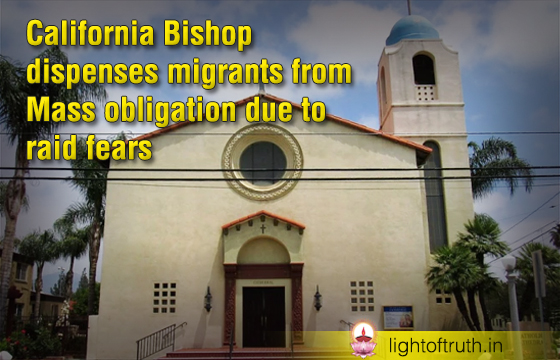
The Bishop of San Bernardino, California, Bishop Alberto Rojas, issued a decree on July 8, 2025, dispensing immigrant faithful from the obligation to attend Sunday Mass until further notice, in light of the “genuine fear” of potential immigration enforcement actions. “There is a real fear gripping many in our parish communities that if they venture out into any kind of public setting, they will be arrested by immigration officers. Sadly, that includes attending Mass,” Bishop Rojas said in a media statement accompanying the decree released on July 10. “I want our immigrant communities to know that their Church stands with them and walks with them through this trying time.”
On June 20, diocesan officials stated ICE agents entered two Catholic parish properties in Montclair and Highland, and detained multiple people in the parking lot of St. Adelaide Church in Highland, California. The director of communications for the Diocese of San Bernardino, John Andrews, said at the time that one male parishioner was taken into custody, adding the others detained were neither parishioners nor worked for the parishes.
These events have “only intensified” the fear of many migrant faithful, the Bishop explained in his recent message. He had already written a letter on June 23 in which he asked “political leaders and decision-makers to “reconsider and cease” immediately these tactics, in favour of an approach that “respects human rights and human dignity.”
The Bishop of San Bernardino, the sixth-largest Catholic diocese in the United States, emphasized that his decree seeks to alleviate the “burden” people may feel due to not being able to fulfil the Catholic obligation of Sunday Mass, considering “all the worry and anxiety” these individuals are experiencing. Bishop Rojas also underlined in the decree that pastors and other Church members “are to provide compassionate support to those affected” and ensure “that they feel welcomed and safe in communities.”
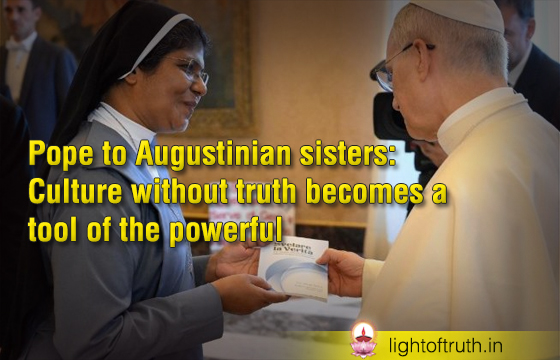
Pope to Augustinian sisters: Culture without truth becomes a tool of the powerful
“A culture without truth becomes a tool of the powerful”. Pope Leo XIV gave this consideration during a meeting with the Augustinian Sisters Servants of Jesus and Mary in the Apostolic Palace on July 5. He explained that “instead of freeing consciences, it confuses and distracts them according to the interests of the market, trends or worldly success”.
“You will be persevering in the following of Christ, who is ‘the way, the truth and the life’ and therefore the criterion of all our cultural initiatives”, the Pope emphasized.
The Augustinian Sisters Servants of Jesus and Mary were founded in 1827 by the Venerable Maria Teresa Spinelli, an Italian Augustinian sister who dedicated her life to teaching and helping young people. Today, the members of this religious order are present in nine countries spanning from the Philippines to Brazil. They follow in their foundress’ footsteps with educational projects, by assisting marginalized young people and women, and offering medical assistance.
Other than allowing Christ to be the guiding element for their mission, the Pope also offered the sisters two other suggestions in order for them to imitate their foundress in their work. You will “be patient in tribulations, because it is precisely in our trials that the Lord confirms his faithfulness; you will be brave in your mission, so that the educational work to which you dedicate yourselves may form wise minds and hearts capable of listening and to feel passion for humanity”, he explained. The Pope in fact urged the sisters to read St. Augustine’s text ‘De Magistro’, where he highlights “that outward teaching must always lead to an encounter with the inner Teacher, who is Jesus”.
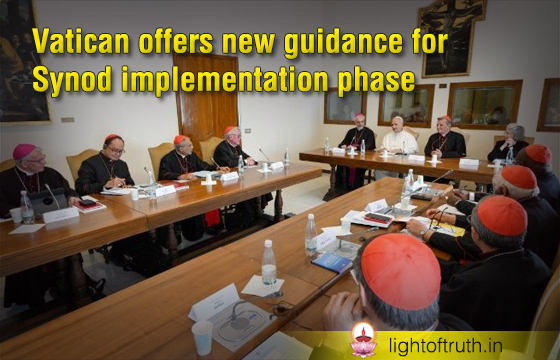
Vatican offers new guidance for Synod implementation phase
The General Secretariat of the Synod released “Pathways for the Implementation of the Synod”, which provides “an interpretive key for understanding the implementation phase of the Synod on Synodality.” Released on July 07, Pathways for the Implementation Phase of the Synod offers “local Churches throughout the world the world a shared framework that will make it easier to walk together” and promotes “the dialogue that will lead the whole Church to the Ecclesial Assembly,” set for October 2028 that will mark the culmination of the synodal process begun by Pope Francis in 2020.
Opening Pathways, Cardinal Mario Grech, the Secretary General of the Synod, notes that “the synodal form of the Church is at the service of its mission… it is the urgency of this mission that drives us to implement the Synod, a task for which all the baptized share responsibility.” He says that the General Secretariat of the Synod, which prepared the new document, is at the service of the local Churches, ready “to listen to them, support their efforts, and, above all, contribute to animating the dialogue and exchange of gifts between the Churches.”
Pathways opens with an explanation of the implementation phase and its objectives, and goes on to describe the participants of the implementation phase, along with their tasks and responsibilities; to suggest how to engage with the Synod’s Final Document, the main point of reference for this phase of the Synod journey; and to offer advice on methods and tools that “can help shape our path during the implementation phase.”
“We convey” these pathways, says Cardinal Grech, “to the entire People of God, who are the subjects of the synodal journey, and in particular to the Bishops and Eparchs, to the members of the synodal teams, and to all those who are involved in various ways in the implementation phase.” The aim, he adds, “is of making them feel our support and continuing the dialogue that has characterized the entire synodal journey.”
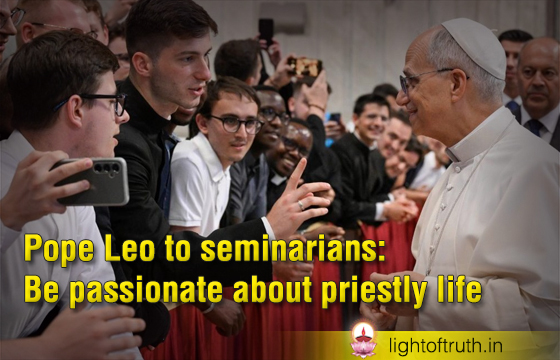
Pope Leo to seminarians: Be passionate about priestly life
Seminarians who have come to Rome for the Jubilee are not only pilgrims, but witnesses of hope, who “fuel the flame of hope in the life of the Church”, Pope Leo said on June 24.
In a meditation delivered in St Peter’s Basilica, Pope Leo told seminarians they are called to bear witness “to Christ’s gratitude and gratuitousness, to the exultation and joy, the tenderness and mercy of His Heart, to practice a style of welcome and closeness, of generous and selfless service, allowing the Holy Spirit to ‘anoint’ their humanity even before ordination.”
The Holy Father emphasized, too, the importance of formation “centred on the heart”, of learning “to love as Jesus loved”. This must be done through the development of the interior life, the first work of discernment, and involves returning to the heart, where we find “traces of God” and where God speaks to us.
Pope Leo said that formation of the interior life involves recognizing the deepest sentiments of the heart, “which help you discover the direction of your life.” He noted that the “privileged path” that leads to interiority is prayer, because without an encounter with God, “we cannot truly know ourselves”. And he invited them to invoke the Holy Spirit frequently, “so that He may shape in you a docile heart, capable of perceiving God’s presence” in nature, art, literature, music, and science.
“Above all”, Pope Leo said, “learn how to listen, as Jesus did, to the often silent cry of the little ones, of the poor and the oppressed, and of the very many people, especially young people, who are searching for meaning in their lives.” The Holy Father called on seminarians to learn to preserve and meditate on the events of their lives, as Mary did, in order to learn “the art of discernment”.
Finally, Pope Leo invited seminarians to be meek and humble of heart, as Jesus was; and like Paul, to adopt the sentiments of Christ in order to grow in human maturity, and to reject all pretence and hypocrisy. The task of seminarians, the Pope said in conclusion, is to “never settle for less, never be satisfied, not be passive recipients, but to be passionate about the priestly life, living in the present and looking to the future with a prophetic heart”.
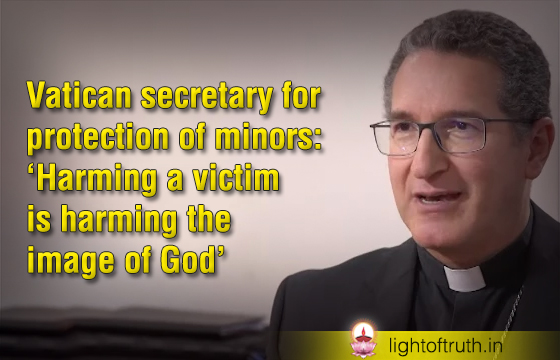
Vatican secretary for protection of minors: ‘Harming a victim is harming the image of God’
Auxiliary Bishop Luis Manuel Alí Herrera, secretary of the Pontifical Commission for the Protection of Minors (PCTM, by its Italian acronym), contends that instead of a single reparative action, victims of abuse within the Church require “an in-depth process that listens to, welcomes, and accompanies.”
Alí Herrera explained that the harm done to such victims is “disastrous” as it harms “the very image of God, the [victim’s] relationship with the Church, interpersonal relationships, and one’s very identity. A victim sees their life plans and their ability to bounce back damaged,” Alí explained in an interview with “EWTN Noticias,” the Spanish-language broadcast edition of EWTN News.
The auxiliary bishop of Bogotá — who, along with the other members of his team, met with Pope Leo XIV two weeks ago — stated that the voice of survivors is at the centre of the Church’s work and that the presence of victims within the commission itself is key to moving toward a true culture of prevention. “We have victims on the pontifical commission; they are part of it as members. Their voice is essential to knowing how to speak to all victims and survivors, and also to guiding our responses in prevention processes,” he noted.
Since its creation in 2014, the PCTM, led by Cardinal Seán O’Malley, has been one of the Church’s most practical instruments for combating sexual abuse and promoting a culture of prevention. The prelate shared that his pastoral perspective on this issue changed completely after hearing the testimony of a person who had suffered abuse. “I had read, studied, and analysed it. But it’s another thing entirely to be faced with the real pain, the tears, the despair of someone who has been deeply wounded. That transformed me,” he related.
For the commission’s secretary, a key part of the work of prevention begins with adequate psycho-affective formation of a candidate for the priesthood beginning at the very outset of seminary. “Affective, communal, and sexual formation must be present from the preparatory phase to the end of theological formation. It must be across the board, continuous, and closely connected to the emotional world and interpersonal relationships,” he noted.
Regarding the impact of the abuse crisis on priestly vocations, Alí acknowledged that it has had painful but also positive effects. “It has had an impact, because many pull back [from considering a priestly vocation] when they see news of cases. But it has also helped, because it has forced us to rethink vocation ministry and recognize that the priest is, above all, a human person, with wounds, crises, and emotions that he must learn to integrate,” the bishop explained.
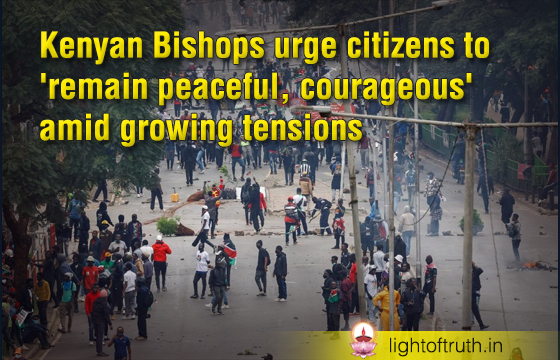
Kenyan Bishops urge citizens to ‘remain peaceful, courageous’ amid growing tensions
In a statement issued on 24 June, the Bishops of Kenya said they are seriously concerned about the grave disregard for human life in the country. The statement was released ahead of protests in memory of the victims of last year’s demonstrations against the Finance Law. The Vatican’s Fides news agency reports that the Bishops’ statement laments that episodes of mysterious disappearances, extrajudicial killings, and violent intimidation have become too frequent.
In their statement, the Bishops recall the names of some of those killed or disappeared, emphasizing that these are not just names, but “brothers, sisters, priests, sons, daughters, and friends who deserve protection and justice.” In particular, the Bishops highlighted the recent murder of Boniface Kariuki, a protester “shot at close range by a police officer.” The 21-year-old was shot dead during demonstrations demanding justice for the death of blogger Albert Ojwang in a security cell. “Security officers have taken an oath to protect the population and not to harm it,” the statement reads.
In the face of the serious economic problems they face, the bishops ask the authorities to listen to the protests of young people, “Generation Z,” who, they say, are expressing legitimate demands. While recognizing the legitimacy and seriousness of resolving these issues, the Bishops urge young people not to resort to violence and to demonstrate peacefully. “Remain peaceful, sincere, and courageous,” they said. “The Church loves and cares for you. Beware of those who seek to manipulate or influence you for evil purposes.”
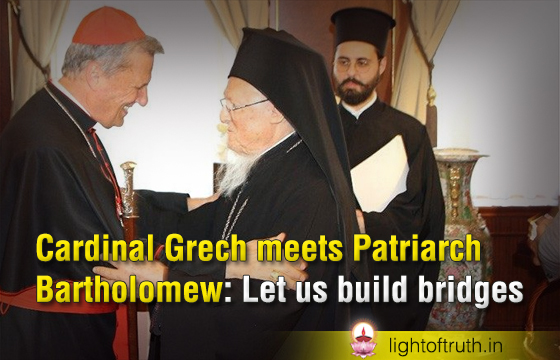
Cardinal Grech meets Patriarch Bartholomew: Let us build bridges
A fraternal meeting—marked by an embrace reminiscent of those often exchanged with Pope Francis—took place on the afternoon of June 17 at the Phanar between Ecumenical Patriarch of Constantinople Bartholomew I and Cardinal Mario Grech, Secretary General of the Synod, who is currently in Istanbul for the meeting of the General Secretaries of the Bishops’ Conferences of Europe (CCEE).
During the gathering, Cardinal Grech presented to all participants the process accompanying the implementation phase of the Synod. His itinerary also included a stop in Nicaea, present-day Iznik—the site of the First Ecumenical Council, whose 1700th anniversary is approaching, and where a visit by Pope Leo XIV is anticipated, continuing the intention of his predecessor, Francis.
In his address to the participants of the CCEE meeting, Patriarch Bartholomew recalled Pope Francis and expressed his “great anticipation” for a possible visit by Pope Leo XIV. First, the Patriarch conveyed his gratitude “for the personal friendship and the unwavering commitment of Pope Francis” (whom he described as “a true friend of Orthodoxy”), noting that his pontificate “has been a time of warmth and mutual encouragement.”
Patriarch Bartholomew dedicated significant attention to the theme of dialogue—ecumenical and interreligious—especially in “a time marked by divisions, fear and violence” when “we are called to be builder of bridges, not walls.” In particular, he underlined the importance of the relationship with the Roman Catholic Church, and the theological dialogue that resumed nearly half a century ago following the revocation of mutual anathemas in 1965.
This relationship is essential to pursue “a steady and serious path of encounter”—a journey that, while not without challenges, is also “marked by moments of grace, deepening understanding, and a sincere desire for the unity that Christ wills.”