
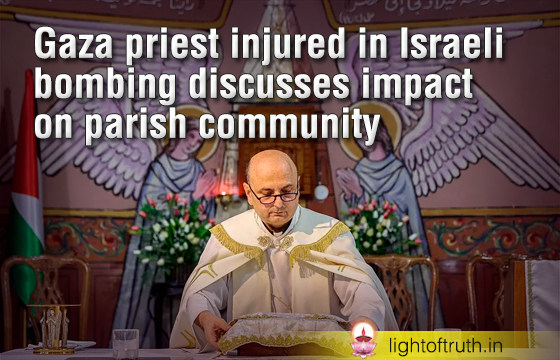
“Thanks be to God more people weren’t harmed,” said Father Gabriel Romanelli in an exclusive interview with EWTN on July 24 in the wake of the July 17 bombing of his parish, Holy Family Church in Gaza, which left three dead and 15 wounded, including himself.
“It was a shocking experience,” Romanelli told “EWTN Noticias” in the Spanish-language inter-view, noting that while the parish grounds were struck toward the beginning of the war in December 2023, last week’s attack marked the first time the church itself was hit. The front of the church was hit in a strike that Israeli officials have said was an accident. “That iconic cross you’ve seen – it’s about 2 meters [6.5 feet] tall – was heavily damaged,” the priest said of the crucifix fixed atop the church structure. “Shrapnel flew in all directions,” he recounted.
“The area is quite small, and while we hear bombings daily and metal fragments often fall, there hadn’t been such a severe incident since the war began,” Romanelli continued, adding: “The recent strike has left a deep mark.”
Romanelli sustained an injury to his leg during the strike, which he shared is healing despite “a minor infection.” Of the others injured, Romanelli revealed only two are now no longer in life-threatening condition: one who suffered a punctured leg and another who sustained internal organ damage.
Category Archives: International
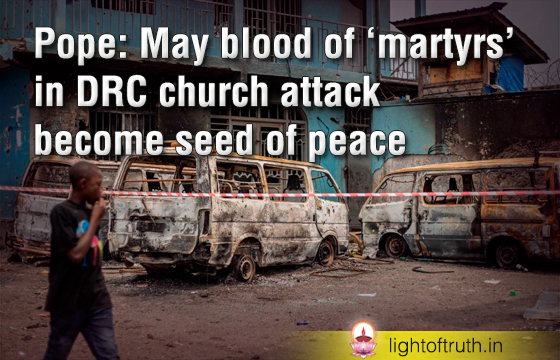
Pope: May blood of ‘martyrs’ in DRC church attack become seed of peace
“May the blood of these martyrs become a seed of peace, reconciliation, fraternity, and love for the Congolese people,” the Pope writes in his message following a brutal attack on a Catholic Church in Komanda town in the Democratic Republic of Congo. Nearly 40 people were killed Sunday in eastern Congo’s Ituri province when rebels stormed a Catholic church during a vigil and opened fire on worshippers. At least 38 people, including women and children, were confirmed dead in the church, while another five were killed in a nearby village. In a telegram addressed to Archbishop Mugalu, President of the Congolese Bishops’ Conference on the Pope’s behalf, Cardinal Pietro Parolin says, “His Holiness Pope Leo XIV learned with dismay and deep sorrow of the attack perpetrated against the Parish of Blessed Anuarite in Komanda, which caused the death of several faithful gathered for worship.” This tragedy, he continues, “calls us even more urgently to work for the integral human development of the martyred population of that region.”
According to Congolese authorities, the attacks in Komanda town in the conflict-battered region were carried out by the Allied Democratic Force, a rebel group backed by the Islamic State that has mostly targeted villagers in eastern Congo and across the border in Uganda.
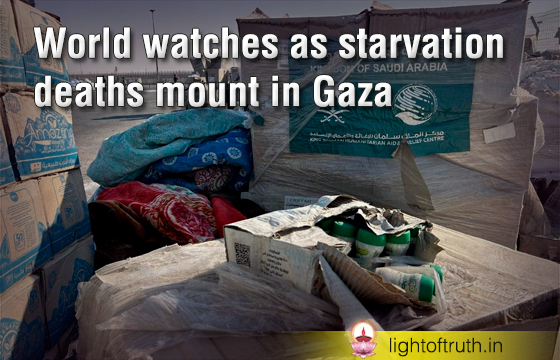
World watches as starvation deaths mount in Gaza
The rising toll of malnutrition in Gaza is drawing global concern, the total number of deaths from starvation in the enclave has reached 147 — 88 of them are children, health officials say. However, more than 120 trucks carrying food and humanitarian aid entered the Gaza Strip on July 27, marking the first major delivery in weeks amid a declared tactical pause in fighting. The aid convoy was coordinated by the United Nations and international relief organizations. Some aid was also air dropped into the enclave at the weekend – but it was a fraction of Gaza’s urgent needs.
Humanitarian organisations warn that while the aid was a positive step, far greater volumes were needed to prevent famine and a deepening health crisis. A total of 49 Qatari aid trucks arrived in Egypt and Jordan on Sunday, delivering humanitarian assistance to the Palestinian people, the Foreign Ministry announced. Provided by the Qatar Fund for Development with support from Qatar Charity and the Qatar Red Crescent, the aid is being handed over to the World Food Programme for distribution in Gaza via the Rafah and Kerem Shalom crossings. The shipment includes 4,704 food parcels, 200 tons of supplies, 174 tons of flour, and 5,000 units of infant formula.
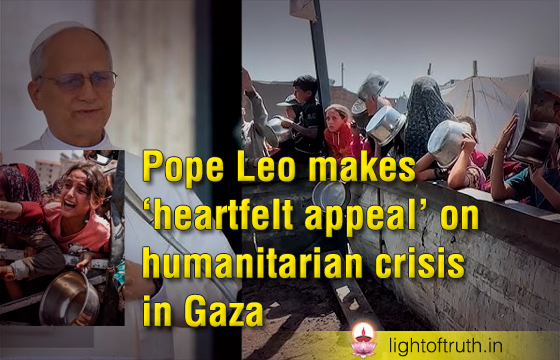
Pope Leo makes ‘heartfelt appeal’ on humanitarian crisis in Gaza
Pope Leo XIV has said that he is following the humanitarian crisis in Gaza with “great con-cern” while also renewing his “heartfelt appeal for a ceasefire.” Speaking on July 27 in St. Peter’s Square after giving his Angelus address, the Pope described how the civilian population in Gaza is being “crushed by hunger and continues to be exposed to viol-ence and death.”
His comments come shortly after the Israeli military began a system of pausing military ope-rations for limited periods – 10 hours a day – in three populated areas of the Gaza Strip in order to facilitate humanitarian assis-tance. On July 25, the UN Office for the Coordination of Humani-tarian Affairs (OCHA) said that the starvation crisis is deepening across Gaza.
Pope Leo in his address also renewed his “heartfelt appeal for a ceasefire” and called for the release of hostages and full respect of humanitarian laws. “Every human person has an intrinsic dignity conferred on him or her by God himself: I urge the parties in all conflicts to recognise it and to stop any action contrary to it,” said Pope Leo. “I urge you to negotiate a future of peace for all peoples and to reject anything that could jeopardise it.” He added: “I entrust to Mary, Queen of Peace, the innocent victims of conflicts and the rulers who have the power to put an end to them.”
Church in Mexico warns of demographic change, calls for protection of families
The Catholic Church in Mexico called on Latin American society and authorities to care for the family, emphasizing that “protecting the family is prote-cting the future of our society.” In a recent editorial in its weekly publication Desde la Fe (From the Faith), the Primatial Arch-diocese of Mexico City noted that the region is facing “a profound and silent demographic transfor-mation, but at an accelerated pace, and its consequences are already being felt in the social fabric.”
The reflection is based on the study “Changes in Demographic Structures,” prepared by the Net-work of Latin American Univer-sity Institutes on the Family, which examines new forms of family organization in the region. According to the editorial, the report’s conclusions show that “birth rates are steadily declin-ing, marriages are decreasing, divorces are increasing, single-person households are multiply-ing, and an aging population has ceased to be a distant threat and has become a palpable reality.”
Given this scenario, the arch-diocese called for people to view the phenomenon not merely as a matter of numbers but as a reality “that profoundly transforms daily life, human relationships, and the very foundations of coexistence.” “The family, understood as the primary nucleus of society, is the great protagonist – and also the greatest victim – of this transition. When bonds weaken, when loneliness replaces belonging, and when aging is not accompanied by structures of support and affection, the result is a more fragmented, more vulnerable, and less resilient society,” the editorial stated.
The archdiocese also high-lighted that the data portray a region where “aging is occurring without sufficient generational offset and with increasingly fragile family ties” and warned that “the number of deaths now exceeds the number of births.” The archdio-cesan publication also warned that “without strong family structures – based on love, commitment, co-responsibility, and mutual care – the entire society deteriorates” and urged authorities to ensure that public policies “must treat the family as a social priority.”
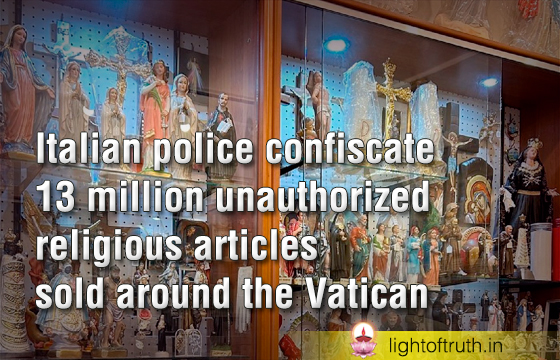
Italian police confiscate 13 million unauthorized religious articles sold around the Vatican
As the 2025 Jubilee Year unfolds, Rome is experie-ncing not only a surge in pilgrims but also an un-welcome flood of counterfeit religious merchandise and labour law violations. Since the opening of the Holy Year on December 24, authori-ties have seized a staggering 24 million fake items across the city – with over half being religious goods, from rosaries to medallions, aimed at unsuspecting tourists and pilgrims. The figures, revealed by Italian financial police and reported by La Repubblica, highlight the darker underside of the city’s booming religious tourism sector. Among the items confiscated were 13 million objects with spiritual significance – often adorned with imagery or text designed to mimic Vatican-issued products. As Rome braces for the Jubilee Youth Encounter at the end of July, preparations have shifted into high gear. The upcoming event, scheduled to bring nearly a million young pilgrims to the Vati-can and Tor Vergata, has prompted stepped-up inspections and security controls. Giancarlo Franzese, provincial commander of the Guardia di Finanza in Rome, confirmed that enforcement actions have already uncovered some 750 undocumented or illegally employed individuals, particularly in the hospitality sector that thrives on the influx of visitors.
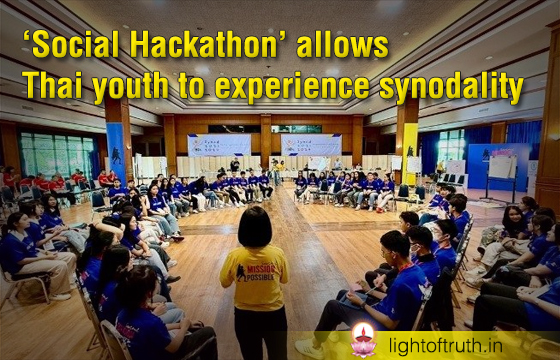
‘Social Hackathon’ allows Thai youth to experience synodality
Students from Catholic schools throughout Thailand are taking part in a “Youth Social Hackathon” that provides them with opportunities and support to create a better world following a synodal dynamic. Organized by the Catholic Education Council of Thailand with the support of partners including the Archdiocese of Bangkok and the General Secretariat of the Synod, the four-day event invites teams from 12 Catholic schools across the country to investigate issues raised by the Synod that are found in their own communities and then propose creative solutions to those problems.
The event is inspired by startup tech “hackathon weekends”, says Dr Peter Monthienvichienchai, director of LiCAS News, the Archdiocese of Bangkok’s English-language news outlet. In the tech world, “hackathons weekends” allow hackers “to develop a product that they would go and pitch for funding to venture capitalists,” he explains. “What we’re doing here at the socialhackathon is that we use a similar format, but we ask the children here to try to solve issues in their community that matter to them.”
Instead of producing a tech product, Monthienvichienchai says, the students will “take a synodal journey with the people on the fringe of society, especially in their local community, listening to what their challenges, what their sufferings are, and come to together and attack the problem; come up with a solution; and pitch for funding.” At the conclusion of hackathon, judges will award funding to the most outstanding pitches “to make their solutions come true.”
The whole point, though, says Monthienvichienchai, “is to engage youth in a way that uses their language. It uses their energy.” At the same time, “for us, it’s an exercise that we’re listening to them. It’s showing them that we trust them to not only solve a problem, but to identify the problem that matters. And then the funding is really to empower the youth to take action and make their solution a reality.”
Five years of disrupted schooling in Ukraine has led to ‘emotional instability in children’
For five consecutive years, children in Ukraine have not have any form of “normal” schooling. From COVID19 to the ongoing war in the country, the Ukrainian Ministry of Education and Science reported that some 4.6 million children in Ukraine face barriers to education and 2 million of them have seen their school close down. In an interview with Vatican News’ Marie Duhamel, Laura Frigenti, the Director-General of the Global Partnership for Education—the largest global fund dedicated to education—spoke about the effects of the war in Ukraine on children’s education.
Frigenti highlighted there are two main consequences of the war on the educational system. The first is “that half of the infrastructure was destroyed, and so the children had to stop going to school and start remote education,” she explained. The children’s rights NGO Plan International reported that about 30% of Ukraine’s educational buildings have been damaged and over 365 schools completely destroyed since 2022. Despite moving online, constant, quality education remains difficult for children to receive as power outages and limited internet access create barriers.
This physical consequence of the war on education has also led to “an emotional instability in many children, which prevents them from fully achieving the objectives that they could achieve under normal circumstances,” as Frigenti described. She pointed out that the children as a result need psycho-emotional support “to make sure that they can compensate the crisis that they are experiencing in their life.” Thus, whenever possible, Frigenti said they try to bring children together physically to help them learn about each other and improve their social skills. However, this is not always possible due to the bombings.
A survey of 1,000 fifteen- to twenty-four-year-olds conducted by Plan International in February 2025 showed that one in five have missed between one and two years of education as a result of the war.
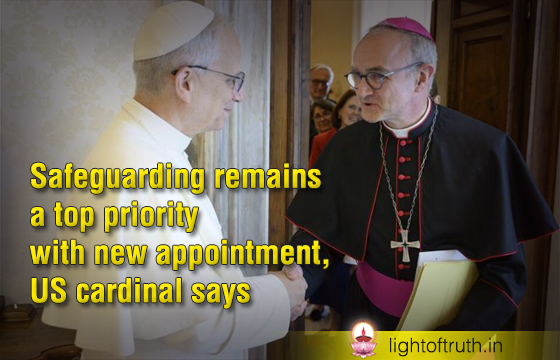
Safeguarding remains a top priority with new appointment, US cardinal says
Pope Leo XIV’s appointment of the new president of the Pontifical Commission for the Protection of Minors shows that safeguarding remains a top priority, its former president said.
“Our Holy Father Pope Leo XIV has affirmed the continued priority of the commission’s work for the universal church in his thoughtful appointment” of Archbishop Thibault Verny of Chambéry, France, as the new president of the commission, said Cardinal Seán O’Malley.
“The Holy Father’s words and deeds in these early months of his pontificate assure the world that the church will not grow complacent in her efforts to as best possible ensure the protection of children, vulnerable adults, and all people in our communities,” he said in a written statement released July 5, the day the Vatican announced the new appointment.
Verny, 58, has served as a member of the papal commission since 2022. “In addition to important contributions to the work of the commission, the archbishop has years of in-depth experience working with law enforcement, other civil authorities, and church leadership to ensure accountability for the serious failures of the church in France,” where he served as auxiliary bishop of Paris before joining the commission, O’Malley wrote.
“He has been at the forefront in seeking healing and reconciliation with survivors,” the cardinal said, and he “played an important role in the development and implementation of substantive policies and procedures, with cultural specificity, for the prevention of any recurrence of abuse.”
“With deep humility and profound gratitude, I thank the Holy Father, Pope Leo XIV,
for my appointment,” Verny said in a written statement. “I am honoured by the trust he has placed in me, fully aware of the grave and sacred task entrusted to the commission: to help the church become ever more vigilant, accountable, and compassionate in her mission to protect the most vulnerable among us,” he wrote.
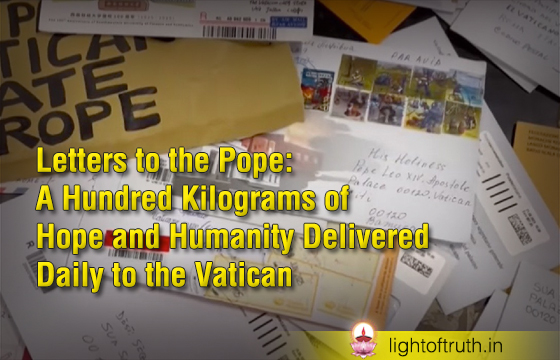
Letters to the Pope: A Hundred Kilograms of Hope and Humanity Delivered Daily to the Vatican
In a small but determined ritual repeated each day in Italy, postal workers sort through handwritten envelopes, illustrated postcards, and carefully wrapped packages—all marked with a curious address: simply, “To His Holiness the Pope.” No street name. No postal code. No country needed. Yet, somehow, they always arrive. According to Poste Italiane, Italy’s national postal service, an astonishing 100 kilograms of mail are delivered to the Vatican daily, addressed to Pope Leo XIV. Since his election on May 8, 2025, the influx has become a steady stream of paper prayers, heartfelt confessions, and appeals for guidance. And no matter how vague the sender’s scrawl—”The Pope, Rome” or “Vatican, Italy”—the system finds its way.
Antonello Chidichimo, director of Poste Italiane’s main sorting facility in Fiumicino, just outside Rome, says this has become the norm. “It’s truly global,” he explains. “Today, letters came from the United States, Kosovo, and India. Tomorrow it will be a different trio. There’s no way to pinpoint the most devoted country. They all write.”
After a stop in Fiumicino, each item undergoes security checks before being scanned, weighed, and forwarded to the Vatican’s nearest distribution centre. From there, the missives continue their journey into the heart of the world’s smallest state—and into the papal household. While the mechanics are routine, the meaning is not. Many letters bear the marks of deep emotion. A shaky hand hints at the elderly seeking a final blessing. A drawing of a dove or a sun might reveal a child’s innocence and trust. Others contain questions, thanks, or tears transcribed into ink. For the Vatican mail handlers, the work goes beyond logistics—it’s a ministry of presence.
Though the content remains confidential, the nature of the correspondence is unmistakable: these are not just letters; they are fragments of lives, stitched together by faith and hope. They carry grief, love, longing, and sometimes joy—each sender, anonymous or not, casting their message into a spiritual bottle and sending it toward Rome.
Inside the Vatican, while it’s not possible for Pope Leo XIV to read every word himself, the significance of this global chorus is not lost. It reflects the papacy not only as an office of leadership, but as a listening post for the world. Whether mailed from a bustling American city or a remote Indian village, each envelope crosses borders not only of geography but of human vulnerability. Poste Italiane knows that, and delivers accordingly—not just to an address, but to a presence.