
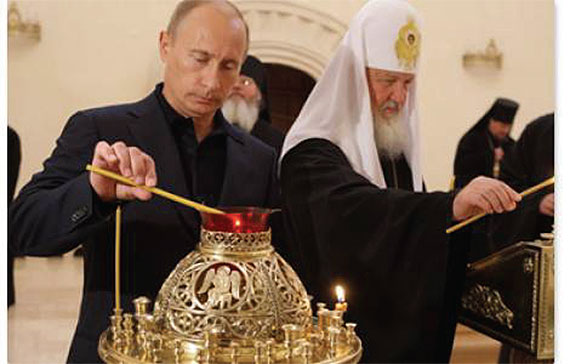
Thanks to Russia’s military intervention in the Syrian conflict, the “genocide” of Christians was stopped. And now, the Russian Orthodox Church will take on the task of supporting the reconstruction of Syrian churches, but also of mosques and historical monuments. This was stated by Kirill, Patriarch of Moscow and all the Russias, in the traditional television interview broadcast on Rossija channel 1 on Sunday 7 January, the day when Russian Orthodox Christians celebrated Christmas. In the interview, focusing on the condition and recent trials the Middle Eastern Christian communities have had to face, the Primate of the Russian Orthodox Church also re-proposed personal memories useful to account for the Russian approach regarding the Middle Eastern events of recent years. “In 2013,” said the Russian Patriarch, “the heads of local Orthodox Churches came to Moscow to celebrate the 1025th anniversary of the Baptism of Rus, and when they met Vladimir Putin, one of the strongest messages was the request that Russia should accept to take part in the protection of Christians in the Middle East. I am pleased,” Kirill added, “that this happened, and thanks to Russia’s interven-tion, the genocide of Christians was stopped.” The Head of the Russian Church confirmed the intention of the Patriarchate of Moscow to contribute to the humanitarian aid of Middle Eastern populations, and also to the reconstruction of “places of worship, monasteries, monuments, including Muslim monuments and historical monuments.” Kirill also reread in parallel the recent Syrian events and those related to the fall of the Iraqi regime of Saddam Hussein, emphasizing their impact on the condition of local Christian communities. According to the Russian Patriarch, “already in 2014 it was clear that the conflicts started in Syria were caused by extremist groups that, once they had reached power, they would have eliminated the Christian presence in that Country. This is why Christians actively supported Assad and his government “bearing in mind that with him” the Country had a certain balance of power and, very importantly, people felt safe.”
Category Archives: International

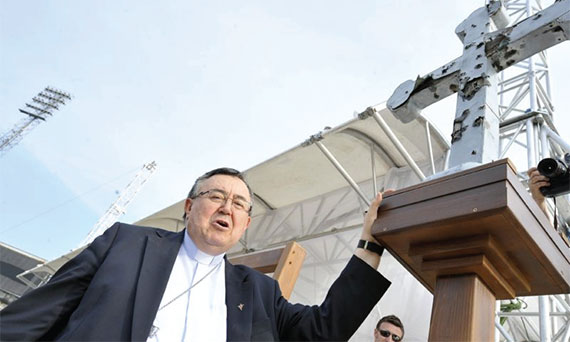
Catholics ‘fleeing Bosnia-Herzegovina’ over discrimination
‘It is harder for Catholics to defend their basic rights’ in the European country, Cardinal Vinko Puljiæ says.
Up to 10,000 Catholics are leaving Bosnia-Herzegovina every year because of state discrimination against the religious minority, according to the country’s cardinal.
Cardinal VinkoPuljiæ, Archbishop of Vrhbosna, highlighted the alarming exodus of the faithful in an interview with Catholic charity Aid to the Church in Need.
He told ACN that the on-going haemorrhaging was a legacy of the 1992-95 war that caused at least 250,000 of the faithful – around half the country’s Catholics – to become refugees.
The cardinal said: “During the war and in the immediate aftermath of the war most of the Catholics were expelled from their homes and there was a great deal of destruction and looting.
“After the war there was neither political nor financial support provided for an ongoing return of the refugees and expelled.”

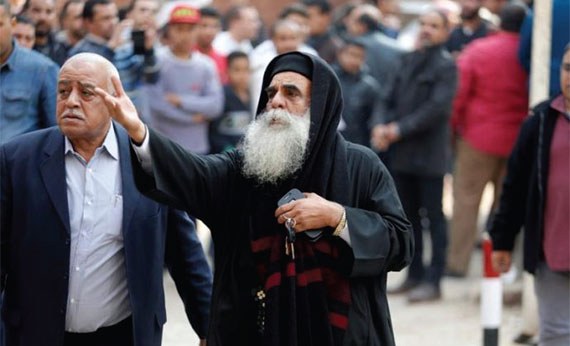
Jesuit says militants want to build “imaginary country” on “Egyptian blood”
A leading Egyptian Jesuit says fundamentalists want to cause conflicts among Muslims and Christians in Egypt.
Fr William Sidhom said the Muslim Brotherhood, an international conservative Islamic political movement founded in Egypt in 1928, wants “to make their own imaginary religious country on the Egyptian blood.”
The priest serves as the secretary general for the Committee for Justice and Peace of the Association of the Catholic Hierarchy of Egypt.
Sidhom spoke to Crux after the latest deadly attack against Christians, which was on Dec. 29, when a militant opened fire outside a suburban Cairo church, killing at least nine people.
A militant group affiliated with the Islamic State has claimed responsibility for most attacks on Christians in the country, including a series of killings that forced scores of Christian families last year to flee their homes in northern Sinai.
“They want to make things bad between Egyptian Muslims and Christians to create a distortion, because this is the only way to break Egypt,” the priest said. “Because Egypt is very strong, and they have no other option to make a division between people, except through religious things.”

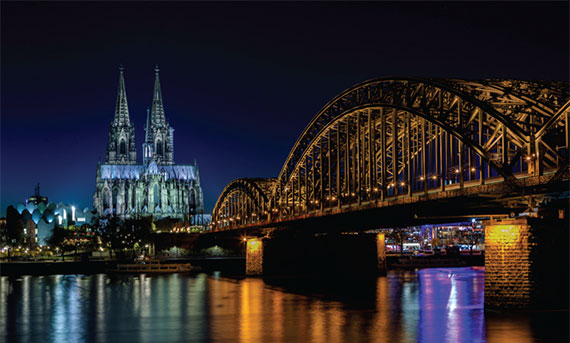
GERMAN CHURCH ACCUSED OF FAILING TO MAKE FINANCES TRANSPARENT
The German Church has been accused of failing to make church finances transparent as the German bishops’ conference had promised it would in 2014 after Bishop Franz-Peter Tebartz-van Elst – since referred to as the Bishop of Bling – was suspended by the Vatican for spending more than 31m euros (£26m) on renovating his bishop’s palace. “We feel and understand the faithful’s desire to be informed about the dioceses’ assets and about how the money is being spent”, the German bishops’ conference declared at the time and promised that each diocese would publish its balance sheets by the end of 2016.
In an article of 21 December (2017) entitled “Heavenly Balance Sheets”, the German newspaper, ‘Handelsblatt’, accused the Church of failing to publish its balance sheets as promised and of hoarding a large part of of its annual surplus from Church tax, which in 2016 (statistics for 2017 are not out yet) came to 6.15 billion euros (£5.5billion).
Church tax is compul-sory for any Catholic who works in Germany and is between 8 and 9% of one’s net income. It is deducted at source by the state and passed on to the Churches. As the German economy is flourishing and unemployment relatively low, the surplus for 2017 is expected to be even higher. According to the Handelsblatt, Germany’s 27 Catholic dioceses have assets of “at least 26 billion euros.” Some dioceses have published their balance sheets, others have partly done so and three have not published them at all. Inquiries on how the surplus billions are invested usually remain unanswered and are “always unwelcome”, the article says. “The motto seems to be “One does not talk of money.”
Heart of forgiveness: Ugandan women once child soldiers now lead peace
Two decades ago, Joseph Kony’s Lord’s Resistance Army stormed St Monica’s with guns firing, searching for children they could coerce to be new soldiers. But on this day in January 2017, the bullet holes that still pepper the ceiling of the classrooms were contrasted against thousands of people outside, clasping their hands in a prayer for peace. Sitting among the crowd was Sr Rosemary Nyirumbe, the former director of St Monica’s school. Kony, a self-described prophet bent on overthrowing Uganda’s longtime president, Yoweri Museveni, instructed his followers to kidnap children as young as 8, brainwash them and force them to burn down homes and rape and kill their neighbours. The violence displaced more than 2.5 million people in northern Uganda and left 100,000 people dead.
The process of reconciliation, some of which uses religious leaders to conduct traditional tribal forgiveness ceremonies, is ongoing.More than 1,500 girls and women have graduated from the various courses, which range from three months to two years.
POPE FRANCIS ISSUES BLUEPRINT FOR GEOPOLITICAL STABILITY
Pope Francis on8 January issued a blueprint for geopolitical stability, calling for a de-escalation of tensions in Korea, for nuclear disarmament and for world leaders to recognise that migrating to another country is a “fundamental human right”.
He set out his vision this morning during his annual address to diplomats. His message runs counter to that of US President Donald Trump, underlining the Pope’s role as an upholder of the compassionate, internationally-focussed, post-war consensus.
Speaking to ambassadors from the 183 countries which the Holy See has relations with, the Pope made an indirect criticism of Trump’s policy on Jerusalem which the president recently decided would be recognised as the capital of Israel.
Grand imam condemns attacks on Coptic Christians, calls on Muslims to celebrate Christmas in solidarity
The Grand Imam of al-Azhar condemned recent terrorist attacks on Coptic Christians “in the strongest terms” and called upon Egypt’s Muslims to celebrate Christmas to show their solidarity with Christians.
The Coptic Orthodox Church celebrates Christmas on January 7. “All Egyptian people are urged to stand firm against this evil conspiracy” and to join “their Coptic brethren in celebrating the anniversary of Christ’s birth,” said Ahmed el-Tayeb, whom some Muslims regard as the highest Sunni Muslim authority.
On December 29, gunmen on a motorcycle attacked a Coptic Orthodox church in Helwan, a city of 640,000 near Cairo, leaving 10 dead, including security officers. Egyptian state media reported that one gunman was killed by security forces in a shootout, while the other was arrested.
That same day, two Coptic Christians were killed in an attack on their store in Helwan. Pope Tawadros II, the head of the Coptic Orthodox Church, decried the “treachery and cowardliness of the evils that were the reason for this painful incident.”
“All condolences to their families and to the police, the church and to Egypt, which will still be strong and capable of defeating insensitive and dark and violent forces which have no conscience,” he added.

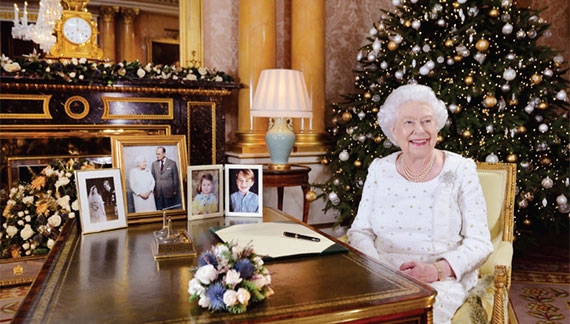
Queen’s Christmas message: I am inspired by Christ’s generous love and example
Her Majesty the Queen has spoken of her Christian faith in her Christmas message.” In her annual message, the Queen focused on the theme of ‘home,’ and praised volunteers who were providing meals to the homeless of Christmas Day. “We remember the birth of Jesus Christ, whose only sanctuary was a stable in Bethlehem. He knew rejection, hardship and persecution,” the Queen said.”And, yet, it is Jesus Christ’s generous love and example which has inspired me through good times and bad. Whatever your own experience is this year, wherever and however you are watching, I wish you a peaceful and very happy Christmas.
The Queen also praised London and Manchester for pulling together after terror attacks this year, hailing the cities’ “powerful identities.” Her Majesty, her husband the Duke of Edinburgh and family members attended an Anglican Church service on Christmas morning near the Queen’s country estate in Sandringham. Afterwards, the Royal Family had a private lunch. Prince Harry’s fiancée Meghan Markle joined the family for the first time this year.

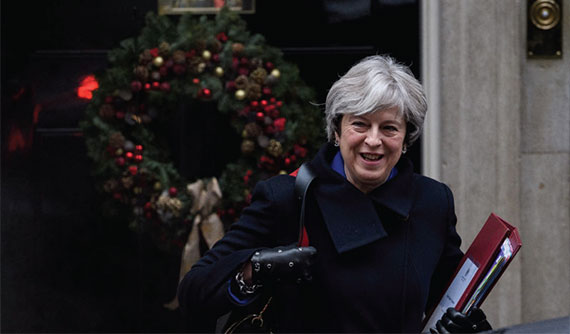
Theresa May: Britain should ‘take pride’ in its Christian heritage
“Let us take pride in our Christian heritage,” Prime Minister Theresa May has said in her Christmas message.
In an address that stressed the role of the emergency services and volunteers, the Prime Minister thanked “all those whose service to others means they will be spending time away from their loved ones this Christmas.”
She also praised the Churches Together initiative, an ecumenical organisation that brings together the vast majority of Christian denominations in Britain.
“As we celebrate the birth of Christ, let us celebrate all those selfless acts – and countless others – that epitomise the values we share: Christian values of love, service and compassion that are lived out every day in our country by people all faiths and none. “Let us take pride in our Christian heritage and the confidence it gives us to ensure that in Britain you can practice your faith free from question or fear. “Let us remember those around the world today who have been denied those freedoms from Christians in some parts of the Middle East to the sickening persecution of the Rohingya Muslims.
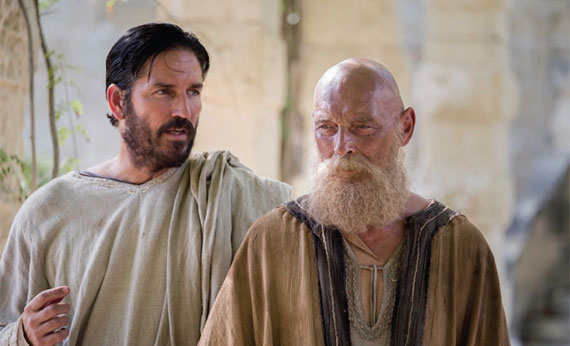
Jim Caviezel Goes Back to the Bible in ‘Paul, Apostle of Christ’
The ‘Passion of the Christ’ actor talks about the challenges of playing iconic roles, why pious films are often lame and why good movies aren’t always family-friendly.
Actors who play iconic roles sometimes regret it afterward, not least because their careers often suffer later. Jim Caviezel has said Mel Gibson warned him that playing Jesus in The Passion of the Christ would hurt his career — but he has no regrets about playing the most iconic role of all time.
Caviezel never again played a central role in a Hollywood film like Frequency, The Count of Monte Cristo or High Crimes, though he did find mainstream success on the small screen as the lead in the critical and popular hit series Person of Interest, which ran five seasons. On the big screen, he played a terrorist in the Denzel Washington thriller Déjà Vu and has taken a number of roles in indies and faith-based films like When the Game Stands Tall.
Now, for the first time since The Passion, Caviezel has returned to the Bible-film genre to play the role of St Luke the Evangelist in the upcoming film Paul, Apostle of Christ, written and directed by Andrew Hyatt (Full of Grace) and produced by Sony’s faith-based label Affirm Films.
Caviezel recently spoke: “Going into that world — playing Our Lord — was … I didn’t know how to do it, and I said, “I’m not going to play Jesus. I want him to play me.” It’s the same thing with Luke. I’m praying very deeply.
Recently, I was watching one of the players of the Dallas Cowboys making the Sign of the Cross before they kicked off to him. I guess when you’ve got those guys running at you, going at full speed, and a collision could happen and you could tear your knee, you gotta go into it knowing [the challenge]. I do the same thing on my films. I am praying for the audience — that what I read on script is conveyed to the person in the theatre, and that they have the possibility of changing their lives. When you are playing Jesus or Luke or Paul … it just requires someone like me to get out of the way. And that’s what I pray about.”
“I think one part of it is that he was a physician, and he had this particular lifestyle — he was wealthy, and he left it all. Why? He saw Paul speak. Was it Paul who spoke, or was it Christ speaking through him? I believe it was the latter, and that changed his life. So that’s kind of where I started.”