Category Archives: International

AFRICA IS PRODUCING BAPTIZED PEOPLE, NOT CHRISTIANS

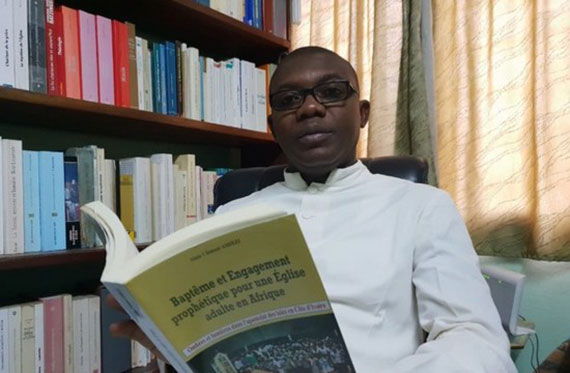
Father Alain Clément Amiézi is a doctor in dogmatic theology and professor at Sacred Heart of Mary Major Seminary at Anyama in Ivory Coast. In his new book, Baptêmeet engagement prophétique pour uneÉgliseadulte en Afrique (Baptism and prophetic commitment for an adult Church in Africa), he focuses on the meaning of baptism and its implications.

“The majority of our African churches have already celebrated the centenary of the beginning of their evangelization. Logically, we should now be talking about an adult Church. But at the qualitative level, it is clear that there is still a lot of work to be done. The percentage of those who continue and who complete their Christian initiation by confirmation after the great festivities that accompany the reception of baptism is very low in several African countries today.

The number of the faithful who are truly committed in the social and political fields on the basis of Gospel virtues is infinitesimal.

We are producing baptized people but not Christians. We provide them with the sacraments without evangelizing them. The responsibilities for this situation are shared.

On one hand, in my view, it is linked to the fact that certain catechumens are requesting baptism for the wrong reasons. On the other, it is linked to the quality of the formation received.”

On the impact baptism have on the life of African Christians he said: “Prophetic commitment involves three aspects.

First, there is Christian coherence which invites us to break with the dichotomy that often exists between the life of faith and everyday life at work, school and in the family.

Christian life is not an overcoat that one can leave at the parish door and collect again when leaving. The second aspect is courageous witness. Our African countries need Christians capable of breaking with the notion that “everyone acts like that” and who are capable of living out their faith through their Christian commitment at social, economic and political level.

The third aspect is to develop a spirituality that assumes and allows Christians to courageously face up to existential problems.

CARD. MARX, “JOURNEY TOWARDS SYNODAL CHURCH CAN HELP US OVERCOME SERIOUS CRISES”

The Archdiocese of Hamburg has celebrated the 24th anniversary of its foundation with a Eucharistic celebration on 7th January, presided over by Card. Reinhard Marx, President of the German Bishops’ Conference. According to a press release, the Cardinal in his homily “placed particular emphasis on the history of our intrinsic ecumenical bond: all Christian denominations are on a journey to serve each person,” since “Christianity is a religion that does not exclude anyone.” And when we celebrate the Eucharist, it is important for us to “constantly refocus and ask ourselves what the priorities are,” and then “look and act,” bearing in mind that “looking always means listening.” Referring to the anniversary of the founding of the Archdiocese, the cardinal asked: “How can we live together and listen to one another? How can we foster our joint responsibility and active participation in the Church?” And he referred to the “Synodal Church” often advocated by Pope Francis: “a new journey towards a synodal Church can help us to learn from one another and also to overcome serious crises,” the Cardinal concluded.

CATHOLICS FIND FLOURISHING FAITH LIFE IN MUSLIM UAE, WHERE POPE WILL VISIT

Catholics from around the world living in the United Arab Emirates are waiting with great anticipation for Pope Francis’s on Feb. 3-5 visit, the first papal trip to the Arabian Peninsula.

“Pope Francis is the ambassa dor of peace, courageously crossing borders and fostering personal encounters with religious leaders, heads of states and humanitarian organizations in the Arab world,” said Father Johnson Kadukkan, parish priest at Saint Joseph’s Cathedral in Abu Dhabi, where Francis will stop for a private visit on Feb. 5 before celebrating Mass at Zayed Sports City Stadium.

There are eight Catholic Churches throughout the seven emirates of the UAE, with a ninth church under construction. Each church offers an extensive schedule of “weekend” Masses, all of which are full. Since the UAE is an Islamic country and Friday is considered a day of prayer for Muslims, Catholics attend weekend Mass on Friday or Saturday; Sunday is a workday.

St Joseph’s Cathedral in Abu Dhabi, for example, has about 90,000 parishioners, with eight priests celebrating nearly 20 Masses during the weekend in various languages: Arabic, English, Tagalog, Spanish, French, Italian, German, Korean, Polish, Ukrainian, Urdu, Sinhalese and the Indian languages of Konkani, Malayalam and Tamil.

HISTORIAN ARGUES THAT CHURCH’S EMBRACE OF ART SAVED THE FAITH

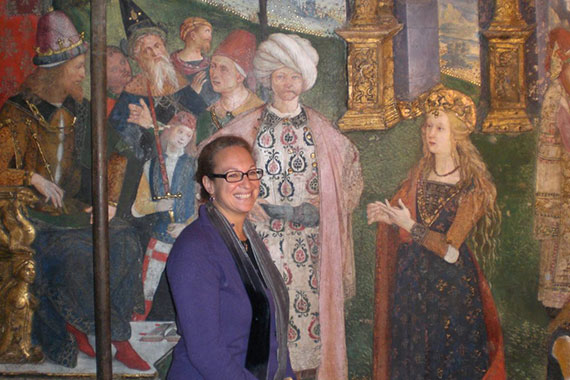
As the Catholic Church struggled to recover from the tumultuous effects of the Protestant Reformation, art historian Elizabeth Lev believes that it was the Church’s embrace of art that effectively saved the faith. Lev, an Americanborn, Rome-based scholar, is one of the most sought after guides in Rome who makes the treasures of the Eternal City more relevant than ever.

In her new book, How Catholic Art Saved the Faith: The Triumph of Beauty and Truth in CounterReformation Art, Lev chronicles how individuals such as Michelangelo and Caravaggio, and lesser known artists such Annibale Carracci and Lavinia Fontana, turned to stone and canvas to combat challenges to the faith.

Why after the Protestant Reformation, where language (95 theses, in fact!) had been used to contest Catholicism, did the Church turn to art to recapture the essentials of the faith?

“The printed word can be painful, as anyone who has been trolled on the Internet will tell you. In the wake of Martin Luther’s famous theses, a flood of printed pamphlets overwhelmed people with conflicting information, polemical statements, and sometimes outright name-calling. While the Catholic Church excelled at scholastic tomes, literary click bait was not its forte, so it turned to art, where it had 1300 years of experience of communication through images. While the Protestants were debating to clast or not to clast with icons, the Catholic were sponsoring beautiful images that would draw people together, gazing in the same direction at artwork designed to point to the divine. These paintings still attract millions of viewers today, even though many tourists no longer understand the teachings or the stories behind them. It was a brilliant PR coup, deploying artists as visual preachers to the public.”

40 MISSIONARIES KILLED IN THE YEAR 2018

In the course of the year 2018, 40 Missionaries were killed throughout the world, almost double the 23 of the previous year, and they were priests for the most part: 35. After eight consecutive years in which the highest number of Missionaries killed was recorded in America, in 2018 it is Africa to take the first place in this tragic category.

According to the data collected by Fides Agency, in 2018, 40 Missionaries were killed: 35 priests, 1 seminarian, and 4 lay people. In Africa, 19 priests, 1 seminarian, and 1 lay woman were killed (21); in America, 12 priests and 3 lay people were killed (15); in Asia, 3 priests were killed (3); in Europe, 1 priest was killed (1). We are using the term “missionary” for all the baptized, aware that “in virtue of the Baptism received, every member of the People of God has become a missionary disciple. Each baptized person, whatever his function in the Church and level of instruction in the faith, is an active agent of evangelization” (EG 120).

U.S. CATHOLICS RATE THE HONESTY AND ETHICAL STANDARDS OF CLERGY

Fewer than a third of U.S. Catholics rate the honesty and ethical standards of clergy as “very high” or “high,” the latest evidence of the hierarchy’s diminished credibility as a result of the clergy sex abuse scandal, according to a Gallup poll released. The record-low 31% honesty rating marked an 18 percentage-point drop from 2017, a large fall after years of steady decline that followed a new global explosion of the scandal and revelations of high-ranking cover-up.

Catholics aren’t alone in the crisis, however. The Gallup survey also found that while the Protestants’ 48% positive rating for clergy is higher than Catholics,’ 2018 marked the first time that fewer than half of surveyed Protestants had high marks for clerical honesty.

The poll of 1,025 adults was conducted Dec. 3-12 and had a margin of error of plus or minus four percentage points. For results based on the total sample of 210 Catholics, the margin was plus or minus eight percentage points.

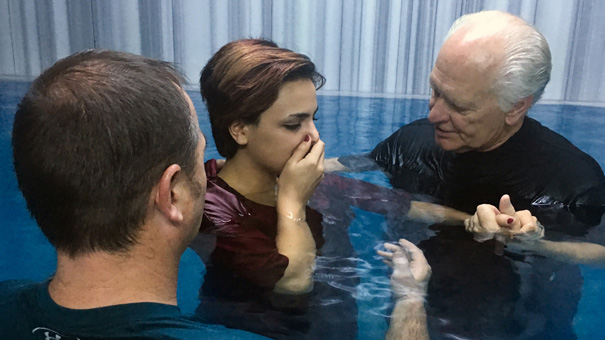
Iranians Are Converting To Evangelical

In a hotel conference room in Denizli, Turkey, about 60 Iranians sing along to songs praising Jesus mixed with Iranian pop music. When the music stops, American pastor Karl Vickery preaches with the help of a Persian translator.

“I’m not famous or rich. But I know Jesus. I have Jesus,” he says, with a Southern drawl. The Farsi-speaking Christian converts shout “Hallelujah!” and clap.

Vickery, who’s part of a visiting delegation from Beaumont, Texas, then offers to pray for each person in the room.

Women with hair dyed blond and short skirts and clean-shaven men in slacks stand up to pray in unison. Vickery puts his hand on one woman’s head and speaks in tongues. One man closes his eyes as tears fall. Another woman raises her hand and shouts “Isa,” Jesus’ name in Arabic and Persian. The room smells of sweat.

Among the parishioners are Farzana, a 37-year-old hairdresser from Tehran, and her daughter Andya, 3, who runs around, taking photos with her mother’s cell phone.

“It feels good. Our relationship to God becomes closer,” Farzana says. She doesn’t want to give her last name because she says her family in Iran might face persecution for her conversion. Her family knows she is a convert and they’re scared for their own safety inside Iran.

In Turkey and across the Middle East and Europe, evangelical Christians are converting Muslim refugees eager to emigrate to the West. The refugees in Turkey escaped Iran, where conversion to anything but Islam is illegal.

There are hundreds of thousands of Christians in Iran. Those considered part of the native Christian communities are permitted to practice their religion with restrictions, but a Muslim converting to Christianity is considered an apostate. The Iranian government jails converts, especially those who proselytize. The authorities see it as a Western plan to turn Iranians against Islam and the Islamic regime, according to converts in Turkey.

Fertility in 91 countries insufficient to maintain population

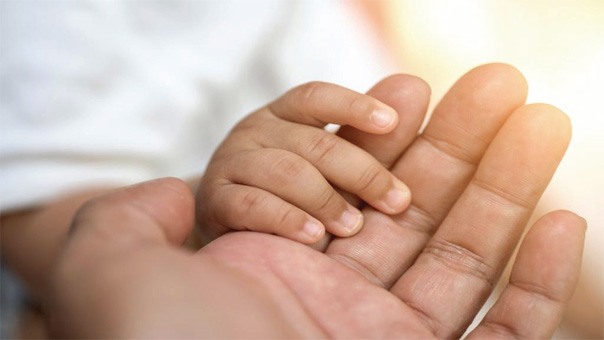
In 2017, the lowest TFR was in Cyprus, where on average, a woman would give birth to one child throughout her life.

Even as the world’s population grew by 87.2 million people annually from 2007 to 2017, 91 nations are not producing enough children to maintain their current populations, shows a new study by the Institute for Health Metrics and Evaluation (IHME).

Part of the annual Global Burden of Disease (GBD) study, the findings say that 91 countries, including Singapore, Spain, Portugal, Norway and South Korea, along with Cyprus, have a total fertility rate (TFR) of lower than two. TFR is a summary measurement representing the average number of children a woman would deliver over her lifetime. In 2017, the lowest TFR was in Cyprus, where on average, a woman would give birth to one child throughout her life

While global TFR declined since 1950, the world’s population grew in comparison with 81.5 million annually from 1997 to 2007. The study says that while in 1950, high-income countries accounted for 24 per cent of the global population, in 2017, the population of these countries accounted for 14 per cent.

The findings show that there is a baby boom just as there is a baby bust. In 104 countries, high birth rates are driving population increases. The highest TFR was in Niger, where a woman would give birth to seven children in her lifetime.

Apart from Niger, Mali, Chad, and South Sudan were among the 104 nations with fertility rates exceeding two births per woman. Singapore, Spain, Portugal, Norway and South Korea, along with Cyprus, had TFR rates lower than two.

Christians working with Syrians: U.S. withdrawal puts minorities at risk

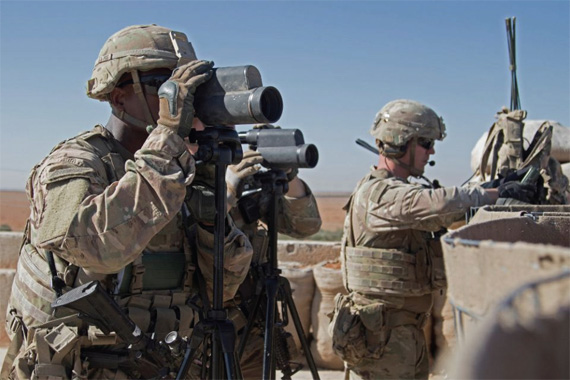
Several Mideast-based Christians working on the Syria crisis have joined a growing chorus about U.S. President Donald Trump’s decision to pull some 2,000 American troops from Syria. They say it puts Christians at risk and could force them to flee again, and they want the decision reversed. They added their voices to other Christian voices in Washington and Europe calling on Trump to reverse his decision, citing concerns for the fate of minorities and the risk they face from Islamic State.

Support independent Catholic journalism. Become an NCR Forward member for $5 a month.

“This U.S. decision to with-draw with no guarantees opens up the gates of hell” for the people of northern Syria, said Fr Ema-nuel Youkhana, a priest, or archimandrite, of the Assyrian Church of the East. He spoke to Catholic News Service by phone, pointing to the controversial military threats already made by Turkey to attack the area.

Arrested man eyed Xmas St Peter’s attack

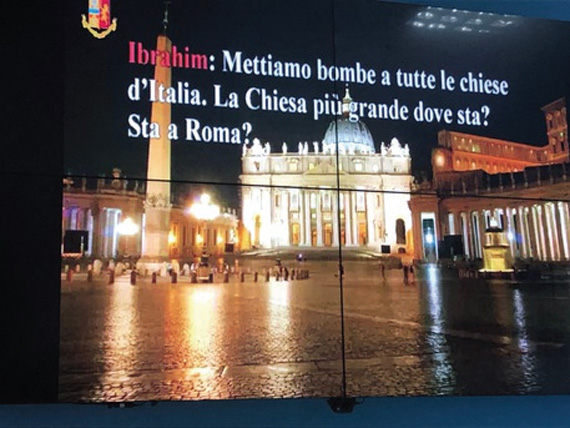
Bari, December 17-A 20-year-old Somali national arrested in Bari on terrorism charges allegedly wanted to stage an attack at St Peter’s Basilica in Rome at Christmas, according to wiretap recordings. Mohsin Ibrahim Omar, who also goes by the name Anas Khalil, is believed by DIGOS special security police in Bari to be linked to the Islamic State (ISIS) in Somalia and to be in contact with one of its opera-ting cells. “Dec. 25 is coming,” he allegedly said in recordings contained in case documentation.

“The 25th is Christmas… the churches are full. “Let’s put bombs in all the churches of Italy. Where is the biggest church? It’s in Rome?,” he said, according to the wiretap, apparently referring to St Peter’s. The FBI are assisting the investigation. A Somali man arrested on December 13 in Bari was allegedly found in a wiretap by Italian DDA anti-mafia and anti-terrorism forces to have called for bombs to be planted in churches. The alleged terrorist was arrested when trying to flee the Bari area on December 13.