Category Archives: International

“The Vatican’s Astronomer on God and the Stars”

“The Vatican’s Astronomer on God and the Stars: The Pope’s chief stargazer, Br. Guy Consolmagno, discusses what the Wise Men saw, how to deflect an asteroid, and why science and faith are more than compatible.”

“The idea that you read the Bible like it was the Chilton’s manual for how to repair your Volkswagen —that’s literalism. It’s a very modern idea,” says Dr Consolmagno. “You don’t find that in the church fathers. You don’t find that in the rabbis of the time of Jesus. That’s not the way they interpreted it. All literature in ancient times started out as poetry.”

Facing such questions, Dr Consolmagno offers a hypo-thesis: “Let’s assume that there’s a God that’s outside nature, who is responsible for the existence of the universe,” he says. “When I start with that axiom, does the universe make sense? Does the universe make more sense than if I assume it’s all done by random chance? Am I able to see things I couldn’t see before? Am I able to understand things I couldn’t understand before? Is it an axiom that works?

Financial corruption in Austrian diocese made public, despite Vatican order

The administrator of the Austrian diocese of Gurk-Kalgenfurt has released a report on financial irregularities under the administration of a former bishop, despite a Vatican directive that the report should be conveyed quietly to Rome. The report pointed to “massive public accusations” against Bishop Alois Schwarz, who headed the Gurk diocese 2001 until May of this year, when he was transferred to the Sankt Polten diocese. The charges involved financial deals which appeared to benefit a female staff member who had a close relationship with the bishop. Msgr Engelbert Guggenberger, who released the critical report, emphasized that he was doing so not in his role as apostolic administrator of the Gurk diocese, but as dean of the cathedral chapter, which had given its unanimous endorsement of the findings.

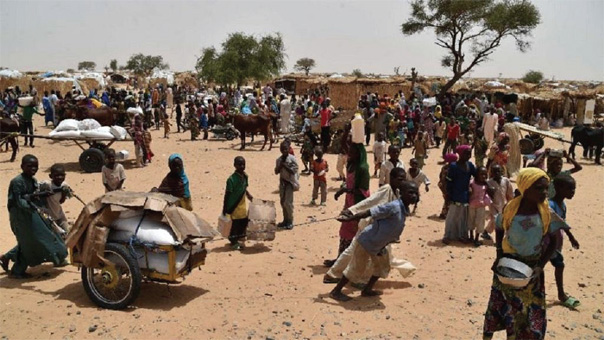
52,000 displaced by violence in western Niger: UN

“The UN refugee agency is becoming increasingly troubled by ongoing violence in Niger’s border areas with Mali and Burkina Faso,” the UNHCR said in a statement.

“Those displaced report fleeing horrific violence. Armed groups are said to be attacking villages, killing and abducting civilians, including community leaders, burning schools and looting homes, businesses and livestock.” The UN refugee agency is becoming increasingly troubled by on-going violence in Niger’s border areas with Mali and Burkina Faso.

The raids and plunder affect residents of the Tahoua and Tillaberi border regions, where the government has declared a state of emergency while troops of a five-nation G5-Sahel military task force fights insurgents.

“They kidnapped five people from my village who were later found dead,” cattle farmer Al-Bashir Gamo Gamo told the UN agency, saying that armed groups threatened the villagers with death if they did not leave within 12 hours.

“Nobody can sleep at night, walk anywhere or cultivate crops because of fear,” he added. In addition to inducing local residents to flee, the violence is affecting 53,000 refugees from Mali who live in Niger’s border regions. A previous count by the United Nations in October reported 42,000 people displaced by the activities of non-state armed groups and also by security measures aimed at halting “repeated infiltrations by terrorists” from Mali.

Foreign Secretary orders review into persecution of Christians

Foreign Secretary Jeremy Hunt has said the UK “must do more” to help persecuted Christians and has ordered an independent review to assess if the British Government is doing enough.

The Foreign Office review will be led by the Bishop of Truro, Rt Rev Philip Mounstephen, and will make recommendations on the practical steps the government can take to better support some of the 215 million Christians globally who faced persecution last year.

Mr Hunt said: “Britain has long championed international religious freedom.”

“So often the persecution of Christians is a telling early warn-ing sign of the persecution of every minority,” he continued.

Due to be published at Easter, the review will map the persecution of Christians in “key countries” in the Middle East, Africa and Asia; provide an analysis of current UK government support and offer recommendations for a “cohesive and comprehensive policy response.”

The Foreign Office said the review would “consider some tough questions and offer ambitious policy recommendations.”

Lord Tariq Ahmad, the Government’s special envoy on freedom of religion or belief, said: “This is an issue that resonates deeply: 70 years ago during the partition of India, my family had to leave their home and livelihoods simply because of their faith.

“Seventy years later religious persecution is on the rise around the world. Our government has prioritised freedom of religion or belief and the review we are announcing today is about providing an objective view of Britain’s support for the most vulnerable Christians globally.

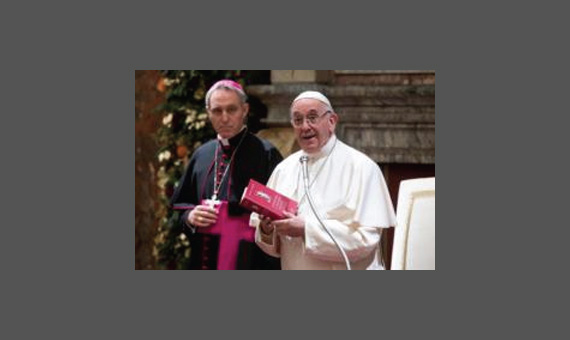
Pope vows action on abuse, decries divisions in Church, in address to Roman Curia

Pope Francis renewed his promise to root out sexual abuse, and at the same time warned against divisions in the Church, in a December 21 address to leaders of the Roman Curia.

“Let us be clear that before these abominations the Church will spare no effort to do all that is necessary to bring to justice whosoever has committed such crimes,” the Pope said of sexual abuse. “The Church will never seek to hush up or not take seriously any case.” While acknowledging that in the past Church leaders have not acted decisively against abuse, he insisted: “That must never happen again.”

An abusive priest, the Pontiff said, is like “a vicious wolf ready to devour innocent souls.” In a speech marked by strong language, he said that the sins of such clerics “disfigure the countenance of the Church and undermine her credibility.” He said that at a Vatican meeting on abuse in February, “the Church will restate her firm resolve to pursue unstintingly a path of purification.”

The annual papal meeting with leaders of the Roman Curia, which was traditionally an exchange of Christmas greetings, has in recent years become an opportunity for the Pope to reflect on the challenges facing the Vatican. Pope Francis, in particular, has used the occasion to deliver stinging indictments of the “sicknesses” of the Curia (in 2014) and of “traitors” who opposed his programs of reform (in 2017). The prospect of another papal scolding may have explained an unprecedented phenomenon: the presence of many empty seats in the hall during the audience.

However, this year Pope Francis did not direct his criticism at the officials of the Roman Curia. In fact he began his address with a nod of appreciation for Archbishop Edgar Peña Parra, who as the new sustituto (Assistant Secretary of State) handles the day-to-day administration of the Vatican bureaucracy.

Pope Francis did warn against the presumption of religious leaders who “frequently come to think and act as if they were the owners of salvation and not its recipients.” But he made that point almost in passing, moving quickly on to look across the past year, in which he remarked that “the barque of the Church has experienced—and continues to experience—moments of difficulty, and has been buffeted by strong winds and tempests.”

Iran: Crackdown on Christians continues with reports of Beatings

Christian leaders in Iran have said that pressure on Christians increases every year around Christmas but that this year it is particularly severe.

At least seven Iranian Christian converts have been arrested in Iran, including two sisters who allegedly have been beaten.

Shima Zanganeh, 27, and her sister, Shokoufeh, 30, were arrested by Intelligence Service officials in their homes in Ahvaz, capital of Iran’s western Khuzestan province, on 2 December, reports Mohabat News.

They were taken to Amanayeh security offices in Ahvaz and then transferred to Sepidar Prison in Ahvaz on Wednesday, 12 December. The sisters appeared in court and were granted conditional release on a bail of 500 million tomans (approximately US $50,000) each.

The family was able to raise the necessary funds, but at each court appearance to secure the sisters’ release, they have been told “the judge is not in today,” the news service said.

It said a reason for the delay could be that authorities want the wounds and bruises of the beatings to fade away before releasing the women.

Prison authorities had informed the Zanganeh family that the sisters were beaten during one of the interrogation sessions and the sisters confirmed this in a later phone call. On the same day the Zanganeh sisters were arrested, security authorities also raided the homes of Farzad Behzadizadeh, 30, and Abdollah Yousefi, 34, and confiscated Christian books, phones and computers, according to Mohabat.

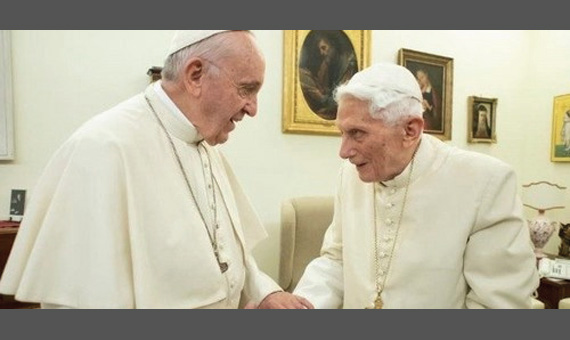
POPE FRANCIS PAYS CHRISTMAS VISIT TO POPE EMERITUS BENEDICT XVI

On Dec. 21 evening, Pope Francis visited the Pope emeritus in order to exchange Christmas greetings. As he has done every year since his election, Pope Francis on December 21 made the short journey to the Mater Ecclesiae Monastery, for a Christmas visit with his predecessor, Pope emeritus Benedict XVI. Pope Francis has visited the Monastery several times over the course of the past year. Most recently, in October, he called on the Pope emeritus on the eve of the canonization of Paul VI. Before that, the Holy Father made a surprise visit with the fourteen new Cardinals he had created in the Consistory of June this year.

Vatican appears likely to empower archbishops on abuse claims against bishops

One of the proposals made at last month’s meeting of U.S. Catholic bishops for investigating future allegations of misconduct by prelates appears likely to receive Vatican approval, according to several eminent canon lawyers and theologians. Celebration, NCR’s sister publication, will publish a new reflection each day during Advent.

The suggestion to empower the nation’s metropolitan archbishops to examine accusations made against bishops in their regions of the country corresponds both with the way the church handled such issues in earlier centuries and the current Code of Canon Law, they say.

Nicholas Cafardi, a respected civil and canon lawyer, noted that the current version of the code already says the Vatican can give archbishops “special functions and power” in their regions “where circumstances demand it.” “This function could be to receive and investigate accusations of sexual impropriety … and then to report to the Holy See on the results,” said Cafardi, who has advised bishops and dioceses on canonical issues for decades.

Richard Gaillardetz, a theologian who has written several books on the practice of authority in Catholicism, said simply: “It’s just good ecclesiology.” “It wouldn’t be too hard to envision the Holy See granting metropolitans special functions, and I could imagine that being done,” he said.

In the Catholic Church, metropolitan archbishops are those who are tasked with both leading an archdiocese and presiding over the bishops in their wider ecclesiastical province. While their role in their provinces has been largely honorific in recent centuries, it was much more expanded in the earlier church.

“It would be an interesting move,” Jesuit Fr Steven Schoenig, a historian who has focused his research on the role of archbishops in the Middle Ages, said of the proposal. “It would kind of restore things to an earlier stage in the church’s history.”

The possibility of empowering arch-bishops to investigate allegations made in their provinces was raised at the annual meeting of the bishops’ conference in November, when the prelates were considering a number of proposals to respond to this year’s spate of revelations of clergy sexual abuse.

Vatican Creates New Office to Serve Catholic Charismatic Renewal Movement

Pope Francis has wanted the creation of a single service dedicated to the Catholic Charismatic Renewal organizations since 2015 — a vision that is now becoming a reality thanks to the creation of CHARIS (Catholic Charismatic Renewal International Service), which will be officially instituted on Dec. 8.

This new body within the Dicastery for Laity, Family and Life will replace the two existing services known as the International Catholic Charismatic Renewal Service and the Catholic Fraternity.

For the 50th anniversary of the Catholic Charismatic Movement in June 2017, Pope Francis already asked the two bodies to join together to organize the celebration at the Circus Maximus in Rome. On this occasion, the Pope quoted the late Belgian Cardinal Leo Suenens, the strong-est episcopal promoter of the movement in its early days, who called it “a current of grace, a renewing breath of the Spirit for all the members of the Church.”

The international service will be made of 18 members, as well as a moderator and an ecclesiastical assistant — Capuchin Father Raniero Cantalamessa, preacher to the Papal Household and a long-time supporter of the charismatic movement. The service’s officials will fully assume their functions from June 9, 2019, the Solemnity of Pentecost.

More than 2,000 people killed or missing in seaborne European migration attempts

The International Organisation for Migration (IOM), the UN-backed inter-governmental agency, has said that some 2,133 people seeking asylum have been killed or gone missing this year while trying to reach Europe by sea. The organisation said that in the period to 28 November, some 107,583 migrants and refugees had entered Europe by sea this year – the fifth successive year in which the arrival of irregular migrants and refugees had topped 100,000; but down on the figures by the same date in both 2017 and 2016 for the same period.

The Mediterranean Sea crossings from North Africa and the Middle East to Europe account for two thirds of the total number of migrants and asylum seekers killed or missing across the road this year – some 3,341 people. But the IOM warn that comparisons are hindered by incomplete data gathering in some regions. This year’s figure for the number killed or missing in the Mediterranean is considerably less than last year’s total of 3,113.