Category Archives: International

Reformers’ ideas gain momentum in German synodal way

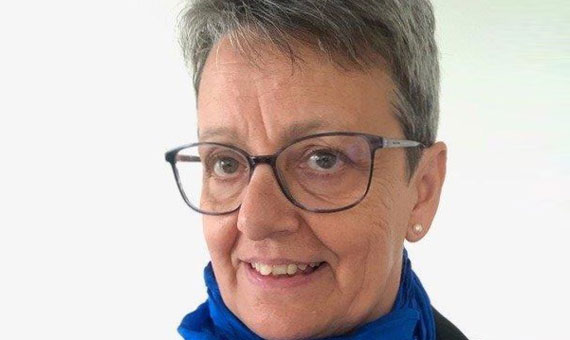
Annegret Kramp-Karrenbauer, Germany’s defence minister, agrees with advocates of radical change in the nation’s Roman Catholic Church.

Kramp-Karrenbauer, 57, often known as “AKK” in German media, a member of the governing Christian Democratic Union (CDU), told journalists on Feb. 3 that she wished there were many more women in church leadership, beginning with their serving as deacons.

“And I am for the abolition of celibacy. It would help to make more people enthusiastic to serve the church,” she said, adding that the decision to live without a family poses too great an obstacle for those wanting to dedicate their lives to the church.

Kramp-Karrenbauer’s fellow CDU member, Heribert Hirte, said in a telephone interview that AKK entered a political minefield when she called for an end to celibacy in the priesthood. He said the church opposes such political intervention into its internal affairs. Still, he praised Kramp-Karrenbauer for her courage in making a public statement.

Hirte, a Catholic, said that women are getting increasingly impatient as they wait for the church to give them a greater role. And an increasing number of Germans, he said, don’t care at all about religion.

How Amazon synod laid groundwork for reforms

Pope Francis was never going to fall into the trap set for him by his opponents over the Amazon Synod. His response, contrary to the initial reaction, propels the Church on a path of ongoing reform. It’s just not in the way people expected.

After bishops from the region voted overwhelmingly in favour to ordained married men as priests in the Amazon, those intent on thwarting this pontificate kicked up such a fuss that any shift Francis made risked totally distracting from the central message of the Synod: the Church’s work to protect the environment and to stand in solidarity with the Amazon’s indigenous communities.

The 83-year-old Roman Pontiff was left in a bind. Faced with a pincer movement, the Pope appeared simply to ignore the contested questions around ordination in his text – on married men, and female deacons – and upheld the status quo.

But the story does not end there. The Pope’s response has opened doors rather than closing them and has laid the groundwork for future reforms. Francis did not say “no” to married priests in the document just “not at the moment.”

In his post-synodal exhortation, Querida Amazonia, Francis made no explicit mention of the ordination of married men and only affirmed what “cannot be delegated” from the priesthood. He set the framework for discussions but did not silence any voice. All the hot-button issues remain on the table, while a wider debate about how to devolve power away from a tiny group at the top of the Church hierarchy is very much under way.

In the Synod’s final text 128 bishops voted to ordain married deacons as priests in remote regions while 137 in favour of continuing discussions on female deacons.

Coronavirus: Holy Mass suspended in northern Italy

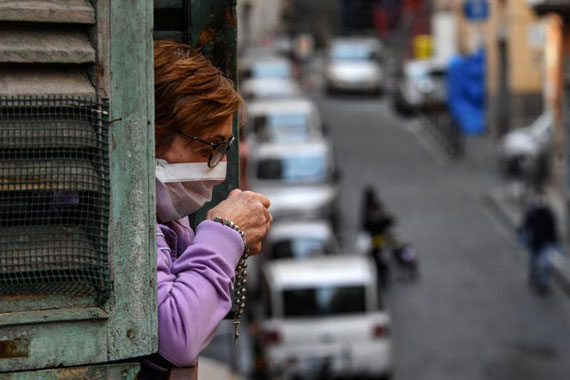
Several Catholic dioceses in northern Italy have suspended Mass and other activities to help contain the spread of COVID-19, the respiratory disease caused by coronavirus. The northern regions of Italy saw a dramatic uptick in coronavirus cases over the weekend, prompting some regions to suspend all events or gatherings of any form, in public or private. In response to the outbreak, dioceses in the area have taken various measures, including cancelling Masses and asking Catholics to receive the Eucharist only in the hand. Italian officials have also imposed quarantine restrictions on several towns in the Lombardy and Veneto regions, where most of the infections have occurred. The number of coronavirus cases in Italy has reached 152. Three people have died in what is the highest number of cases in Europe.

Germany’s synodal assembly draws praise, criticism from participants

The first Synodal Assembly on the future of the Catholic Church in Germany drew both praise and some criticism, with many of the 230 participants lauding what they called a special atmosphere in the debates on key reforms. Cardinal Reinhard Marx, president of the German bishops’ conference, said the spirit of the talks had been “positive and encouraging” and referred to the synodal path process as a “spiritual experiment,” reported the German Catholic news agency KNA.

Thomas Sternberg, president of the Central Committee of German Catholics, which represents laypeople, said: “No one is disputing the other’s piety here.” A “new image of the Church” had been seen in the Frankfurt talks, he said.

But there was criticism too, particularly from Cologne Cardinal Rainer Maria Woelki, who said: “All my fears were confirmed, actually.” He said the synodal path had installed a form of Protestant Church parliament, and delegates who were skeptical of the reform process had found it comparatively difficult to have their say.

In an interview with KNA, the cardinal also said the talks had been marred by theological shortcomings.

“My impression is that much of what belongs to theological doctrine is no longer shared here with us, and instead one believes that one can shape the Church in a completely new and different way,” he said. Many arguments presented had not been compatible with the faith and teaching of the universal Church, he added.

The Synodal Assembly is the highest decision-making body of the synodal path, an effort by the bishops’ conference and Central Committee of German Catholics to restore trust following a September 2018 church-commissioned report that detailed thousands of cases of sexual abuse by Catholic clergy over six decades. Catholic observers from eight neighbouring countries as well as delegates from other denominations and churches monitored the Synodal Assembly in Frankfurt on Jan. 30-Feb. 1.

Letter from Rome: The shadow pontificate is drawing to a close

It was only a matter of time. Pope Francis has finally lost his patience and gotten rid of Arch-bishop Georg Ganswein as prefect of the Papal Household.
According to German weekly Die Tagespost, the Pope put the 63-year-old on “indefinite administrative leave.”

He did so, the paper said, because of the German prefect’s involvement in a controversial book that Benedict XVI co-authored with Cardinal Robert Sarah. It was a slim volume that most people saw as a warning to Francis that he dare not even consider allowing the ordination of married priests.

Ganswein, who lives with Benedict and is his long-time personal secretary, was seen – rightly or wrongly – as the man ultimately responsible for dragging the retired Pope into the book project.

Forum examines religious persecution 75 years after Auschwitz liberation

As the world recognizes the 75th anniversary of the liberation of the Nazis’ infamous Auschwitz concentration camp, the vows of “never again” after the Holocaust’s horrors became known threaten to be swallowed up by religious persecution against Christians, Muslims and other groups, said panellists at a Feb. 5 forum at the U.S. Holocaust Memorial Museum.

“The unthinkable is possible, and everyone must act,” said Naomi Kikoler, director of the museum’s Simon-Skjodt Centre for the Prevention of Genocide and panel moderator.

Omer Kanat, chairman of the World Uyghur Congress’s executive committee, said the crisis for Uighur Muslims began in 2017 as China’s crackdown on the minority ethnic group intensified, calling the “eradication of Uighur culture” an “extermination.”

There are 1.8 million to 3 million Uighurs in “concentration camps,” Kanat said. “The statements of government officials are going in this direction: ‘We cannot sustain the weeds among the crops. We have to spray a chemical, and kill all of them.’” He added not only are Uighurs within China traumatized by the ongoing repression, but Uighurs living outside China are despondent over “their inability to help their family back home.”

Belgian Catholic universities to help train imams

Belgium’s Catholic universities of Leuven and Louvain will begin educating imams this year in six-year programs that aim to transmit “knowledge of the fundamental values of the Belgian State and the resulting legal principles.”

Courses in Dutch will begin in Leuven in February and in French at Louvain in the autumn. Once one bilingual university, they split into two institutions along language lines in 1968. The goal, worked out by an official commission launched after Islamist attacks in Brussels in 2016, is to provide a university-level education in Belgium for imams, who will then be registered as clergy and paid by the state as are clerics from other religions.

Another aim is to reduce the influence of Middle Eastern countries, which now send imams to serve their ethnic groups in Belgium or offer western Muslims an Islamic education. Belgian officials suspect both to be a potential source of radical ideas.

The courses in law, politics, sociology of religion and history of the Muslim world have been worked out with the Muslim Executive of Belgium, the official Muslim interlocutor.

The Muslim partner will arrange Islamic theological studies in a separate academy run by Muslims. Catholic theology will not be part of either university’s course. “In every recognised mosque, there should be someone who has attended this training,” said Justice Minister Koen Geens. “The real purpose must be to have preaching by people educated in Belgium.”

France has a similar programme, with the Catholic Institute of Paris giving courses in the secular subjects and Muslim theology taught at the city’s Grand Mosque.
German efforts to train imams have been complicated by opposition from Turkish-financed mosques but state universities offer degrees in Islamic studies that qualify Muslims to teach Islam in religion classes in state schools.

Archbishop bans receiving host in the hand

A Catholic Archbishop in Uganda has decreed that Holy Communion can in future be received only by mouth, and not in the hand. The conservative Archbishop of Kampala, the Most Rev Cyprian Kizito Lwanga, said this was because of “many reported instances of dishonouring the Eucharist that have been associated with reception of the Eucharist in the hands.” In addition, he said that those in “illicit marital co-habitation and those who persist in any grave and manifest sin” cannot be admitted to communion at all.

And in the same letter, released on 1 February and headlined: “Decree concerning the proper celebration of the Eucharist in Kampala Arch-diocese,” he said that Mass can no longer be celebrated in people’s houses or other “non-sacred places” unless “grave necessity” requires other-wise. He also stipulates that any priest who is not vested properly must sit with the laity and not the clergy.

In addition, lay people are no longer to be allowed to distribute, unless specifically designated an extraordinary minister of communion. “In celebrating and ad-ministering the Eucharist, priests and deacons are to wear the sacred Vestments prescribed by the rubrics (Can. 929). Following this canonical norm, it is strictly forbidden to admit as a co-celebrant, any priest who is not properly vested in the prescribed liturgical vestments. Such a priest should neither concelebrate nor assist at the distribution of Holy Communion. He should also not sit in the sanctuary but rather take his seat among the faithful in the congregation. Archbishop Lwanga issued the decree after meeting clergy and senior executive committees of parishes at Rubaga Cathedral in Kampala, Uganda’s PML Daily reported.

Pope’s top aides say door still open on married priests, women deacons

Although Pope Francis’s highly anticipated document on the Amazon bypasses the hot-button issues of women deacons and married priests, a number of the Pope’s close advisors have said the door is not definitively closed on either front. In his post-synodal apostolic exhortation, Querida Amazonia (Beloved Amazon), Pope Francis appears to leave the question of married priests open-ended, giving neither a clear yes or no.

Instead, he suggests a better distribution of priests in the Amazon and encourages missionary priests in the region to go to more rural areas, while also stressing the need for a priestly formation which better understands and appreciates local cultural traditions. Francis also skipped over the issue of women deacons, warning only against the temptation to “clericalize” women rather than empowering them through leading community roles which better “reflects their womanhood.” In comments to the press, Canadian Michael Czerny said the best way of looking at the Pope’s approach to married priests in the document, given that the October 2019 Synod on the Amazon proposed the ordination of Viri Probati, or tested married men, is that it is “part of a journey.”

“We are at a very important point in the synodal process. There are long roads ahead, as well as roads already traveled,” he said, and on the question of married priests, Francis “has not resolved them in any way beyond he has said in the exhortation.”

Pope shares with U.S. bishops his frustration with reaction to Amazon text

Pope Francis told a group of U.S. bishops that, like them, he is accused of not being courageous or not listening to the Holy Spirit when he says or does some-thing someone disagrees with – like not mentioning married priests in his document on the Amazon.

“You could see his consternation when he said that for some people it was all about celibacy and not about the Amazon,” said Bishop William A. Wack of Pensacola-Tallahassee.

“He said some people say he is not courageous because he didn’t listen to the Spirit,” the bishop told Catholic News Service on Feb. 13. “He said, ‘So they’re not mad at the Spirit. They’re mad at me down here,’” as if they assume the Holy Spirit agreed with them.

Bishop Wack was one of 15 bishops from Florida, Georgia, North Carolina and South Carolina who spent close to three hours with Pope Francis on Feb. 13 as part of their “ad limina” visits to the Vatican. They were joined by two from Arizona – Bishop Edward J. Weisenburger of Tucson and Auxiliary Bishop Eduardo A. Nevares of Phoenix – who had been unable to meet the Pope with their group Feb. 10.