Category Archives: International

German abbess faces possible landmark trial on church asylum

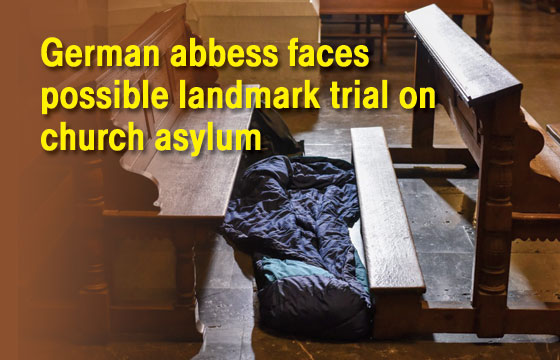
A Benedictine abbess who granted refuge to female asylum-seekers faces trial for refusing to pay a fine, reported the German Catholic news agency KNA. It could become a land-mark case by determining whe-ther granting church asylum amounts to the punishable offen-se of “aiding and abetting illegal residents,” as state prosecutors often interpret it. There is no supreme court ruling on this issue yet, KNA reported.

Mother Mechthild Thurmer granted refuge to female asylum-seekers in her monastery in the Bavarian town of Kirchschletten more than 30 times. The main hearing at the Bamberg district court was cancelled in mid-July because the judge wanted to wait for a possible further charges against her, a court spokesman told KNA.

“I acted out of Christian spirit,” the 62-year-old abbess said. “To give concrete help to a person in need can’t be a crime.”

Up to now, authorities in Bavaria have mostly dropped proceedings against people granting church asylum and imposed no penalties. In a few cases, they offered to close cases in exchange for a fine. If the accused agreed, the matter was over, although this did not amount to an acquittal. Franz Bethauser, the lawyer for Mother Mechthild, has long been hoping for a fundamental clarification of the issue by the justice system in order to give people legal certainty.

KNA said the hearing in Bamberg would not be just about Mother Mechthild. It’s also about whether the 2015 agreement between the churches and the government on church asylum still stands. Under that agreement, authorities tolerate asylum while the asylum-seeker’s individual application is exa-mined, provided that he or she is not hidden.

The Freising district court ruled in 2018 that as long as the state does not enforce an asylum-seeker’s obligation to leave the country, church asylum cannot be punishable.
Vatican publishes instructions on parish reform and diocesan restructuring

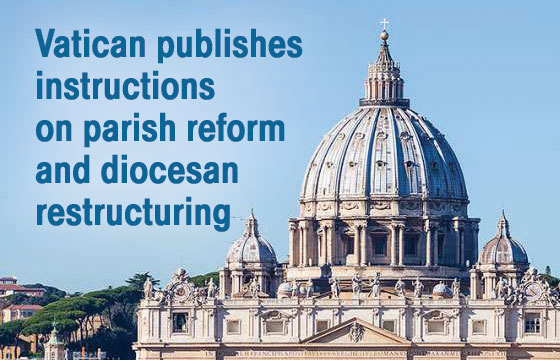
The Vatican’s Congregation for Clergy has published instructions on reforming parishes and restructuring dioceses to better serve their “singular mission of evangeli-zation.”

The 24-page document is called “The pastoral conversion of the parish community in the service of the evangelizing mission of the Church” and seeks to “foster a greater co-responsibility and collaboration among all the baptised,” according to Msgr Andrea Ripa, the under-secretary of the Congregation for the Clergy.

The under-secretary described the in-structional document as an “instrument with which to support and accompany the various projects of parish reform and diocesan restructuring.”

“One could say that the essence of the present Instruction is to recall that in the Church ‘there is a place for all and all can find their place,’ with respect to each one’s vocation,” Ripa said in an introduction to the document on July 20. The instruction, which does not introduce anything new to Church law, sets out provisions of the existing law and guidelines to preserve “the faithful from certain possible extremes, such as the cleri-calization of the laity and the secularization of the clergy, or from regarding permanent deacons as ‘half-priests’ or a ‘super laymen,’” the under-secretary wrote.

Signed by Pope Francis on June 29, the Solemnity of Saints Peter and Paul, the instru-ction promotes greater cooperation among different parish communities, emphasizing the need for the parish to be inclusive, evange-lizing, and attentive to the poor.

The document builds on the 2002 instruction from the Congregation of Clergy, “The Priest, Pastor and Leader of the Parish Community,” and the Vatican interdicasterial instruction “Ecclesia de Mysterio,” on the collaboration of laity in the ministry of priests.

It includes instructions on the suppression or merging of parishes, ways of assigning pastoral ministry within the parish, the pastoral council, the sacraments, and the renewal or “conversion” of parish and diocesan structures.

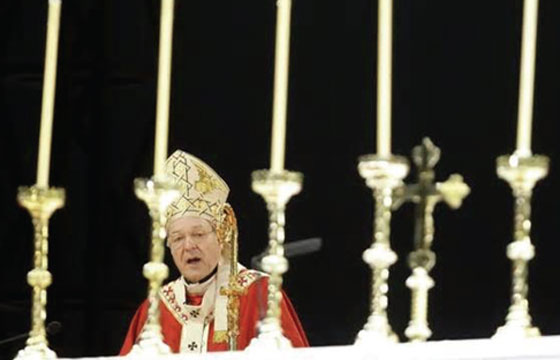
Pell says jail offers lessons for how the Church should manage money

To hear Catholicism’s most famous former inmate tell the story, the experience of being in jail actually offers improbable insights for Church management, perhaps especially managing money.

In a new video released on July 14, Australian Cardinal George Pell, who spent more than 400 days in jail after a conviction for a sexual abuse charge that was eventually over-turned by his country’s High Court, said it was important for him behind bars not only to pray but also to maintain a healthy daily routine.” Basically, we believe that Grace works through nature,” he said in the video. “And it’s one thing to have a spiritual vision, which comes from Christ. Another thing is to have a plan or a project. Of course, to implement those things you need managerial skills: Human capacity which is trained for good and godly purposes.”

World Council of Churches wants Hagia Sophia decision reversed

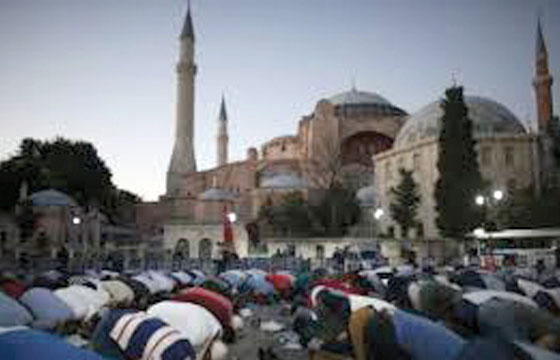
The World Council of Churches has called on Turkey”s President Recep Tayyip Erdogan to reverse his decision to turn the celebrated Hagia Sophia museum back into a mosque.

In a letter to Erdogan, the Council, which counts 350 churches as members, said the move would sow division, the BBC reported.

The Unesco World Heritage site in Istanbul has been a museum since 1934.
The president announced his decision on July 10 following a court ruling which annulled its museum status.

The Hagia Sophia was built 1,500 years ago as an Orthodox Christian Cathedral, but was converted into a mosque after the Ottoman conquest in 1453.

It was converted to a museum on the orders of Mustafa Kemal Ataturk, the founding father of modern, secular Turkey.

Since then religious services have been banned at the site, but devout Muslims have long campaigned for worship to be allowed.

The Geneva-based World Council of Churches says it represents more than 500 million Christians.

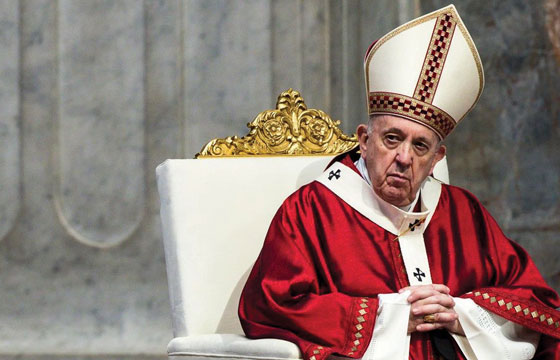
Isolated Pope Francis Faces Yet Another Setback in Pandemic

The world-wide restrictions on public events to deal with the coronavirus pandemic are the latest blow to Pope Francis, whose pontificate has been struggling in recent years to sustain the progressive hopes that the Argentine raised early in his reign.
The pandemic has hindered Pope Francis’ ability to communicate his teachings and promote his causes, from the environment to the rights of migrants, as well as his efforts to tackle the Vatican’s financial troubles. The lack of public events and personal interactions are particular burdens for a Pope who is more at home communicating with crowds than in dealing with the Vatican’s bureaucracy.

Even before the pandemic, the early progressive trend of his pontificate, exemplified by openings toward divorced and gay Catholics, had run out of momentum amid internal church divisions. A series of scandals over clerical sex abuse of minors in various countries around the world, as well as affairs involving financial mismanagement at the Vatican, had cast a shadow on the institution.

Now, in the eighth year of the 83-year-old Pope’s reign, some Vatican insiders and observers are even looking toward its end. “The Next Pope” is the title of two books scheduled for publication over the next few weeks.

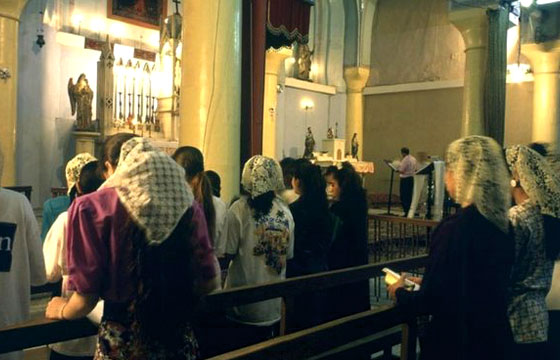
Iraq’s Christians ‘close to extinction’

In an impassioned address in London, the Rt Rev Bashar Warda said Iraq’s Christians now faced extinction after 1,400 years of persecution.
Since the US-led invasion toppled the regime of Saddam Hussein in 2003, he said, the Christian community had dwindled by 83%, from around 1.5 million to just 250,000.
“Christianity in Iraq,” he said, “one of the oldest Churches, if not the oldest Church in the world, is perilously close to extinction. Those of us who remain must be ready to face martyrdom.”
He referred to the current, pressing threat from Islamic State (IS) jihadists as a “final, existential struggle,” following the group’s initial assault in 2014 that displaced more than 125,000 Christians from their historic homelands.

“Our tormentors confiscated our present,” he said, “while seeking to wipe out our history and destroy our future. In Iraq there is no redress for those who have lost properties, homes and businesses. Tens of thousands of Christians have nothing to show for their life’s work, for generations of work, in places where their families have lived, maybe, for thousands of years.”

IS, known in the Arab world as Daesh, was driven from its last stronghold at Baghuz in Syria in March after a massive multi-national military campaign, effectively spelling the end of its self-declared “caliphate.”

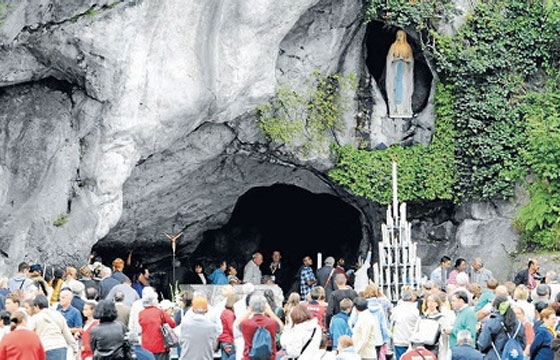
Facing $9 million deficit, Lourdes launches online pilgrimage

As Europe slowly but steadily re-opens after coronavirus closures, Catholics across the continent are being allowed back to Mass. However, organized groups of pilgrims in large numbers are still a long way off, leading the famed Shrine of Our Lady of Lourdes to organize an online pilgrimage and crowd funding drive to try to make up a $9 million deficit.

“Lourdes needs the world, and the world needs Lourdes,” said Monsignor Olivier Ribadeau Dumas, rector of the Sanctuary of Our Lady of Lourdes in southern France.

“Lourdes United” took place on July 16, and it included a 15-hour live session, in different languages, with Masses, proce-ssions, rosaries and other prayers. The date was significant: It’s the anniversary of the last Marian apparition recorded in Lourdes.

While the Vatican has approved devotion to the apparition and installed a feast day to Our Lady of Lourdes, it and other apparitions still are considered “private revelations” and thus not mandatory for Catholic belief.

Amazon conference is ‘experiment in Church structure’

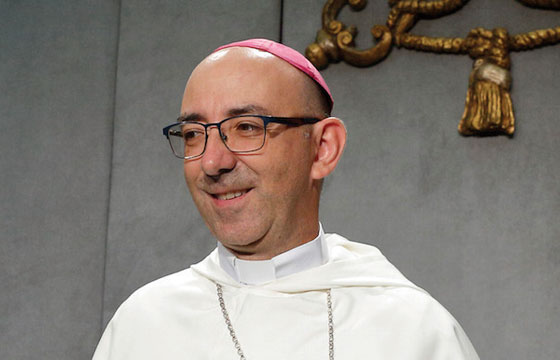
Following the decision on 29 June to establish an Amazon Ecclesial Conference, its president, Cardinal Cláudio Hummes, former archbishop of São Paulo, Brazil, and its vice-president, Bishop David Martínez de Aguirre, of Puerto Maldonado in southern Peru, have shed further light on the significance of the new body and how it will be structured. A key feature is its synodal nature, which will emphasise the participation of the laity, especially women and indigenous people.

Cardinal Hummes commented: “Following a suggestion from the Pope himself, this is not going to be an episcopal conference, like so many others, but what he has called the Ecclesial Conference of the Amazon Region. The reason for this is that it is meant to be an expression of the synodal nature of the Church in the region…Like the Amazon Synod, where there were bishops who had a vote, but many others, laypeople, indigenous, with the right to speak, it is a Church that listens to the communities and with them looks for ways of evangelising that are incarnate and inculturated.”

Bishop Martínez de Aguirre went further and stressed that the new body is intended to be a model for the Church as a whole. “We can say that this could be considered a sort of experiment – I’m not sure if that’s the most appropriate word – for a new form of Church life, based on synodality, in which the bishop is no longer someone that leads the Church on his own, but someone who is part of the whole Church journey…As Pope Francis said in The Joy of the Gospel, the pastors are there, sometimes in front, sometimes in the middle and sometimes at the back.”

Humanity Is Facing ‘Tsunami of Humanitarian Crises’

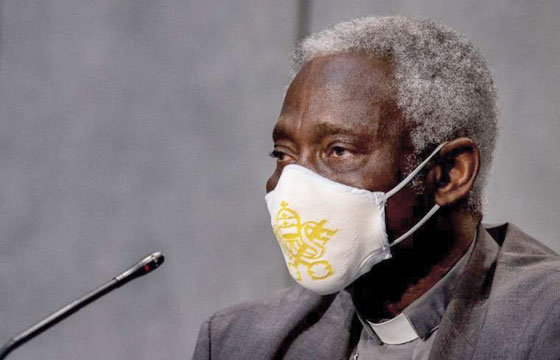
The head of the Vati-can’s coronavirus taskforce said that humanity is facing “a tsunami of humanitarian crises” caused by the con-vergence of medical, eco-nomic and environmental factors.

This tsunami “has spread and spared no human life and no institution,” said Ghanaian Cardinal Peter Turkson, who also heads the Vatican department for Integral Human Development, and in the wake of the pandemic and its lockdowns domestic violence, discrimination, prejudice, and global conflicts have all “reared their ugly head.”

Cardinal Turkson spoke these words during a July 7 Vatican press briefing, in which he added that the world is currently “facing one of the worst humanitarian crises since the Second World War.”
The cardinal noted his appreciation for the recent United Nations appeal for a global ceasefire, insisting that “there should be only one battle in the world: the battle against COVID-19.”

“Political tensions are rising, because of the decline in employment or the restrictions on movements,” he suggested, adding that the commission recognizes that “there can be no peace without reconciliation and healing.”

Pope weaves ‘Tale of Two Cities’ on Hong Kong and Hagia Sophia

Cue the soundtrack from film adaptations of the Dickens classic, because what Pope Francis has given us, ladies and gentlemen, is a Tale of Two Cities… only the settings aren’t London and Paris, they’re Beijing and Ankara.
We’re in the middle of July, which means most of Italy, including the Vatican, is down-shifting in preparation for the August holidays. Though a Pope can make news anytime he wants, in reality about the only time he’s on the public stage is for his noontime Sunday Angelus address, and the last two have been humdingers.
The headline was what the pope didn’t say. An advance text circulated by the Vatican included a passage about Hong Kong which Francis chose to skip, fueling endless speculation about whether China had somehow exercised pressure on the Vatican, or whether the Pope maybe got cold feet.
On July 13, by way of contrast, the story was what the Pope did say that wasn’t in the advance text. He spoke out on Turkey’s decision to revert the fabled Christian basilica of Hagia Sophia from a museum to an active mosque, a move which had been strenuously resisted by Turkey’s small Christian co-mmunity centering on the Patriarchate of Constantinople.
“I’m thinking of Santa Sophia … I am very pained,” he said, in language that did not appear in the advance version of his remarks circulated by the Vatican Press Office.
So, the obvious question presents itself: Why did Francis speak out on Hagia Sophia, but bite his tongue on Hong Kong? In all likelihood, the distinction, at least in part, has to do with who’s most likely to be paying attention and most likely to be unhappy: Turkey, in the case of Hagia Sophia, and China with regard to Hong Kong.
In other words, it’s the difference between Ankara and Beijing.
To begin with, Turkey is a regional power while China is a global superpower. Diplo-matically, there’s a lot more to lose in fraying relations with Beijing than Ankara.