
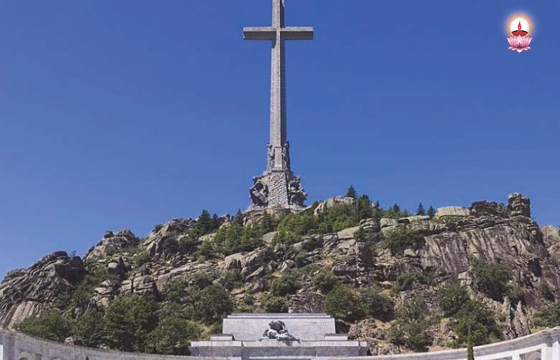
A group of Spanish lawyers has launched petitions and lawsuits to prevent the removal of crosses by local officials, after claims that Christian symbols are linked with the country’s former dictatorship.
“Many towns are being pressured to get rid of public crosses, which local people have spent weeks and months defending,” said Maria Riesco, spokeswoman for the Association of Christian Lawyers. “We are checking the documentation and investigating each case, as well as maintaining a dialogue with regional governments in hopes of having them restored.”
Riesco, a Catholic, spoke as the Valladolid-based association announced legal proceedings against the mayor of Aguilar de la Frontera, near Cordoba, for ordering the demolition of a cross outside the town’s Carmelite convent.
In a Feb. 12 interview with Catholic News Service, she said the 20-foot concrete cross had been taken down illegally amid Catholic protests, in violation of religious freedom.
The press office of the Spanish bishops’ conference told February 12 the Association of Christian Lawyers was acting independently of the church. It said the conference would not comment on the removal of public crosses.
Meanwhile, Polonia Castellanos, lawyers association president, said action was also under-way to protect crosses in Spain’s western Extramadura region, after at least 34 municipalities were ordered to remove them from streets and parks.
Category Archives: International
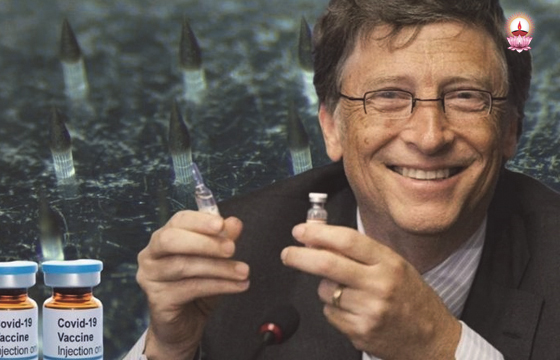
Bill Gates Hypes ‘Next Pandemic’ Hysteria
Microsoft multi-billionaire Bill Gates is calling for a “global alert system” backed by “mega-diagnostic platforms” that could test over “20% of the global population every week” in preparation for the next pandemic.
“The world wasn’t ready for the COVID-19 pandemic. I think next time will be different,” declares the pro-abortion philanthropist, warning that “the threat of the next pandemic will always be hanging over our heads — unless the world takes steps to prevent it.”
“The world needs to regularly run germ games — simulations that let us practice, analyze and improve how we respond to dis-ease outbreaks, just as war games let the military prepare for real-life warfare,” exhorts Gates, boasting his foundation has donated $1.75 billion in the fight against COVID-19.
Researchers say the vaccine zealot has become “the subject of a diverse and rapidly expanding universe of conspiracy theories,” including 44% of Republicans and 19% of Democrats in the United States who believe Gates “is linked to a plot to use vaccinations as a pretext to implant microchips into people.”
“Until vaccines reach every-one, new clusters of disease will keep popping up,” Gates asserts. “Those clusters will grow and spread. Schools and offices will shut down again. The cycle of inequality will continue.” Gates did not confirm if a blanket bombing of the globe with vaccines would include encoding of medical information in a patient’s skin using near-infrared quantum dots (NIR QDs).
A Massachusetts Institute of Technology (MIT) project fund-ed by the Bill and Melinda Gates Foundation developed the technique — popularly misunderstood as “a cover for implanting some form of microchip, radio frequency identification (RFID) chip or other digital tracking device” — interpreted by some as the satanic “Mark of the Beast,” the Australian Strategic Policy Institute noted.
The MIT report, published in December 2019 in Science Translational Medicine, confirm-ed that “intradermal QDs can be used to reliably encode information and can be delivered with a vaccine, which may be particularly valuable in the developing world and open up new avenues for decentralized data storage and biosensing.”
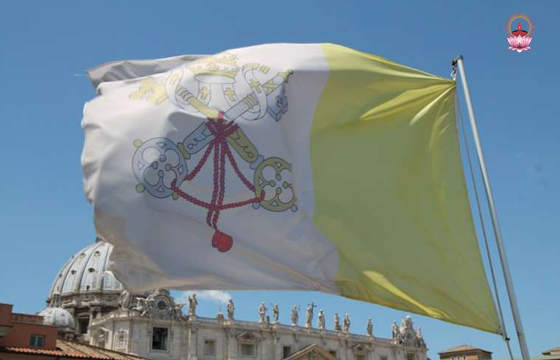
Vatican projects nearly 50M-euro deficit due to COVID losses
The Vatican said it expects a deficit of nearly 50 million euros ($60.7 million) this year because of pandemic-related losses, a figure that grows to 80 million euros ($97 million) when donations from the faithful are excluded.
The Vatican released a summary of its 2021 budget that was approved by Pope Francis and the Holy See’s Council for the Economy, a commission of outside experts who oversee the Vatican’s finances. The publication was believed to be the first time the Vatican has released its projected consolidated budget, part of Francis’s drive to make the Vatican’s finances more transparent and accountable. The Vatican has run a deficit for the past several years, narrowing it to 11 million euros in 2019 from a hole of 75 million euros in 2018. The Vatican said Friday it anticipated the deficit would grow to 49.7 million euros in 2021 but that it expected to make up the shortfall with reserves.
Francis particularly wanted to release information about the Peter’s Pence collections from the faithful, which are billed as a concrete way to help the pope in his ministry and works of charity but are also used to run the Holy See bureaucracy.
The funds have come under scrutiny amid a financial scandal about how those donations were invested by the Vatican’s secretariat of state.

Pope names first woman under-secretary with rights to vote
Pope Francis February 6 appointed a Spanish priest and a French religious sister as under-secretaries of the Synod of Bishops.
It is the first time a woman has held a position of this level within the general secretariat of the Synod of Bishops.
Father Luis Marín de San Martín and Sister Nathalie Becquart will replace Bishop Fabio Fabene, who was named secretary of the Congregation for the Causes of the Saints in January.
Working with and under secretary general Cardinal Mario Grech, Marín and Becquart will prepare the Vatican’s forthcoming synod on synodality, scheduled for October 2022.
In an interview with Vatican News, Cardinal Grech said in this position, Becquart will vote in future synods alongside other voting members, who are bishops, priests, and some religious men.
During the 2018 youth synod, some people asked why religious and consecrated women could not vote on the synod’s final document.
According to the canonical norms governing synods of bishops, only clerics – that is deacons, priests, or bishops – can be voting members.
Grech noted February 6 that “during the last Synods, numerous synodal fathers emphasized the need that the entire Church reflect on the place and role of women within the Church.”
“Even Pope Francis highlighted several times the importance that women be more involved in the processes of discernment and decision making in the Church,” he said.
“Already in the last synods, the number of women participating as experts or auditors increased. With the appointment of Sister Nathalie Becquart, and the possibility that she will participate with the right to vote, a door has been open,” Grech stated. “We will then see what other steps could be taken in the future.”
Sister Becquart, 51, has been a member of the Congregation of Xavieres since 1995.
She has been one of five consultors, four of whom are women, to the general secretariat of the Synod of Bishops, since 2019.
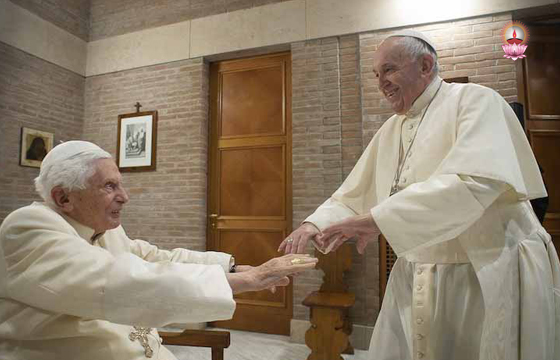
Pope announces ‘world day of grandparents’
Pope Francis has announced a new “world day of grandparents and the elderly” to recognised often-forgotten older generations.
Speaking after the Angelus yesterday, he praised the “precious voice” and “wisdom” of the elderly, and said it was important that children are allowed to meet and learn from their grandparents.
He timed his announcement two days before tomorrow’s feast of the Presentation of Jesus in the Temple, when Simeon and Anna, both elderly, recognised Jesus as the Messiah.
“The Holy Spirit still arouses thoughts and words of wisdom in the elderly today: their voice is precious because it sings the praises of God and guards the roots of peoples,” Pope Francis said. “They remind us that old age is a gift and that grandparents are the link between generations, to transmit to young people an experience of life and faith.
“Grandparents are often forgotten and we forget this wealth of preserving the roots and transmitting.”
Pope Francis said: “It is important that grandparents meet their grandchildren and that grandchildren meet with grand-parents, because – as the prophet Joel says – grandparents will dream in front of grandchildren, they will have illusions [great desires], and young people, taking strength from their grand-parents, will go on, prophesy.”
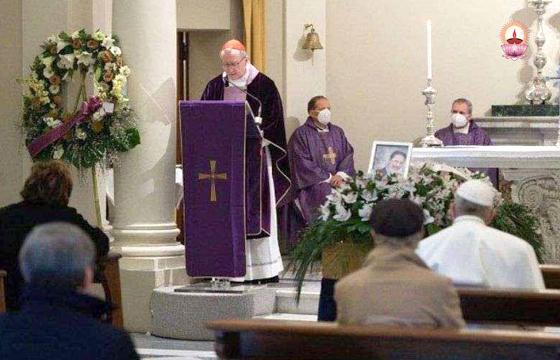
Pope attends funeral of his personal physician
Seated before a casket covered with flowers, Pope Francis attended the funeral of his personal physician, Dr Fabrizi Soccorsi, on Jan. 26.
The funeral Mass was celebrated by Cardinal Pietro Parolin, Vatican secretary of state, at the Church of Santa Maria Regina della Famiglia, which is in the Governor’s Palace inside Vatican City. Soccorsi, 78, had been admitted to Rome’s Gemelli hospital December 26 because of cancer, according to the Italian Catholic agency SIR.
However, he died Jan. 9 of “pulmonary complications” caused by COVID-19, the agency said, without providing further details.
Soccorsi had been the pope’s personal physician since 2015. He had also served as an adviser for the Vatican’s health services department and a consultant-physician to the Vatican Congregation for Saints’ Causes.
He had been head physician of the hepatology ward in Rome’s San Camillo-Forlanini hospital and director of its department of liver diseases, the digestive system and nutrition; he also taught immunology at the municipal and regional medical schools.
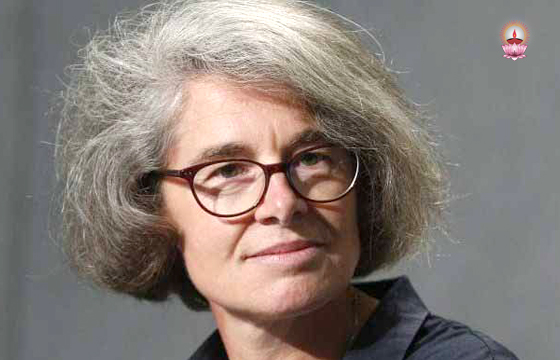
Nun says her Vatican appointment means ‘clericalist mindset is changing’
A French nun who could potentially be the first woman to cast a vote in the Synod of Bishops said that her appointment is evidence the “clericalist mindset is changing” as more and more women assume high-level decision-making responsibilities in the Catholic hierarchy.
Sister Nathalie Becquart told journalists that Pope Francis has been underlining the importance of including women in the decision-making processes, helping move the Church from a clericalist attitude towards a more synodal one.
“How can we somehow end with a clerical Church, where there have been abuses, of power and other kind of abuses,” she asked, during a conference transmitted live from Rome via Zoom. “By being like Christ, by being at the service of others and accompanying others.” The Synod of Bishops is a product of the Second Vatican Council, and since the late 1960s it has been meeting in Rome semi-regularly to discuss a wide array of topics. It serves as an advisory body to the pope, with no actual decision-making power.
No woman has ever voted in one of these meetings, though they have regularly taken part as observers, advisers, auditors and experts. Becquart, appointed by Pope Francis as undersecretary of the Synod of Bishops, could become the first woman to cast a vote. Though there’s no written rule that says the undersecretary does vote, it has been the tradition thus far. Furthermore, Maltese Cardinal Mario Grech, told the Vatican’s in-house media that “a door has been opened” for her to vote in the upcoming synod, to be held in 2022, on the issue of synodality.
“We will then see what other steps could be taken in the future,” he said regarding the role of women in decision-making positions within the Church. But Becquart does not see her appointment as being about power, but rather, service: “Now that I have been appointed, the question is, how can I be of service? How can I use this authority for the service of the Church?”
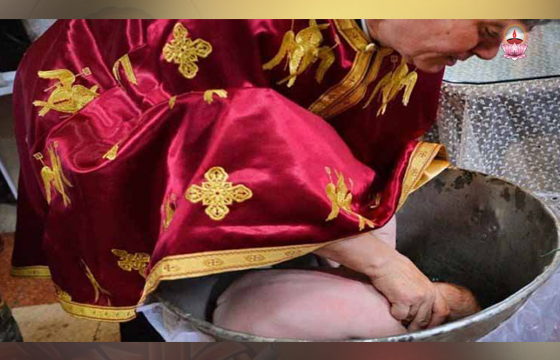
Romania: Church under fire after child dies during baptism
Authorities in Romania are probing a Christian priest in connection with the death of a baby during the baptism ceremony of the child. The baby had died of a heart attack after the bishop had plunged the child’s head underwater three times during a baptism. According to reports, the six-week-old child’s lungs were filled up with water which led to a cardiac arrest. The incident occurred on February 1 in Suceava, northeast Romania. The baby was rushed to the hospital but died a few hours later following the incident.
A spokesperson of the hospital confirmed the death due to baptism saying, “A one-month-and-a-half baby was found in cardiac arrest in the church after the baptism service. The baby was respited by the SMURD unit that arrives on the spot.”
“He was hospitalized in serious condition in the hospital’s intensive care unit, was intubated and mechanically ventilated,” the spokesperson added. Reacting to the child’s death, the father of the child said, “The boy was crying but the priest submerged him three times in water and he inhaled water. [I] removed him, wiped him, from the doctors I found out he inhaled 110 ml of water… If you see a child with a gaping mouth and crying you wouldn’t immerse him completely in water, would you?” More than 80 percent of people in Romania are Orthodox and the church’s baptisms are big events comparable to weddings.
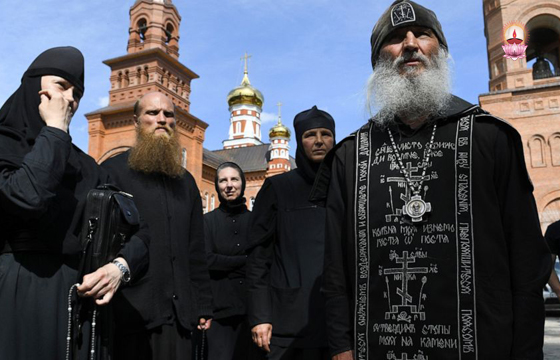
About 4,000 Russian clerics, monks, nuns have been sick with corona virus
As of January 27, 360 clergymen, monks, and nuns of the Russian Orthodox Church are undergoing treatment for corona virus in Russia, Patriarch Kirill’s working group said on Wednesday. The overall number of clerics, monks, and nuns sick with corona virus halved on Wednesday as compared to the previous day, the Russian Orthodox Church said.
In total, 3,915 clergymen, monks, and nuns have come down with corona virus. The number of recoveries increased by 11 on Wednesday as compared to the previous day.
As of today, Russia has recorded 144 fatalities caused by complications of corona virus among clergymen, monks, and nuns. Of the 144 deceased, 14 are clergy from Moscow parishes.
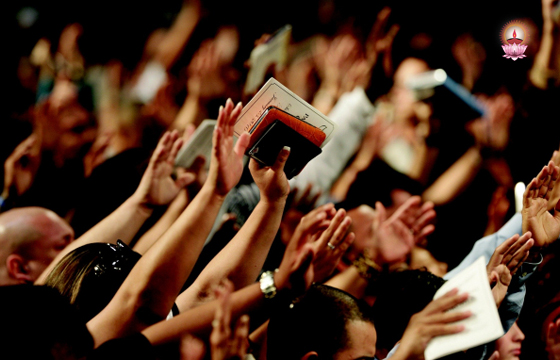
42% of Americans say churches are ‘too segregated’: study
A new survey from Lifeway Research found that less than half of Americans believe the nation’s churches are too segregated, yet most believe religious leaders play a “positive role” in improving race relations.
The survey of 1,200 Americans released found that 42% of U.S. adults believe “churches in America are too segregated,” while 36% disagree and 22% aren’t sure.
Americans are evenly split on the question of whether the nation has “come so far on racial relations,” with 46% agreeing and 46% disagreeing. However, white Americans are the most likely to say we’ve made significant progress (51%), while African Americans are the most likely to disagree (66%).
Overall, 38% of white Americans and 52% of black Americans believe churches are too segregated. When thinking about how to improve race relations, most Americans (57%) say religious leaders play a positive role.
In 2014, 74% of Americans agreed the nation has “come so far on racial relations.” The newest survey found a 28-point decline on that question.
Most Americans (58%) say race relations grew “more strained” after former President Donald Trump was elected in 2016. Eighteen percent say race relations stayed the same, while 11 percent say they improved.
Nearly seven in 10 Americans (69%) say racial diversity is good for the country, while just one-quarter (23%) say it is not.