
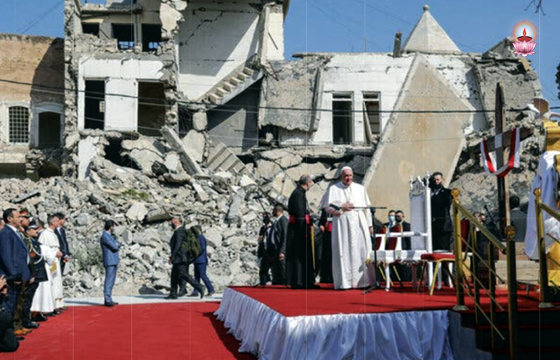
An elderly Pope Francis bowing and asking God’s forgiveness for the violence unleashed in the square of the four churches in Mosul; the choral participation of Muslims, Christians, Yazidis and Sabeans, all in traditional costume, survivors of a violent uprooting; the crumbling walls of the churches under reconstruction, where the monument to the martyrs and to those who died under the murderous fury of bloodthirsty hired men is blessed… I was moved to see all these buds of rebirth in a country and especially in a people that risked crumbling away like dust on the wind to disappear.
Iraq, like Iran, influenced by the Zoroastrian tradition, celebrates the new year in spring, on March 21. This year, the new spring came a few weeks earlier, with the pontiff who revealed the resurrection of a people who seemed destined to be swallowed up by terrorism, emigration, division to the eyes of the whole world.
I underline “people” and not “state”: The Iraqi state is still crippled by division, laying mutual blame, yet to rebuild harmony within, but the people show us examples of hope in coexistence and the future. Young Muslims and Christians rebuilding mosques and churches in Mosul is something that has been going on for some time. The Pope highlighted this by showing the power of hope that overcomes oppression; the resurrection that overcomes death.
Category Archives: International

Iranians are happy about the Pope-Sistani meeting, not the fundamentalists
Pope Francis’s visit to Iraq on March 5-8 has had several repercussions in Iran, especially the meeting between Francis, the leader of world Catholicism, and Ayatollah Ali al-Sistani, one of the most important Shia religious leaders.
Some, including Mohammad Masjedjamei, former Iranian ambassador to the Holy See, mentioned Pope John Paul II’s desire to visit Iraq 21 years ago and the opposition to it by then-leader Saddam Hussein.
For many Iranians, the most important part of the trip was the Pontiff’s visit to al-Sistani, which is of great value for peace in the region and the safety of Iraqi Christians.
At present, Sistani is the world’s most important Shia leader, and the city of Najaf, where he lives, has been for centuries the home of Shia leaders.
After the Islamic Revolution of 1979, Iran’s political clergy sought to change this situation, by trying to turn Qom – the main seat of Iran’s Shia clergy located in central Iran – into the centre of world Shiism.
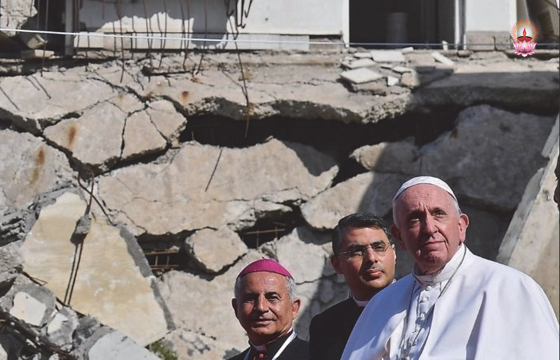
Iraq: Pope’s Trip Leaves Collateral Damage
Pope Francis’ Iraq trip has triggered a tidal wave of mockery on social media, with Muslims gleefully announcing that the Pontiff has surrendered to Isla-mic supremacy, an Iraqi Muslim convert has told Church Militant.
The Kurdish response to Francis on the final day of his visit has been largely negative, as “many Kurds see the pope as a person who flatters wicked people like President Erdoðan,” observed Nasser Aza, an academic from Erbil.
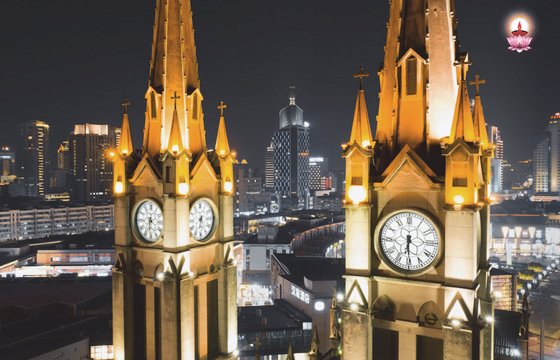
Beijing sets new rules that ignore Vatican deal
The Chinese Communist Party has promulgated an order establishing a procedure for the selection of Catholic bishops in China that makes no provision for any papal role in the process.
On 11 February, the magazine Bitter Winter translated the new regulations, that will come into force on 1 May, into English, and the Catholic News Agency summarised the new process: “China’s state-run Catholic Church and bishops’ conference will select, approve, and ordain episcopal candidates – with no mention of the Vatican’s involvement in the process,” it said.
In September 2018 the Vatican and Beijing struck a still secret deal understood to provide for the Communist Party offering three names of possible bishops to the Pope, who would choose one of them.
Pope Francis told reporters at that time that the agreement envisions “a dialogue about potential candidates. The matter is carried out through dialogue. But the appointment is made by Rome; the appointment is by the pope. This is clear.”
Vatican officials have defended the September 2018 deal as a good first step towards ensuring greater freedom and security for the Catholic community in China. This would be achieved by bringing about one Church, in a process that combined the Chinese Patriotic Church, under the authority of the Communist Party, with the Under-ground Church whose first allegiance in ecclesial matters is to Rome.
This secret deal expired on 22 October 2020 and was renewed on the same day. The Vatican issued a communique saying Beijing and Rome had “agreed to extend the experi-mental implementation phase of the provisional agreement for another two years.”
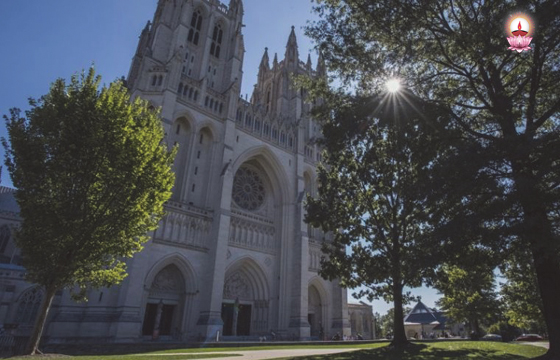
National Cathedral tolls bell 500 times to honour 500K Americans who died from COVID-19
The Washington National Cathedral tolled its 12-ton bell 500 times in memory of the approximately 500,000 Americans who have died due to COVID-19 on Monday. The cathedral, affiliated with The Episcopal Church and is known as the Cathedral Church of Saint Peter and Saint Paul in the City, livestreamed the event in the afternoon. The ceremony included prayers and reflections from individuals representing multiple faith traditions.
Rev. Canon Jan Naylor Cope, provost of the National Cathedral, read a passage from the Book of Common Prayer. “We thank you for giving them to us,” she read from the prominent Anglican Commu-nion liturgical resource, “to know and to love as companions on our earthly pilgrimage.”
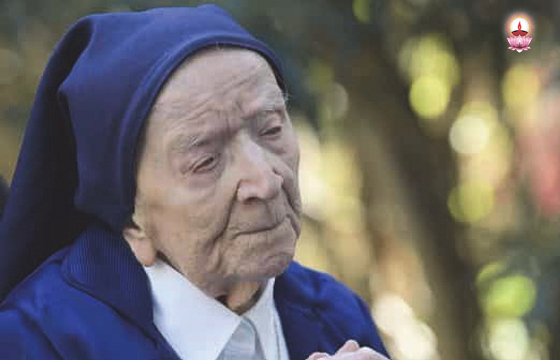
COVID-defying French nun toasts 117th birthday with wine and prayer
It was packed. Some of Sister André’s’s great-nephews and great-great nephews were expected to join a morning video call for her, and the bishop of Toulon was due to celebrate a Mass in her honor.
“She was very proud when I told her. She said, ‘A Mass for me?’” Tavella said.
The menu for her birthday feast included a starter of foie gras, followed by capon with fragrant mushrooms and wrapping up with baked Alaska, the nun’s favorite dessert.
“All of it washed down with red wine, because she drinks red wine. It’s one of her secrets of longevity. And a bit of Champagne with dessert, because 117 years have to be toasted,” Tavella said.
As for packing dozens of candles onto a cake, “we stopped trying a long time ago,” he added. “Because even if we made big cakes, I’m not sure that she would have enough breath to blow them all out. You would need a fire extinguisher.”
Sister André’s birth name is Lucile Randon. The Gerontology Research Group, which validates details of people thought to be 110 or older, lists her as the second-oldest known living person in the world, behind only an 118-year-old woman in Japan, Kane Tanaka.
Tavella told French media earlier this week that Sister André tested positive for the coronavirus in mid-January but she had so few symptoms that she didn’t even realize she was infected. Her survival made headlines both in France and beyond.
“When the whole world suddenly started talking about this story, I understood that Sister André was a bit like an Olympic flame on a ‘round the world tour that people want to grab hold of, because we all need a bit of hope at the moment,” Tavella said.
By strange coincidence, Tavella was celebrating his 43rd birthday.
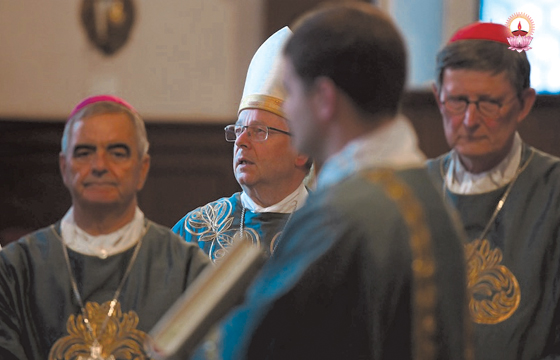
Record numbers leave Church in Cologne as anger grows
Anger is increasing in the Cologne archdiocese over Cardinal Rainer Maria Woelki’s refusal to publish the results of the investigation into the handling of abuse cases, as record numbers of Catholics opt to quit the Church. The number of Catholics officially leaving the Church has increased at an unprecedented rate, by 70%, and is now a record 1000 a month.
In order to leave the Church in Germany and stop having to pay 8-9% of net income in compulsory church tax which is collected at source, Catholics have to make an appointment with their municipal office and state that they intend to leave in writing.
The number wanting to leave in the Cologne archdiocese has risen so sharply in recent weeks that hundreds of extra appoint-ments have had to be squeezed in. The archdiocesan council, an elected body of representatives of the parishes and Catholic associations in the archdiocese which advises the archdiocesan leadership, has taken the unprecedented step of terminating its cooperation with the archdiocese.
According to the Kölner Stadt-Anzeiger, the council decided at a plenary meeting on 28 January to suspend active cooperation with the archdiocese. The decision was unanimous.
More than 50 priests, including the secretary of the priests’ council, have, moreover, sent highly critical, urgent letters to Cardinal Woelki accusing him of forcing them to distance them-selves from the archdiocese and pointing out that he is responsible for their conflict of loyalties.
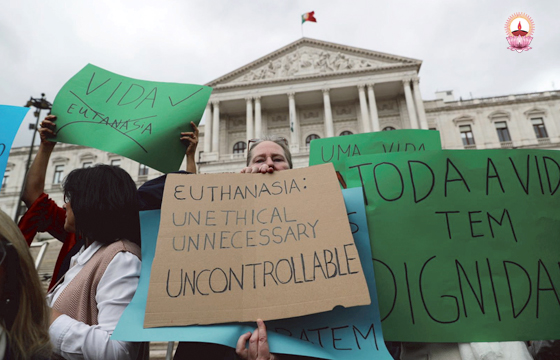
Portugese Church welcomes challenge to euthanasia law
Church leaders in Portugal have welcomed moves by their country’s president to block a new euthanasia law, citing its imprecision and implications for human rights.
“I find it strange that the Twenty-First Century state feels entitled and duty-bound, in the name of civilisational progress, to foster a culture of death,” said Bishop Antonino Fernandes Dias of Portalegre-Castelo Branco.
“Nobody is going to ask parliamentarians to enter upon a metanoia process… We merely ask them not to forget the real problems of those who trusted them and whom they promised to serve.”
The 72-year-old bishop was reacting to a weekend letter from President Marcelo Rebelo De Sousa to the Constitutional Tribunal, questioning the compatibility of the law on “medically assisted death”, passed on 29 January, with Portugal’s legal order.
Preaching on Sunday, he said “omniscient and omnipotent” legislators had ignored advice from top medical professors, jurists and bioethicists, while the centre-left government of premier Antonio Costa also appeared intent on using “fracturing causes” to conceal a crisis caused by Covid-19 and other national problems.
The law, merging five right-to-die bills, passed by 136 votes to 78 in the 230-seat Lisbon parliament, and will enable mentally fit over-18s to request assistance in dying if faced with “intolerable suffering, with extremely serious and permanent harm… or incurable and fatal disease.”
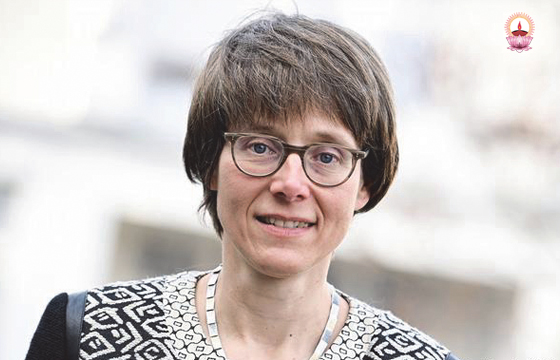
Embattled German bishops pick woman theologian as top Catholic administrator
The German Catholic Bishops’ Conference (DBK) elected a woman for the first time as the conference’s top administrator on, in a move aimed at modernizing the body. Theologian Beate Gilles was appointed as general secretary of the conference, which is based in Bonn. After her election to the post, the 50-year-old noted her skills as a runner are also well suited to her new role.
“I am an endurance athlete,” Gilles said. “That means I know that a marathon is not decided in its 40 kilometers, but rather by the 1,000 kilometers in training — that’s my distance.” Gilles is taking on the role as Germany’s bishops face deep disquiet among 22 million German Catholics as well as demands for more leadership roles for women. During virtual bishop’s conference gathering, DBK chair Georg Bätzing described Gilles’ election as a “strong signal that the bishops are fulfilling their pledge to advance women into leadership positions.”
Gilles, who takes over as general secretary on July 1, will not only be the first woman to hold the top bishops’ conference post, but also the first layperson.
The high-ranking role of general secretary is responsible for implementing decisions made by the bishops.
She currently heads a department for youth, family, and childcare in Bätzing’s Limburg diocese.
From Stuttgart, where for a decade Gilles previously headed a Catholic educational entity, colleagues wished her endurance.

Mars missions can inspire next generation scientists, papal astronomer says
As Perseverance, the latest probe on Mars, gears up to send to Earth high-definition images, video and audio of its surroundings, one papal astronomer said he hoped the fresh new discoveries will inspire future explorers.
With advanced degrees in physics, philosophy and theology, Jesuit Brother Robert Macke said, “What really inspired me to come into this field was growing up with the results that were coming out of the spacecraft missions, like Voyager, and all the photographs that nobody had ever seen before” of Saturn and its moons and other objects in the solar system.
Born in Fort Worth, Texas, in 1974, Macke told Catholic News Service he only “dabbled a little” in enjoying science fiction, influenced by his father’s interest in the genre, and he credits it with inspiring him to think of new ideas.
But it was the reality of scientific discoveries that made him say, “Wow, these are real places that you can really explore and photograph and study,” he said Feb. 19 in a call from the Vatican Observatory in Castel Gandolfo near Rome.
“Seeing the results and the images that come out of missions like Perseverance, I hope these will be an inspiration to the next generation of young scientists,” he said.
The popular imagination has come a long way since early speculations about little green men and artificial canals of some ancient civilization once populating the red planet.