
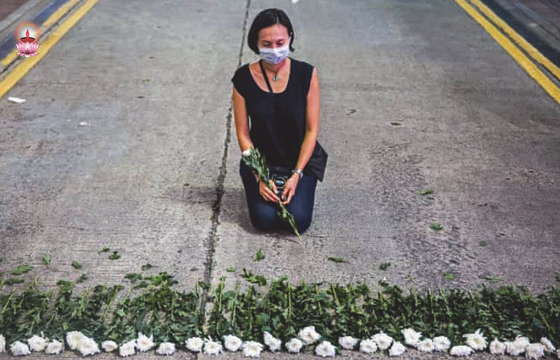
The protesters killed in Tiananmen Square in mainland China on June 4, 1989, used to be remembered in Hong Kong with an annual candlelight vigil in the city’s expansive Victoria Park, attended by crowds as big as 130,000, all holding flickering candles.
Now the lawful gatherings seem to be limited to seven Catholic churches. The reason for the dramatic downsizing? Politics and the pandemic. Police said they had to cancel the event this year and last year because of social distancing rules put in place to control the spread of COVID-19. This year’s event is the first one banned since the Chinese government in Beijing imposed a national security law on Hong Kong last June. The controversial legislation prohibits acts of secession, subversion, terrorism and collusion with foreign forces.
Category Archives: International
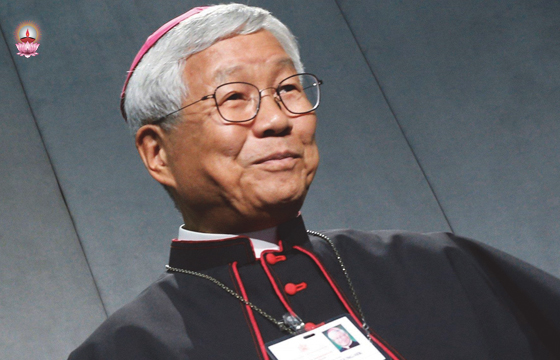
Pope names South Korea bishop prefect for clergy
Pope Francis has appointed South Korean Bishop Lazarus You Heungsik of Daejeon as the new prefect of the Vatican Congregation for Clergy.
The Vatican made the announcement June 11, adding that the outgoing prefect, Italian Cardinal Beniamino Stella, 79, would remain at the congregation until the new prefect could assume his role.
The new prefect has also been made an archbishop, the Vatican added.
Born Nov. 17, 1951, in Nonsan, Archbishop You studied in Seoul and in Rome, where he received his doctorate in dogmatic theology at the Pontifical Lateran University.

Iran expels Italian nun who has spent her life for the poor of the country
Seventy-five-year-old Sister Giuseppina Berti, who has worked for 26 years in the leprosarium of Tabriz and now lives in Isfahan in the house of the Congregation of the Daughters of Charity of St. Vincent de Paul, will have to leave Iran in the coming days. In fact, her visa has not been renewed and she has received a travel order. Her departure will make it difficult for her fellow nun, Sister Fabiola Weiss, a 77-year years old Austrian, who has dedicated 38 years to the poor and the sick in the leprosy hospital, and whose residence permit has been renewed for another year. The two religious nuns, who have dedicated their lives to the country’s sick without distinction of religious or ethnic affiliation, are forced to abandon the Congregation’s house, built in 1937.
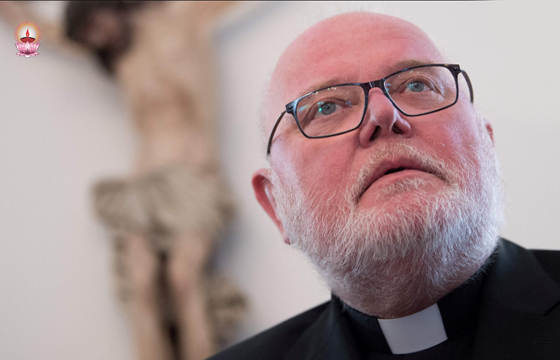
German lay Catholics ‘shattered’ by Marx resignation
The head of Germany’s lay Catholics has said he is “shattered” by the resignation of Cardinal Reinhard Marx while others have written to Pope Francis, asking him not to accept.
The head of the Central Committee of German lay Catholics (ZdK), Thomas Sternberg, with whom Marx initiated the German synodal path for church reform in December 2019, told the Rheinische Post that he was “shattered” by Marx’s resignation. “Should the Pope accept his resignation, that will leave a huge hole in the German Church”, he said.
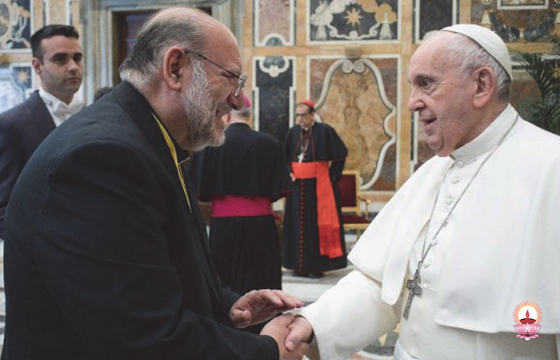
‘Old habit’ of covering up abuse must stop everywhere, pope says
Abuse against a minor is a kind of “psychological murder” that can destroy the victim’s childhood, Pope Francis told an Italian association active in the fight against child abuse and online child pornography.
“Therefore, protecting children against sexual exploitation is a duty of every nation, (which is) called to identify both traffickers and abusers,” he said during an audience May 15 at the Vatican with members of the association, Meter.
The association was founded in 1989 by Father Fortunato Di Noto, an Italian priest who has been leading the fight in Italy to protect children from online predators around the world. It works with law enforcement, government agencies and schools in fighting the crime of child sex abuse and other forms of online abuse, in prevention and offering safety and help for victims.
The pope praised its work, especially in trying to protect children from danger online.
“It is a scourge that, on the one hand, must be confronted with renewed determination by public institutions, authorities and others and, on the other hand, it requires raising even more awareness in families and different educational agencies,” he said.
“Even today, we see how often in families the first reaction is to cover everything up,” he said, adding it has always been the first reaction by other institutions, too, including the church.
“We have to fight against this old habit of covering it up,” he said. “Abuse against minors is a kind of ‘psychological murder’ and in many cases an obliteration of childhood,” he said, calling on everyone to do their part to safeguard children.
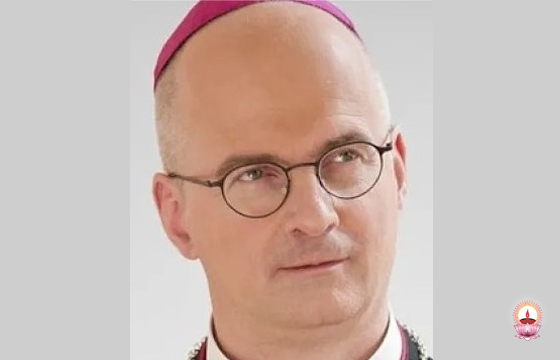
Swiss bishop appoints lay people in episcopal vicars’ place
A Swiss Catholic bishop has announced that he is appointing lay people in place of episcopal vicars in his diocese.
Bishop Charles Morerod, who has led the Diocese of Lausanne, Geneva, and Fribourg since 2011, revealed the decision in a May 25 interview with the Swiss Catholic Church’s website kath.ch. The Dominican prelate said that he had chosen two lay people and a deacon as his “lay representatives,” replacing three episcopal vicars.
“By virtue of baptism, lay people have an active role in the life of the Church and should not only take care of administrative matters, but also be active in pastoral care,” he said.
“This cooperation is a positive thing. It already exists, but we can further develop it positively.”
CNA Deutsch, CNA’s German-language news partner, reported that the three vicariates concerned will now be known as “diocesan regions.”
According to the bishop, his representatives will take care of “local issues” and discuss them with him at the diocesan level.
The Code of Canon Law, the body of ecclesiastical laws for the Latin Church, says that “In each diocese the diocesan bishop is to appoint a vicar general to assist him in the governance of the whole diocese.”
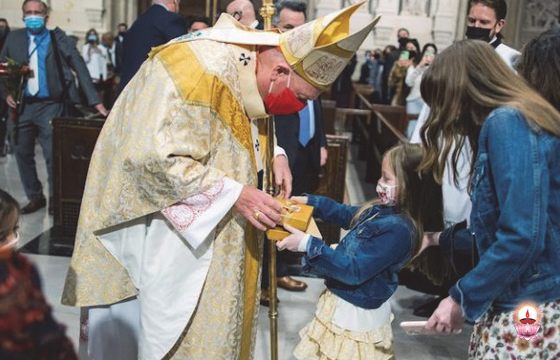
Survey: Religiosity seems to be ‘buffer’ against some pandemic stresses
The COVID-19 pandemic took a toll on participation in religious services just as it did on workplaces, but a new survey indicates strong emotional resilience from those who consider their faith vital to their existence.
That was part of the findings of a survey conducted late last year of 1,600 adults, mostly from Washington, Maryland and Virginia. Nearly 40% of the respondents identified as Catholic.
Survey results were discussed during a May 21 webinar hosted by Catholic University’s sociology department and the Institute of Human Ecology.
Respondents who reported a decline in religiosity since the pandemic had more than twice the odds of feeling isolated and lonely than respondents who did not report such a decline.
“Religiosity seems to be a buffer against negative stresses,” said Brandon Vaidyanathan, chair of the sociology department and an associate professor of sociology.
Fewer than 20% of the sample said their mental health had worsened, he added.
The one area where people report a deterioration in their lives was in feelings of isolation, but only “a very small number,” Vaidyanathan said, reported their “sense of purpose in life having been weakened.”
Vaidyanathan, who also is a fellow of the Institute of Human Ecology, and his colleagues conducted the Mental Health in Congregations Study. It was funded with grants from the John Templeton Foundation and the H.E. Butt Foundation.
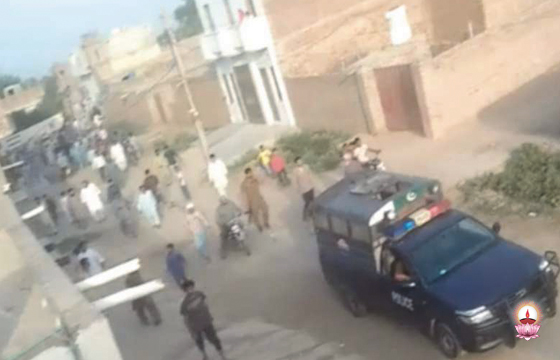
Christian Village Attacked in Pakistan
Around 200 Muslims attack-ed a Christian village in the Okara District of Pakistan.
The incident was incited May 14 when a Muslim motorcyclist, Muhammad Khalil, complained that youths cleaning a church road threw dust and water at him. At that moment, a verbal dispute took place. A few hours later, Khalil brought some friends, and they began to hit the youths with firearms and hockey sticks.
The next day, motorcyclist Mohammedan Khalil ran a raid with 200 Muslims against the Christian village. They beat Christian men and women with iron bars, overran houses, destroyed furniture, stole property and assaulted young girls.
Police were called to investigate crimes against 66 people, but 20 of the participants could not be identified.
Police still have not arrested any attackers. Based in Lahore, Kamran Chaudhary, a journalist for UCA News, told Church Militant police still have not arrested any attackers.
Day labourer Mangta Masih lost his thumb when a mob attacked his house. The 45-year-old follower of Christ.
We hid our women inside while they tried to break in. One of them grabbed me from behind, and another struck with a sickle blade. I tried to prevent the blow with my right hand. I fell down, and they kept beating us with batons. They were armed with glass bottles, stones, axes, batons and bricks. Others used stairs to climb to our roofs and started breaking our furniture. We pleaded to spare the women, but the attack continued for half an hour.
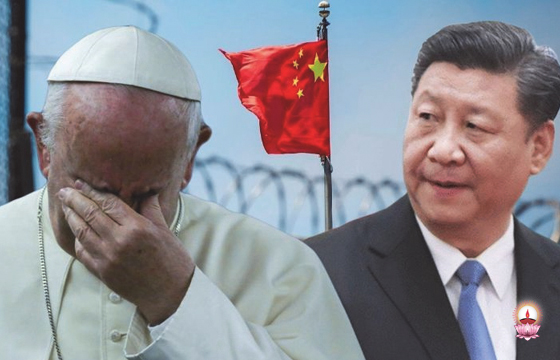
China Snubs Pope, Enforces New Clergy Laws
In a further blow to Pope Francis’ secret Sino-Vatican concordat, China is enforcing new draconian laws compelling clergy to “practice the core values of communism” and pro-mote the “sinicization of religion” — under threat of criminal sanctions.
The Measures for the Administration of Religious Clergy, issued by the Communist Party of China’s (CCP) State Bureau of Religious Affairs (SBRA), came into force on May 1 — creating an “Orwellian system of surveillance” and tightening the noose on “the already strict control on all clergy.”
The 52 articles under the measures cover the five approved religions of Buddhism, Catholicism, Protestantism, Islam and Taoism. However, the Catholic Church has been singled out for special sanctions on the issue of episcopal appointments.
Article 16 stipulates that “Catholic bishops shall be approved and ordained by the Bishops’ Conference of the Catholic Church in China” (BCCCC) with the Chinese Patriotic Catholic Association (CPCA), and BCCCC shall file a record of the ordination within 20 days to the SBRA.
Former Taiwanese bishop Andrew Tsien explains the objectives of the CPCA are “to substitute it for the true Roman Catholic Church” and, in the long term “to eliminate religion in order to achieve a pure materialistic and autocra-tic society.” The BCCC is the CCP-aligned episcopal organization.
The measure on Catholic bishops also requires “a copy of the bishop’s household registration booklet and a copy of the resident ID card” and “a statement on the democratic election of the bishop issued by the Catholic organization of the province, autonomous region, or municipality directly under the central government.”
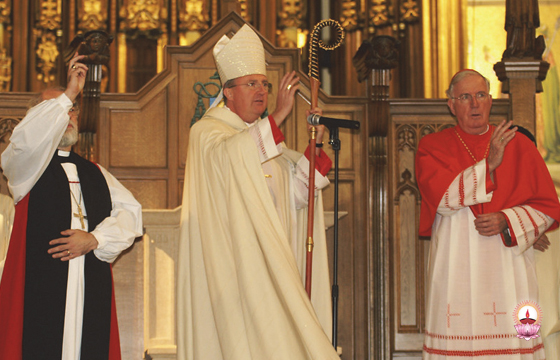
Archbishop Roche to head liturgy congregation
Pope Francis has appointed Archbishop Arthur Roche to lead the Holy See’s department for liturgy, making him the top-ranking English priest in the Curia. His appointment represents an overhaul of the office which oversees the practice of worship across the global Church.
The former Bishop of Leeds is to be the Prefect of the Congregation for Divine Worship and the Discipline of the Sacraments, a role he takes up after spending almost a decade as secretary, the number two official, at the congregation.
Along with Archbishop Roche, the Pope announced a revamped leadership team of trained liturgists at the congregation, which is tasked with furthering the implementation of the renewal of the liturgy as set out the 1962-65 Second Vatican Council.
Francis has chosen Bishop Vittorio Viola, 55, a Franciscan friar and liturgy specialist as secretary of the congregation, and Msgr Aurelio García Macías, a Spanish priest-official at the department, to be under-secretary. Bishop Viola has taught liturgy at the Benedictine-run Pontifical Liturgical Institute of Sant’Anselmo in Rome, and Msgr Garcia, who will soon be ordained a bishop, has a doctorate in liturgy from the same institute.
Archbishop Roche’s appointment makes him the highest-ranking English priest in the Roman Curia and is likely to see him named a cardinal in any forthcoming consistory. Archbishop Paul Gallagher, the Holy See’s foreign minister, is the other high-ranking English priest in the Vatican, however, Arch-bishop Roche will be the only one heading a dicastery.