
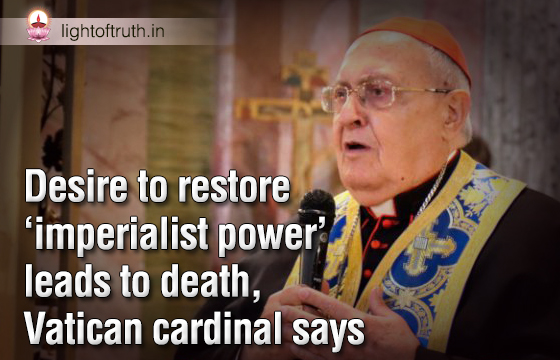
Without naming names, Cardinal Leonardo Sandri lamented how a national leader, yearning to restore “a past of imperialist power,” can sow death and destruction.
The cardinal’s apparent reference to Russian President Vladimir Putin and his invasion of Ukraine came during a homily April 5 at a Mass in Orvieto with officers and cadets of Italy’s Finance Police, who were attending an anti-terrorism training course.
Before celebrating the Mass, Sandri, prefect of the Congregation for Eastern Churches, gave an overview of the situation facing Eastern Catholics in Syria, Iraq and Ukraine, his office said.
The Old Testament reading at the Mass recounted how the Israelites complained to Moses and to God after they had been led out of Egypt and slavery and, the cardinal said, seemed almost to long for what they had when they were enslaved.
Category Archives: International

Mel Gibson, Mark Wahlberg talk about ‘Father Stu’ – and the ‘Passion of the Christ’ sequel
When can devotees of “The Passion of the Christ” be able to see the sequel?
Not anytime soon, from the sounds of it.
In an interview on “The World Over” that aired April 7, Gibson, who produced, co-wrote, and directed the hugely successful 2005 film about the crucifixion and death of Jesus Christ, told EWTN’s Raymond Arroyo that he hasn’t yet settled on a script for the sequel, which picks up the story with Jesus’ resurrection.
“So when can we expect a script, Mel?” Arroyo asked.
“Well, I’ve got two scripts,” Gibson revealed. “So I’ve got the pair of them, and they’re both good.”
Arroyo interviewed Gibson, actor Mark Wahlberg, and writer-director Rosalind Ross about the launch of their new film, “Father Stu,” a biopic about the late Father Stuart Long, a no-nonsense Montana priest who died of a rare muscular condition in 2014.
Wahlberg plays the role of Father Stu in the film and Gibson plays the role of Bill Long, the late priest’s father. The film comes out nationwide April 13, to coincide with the start of Holy Week.
“Father Stu was a living embodiment of grace and strength and suffering. And you hear it from anybody whose life he touched, that he was incredibly grateful for what afflicted him and had such dignity and strength in it,” Ross told Arroyo.
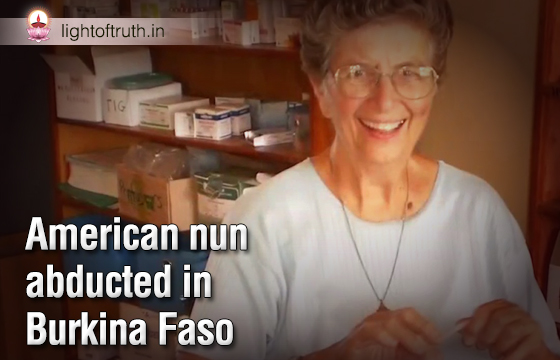
American nun abducted in Burkina Faso
Prayers are being sought for the safe release of Sister Suellen Tennyson, 83, an American Catholic nun who was reportedly kidnapped in Burkina Faso the night of April 4.
“On the night of Mon-day 4 to Tuesday 5 April 2022, Unidentified Armed Men (UAM) visited the community of nuns in Yalgo Parish of the Diocese of Kaya. They abducted Sister Suellen Tennyson, from the Congregation of Marianite Sisters of the Holy Cross,” Bishop Théophile Nare of Kaya said in an April 5 statement shared with ACI Africa.
The bishop added, “Sr. Suellen Tennyson was taken to an unknown destination by her kidnappers who, before leaving, vandalized rooms (and) damaged the community vehicle, which they attempted to take with them.” “Until the search for her is successful, we remain in communion of prayer for the release of Sr. Suellen Tennyson,” Bishop Nare stated.
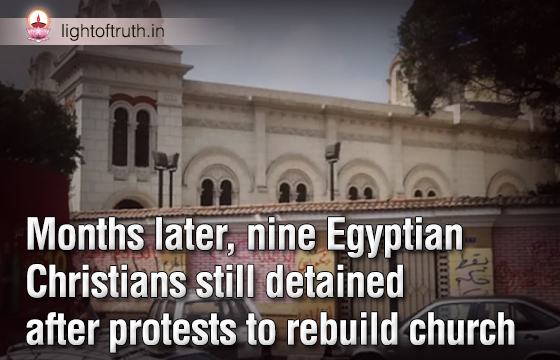
Months later, nine Egyptian Christians still detained after protests to rebuild church
Months after protests of the government’s apparent refusal to approve the rebuilding of a damaged church, nine Christian protesters in Egypt remain in detention as supporters call for their re-lease.
“Instead of arresting a number of residents of the estate, official and security authorities should have responded promptly to their demands and issued a decision to rebuild the church,” Ishak Ibrahim, a freedom of religion and belief expert at the Egyptian Initiative for Personal Rights, said March 13.
He noted that the villagers had taken a legal path to seek the permit.
At the centre of the matter is the Coptic Orthodox St. Joseph and Abu Sefein Church in Ezbet Farag Allah village in the Minya governorate. In 2016 the church was severely damaged by an unexplained fire that some locals fear was deliberately set. It was the only church for the 800 Christians in the area.
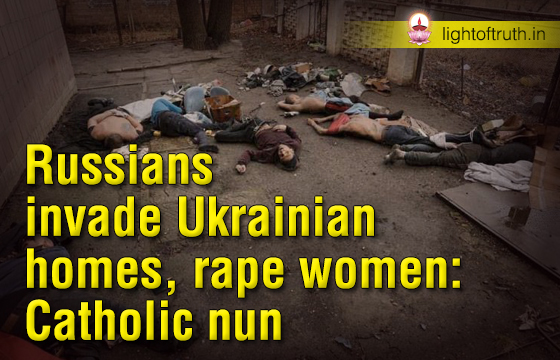
Russians invade Ukrainian homes, rape women: Catholic nun
A Catholic nun from India serving the war-hit people of Ukraine says hungry and frustrated Russian soldiers now invade Ukrainian homes, loot food and rape women.
“We hear stories of such atrocities almost daily, and we too live in fear and anxiety,” says Sister Ligi Payyappilly, who shelters around 75 women and children besides 50 elderly people at her convent at Mukachevo in western Ukraine.
The 48-year-old superior of the Sisters of St. Joseph of Saint-Marc convent says the Russian soldiers have now started attacking camps and government shelter homes for refugees, besides residential homes.
“They want food and sex, and they are hungry, angry and frustrated,” Sister Payyappilly told on April 7.
The nun, who came to limelight when she helped overseas students escape to neighbouring countries, said the Russian soldiers, who have exhausted their food stock, have no hope of returning home. “They have started acting crazy,” she added.
According to the Washington Post, an estimated 15,000 Russian troops have been killed, three times more are either wounded or taken prisoner in Ukraine — an estimate from NATO, based on the assumption that for every soldier killed, three are wounded.
As the Russian invasion entered the 41st day on April 6, human casualties remained high for Russians whereas Ukrainians have suffered huge infrastructure loss. The Russians in the invaded land are now attacking civilians, according to Sister Payyappilly, a Ukrainian citizen now.
When the war started on February 24, Mukachevo and other places in western Ukraine were safe. However, the Russians have now started attacking the western region.
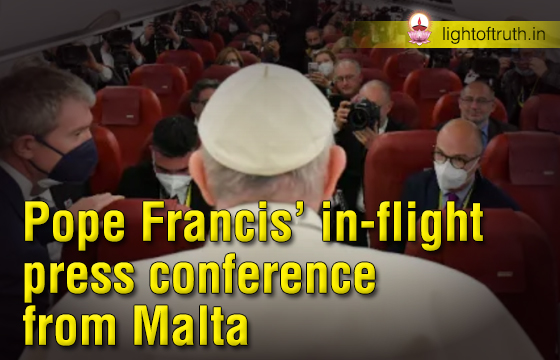
Pope Francis’ in-flight press conference from Malta
Pope Francis returned to Rome on Sunday after a two-day trip to Malta. During the April 2-3 visit, he addressed civil authorities, visited a Marian shrine and the site where tradition holds that St. Paul stayed in 60 A.D., celebrated an outdoor Mass, and met with migrants and refugees.
Pope Francis’ press conference on the flight from Malta.
“My health is a bit fickle, I have this knee problem that brings out problems with walking. It is a bit annoying, but it is getting better, at least I can walk, until a week ago I couldn’t do it. It’s a slow thing this winter… at this age, you don’t know how the match will end. Let’s hope it goes well.” Pope Francis’ said in a press conference on the flight from Malta.
“The way Europe is making room, with much generosity, to Ukrainians, opening the door to Ukrainians, they are doing even to those who come from the Mediterranean. This is a point that finished my visit [and] touched me so much. I felt their suffering, which is more or less what I told you is in that little book that came out, “Hermanito,” in Spanish, “the little brother,” the suffering of these people. One person who spoke today had to pay four times. I ask you to think about this.”
“War is always a cruelty, an inhumane thing that goes against the human spirit – I don’t say Christian, human. It is the spirit of Cain that is said to go there. I am willing to do everything that can be done, and the Holy See, especially the diplomatic part – Cardinal Parolin, Msgr. Gallagher – are doing everything, everything. You cannot publish everything they do, out of prudence, out of confidentiality, but we are at the limit of the work. A trip is among the possibilities.” As a message for Putin the Pope said.
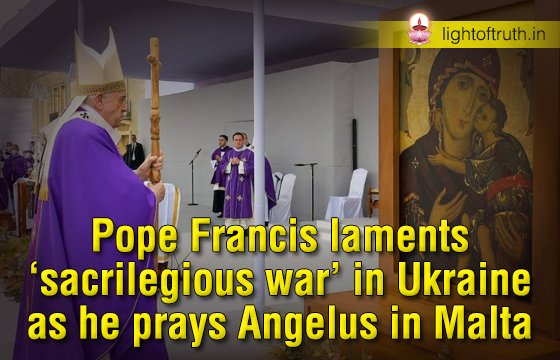
Pope Francis laments ‘sacrilegious war’ in Ukraine as he prays Angelus in Malta
Pope Francis lamented the “sacrilegious war” in Ukraine as he prayed the Angelus in Malta on April 3. Speaking immediately after celebrating an outdoor Mass in the Maltese capital, Valletta, on April 3, the Pope urged Catholics to pray for people aiding the suffering following the full-scale Russian invasion.
“May the Lord accompany you, and Our Lady keep you,” he said. “Let us now pray to her for peace, as we think of the humanitarian tragedy unfolding in war-torn Ukraine, still under the bombardment of this sacrilegious war. May we be tireless in praying and in offering assistance to those who suffer.”
The Pope has referred to the war throughout his two-day trip to the archipelago in the central Mediterranean Sea. Before leaving Rome, he met with a group of Ukrainian refugees. On the flight to Malta, he said that a papal visit to the Ukrainian capital Kyiv was “on the table.” In a speech to Malta’s civil authorities on the first day of his visit, the Pope alluded to the war in Ukraine, saying: “Once again, some potentate, sadly caught up in anachronistic claims of nationalist interests, is provoking and fomenting conflicts, whereas ordinary people sense the need to build a future that will either be shared, or not be at all.”
In his brief address before reciting the Angelus prayer, the Pope thanked the Maltese authorities and people for their warm welcome.
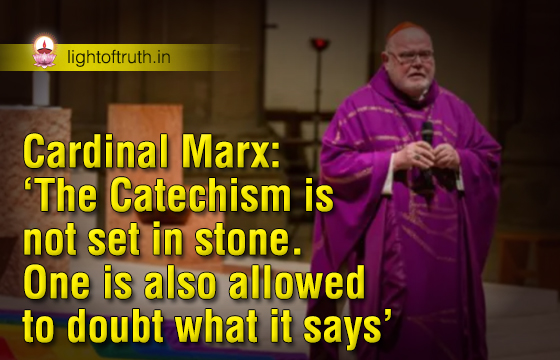
Cardinal Marx: ‘The Catechism is not set in stone. One is also allowed to doubt what it says’
German Cardinal Reinhard Marx said in an interview published on March 31 that the Catechism of the Catholic Church is “not set in stone” and “one is also allowed to doubt what it says.” The cardinal made the comments in a seven-page spread in the March 31 edition of the weekly current affairs magazine Stern, reported.
Marx, the archbishop of Munich and Freising, is one of the most influential Catholic leaders in Europe, serving as a member of Pope Francis’ Council of Cardinal Advisers and president of the Vatican’s Council for the Economy. He spoke about the Catechism in response to a question about “how homosexual, queer, or trans people are to be accommodated in Catholic teaching.”
He said: “An inclusive ethic that we envision is not about being lax — as some claim. It is about something else: encounter at eye level, respect for the other. The value of love is shown in the relationship; in not making the other person an object, in not using or humiliating the other person, in being faithful and dependable to each other. The Catechism is not set in stone. One may also doubt what it says.”
He went on: “We discussed these questions during the family synod, but there was reluctance to set something down. Even then I said: there are people living in an intimate love relationship that is expressed sexually. Are we really going to say that this is worthless?”
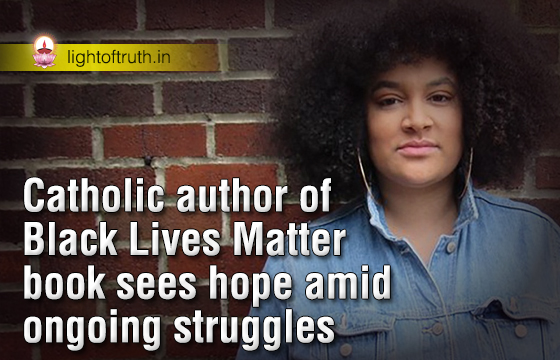
Catholic author of Black Lives Matter book sees hope amid ongoing struggles
When journalist Olga M. Segura initially set out to write a book on Black Lives Matter and the Catholic Church, she intended it to be more of an overview that might prompt white Catholics to get more involved in the work of racial justice.
That was back in early 2020, when she first started writing. Then, the pandemic hit, followed soon after by nationwide protests after George Floyd died while in Minneapolis police custody.
Her book, published last April, essentially took on a new life. As she puts it: “I thought, ‘OK, it’s not about gentle accompaniment anymore.’” Instead, she said the book’s emphasis became about helping Catholics understand how the church is suffering and how Catholics of colour are “struggling in ways that people might not even be thinking about.”
It also ended up becoming more personal because Segura, a Black Catholic who immigrated to the United States from the Dominican Republic, wanted to share some of her own experience.
The freelance writer and opinion editor at the National Catholic Reporter said she realized that what she was going through at the time was not an anomaly. “This is everyone in my community,” she said, adding that the book also revealed her faith struggles, particularly her feeling that her church was no longer providing a safe space for her or other non-white Catholics.
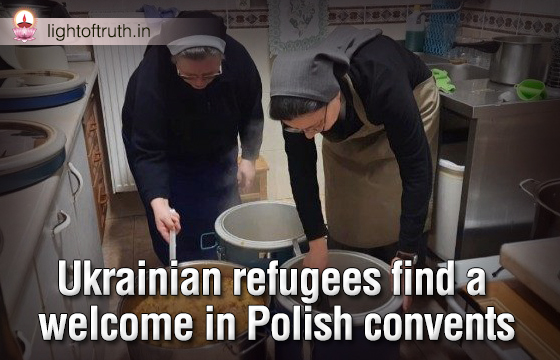
Ukrainian refugees find a welcome in Polish convents
Olga and her youngest children are safe in Poland, but she is consumed with worry for her husband and oldest son, who are still in Ukraine.
And her heart breaks when the little ones ask questions, including about why Russia invaded Ukraine when so many Russians live in Ukraine and when so many of their families are intermarried.
Everything is difficult to explain to the children, Olga said. “The youngest (two) don’t notice so much, but the oldest asks when he will see his father. I tell him the truth. He asks why uncles shoot at his father. And ‘When daddy dies, will he come to us?’”
“I don’t know how to answer these questions and I want to cry,” she said. Olga and her three children — Dima, 2, Natasha, 4, and Nazar, 6 — and her friend Alina and Alina’s 4-year-old son, Alexander, and 19-year-old daughter, Anna, found safe haven with the Missionary Sisters of the Holy Family in Lublin. The Ukrainian women asked that their real names not be used.
The Polish Conference of Major Superiors of Women said March 15 that an estimated 18,000 refugees from Ukraine were receiving spiritual, psycho-logical, medical and material help at 924 convents in Poland and that close to 500 of those communities are sheltering almost 3,000 adults – mostly women – and more than 3,000 children. Olga and Alina met at a prayer group near their homes in the Dnepropetrovsk Oblast (district) in southeastern Ukraine.