
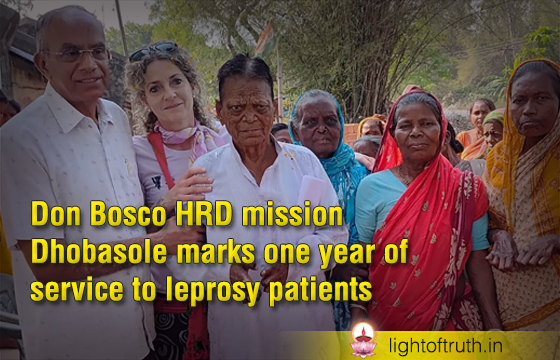
As Don Bosco HRD Mission Dhobasole, West Midnapore completes one year of service to the Leprosy patients and their families, the team reflects on its humanitarian efforts to bring relief to patients in a leprosy hospital and rehabilitation villages. Nestled in Anchuri village, near Anchuri railway station, the government-run Bankura Leprosy Hospital serves patients from across West Bengal and neighbouring states. Despite leprosy being declared eradicated, thousands still suffer, particularly in underserved regions of India. Bankura hospital, with its 500-bed capacity spread across ten blocks, provides free medical care, food, and treatment. However, patients face extreme social stigma—ostracized by their families and communities, they often seek refuge in government and non-government facilities. A visit by Don Bosco HRD Mission Dhobasole last year revealed the lack of basic necessities. There are 350 men and 150 women patients, many live in discomfort, without proper storage for belongings, mobility aids, or essential medical equipment.
Category Archives: From The States

CCBI Inaugurates New Headquarters in New Delhi, Marking Historic Milestone
The Conference of Catholic Bishops of India (CCBI), the national episcopal conference for the Latin Catholic Church in India, celebrated a landmark event today with the solemn blessing and inauguration of its newly renovated General Secretariat at 9-10, Bhai Vir Singh Marg, New Delhi. His Eminence Cardinal Filipe Neri Ferrão, President of the CCBI, presided over the inauguration ceremony. His Excellency Leopoldo Girelli, Apostolic Nuncio to India and Nepal inaugurated the building. Archbishop Peter Machado, Vice President of the CCBI, blessed the office block, while Archbishop Anil Couto of Delhi blessed the residential section of the building. The event signifies a significant chapter in the history of the Episcopal Conference for the Latin Catholic Church in India.
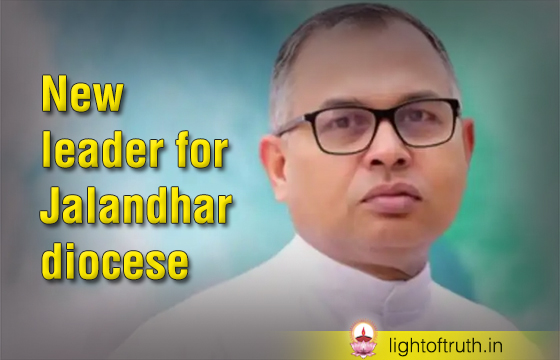
New leader for Jalandhar diocese
The Vatican has appointed a new bishop for India’s Jalandhar dioce-se in Punjab, four years after Bishop Franco Mulakkal stepped down des-pite a court clearing him of charges of raping a nun. The Vatican named Father Jose Sebastian Thekkum-cherikunnel as the new bishop on June 7. The 63-year-old priest serves as the financial administrator of the diocese. The diocese, which has been without a bishop for nearly seven years, has not announced the date of Episcopal ordination. Retired Auxi-liary Bishop Agnelo Rufino Gracias of Mumbai has been serving as its Apostolic Administrator since Sept. 20, 2018, a day before police arrested Mulackkal based on the complaint made to law enforcement. The bishop elect also comes from Kerala but was ordained a priest in 1991 for the Jalandhar diocese based in Punjab, the Sikh-dominated northwestern Indian state. In 2004, Thekkumcheri-kunnel obtained a Licentiate in Canon Law from the Pontifical Urban University in Rome. He served the diocese in various roles across parishes and at the diocesan seminary. Additionally, he held the positions of chancellor and judicial vicar of the diocese. In 2022, he was appoin-ted as the financial administrator.
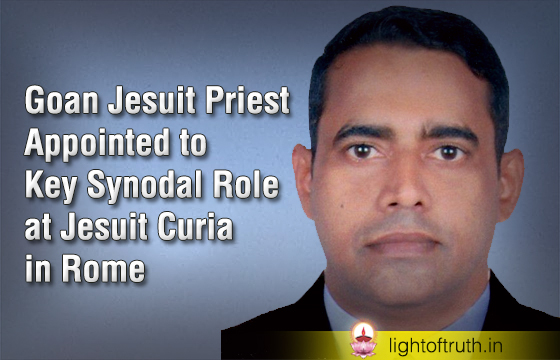
Goan Jesuit Priest Appointed to Key Synodal Role at Jesuit Curia in Rome
Jesuit Father Joseph Cardo-zo has been chosen to assist the Office of Discernment and Apostolic Planning for a Synodal Church. “It is in response to the call of the late Pope Francis, who after the completion of the Synod in Rome, had requested the Society of Jesus to help the Catholic Church in actualizing Synodality,” Father Cardozo told. The member of the Goa province will reside at the Jesuit headquarters in Rome. Jesuit superior general Father Arturo Sosa identified the area of discernment in common as a key contribution that the Society of Jesus can make to the synodal process. Discernment in common is a process where a group of people work together to identify the best course of action in a given situation. It’s often used in a religious context, where it’s seen as a way to discover God’s will for the group, explained Father Cardozo, who currently holds the post of vice provincial and the superior of the Jesuit community at Miramar, near Panaji.

Thousands attend elevation of Calicut as archdiocese
More than 10,000 people braved heavy rains to attend a ceremony to elevate Calicut diocese as a metropolitan arch-diocese and its bishop as its first metro-politan archbishop. Apostolic Nuncio to India and Nepal Archbishop Leopoldo Girelli led the May 25 ceremonies at St. Joseph’s Church, in Kozhikode (formerly Calicut). In his homily during the inaugural Mass, Cardinal Baselios Cleemis, head of the Syro-Malankara Catholic Church and president of the Kerala Catholic Bishops’ Council, stressed the deep spiritual signi-ficance of occasion. He commended the faith and leadership of the faithful of the newly erected archdiocese. The cardinal paid tribute to St. Francis Xavier, whose missionary zeal in the Malabar region laid the foundation for the Syro-Malabar and Syro-Malankara Churches. He noted that Calicut’s new archdiocesan status stands as a testament to this enduring spiritual legacy, rooted in centuries of evangeliza-tion and community witness.
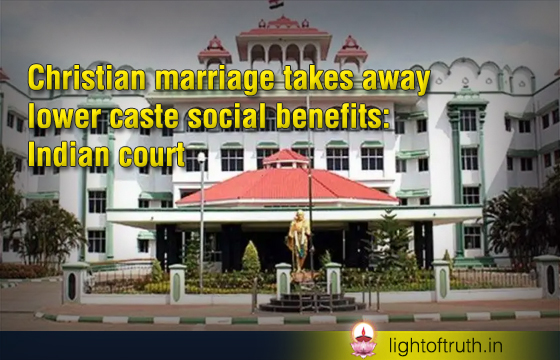
Christian marriage takes away lower caste social benefits: Indian court
The top court in southern Indian Tamil Nadu state has ruled that persons marrying under the Christian personal law should be considered to have converted to Christianity and abandoned their eligibility for caste-based social benefits. The ruling came in a case seeking the court’s order to disqualify the “illegal” election victory of a lower caste woman to a local body seat that is reserved for lower caste people, officially referred to as Scheduled Castes. In October 2022, Prime Mini-ster Narendra Modi appointed a three-member panel to exa-mine the implications of exten-ding benefits to Christians of lower caste origin, following the court’s request for the go-vernment’s view on the issue. The hearing is halted again due to the panel’s failure to submit its report to the government. Out of India’s 1.4 billion people, 201 million belong to the Dalit community, and nearly 60 percent of India’s 25 million Christians trace their origin to Dalit and tribal communities.

Christians in India’s Odisha denied ‘right to belief, dignified burial’
A legal rights group on a fact-finding mission in a tribal district of India’s eastern Odi-sha state has found that aggre-ssive Hindu mobs are denying poor Christians from tribal and Dalit communities the “right to belief and a dignified burial.”
The Odisha Lawyers Forum, in a May 14 report titled: Free-dom to Be Buried, A New Stru-ggle for Christians in Odisha, has cited recent cases of “denial of the rights of the deceased” in Nabarangpur district, which they say are a clear violation of the Indian Constitution and laws. The report has docu-mented many such cases between 2022 and 2025, based on testimonies provided by survivors in the villages.
“The Odisha Lawyers Forum found gross violations of fundamental, constitutional and human rights of the most vulnerable communities of Adivasi, Dalit and religious minorities in terms of equality before law, right to freedom of expression, thought, belief and association, more importantly, the right to life and a dignified burial in Nabarangpur district in Odisha,” the report said.
Four Indian Christians arrested for alleged conversion
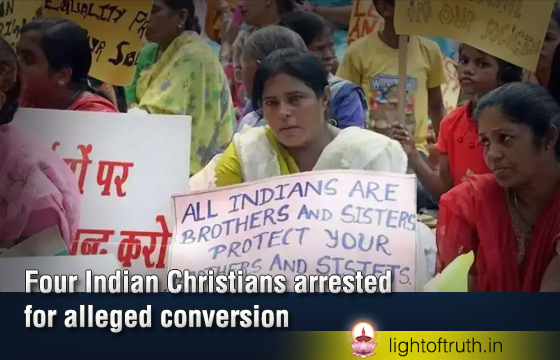
Police in Uttar Pradesh in northern India have arrested four Christians after they were accused of violating the state’s stringent anti-conversion law. “Our four faithful were arrested on May 12 after they were accused of attempting to convert gullible indigenous people with job offers and financial aid,” said a Church official providing legal help to the victims. They were arrested and taken to Chandan Chawki police station in Lakhimpur Kheri district in the state, which witnesses high levels of persecution against Christians, according to rights activists. The four were remanded in custody the following day. Efforts to secure their bail were still ongoing, according to the Church official, who did not wish to be named. This was the latest in a series of arrests of Christians for alleged violations of the anti-conversion law, which carries up to 20 years in jail. Christian leaders and rights activists say these laws are tools to persecute minorities by right-wing Hindu groups and have called on the Supreme Court to declare them unconstitutional.
Police probe robbery, attack on priests in eastern India
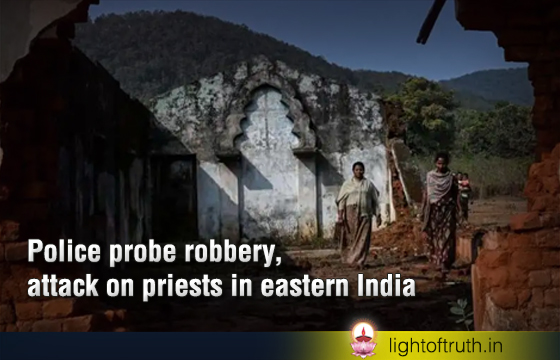
Police in eastern Indian Odisha state have started probing an armed robbery at a Catholic seminary that left two Catholic priests assaulted and injured and valuables looted. A gang of nine suspected robbers barged into Carmel Niketan minor seminary in Charbati of Kuchinda in the state in the early hours of May 23, said Father Thomas Bose Velassery, the regional vicar of the Order of Discalced Carmelites. The seminary is managed by the religious order. He said during the attack, two priests – Silvin K. S., 40, and Linus George, 90 – who look after the seminary, were tied, assaulted, and their phones snatched. During the attack, the seminary was mostly deserted as students were away on summer holidays, he added. Odisha is also known for the persecution of Christians by Hindu hardliners. In 2008, Odisha’s Kandhamal district witnessed one of the worst anti-Christian violence that left at least 39 Christians killed and as many as 70,000 became homeless, according to official government reports. Other reports said the death toll was 100, and some 40 Christian women were sexually assaulted by a Hindu mob. At least 100 churches and between 5,000 and 6,000 houses were destroyed in the violence.
Indian Catholic project awarded for helping youth, women
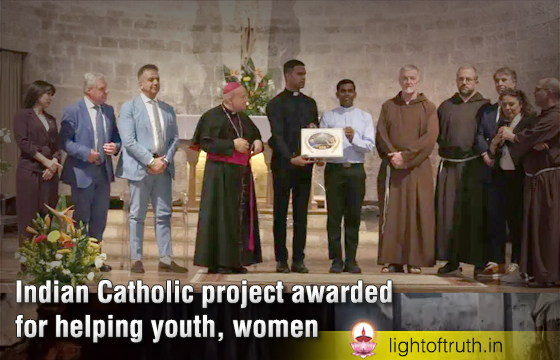
A project run by the Catholic Church in western India’s Goa state, which supports vulnerable youth and marginalized women in becoming self-reliant, has won the 2025 “Francis of Assisi and Carlo Acutis, for an Economy of Fraternity” international award. Project HOPE was conferred the award at the Church of St. Mary Major in Assisi, Italy, on May 25. The award includes a cash prize of 50,000 euros and a scarf featuring an image of St. Francis of Assisi removing his clothes as a symbol of renouncing the material world.
Father Sanford Rodrigues from the Archdiocese of Goa and Daman received the award on behalf of the project team. HOPE, which stands for Healing, Opportunities, Protection, and Empowerment, was born out of “Childline” — an initiative by Catholic charity Caritas Goa that sought to rescue and rehabilitate vulnerable children from the poor and neglected villages. The government took over the project in 2023, and subsequently, some volunteers launched a new project on a pilot basis, which evolved into HOPE.