

The historic Marian shrine of Bandel Church, standing sentinel on the banks of the Hooghly since 1599, became the backdrop for a spiritual and musical homecoming as Baul Samrat Sanajit Mandal reimagined two seminal tracks from Bengali Gospel classic. The music video shoot on June 21, 2025 by Song of Gospel YouTube Channel featured Mandal performing Kaatar Mukut (Crown of Thorns) and Dhike Dhike Shona Jai (Heard All Over) – songs that have resonated deeply with Bengali-speaking Christians for over two decades. This new rendition blends faith, folk, and film in a moving tribute to a legacy that continues to inspire. “In these songs, I find not just melody, but prayer,” said Sanajit Mandal. “Kaatar Mukut carries the pain of sacrifice, while Dhike Dhika Shona Jai bursts with the joy of resurrection. Singing them again at Bandel felt like coming full circle.”
Category Archives: From The States
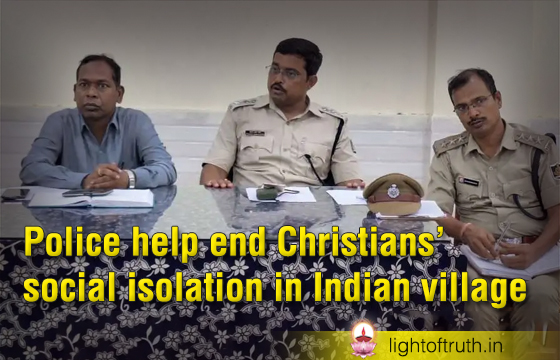
Police help end Christians’ social isolation in Indian village
The police and administrative intervention helped end the social isolation that Hindus had imposed on a group of Christians in a village in Odisha, India, a police official has confirmed. The one-month social boycott was lifted at a meeting of government officials, police, and some 60 villagers on June 24 in Rangamati of Keonjhar district, said Prasant Kumar Behera, sub-divisional police officer. “We told the leaders and villagers nobody wants fights and violence between the Hindus and Christians and igniting the spark with frivolous issues,” he told UCA News on June 26. The boycott has been lifted with Hindu leaders promising “that there will be no violence or aggression,” he added. The Hindus imposed a social boycott on a total of 23 Christian families after they allegedly refused to abandon their faith and return to their “original Hindu religion.” The social isolation meant that Christian was denied access to all shared facilities in the village, including the village well and grocery stores. The villagers also refused to hire them for work in the farmlands. It prompted Christians to seek assistance from the police. Christian leaders say that violence against Christians has risen since the pro-Hindu Bharatiya Janata Party (BJP) took power last May. Hindu groups that support the BJP consider the political gain a mandate to push for their idea of making India a Hindu nation, they say. Police officer Behera said government officials and police “sensitized villagers” that the national constitution recognizes rights of every citizen and attempts to take laws into their own hands can trigger punitive measures.

Indian Catholic school denies discriminating against Hindu student
An official from a Catholic school in India’s northeastern Assam state has dismissed an allegation that a teacher forcibly removed a ‘tilak’ — a red circular sacred Hindu mark — from the forehead of a student. Salesian priest Ethelbert Minj, in-charge of Don Bosco School in Sonitpur district, said the allegation levelled by the family of a Hindu student was fabricated and prompted by a right-wing Hindu group. The response came after the uncle of the child lodged a complaint with local police that a schoolteacher forcibly removed the ‘tilak’ from her forehead on June 23 and thus hurt the religious sentiments of Hindus. Minj alleged the child’s uncle was prompted by the right-wing Bajrang Dal group which he claimed seeks to tarnish the hard-earned reputation of the institute. “Our school has been in this locality for more than a decade and no such incident was reported in the past. The school does not discriminate children on the basis of caste, creed and religion,” the priest told UCA News on June 25. “This incident is purely influenced by groups who wants to divide people in the name of religion, caste and creed,” he claimed, adding the school would cooperate with the police to establish the truth. Quoting the parents, some local media reported the incident left the child traumatized. In the police complaint, the child’s uncle accused the teacher of violating the constitutional right to religious freedom. Allen Brooks, spokesperson of the ecumenical group, Assam Christian Forum, said such an allegation is unprecedented and hard to believe. “Our institutions have always respected and accommodated all religions and cultures, maintaining a peaceful and tranquil atmosphere,” Brooks told
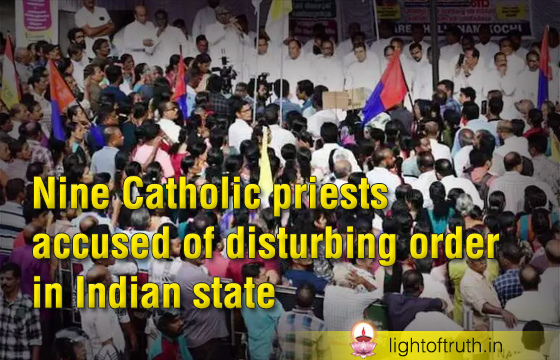
Nine Catholic priests accused of disturbing order in Indian state
Police have charged nine Catholic priests and a lay leader with unlawful assembly in southern India’s communist-ruled Kerala state, after the accused joined a protest seeking safety for people threatened by coastal erosion. “This is totally a false case and we cannot be silenced with it,” said Joseph Jude, vice-president of Kerala Region Latin Catholic Council. The lay leader was among those accused, along with the priests, of obstructing public movement through their unlawful assembly. He said the issue is of urgent concern as several thousand people, including fisher folks, mostly Catholics in the area, will be rendered homeless. “The state government, instead of ensuring the safety of the people, is trying to silence those who raise their voice for a public cause,” Jude told UCA News on June 23. Some 5,000 people, mostly Catholics, including over 150 priests of the Latin diocese of Kochi and Allappuzha, joined in the public rally in the coastal town of Chellanam in Ernakulam district on June 20. They allege the state government failed to protect around 500 homes from possible submergence in the Arabian Sea due to coastal erosion. Some families have already relocated to safer areas as the monsoon is intensifying. The sea wall in the area, spanning over 17 kilometres, was washed away in 2017 during Cyclone Ockhi.
“The government promised to rebuild it immediately, but completed work on only seven kilometres in 2023 and later discontinued the work,” a protest leader said. Sherry J. Thomas, president of the Kerala Latin Catholic Association, condemned the police action against the priests and the lay leader.

Expelled Indian tribal Christians endure hardships
Tribal Christian families in the central Indian state of Chhattisgarh have been passing days in hardship after they were expelled from their village by other villagers allegedly linked with right-wing Hindu groups. Expelled Christians alleged they faced increased hostilities and persecution from religious radicals for their faith before being made homeless earlier this week. Lachhan Dugga from Huchadi village in Kanker district is among those driven out of their village in Bastar region, infamous for Naxalites, the armed Maoist insurgents fighting government forces.
Dugga said he and six family members became Christians a few years after he was cured of ‘bad stomach pain thanks to Christian prayers. “Now, we have been driven out of home for our faith in Jesus,” Dugga told on June 18. He said that the village head led a mob that locked their home and ordered them to leave the village on June 16. “They threatened to kill us if we returned to the village without renouncing Christianity,” he lamented. The family has moved to a house of a relative in another village, abandoning their house and one hectare of farmland. Parameshwari Kanwar, another family member, said the mob chased them to a public road half a kilometer away after they refused to leave and dumped their belongings. “We have lodged a complaint with the local police, but we are not getting any help,” she told UCA News, adding that two more Christians in the village were also expelled on June 18. “Now our village is Christian-free as a two-member family, the last among the six Christian families was chased away from it on June 18,” she added.
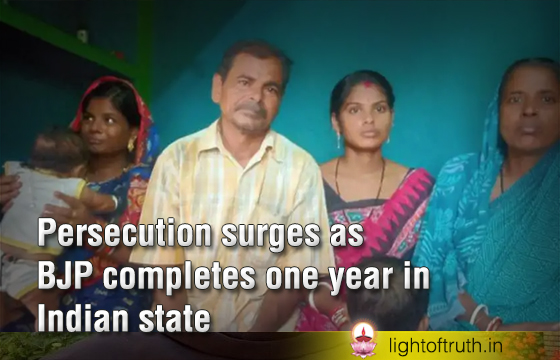
Persecution surges as BJP completes one year in Indian state
Attacks on Christians in eastern India’s Odisha have surged since the Bharatiya Janata Party (BJP) took power in this state a year ago, their leaders say. “Not a single week passes in Odisha without some violent attack aimed at Christians to renounce their faith and return to Hinduism,” says Father Ajay Kumar Singh, a social activist from Cuttack-Bhubaneswar archdiocese. After the BJP party came to power in Odisha in June 2024, “systematic persecution” against Christians began, particularly in areas where tribal and socially disadvantaged Dalit people dominate.
The BJP formed a government on its own in June 2024 for the first time after winning 78 of the 147 seats in the state legislature. It ousted Naveen Patnaik, who was the state chief minister for 24 years. After the BJP took power, the state recorded several incidents of Christian harassment, including disrupting prayer services in churches, denying burial of their dead, and social boycott in villages, Singh said. Christian leaders say that in these incidents, Hindu groups that support the BJP and work to make India a Hindu nation demanded that Christians renounce their faith and become Hindus. The latest such incident occurred on June 16, when a Christian couple — Gouranga Bai, 50, and his wife Ritanjali Bai, 42 — were harassed, forcing them to abandon their Christian faith. Bishop Pallab Lima, who heads the United Believers Council Network of India (UBCNI) told UCA News on June 18 that the couple were the only Christians in Kontia Ichhapur, a village comprising some 1,000 Hindus in Bhadrak district. “I have spoken to one of the village leaders, and the ritual ceremony of returning to the Hindu faith has been postponed,” he said
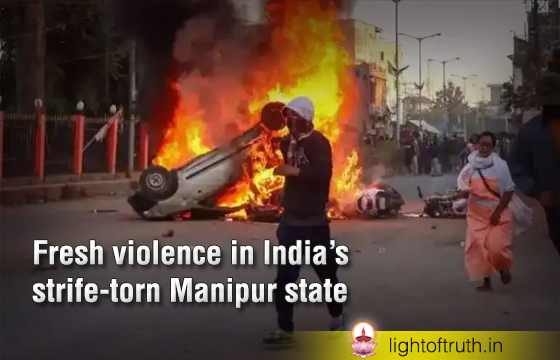
Fresh violence in India’s strife-torn Manipur state
Fresh violence has erupted in India’s Manipur after the arrest of a prominent leader of a Hindu Meitei radical group, prompting authorities to tighten security in the strife-torn north-eastern state. Prohibitory orders were imposed at midnight on June 7, banning gatherings of more than five people in any location. Internet and mobile data services were also suspended, officials reported. The security measures will remain in effect for five days in the five restive districts of the northeastern state. The latest outbreak of violence erupted after the federal probe agency, the Central Bureau of Investigation, arrested A. Kanan Singh, leader of the Arambai Tenggol, an armed group representing the majority Meitei community.
He was picked up from the Imphal airport on June 7 for his alleged involvement in the ethnic violence that began on May 3, 2023, in the hilly state adjacent to civil war-torn Myanmar. The federal agency also reportedly took four of Singh’s associates into custody for interrogation. This upset the Meiteis, who protested at the airport and blocked roads to demand their immediate release. A government notification warned of the “imminent danger of loss of life and/or damage to public/private property, and widespread disturbances to public tranquillity and communal harmony” due to the violent protests. It also expressed apprehension that some antisocial elements might use social media to incite passions among the masses, which could have serious repercussions for the law and order situation. A Christian leader from the state confirmed that “there is unrest in many places in the Hindu majority Meitei areas.” “The latest violence seems to be a ploy on the part of Meiteis to delay the federal government’s efforts to restore peace in the state,” he told on June 9.

Christians in India’s Odisha seek their right to belief
Christians in India’s Odisha have demanded that their constitutional right to freedom of religion be safeguarded amid rising religious persecution under the pro-Hindu Bharatiya Janata Party (BJP), which rules the eastern state. “Our people are assaulted, threatened, and forced to give up their faith in Jesus. This is the new situation in which we live in this state,” said Bishop Pallab Lima, who heads the United Believers Council Network India (UB-CNI). Lima told on June 11 that some 60 complaints, including violent assaults, threats, social boycott, denial of burial grounds, etc., were lodged with the police in the past few months. “The state’s police registered 32 FIRs [first information reports providing initial details of the crimes], but no action was initiated against the per-petrators,” he said. Lima alleged that the perpetrators belong to radical outfits associated with the BJP, which has been in power in Odisha since June last year. “The aggrieved Christians,” he said, “staged peaceful protest marches at 25 of 30 district headquarters in the state on June 9 to highlight their plight to the authorities.” The protesters also handed over petitions addressed to Indian President Droupadi Murmu, calling on her to protect Christians’ right to practice and proclaim their faith without any disturbance from anybody.
7 jailed for forcing Christians to flee villages in India’s Odisha
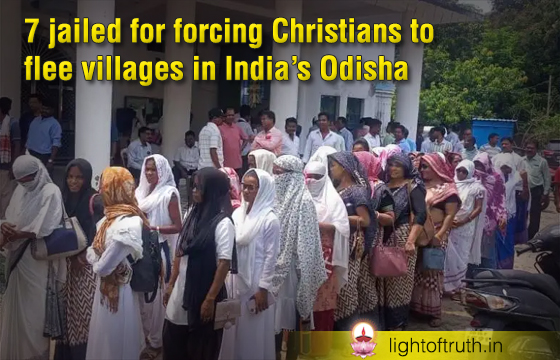
Seven people were sent to judicial custody by a court in India’s eastern Odisha state for attacking Christian families in villages and forcing them to flee their homes after they refused to give up their faith in Jesus. The incident was reported from Narayanpatna and Bondhugaon in Koraput district on June 10. At least 60 indigenous Christians, including women and children, were forced to spend the night in a nearby forest, after which they trekked to their relatives and friends’ houses in the area the next day, Church leaders said. “We are happy that police arrested seven persons on June 12 and a local court remanded them in judicial custody the same day,” said Bishop Pallab Lima, head of the United Believers Council Network India.
Strategy seen in attacks on priests in eastern India
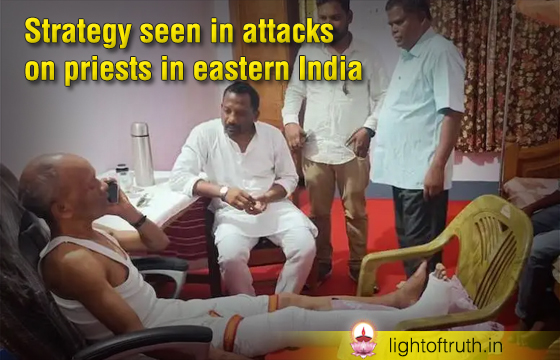
Christian leaders in eastern India claim that the increasing incidents of robbery and assaults on priests in the region are systematic and part of a larger agenda to weaken the Church’s mission. In the latest incident, five masked men broke into the vicarage of a Catholic parish in Simdega diocese, in Jharkhand, during the early hours of June 9. The robbers “brutally assaulted” Samsera parish’s priest, Father Ignatius Toppo, and his assistant, Father Roshan Soreng, before stealing an undisclosed amount of money from a safe, according to Father Agustin Dungdung, the principal of the Church-run school in the parish. Father Dungdung, who resi-des in the parish house, was also attacked. In the past two years, “churches in eastern Indian states have increa-singly faced such attacks,” Bishop Theodore Mascarenhas of Daltonganj told on June 12.