
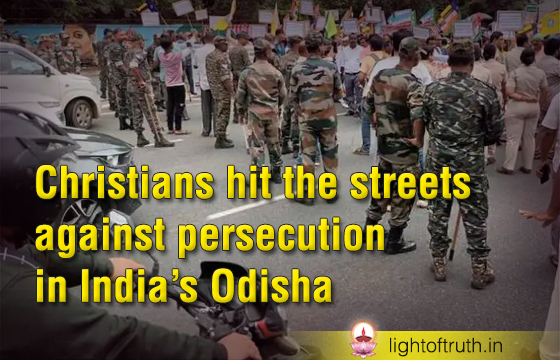
Several thousand Christians marched on the streets and blocked highways in the eastern Indian state of Odisha to demand justice and protection from increasing attacks against them by Hindu mobs.
Protest rallies, attended by 1,000 to 5,000 Christians, were held in 20 out of 30 district centres in the state on July 1, according to Aravind Kachhap, an orga-nizer and president of the Rashtriya Christian Morcha or National Christian Front. Some 300 people walked through the state’s capital, Bhubaneswar, and blocked a road, said Jugal Ranjit, a Christian leader, who attended the rally. “It was the first time Christians had rallied in such huge numbers and blocked a road in the capital city,” he said. “Normal life was disrupted in many cities and towns, sending a clear message that Christians will not tolerate any more attacks,” said Father Ajay Singh, a social activist from the Cuttack-Bhubaneshwar archdiocese.
Christian leaders at the rallies demand-ed an end to Hindu groups’ oppression, discrimination, and violence against Christians, who belong to indigenous and Dalit (formerly untouchable) communities.
Category Archives: From The States
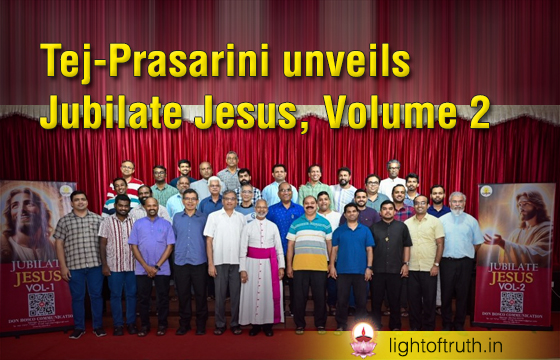
Tej-Prasarini unveils Jubilate Jesus, Volume 2
After the resounding success of Jubilate Jesus, Volume 1–launched on New Year’s Day 2025 with vivacious Jubilee Anthem–Tej-Prasarini, Don Bosco Communications, officially released Volume 2 in honour of the 2025 Jubilee of Jesus’ birth, on July 3.
The event held in the auditorium of Don Bosco High School, Matunga was graced by chief guest, Auxiliary Bishop Dominic Savio Fernandes of Mumbai, the Provincial of the Mumbai Province Fr. Savio Silveira and several other dignitaries.
The album opens with Tej-Pra-sarani anthem, You Are the Light of the World, this new volume encapsu-lates the very identity and mission of Tej-Prasarini– “Tej” meaning light, and “Prasarini” meaning to radiate. Staying true to its name, the produ-ction centre continues to spread the Light of Christ through music and media, inviting people of faith and goodwill to walk in His footsteps.
The dual-volume initiative, released within the same Jubilee year, springs from a deep pastoral desire: to keep Jesus at the heart of every thought, word, action, and relationship throughout this spiritual milestone. “These songs are more than melodies–they are medita-tions,” said Director of Tej-Prasarini Salesian Fr. Joyston Machado. “Each track is crafted to help listeners encounter Jesus in a deeply personal and joyful way.”
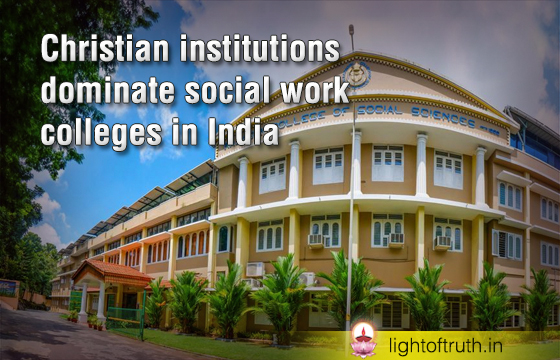
Christian institutions dominate social work colleges in India
Rajagiri College of Social Scien-ces (Autonomous), managed by the Carmelites of Mary Immaculate congregation in Kerala’s Kochi, has ranked second among 25 best social work institutes in India. The top rank in the list of “India Today Best Colleges 2025” has gone to Mumbai’s Tata Institute of Social Sciences.
The list was published on July 11 to help aspiring social workers to choose the right college for a Master of Social Work course. As many as 11 among the 25 colleges are under Christian management.
“These colleges typically invest in experienced faculty, well-equipped classrooms, and partnerships with NGOs and government bodies to offer practical exposure. Factors such as hands-on training, faculty background, internship opportunities, and campus support services are important when identifying the top private MSW colleges in India,” said the introduction to the list.

Planned anti-conversion law in India’s Maharashtra alarms Christians
Christian leaders have expressed concerns over curbs on religious freedom after the government in India’s second-most populous Maharashtra state announced plans to enact a law to tackle alleged conversions. The reactions came after the state’s Revenue Minister Chandrashekhar Bawankule told the state legislature on July 9 about the plan for introducing a stringent anti-conversion law.
“A strict law to prevent religious conversions will be enacted in the state,” Bawankule from the ruling Bharatiya Janata Party (BJP) reportedly told fellow lawmakers. He said the move came following allegations of Christians converting poor Hindus and tribal people in the state.
The minister said he would speak to Chief Minister Devendra Fadnavis on how to bring about an anti-conversion law with stringent provisions, but did not elaborate on a timeline. If the law is enacted, Maharashtra would become the 13th state in India to enforce the anti-conversion law. Most of these states are ruled by the BJP and its allies.

Indian Christians demand action against hate-spewing Hindu lawmaker
About 7,000 Christians marched on the streets of India’s commercial hub Mumbai, demanding the arrest and punishment of a pro-Hindu lawmaker who recently declared huge bounties for attacking and killing pastors and missionaries. The marchers chanted slogans and displayed banners during the July 11 rally at Azad Maidan grounds in Mumbai, the capital of the western Indian state of Maha-rashtra, asking authorities to slap criminal charges against Gopich and Padalkar from the ruling Bharatiya Janata Party (BJP). The rally was organized by the ecumenical group, Sakal Christi Samj Maharashtra (All Maharashtra Christian Coali-tion), and joined by members of various Christian organiza-tions, said Cyril Dara, the coalition’s convener.
During the demonstration, Christian leaders condemned Padalkar for disregarding the law and inciting violence agai-nst the Christian community. “Padalkar publicly announced the bounties a fortnight ago, which has outraged and deeply hurt our religious sentiments,” Dara told on July 11.
He said the protesting Christians also demanded the expulsion of the legislator from the party of Prime Minister Narendra Modi. “This action will help curb future atrocities on the Christian community, like the vandalism of churches and attacks on religious leaders. The community needs protection from the government and action against the culprit,” the coali-tion said in a statement.
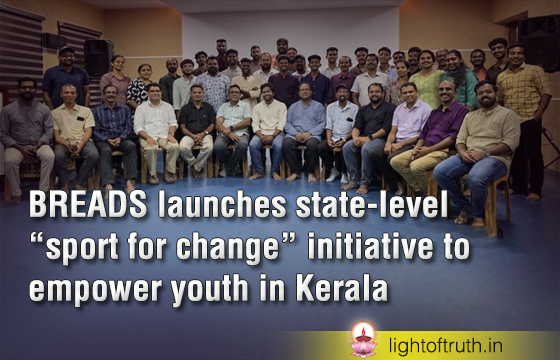
BREADS launches state-level “sport for change” initiative to empower youth in Kerala
BREADS Bangalore con-vened a state-level strategic meeting on July 3, 2025 to launch its pioneering “Sport for Change” initiative–an ambi-tious youth empowerment pro-gramme operating across seven locations in five districts of Kerala. Rooted in a dynamic anti-drug campaign, the initiative leverages the unifying and transformative power of sports to steer young people away from substance abuse and anti-social influences, fostering instead a culture of discipline, purpose, and resilience.
BREADS stands for Banga-lore Rural Educational and Development Society. It’s the official development wing of the Salesian Province of Bangalore, working primarily in Karnataka and Kerala to uplift margina-lized communities–especially children, youth, and women. The gathering brought together an inspiring constellation of stakeholders committed to youth development through sport.
BREADS Executive Director, Fr George P. S., remarked, “Sport is not just a game–it’s a gateway to transformation. When young people are given the right environment, they discover their strength, discipline, and dignity.”
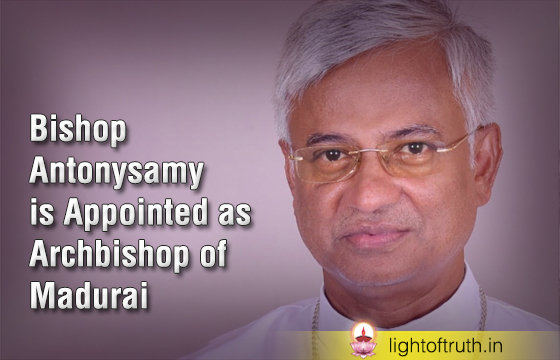
Bishop Antonysamy is Appointed as Archbishop of Madurai
The Holy Father Pope Leo XIV has appointed Bishop Antonysamy Savarimuthu, until now Bishop of Palayamkottai and the Chairman of the CCBI Commission for Canon Law as the Metropolitan Archbishop of the Archdiocese of Madurai on July 5, 2025. Bishop Antony-samy Savarimuthu was born on 8 December 1960 in Vadakku Vandanam, in the District of Tuticorin, Tamil Nadu. He was ordained a priest on 26 April 1987, for the Diocese of Pala-yamkottai. On 20 November 2019, he was appointed Bishop of Palayamkottai and ordained bishop on 15 December. Since 2024, he has served as Apostolic Administrator of Madurai
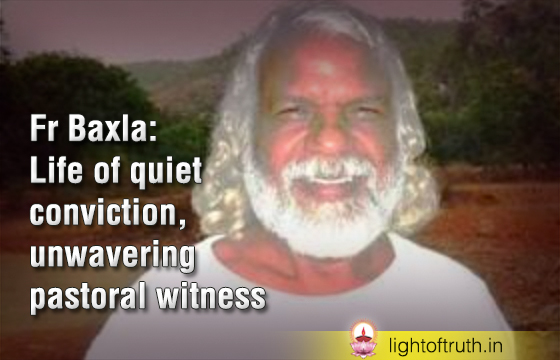
Fr Baxla: Life of quiet conviction, unwavering pastoral witness
Salesian Father Zephyrinus Baxla, a trailblazer in Adivasi cultural revival and education, died on July 7 due to kidney ailments. Father Baxla would have turned 75 in August. Father Augustine Tirkey, a companion of Father Baxla, said his confrere “was a man of quiet conviction. He never raised his voice, but his presence commanded respect,” said. “I remember him spending hours listening to villagers, never rushing, always attentive. His pastoral heart was his greatest gift.” Born in August 1950 into a humble tribal family, Father Baxla’s early life was shaped by cultural rootedness, simple piety, and an innate call to serve, Salesian Shillong provincial Father John Zosiama said. Drawn to the Salesian charism, he entered formation and was ordained a priest when the Church in eastern India was taking bold steps in grassroots evangelization and social transformation, the provincial recalled. A professor of Scripture at Sacred Heart Theological College Shillong, over the decades, Father Baxla’s ministry spanned remote missions, parishes, formation houses, and educational initiatives. In every assignment, he embodied the heart of a true pastor – faithful, unassuming, and wholly dedicated to walking with his people. Father Baxla’s contribution to Adivasi education and cultural revival was particularly profound. During his time in Kurukh-speaking regions, Father Baxla championed the Tolong Siki script, not merely as a linguistic tool, but as a symbol of identity and dignity, the provincial said.
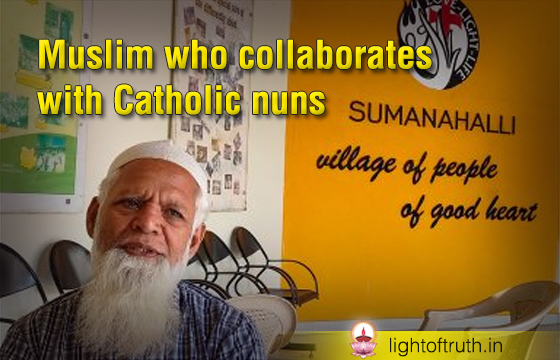
Muslim who collaborates with Catholic nuns
Masthan Sahib has worked with Catholic nuns for four decades in a leprosy rehabilitation centre in Bengaluru, the capital of the southern Indian state of Karnataka. The centre, Sumanahalli, is under the Bangalore Archdiocese, aided by the state government, and managed by nuns and priests of different congregations. Sahib, a resident of Palamaner, a remote village in the Chittoor district of Andhra Pradesh state, Karnataka’s eastern neighbour, was trained by Catholic nuns from overseas to assist their work among leprosy patients. The 65-year-old Muslim shared with Global Sisters Report how he serves mostly Hindus and Catholic nuns without compromising his faith.
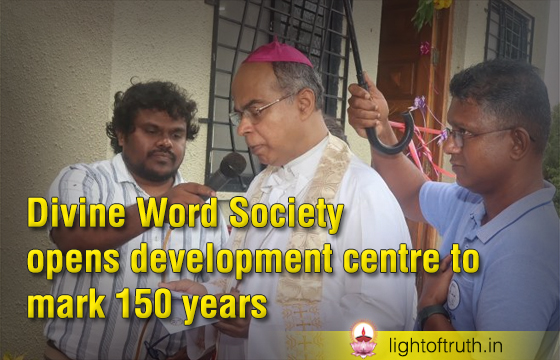
Divine Word Society opens development centre to mark 150 years
More than 200 people have attended the opening of the Community and Human Resources Development Centre at Tala in Maharashtra’s Raigad district to mark the Divine Word Society’s 150 years of service. Archbishop John Rodrigues of Bombay led the thanksgiving Mass on June 18 at the Janseva Society Campus in Tala, some 115 km south of Mumbai, the capital of the western Indian state of Maharashtra. The archbishop encouraged all present to remain steadfast in uplifting the marginalized with dignity and love. He described the new centre as a “sanctuary of transformation,” a space born from faith in action. The occasion also marked the Janseva Society’s 13 years of serviced to Katkari tribe, a Particularly Vulnerable Tribal Group in Maharashtra. The Archdiocese of Bombay in collaboration with the Indian Mumbai province of the Society of the Divine word made an agreement on June 1, 2012, to begin a mission station at Tala. It aimed to spread Christ’s mission in Tala Taluka. The society works among 22 Kathkari tribe hamlets and three shepherd group villages. It deals with illiteracy, alcoholism, child labour, bonded labour, issues of health and hygiene, lack of road and water facilities.