Category: Asian

  • SOUTH KOREAN CATHOLICS HOPE CATHOLIC PRESIDENT-ELECT CAN UNIFY NATION

    SOUTH KOREAN CATHOLICS HOPE CATHOLIC PRESIDENT-ELECT CAN UNIFY NATION

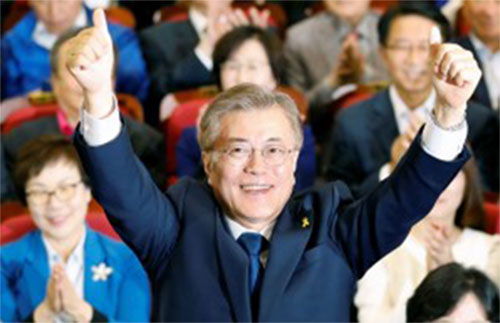
    Catholics in South Korea have high expectations for unity, equality and an end to corruption under the country’s newly elected president, Moon Jae-in.

    In a congratulatory message to Moon that also noted the national rift that led to the special election, the head of the Korean bishops’ conference, Archbishop Hyginus Kim Hee-joong of Gwangju, said the country needed “a credible leader who keeps principles and steps toward true peace and justice beyond today’s conflicts and confrontations.”

    “May the new president be a great leader who can make democracy take root in this country and bring peace and prosperity to the Korean people,” Archbishop Kim said in his statement.
    Moon, a Catholic and member of South Korea’s Democratic Party, won the election on 9 May with 41% of the vote among a slate of 13 candidates. Moon, 64, was buoyed by the growing dissatisfaction of ordinary citizens whose anger over corruption was years in the making under Park. From late 2016 to early 2017, tens of thousands of South Koreans filled the streets of Seoul every week calling for Park’s removal.
  • Hong Kong releases survey on diaconate ministry

    Hong Kong releases survey on diaconate ministry

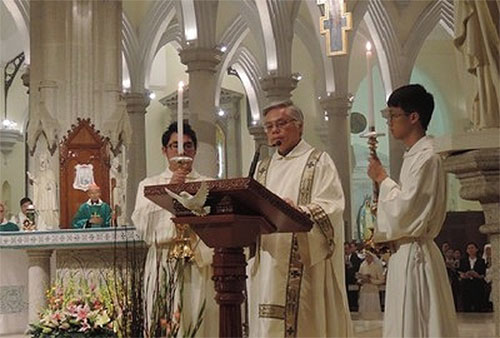
    A new survey by the Hong Kong Diocese has found that parishioners accept perma-nent deacons but do not fully understand their ministry.

    The survey was conducted by the Catholic Studies Centre of the Chinese University of Hong Kong over three years and was released on April 23 with a more detailed version coming in June. It interviewed over 4,000 parishioners, clergy, deacons, nuns and seminarians. Hong Kong Diocese in 1997 became the first Asian Diocese of the Latin rite to ordain permanent deacons.

    “The latest survey is the first research on the ministry since the last one was done 25 years ago in 1992 when the ministry was under preparation,” said Father Dominic Chan, Vicar General of Hong Kong Diocese. “We feel grateful now that well over 90 percent of the clergy and faithful have accepted laymen to become permanent deacons. Less than 20 percent of the clergy accepted this in 1992,” he told ucanews.com.

    Although 70 percent of respondents welcomed permanent deacons in their parish, Father Louis Ha, head of the research project, suggested more education was needed as many interviewees said they did not know the details of the diaconate ministry.

    “The lay respondents thought that there was not much difference between permanent deacons and lay church workers as they do similar tasks. This shows that they do not have a clear vision of the ministry devised in the Second Vatican Council,” he said.

  • Church attendance in Philippines declines

    Church attendance in Philippines declines

    The failure of families to sustain values formation among young people is one of the factors that has led to a decline of church attendance in the predominantly Catholic Philippines.

    “[Young people] don’t feel that it is important to attend Mass on Sundays,” noted Henrietta de Villa, former Philippine ambassador to the Vatican.

    Results of a survey conducted last month showed that church attendance among Catholics is declining even as most Filipinos claim that religion is very important in their daily lives.

    The survey by pollster Social Weather Stations (SWS) noted that the proportion of those who attend religious services weekly was lowest among Catholics at 41 percent.

    De Villa said the result of the survey shows the importance of a “solid Christian family” that can guide the so-called “millennials” in the practice of their faith.

    The lay leader said while she was happy about the growing number of Filipinos who said religion is “very important” to their lives, “it is sad that few people are going to church.”
    “It is very important that families should start to form their children in faith while they are young,” said De Villa.

    Archbishop Emeritus Oscar Cruz of Lingayen-Dagupan said “family and life apostolate” should be strengthened.
    “It will have a big influence on people,” said the prelate.

    Archbishop Cruz also blamed the proliferation of modern technology and other recreational activities as among the causes of Filipinos’ declining interest in church activities.

    De Villa, meanwhile, said that aside from strengthening Catholic families, priests and bishops should also be conscious in sharing “meaningful” homilies, especially to young people. Results of the SWS survey, conducted in late March, showed that Catholics are the least active among Filipino groups in attending weekly religious services.

    Of the surveys on church attendance conducted by the pollster since 1991, weekly attendance at religious services has always been lower among Catholics.

  • New pastoral centre for isolated Korean Catholics

    New pastoral centre for isolated Korean Catholics

    Chunchon Diocese realized a long-term dream when it opened a pastoral centre to offer faith education and cultural events to Catholics living in this isolated area of South Korea.
    The diocese held the blessing ceremony for its Yeongdong Catholic Pastoral Centre in the coastal city of Gangneung’s Juminjin harbour on March 31. Bishop Lucas Kim Un-hoe of Chunchon presided over the ceremony.

    The seeds of Catholic faith were sown in Yeongdong some 100 years ago. However, as most of the pastoral events were held in Chuncheon, the city where the  diocese is based, Catholics from other areas could not join because the diocese is divided by two mountain ridges. Bishop Kim said, “This area lacks venues for education and it was hard to offer programs here. The new centre will appease the thirst of the faithful.” From April, the centre will offer classes on the Bible, Catechism and a reading forum. It will also offer monthly lecture programs.

  • Jailed in Vietnam, Christian lawyer wins German award

    Jailed in Vietnam, Christian lawyer wins German award

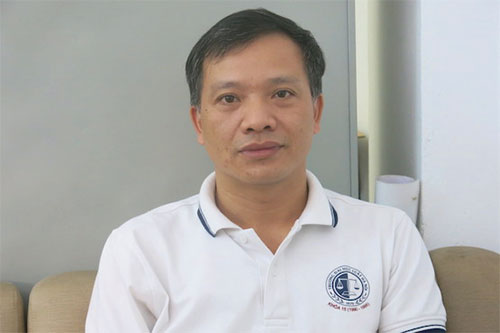
    Jailed Christian attorney Nguyen Van Dai received an award by the German Association of Judges on April 5 for his efforts to defend human rights in Vietnam.

    Dai, who has been held incommunicado at a prison in Hanoi, was the first Vietnamese lawyer to win the Human Rights Prize for fighting for a democratic and liberal future in the communist country, said Deutscher Richter-bund (German Association of Judges) the largest professional organization of judges and public prosecutors in Germany.

    “The path to democracy in Vietnam is still long and needs people like Dai,” the organization said.

    On April 4, Dai’s wife, Vu Minh Khanh, was stopped at Noi Bai Airport so she couldn’t fly to Germany to receive the award. She was told that she was not able to leave the country until 2019.

    Vu Quoc Dung, the chairman of the human rights organization “Veto! Human Rights Defenders’ Network” based in German, received the award on Dai’s behalf.

    Dai, 47, and his assistant Le Thu Ha were arrested in December 2015 for being accused of conducting “propaganda against the Socialist Republic of Vietnam” after he had held a workshop on basic human rights at the house of a former political prisoner in Nghe An Province.

  • Beijing arrests two South Korean Protestant pastors

    Beijing arrests two South Korean Protestant pastors

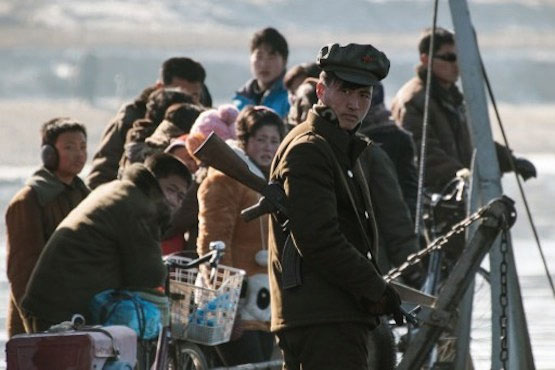
    Authorities in the northeastern Chinese province of Liaoning have formally arrested two South Korean Protestant pastors accused of trying to help North Koreans flee across the border into China.

    Neither pastor has been named. One was arrested along with his wife in February as they tried to board a plane for South Korea from Qingdao in the eastern province of Shandong, while the second was detained at a hotel in the northeastern city of Qinhua-ngdao, Radio Free Asia (RFA) reported.

    While both wives have since been released, the two pastors remain in police detention.

    Peter Chung, spokesman for the human rights group Justice for North Korea, said their families have hired lawyers to represent the pastors, now that the cases look set to proceed to trial.

    “The cases are now with the state prosecutor’s office; all the files are with the prosecutor now,” Chung told RFA on April 5. “This was approved on March 29.”

  • Convert to Islam and walk free: Pakistan prosecutor

    Convert to Islam and walk free: Pakistan prosecutor

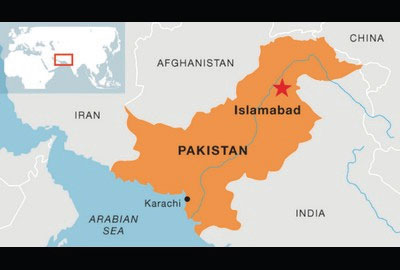
    Scores of Christians facing trial over the lynching of two suspected terrorists after two church bombings in 2015 are being forced to convert to Islam in return for their acquittal, activists said. Nearly 60 Christians are on trial for the mob killing of two men mistaken for militants shortly after two Taliban bombers attacked worshipers at the Roman Catholic Church and Christ Church in Youhanabad in Lahore on March 15, 2015.

    The bombings resulted in death of 15 people while 72 others were wounded. Angry protesters managed to grab two suspects from police, beat and lynch them to death. They were later identi-fied as passers-by.

    More than 100 Christians were rounded up in the wake of the incident and put on trial. Centre for Legal Aid, Assistance and Settlement (CLAAS), an inter-denominational organisation working for persecuted Christians in the country, said that Prose-cutor Syed Anees Shah offered Christians acquittal if they agreed to convert to Islam.

    “How can we expect justice when people sitting in courts are inwardly biased? We demand that the government takes action against the public prosecutor,” Sohail Habel, a member of CLAAS told ucanews.com.

    “In my 13 years of human rights activism, I have seen many such offers made to non-Muslim prisoners,” he said, adding that a CLAAS legal team was support-ing the victims and trying to dissuade them from capitulating.

    Pakistan prosecutor removed from Christian case

    A Pakistani prosecutor who tried to push Christians into converting to Islam in exchange for an acquittal in a lynching trial has been removed from the case, activists said. Pakistani media reported that Deputy District Public Prosecutor Syed Anees Shah told 42 Christian prisoners before an anti-terrorism court in Lahore that he could “guarantee their acquittal” if they converted to Islam.

  • Religions join forces to end slavery in Indonesia

    Religions join forces to end slavery in Indonesia

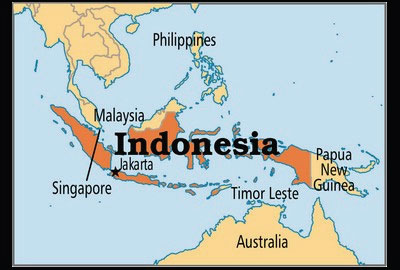
    Indonesian Catholic, Muslim, and Protestant groups have pledged unity to fight against slavery and human trafficking in Indonesia’s maritime and fishing sector.

    They signed a joint declaration recently to end slavery at the vice president’s office. The joint commitment is “our effort to show that we want to work together with the government to end the problem,” said Father Paulus Christian Siswantoko, executive secretary of the Indonesian bishops’ Commission for Justice, Peace and Pastoral for Migrant People.

  • Philippine activists condemn ‘calvary of the poor’

    Philippine activists condemn ‘calvary of the poor’

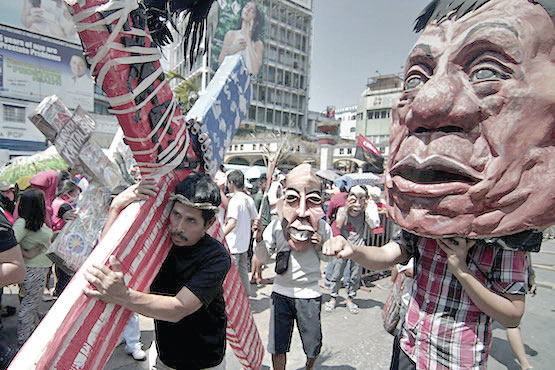
    Activists in the Philippines called attention to what they described as the “Calvary of the poor” during a protest march to mark the start of the observance of the Holy Week.

    Protesters carried crosses symbolizing issues that burden the poor — lack of housing, killings, and human rights abuses — in a dramatization of the passion Jesus Christ on April 10, the Monday in Holy Week.

    Hundreds from slum communities joined the procession to the presidential palace in Manila to condemn the government’s “anti-poor policies.” “Promises made by the government should not remain as promises,” said Gloria Arellano, spokeswoman of the urban poor group Kadamay.

    President Rodrigo Duterte announced that he would provide free housing for the poor and distribute land to landless peasants as part of the government’s peace initiatives with communist rebels.
    The Philippines concluded another round of peace negotiations in The Netherlands aimed at ending almost five decades of communist insurgency.

    Arellano, however, said a lot of Duterte’s campaign promises, including wage hikes for workers and an end to labor contracting, remain unfulfilled.

    During the march, protesters noted similarities between Jesus’ suffering and the Filipino people’s “continuing Calvary.”

    “Poor Filipinos must continue to pressure the government to address the concerns of the homeless,” said Arellano.

    “Instead of crucifying or shaming the poor, we call for solidarity with them in our prayers and our actions,” she added.

    Aside from their call for free mass housing, urban poor groups said, “there is still so much to do” to address the plight of poor Filipinos.

    The issues raised by the protesters during the “Calvary of the Poor” included the spate of killings of suspected drug users and peddlers, the proposal to revive capital punishment in the country, the lowering of the age of criminal liability for minors, the proliferation of fake news, and climate change, among others.

  • A defender of Sri Lankan fisher folk

    A defender of Sri Lankan fisher folk

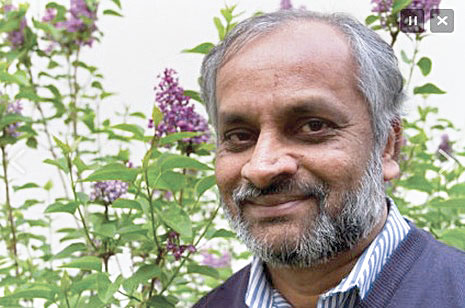
    He could have been a researcher or an entrepreneur but he chose to get involved in civil society. And at the age of 54, Herman Kumara believes that he made the right choice.
    “I am really happy,” he says. “My former faculty comrades are earning money, sometimes a lot of money, but they are not happy with what they are doing. Personally, I have what I need to eat and to survive and that’s enough.” As a student, Herman Kumara studied biology at the University of Kandy in the centre of Sri Lanka, one of the nation’s most reputable universities.
    There he was president of the Newman Society which organized the Catholic students.
    “We Christians are a minority in the country but an influential minority,” he says. “We are like the salt that gives taste to the curry.” He had planned to do a master’s degree when the civil war broke out. “In 1989, some inhabitants of my village suspected me of being a member of the Marxist party, the JVP. They wanted to kill me.,” he recalls.
    “So I realized what oppression of a minority really meant. As Catholics, we could also feel threatened.”
    As a result, he ended his studies. “I did not want to be a white collar worker and I understood that my generation was suffering.  That it was necessary to find alternatives.”
    A priest friend suggested that he join the Catholic development agency, Caritas. The movement then supported the struggles of farmers, fisherfolk, and workers in tea plantations as well as women war victims.
    “I did not have confidence in the hierarchy,” he comments with reference to the religious authorities who removed him from Caritas.