All posts by Light of Truth

Bangladesh cardinal appeals for charity during pandemic

Cardinal Patrick D’Rozario of Dhaka has made an appeal to Bangladeshi Catholics to engage more in prayers to seek God’s intervention and to donate charitably to support poor and needy people during the Covid-19 pandemic.

He urged all Catholics of Dhaka Archdiocese to observe special “prayers, fasting and acts of mercy” on May 14 in line with Pope Francis’ call. “I praise the Lord and thank you all for your strong faith, love and hope as Christian faithful during this grave crisis. We can win this test of faith one day by placing our trust in God,” Card. D’Rozario said in a pastoral letter circulated on May 7. On May 14, all priests in the archdiocese will participate in a special prayer and recollection to be united with the faithful spiritually, he said.

Catholic and Buddhist leaders meet for Vesak in Vietnam

Catholic and Buddhist leaders teamed up in southern Vietnam to promote religious values as they met for Buddhism’s Vesak festival.

Archbishop Joseph Nguyen Chi Linh of Hue, who led a nine-member delegation from Hue Archdiocese, paid an official visit to the Buddhist Sangha Executive Committee based in Thua Thien Hue on May 6.

The delegates were warmly welcomed by Most Venerable Thich Duc Thanh, head of the local executive committee, and eight other Buddhist dignitaries.

Archbishop Linh offered congratulations and good wishes to the hosts and Buddhists celebrating the Vesak festival, which commemorates the birth, enlightenment and death of the Lord Buddha.

The president of the Catholic Bishops’ Conference of Vietnam said Buddhism is a large religion and has deep and great influence on the world, so the United Nations yearly holds the Vesak festival. Vietnam has hosted the UN Day of Vesak three times, in 2008, 2014 and 2019.

Archbishop Linh said traditional Buddhist teaching highlights humanity and sacrifice and leads people to find happiness. “This is a meeting place between Buddhism and other religions, especially Christianity,” he noted.

The prelate also expected to foster community solidarity between local Catholics and Buddhist followers.

He expressed high hopes that “this frank meeting today will serve as a first step to fulfill the dream of promoting solidarity between the two religions.”

India’s Muslims feel targeted by rumors they’re spreading Covid-19

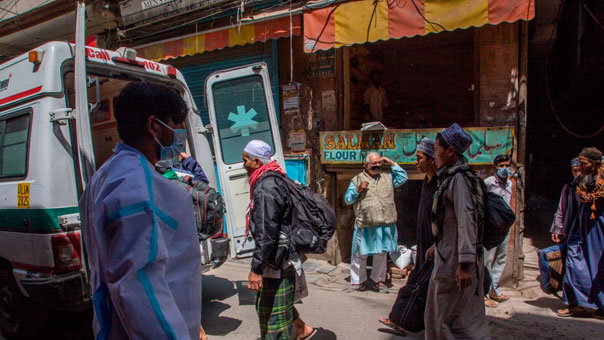
Hafiz Mohammed Naseerudin says that after a police officer assaulted him for being a Muslim and blamed him for spreading the coronavirus, he was left lying on the road for almost an hour.

Naseerudin, 44, had gone to pick up some vegetables from his friend’s house in Humnabad, in the southern Indian State of Karnataka, when he says an officer stopped him on his scooter.

Other vehicles were on the road, Naseerudin says — he believes he was stopped because of his religion.

“I am an Imam, so I look and dress very Muslim. I also have a long beard,” he says. “The cop started hitting me and saying that it is because of me and my community that this disease is spreading.”

Nagesh D L, police superintendent of Bidar district where Humnabad is located, says the officer has been suspended while an inquiry was conducted into the incident. Naseerudin says he called the police from hospital to make a statement, but Nagesh claims they did not receive any complaint.

Aaseerudin is not alone. As fears of a widespread coronavirus outbreak mount in India, some of the country’s Muslims, who make up roughly 200 million of the country’s 1.3 billion population, have been targeted in Islamophobic attacks on the streets and online, and accused of spreading the virus.

In the capital, New Delhi, for example, volunteers distributing ration kits to Muslim families say they face harassment from police and are scared to go out. In Punjab, Muslim milk producers say they have been threatened by villagers, their houses have been raided by police, and people are scared to buy their produce.

At the centre of the recent Islamophobia is a gathering of a conservative Muslim missionary group in New Delhi in mid-March, and led to a large, highly publicized cluster of coronavirus cases.

Xavier casket to undergo restoration job in Italy

The silver casket that houses the relics of Saint Francis Xavier is set to go to Italy for restoration.

However, an impasse has arisen over the responsibility to conduct the restoration. The Church authorities want to over-see the work, which was disputed by the Archaeological Society of India that manages the Bom Jesu Basilica in Old Goa where the casket is kept since 1637.

It was in that year the saint’s mortal remains were first taken away from public view and ensconced in a silver casket. It is kept atop specially constructed mausoleum within the basilica.

The silver casket has shown serious sign of distress and experts have said that it will become irreparable if no action is taken within the next few years.

“We have been wishing to send it to Italy, where they have offered to do it for free. How-ever, the ASI New Delhi put paid to such plans and has instead said that this can be done by the ASI’s chemical institute in Aurangabad,” Fr Patrício Fernandes, the rector of basilica, said.

Cardinal decries migrant deaths, industrial accidents in India

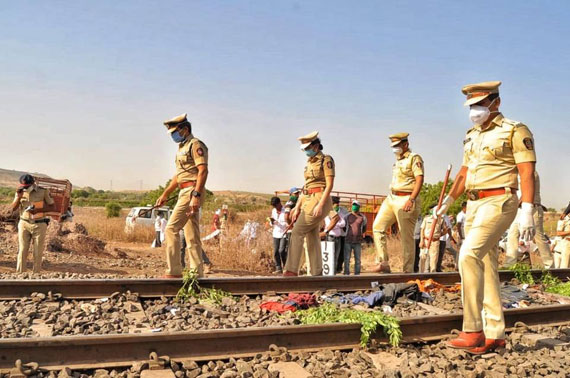
Cardinal Oswald Gracias said his “heart wept” upon hearing the news that 15 migrant workers were crushed to death on May 8 after falling asleep on railway tracks in Aurangabad, which is in India’s Maharashtra State.

One more person was hospitalized in the incident, and four others were treated for shock. The police said the migrants, who were headed to Madhya Pradesh in central India, apparently chose to walk on railway tracks to avoid the highway, where they risked getting stopped by authorities enforcing India’s COVID-19 coronavirus lockdown. Police said the men likely thought the trains weren’t running, due to the lockdown.

Millions of internal migrants – most of the day labourers with little savings – were trapped far from home with little money when the lockdown was declared on March 24 with just a few hours’ notice. “I received this news with immense sorrow,” Gracias, the Archbishop of Bombay and President of the Catholic Bishop’s Conference of India (CBCI), told Crux.

Imphal Archdiocese reaches out with relief aid

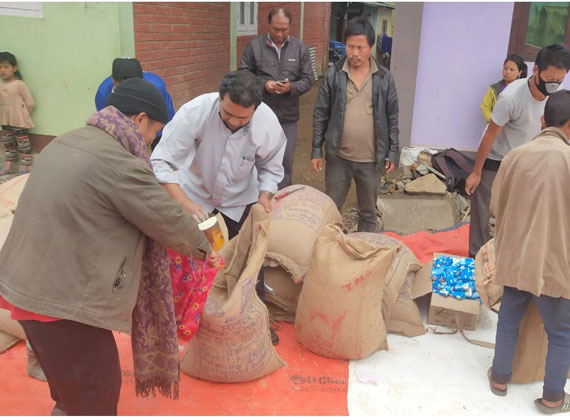
The Diocesan Social Service Society (DSSS), a developmental wing of the Archdiocese of Imphal, distributed dry rations to 2898 families in 42 villages within seven districts of Manipur.

Father Biju Luckose, director of DSSS, Father Thohrii Joseph, assistant director and Father Dale Joseph, financial administrator of the Archdiocese of Imphal and the staff of DSSS spearheaded the relief aid distribution.

The relief work was carried out for five days in these seven districts which include Imphal East, Imphal West, Chandel, Churchandpur, Senapati, Tengnoupal, and Kangpokpi.

The COVID-19 relief aid was the initiative of the Archbishop Dominic Lumon, the head of the Catholic Church in Manipur to reach out with a little helping hand to some of the remote villages of Manipur during this pandemic crisis.

In this time of crisis not only prayer alone but goodwill action, gesture and solidarity to our suffering and struggling brothers and sisters is the need of the hour, the Archbishop said.

The villages in the far-flung areas expressed their deep sense of gratitude and happiness for taking an initiative to reach out to them despite the rain and road conditions.

Jharkhand minister thanks Church for Covid-19 relief

Jharkhand’s Minister for Finance and Public distribution Rameshwar Oraon on May 5 made a surprise visit to the Ranchi Archbishop’s House to thank the Catholic Church’s works among those affected by the nationwide lockdown.

The minister met Jesuit Archbishop Felix Toppo of Ranchi and his Auxiliary Bishop Theodore Mascarenhas and hailed the Church’s “tremendous and wonderful humanitarian activity.”

He said the government was impressed and grateful to the Catholic community for its selfless and dedicated service to suffering humanity.

The Minister was accompanied by his son Rohit. The Church in Ranchi has collaborated with Deputy Commissioner Rai Mahimapat Rai and the district administration to bring relief to the poor during the Covid-19 crisis.

The priests and nuns of the archdiocese have opened 14 shelters each with a capacity for 200 migrants in Church-managed schools. The Church meets the expenses for the shelters.

The district authorities have commended the centres as model shelters with excellent management. They also portray the merciful human face of service, the administration agrees.

The Church’s community kitchens in Ranchi have so far served more than 40,000 meals.

The Church has distributed some 270,000 rations to more than 5,000 families in the poorer areas of the city and 23 villages in the Namkum, Mandar, Angara, Bero, and Ranchi Blocks.

The Church also distributed 600 PPE (Primary Protective Equipment) kits containing reusable gloves, reusable masks, sanitizers and soaps to the frontline workers in the containment area of Hinpiri.

Beneficiaries included ambulance drivers, sweepers and police personnel. The archdiocese also distributed PPE to 600 police personnel serving on roads and streets.

Catastrophe Of Exclusion And Obscene Inequality

Socrates was born in Athens but he considered himself “a citizen of the cosmos.” H.G.Wells believed borders eventually disappear, and geopolitical gurus have proclaimed the “end of geography.” The protagonists of globalization celebrate the advent of borderless world. “The future has a new home,” the website declares of a megacity being built in Saudi Arabia wirtes Ash Narain Roy

The coronavirus pandemic has shattered all such dreams and utopias by exposing our collective vulnerabilities. After all, the future has a way of arriving unannounced, and we’re too shocked to welcome it. Whenever the dream city does come up, this new home, brainchild of Prince Salman as-Saud, it will not be the future of humanity. We are nursing now a fear of the future, but we have a different future in mind: the future of the past.

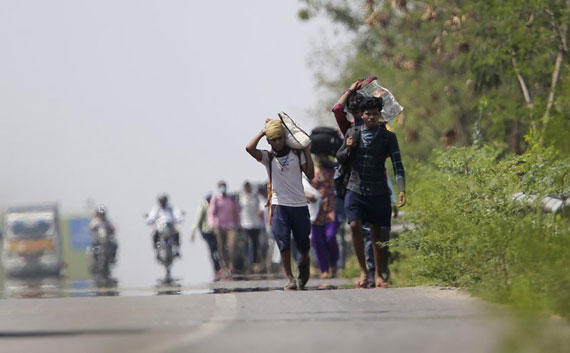
The never ending caravans of migrants marching along well-laid tracks and highways carrying children and their belongings become the next defining moment in India’s development path. The humiliation of the poor and of innocents, the disdain for the marginalized, the utter callousness towards their plight manifest how little India has moved up the ladder of social inclusion, and how the othering of people —making them something other than ourselves— has only expanded the India/Bharat divide.

His own body was a site of resistance for Gandhi. Migrants’ bodies too are sites of resistance. They carry not just their belongings but their world on their bodies. They know there isn’t plenty to eat back home either but they know there will be no humiliation there and they will not be viewed with scorn.

The pandemic reminds us how, in Frank Furedi’s words, “Belonging to a community is the most precious asset that human beings possess.” With migrants trying desperately to leave, where are the leaders they elected to represent them?

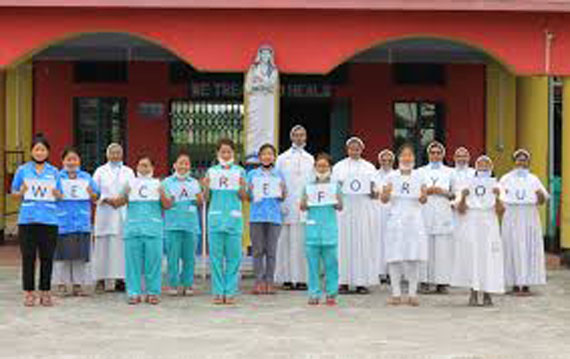
Arunachal bishop hails nurses as “real heroes”

Bishop George Palliparambil of Miao on May 12 hailed nurses as ‘real heroes’ in the global war against the Covid-19 pandemic.

The Salesian prelate was addressing the International Nurse’s Day celebrations held at Krick and Bourry Memorial Hospital, Injan in Arunachal Pradesh’s Changlang District.

“I really want to thank and congratulate all the nurses for the great sacrifice they make for humanity. I want to assure you and all the nurses across the world that you are always remembered in our prayers,” he told the nurses of the hospital that he founded in honour of two missionaries who were martyred in the north-eastern Indian State. The World Health Organization declared the year 2020 as the Year of the Nurse and Midwifery in recognition of the contribution they make and the risk associated with nursing, in the context of Covid-19.

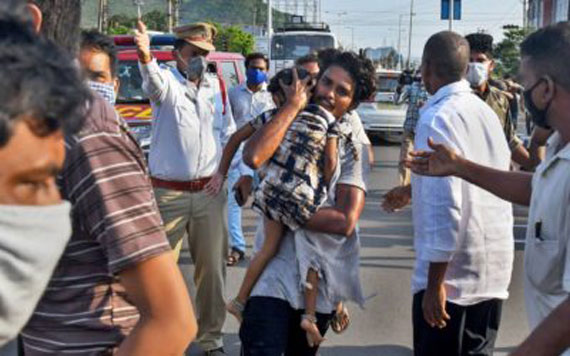
Indian bishops express shock, pain over Vizag gas leak

The Catholic Bishops’ Conference of India on May 7 expressed shock and pain over the gas leak in Visakhapatnam, a port city in Andhra Pradesh State. “From the reports it is noted that many have died and scores are ill, and the accident has created mass panic in several areas,” says a press statement from the conference.

At least 11 people were dead and more than 1,000 fell ill on May 7 after gas leaked overnight from a chemical plant of a multinational firm near Visakhapatnam.

Lima Joshi, a Catholic lay-woman living in Vishakhapatnam, told Matters India over phone that people felt breathlessness when they came out of their houses. “Many fell on the ground unconscious,” she added. According to her, the gas spread over a 4-km radius of an LG Polymers factory. “People started running away from their homes. Many died on the spot and many are admitted in hospitals.”