After just over a year of lockdown, a new study has found the coronavirus pandemic has raised a host of questions – particularly around belief in God, religious practice and death.
To mark the launch of Season 3 of The Big Conversation – a series of video debates featuring some of the biggest intellectual thinkers across the religious and atheistic spectrum – Savanta Com Res has released a new survey, commissioned by Premier Christian Radio, that shines a light on the impact the pandemic has had on people’s spiritual beliefs and behaviours.
It found 67% of those who call themselves religious have questioned their belief during the pandemic. Meanwhile, 24% are more fearful towards dying because of the pandemic, with the figure rising slightly among the religious at 27%.
The survey of 2,092 UK adults also showed that a third of people say that the pandemic has had an effect on their prayer life. However, there is no consensus on whether it’s made us more or less likely to pray. Sixteen percent have increased their prayer and 15% have decreased.
Unbelievable? presenter, Justin Brierley, who hosts The Big Conversation said the pandemic has raised major issues for those with spiritual leanings and none:
“A year of living in the pandemic has caused many of us to re-evaluate life. The survey shows that whether we are religious or non-religious, we are all more aware of our own mortality. However, it was interesting to see just how many people of faith have been led to doubt the existence of a loving God. I believe that our opening Big Conversation on God, suffering and the pandemic will help people to find answers to their questions.”
In the first of the six-episode Big Conversation series Brierley welcomes Los Angeles-based Bishop Robert Barron, founder of Word on Fire, along with Alex O’Connor who is a Philosophy & Theology student at Oxford University.
All posts by Light of Truth

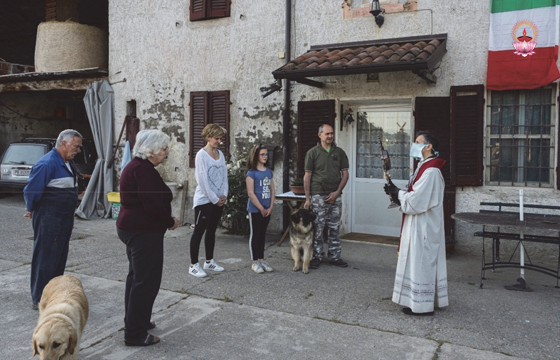
Italy sees worst gap between births, deaths since 1918 Spanish Flu
With Italy already facing a diminishing population, low birth rates and fewer religious and civil marriages, the COVID-19 pandemic severely impacted those numbers for 2020, according to the Italian National Institute of Statistics.
In fact, it said, Italy set new records in 2020 with the lowest number of births since its unification in 1871, the highest number of deaths since the end of World War II and the largest gap between the number of deaths and births since the Spanish flu pandemic of 1918.
The statistics were released March 26 in a report on Italian demographics during the COVID-19 pandemic for 2020.
The first COVID-19 cases in Europe were registered in late January in Italy, and the country’s northern regions, especially Lombardy, were hit the hardest by the contagion until nationwide lockdowns and restrictions slowed the surge.
According to the Italian National Institute of Statistics, commonly referred to as ISTAT, more than 746,000 deaths were registered in 2020, almost 112,000 more than 2019 — an increase of 17.6% — and the highest number recorded since the end of World War II.
There were 7,600 fewer deaths recorded in January and February 2020 — the pre-pandemic phase — than the average for those two months in each of the preceding five years, it said.
But starting in March, when the epidemic exploded in Italy, until the end of 2020, the number of deaths nationwide went up 21 percent compared to the same period in the previous five years, the report said. The number of deaths registered as being due to COVID-19 were 10% of all deaths in 2020 with nearly 76,000 lives lost; ISTAT estimated that those deaths accounted for 70 percent of the increase over a normal year.
However, the highest numbers were during the worst phase of the crisis, from March to May 2020 when the number of deaths was 31.7 percent higher than the national average with almost 51,000 additional deaths than those recorded in the same period over the preceding five years, ISTAT said.
Northern Italy saw the highest concentration of deaths with the number of deaths being 61% higher than its norm from March to May; the number of deaths were 95% higher than the norm in March and 75% higher in April, it said.
The northern region of Lombardy — the epicentre of the pandemic — saw a 111.8 percent increase in the number of dead in that first phase, it said.
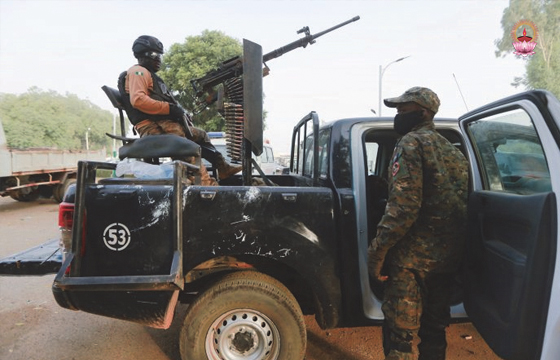
Priest, six others killed by armed gunmen at Nigerian parish
Father Ferdinand Fanen Ngugban and six others died of gunshot wounds after armed gunmen invaded the grounds of St. Paul Parish in Ayetwar March 30, said the Diocese of Katsina-Ala.
“After celebrating Mass and while he prepared to leave for the chrism Mass at St Gerald Majella Catholic Cathedral, Katsina-Ala, to renew his priestly vows alongside his brother priests, there was pandemonium among the internally displaced persons who took refuge in the parish premises,” said a state-ment from the diocese.
“Father Ferdinand went out to find out the cause of the confusion. He was shot in the head as he tried to take cover after sighting some armed gun-men,” the diocese said. It said burial arrangements for all the deceased would be announced.
Ngugban, who served as assistant pastor at St. Paul Parish, was ordained a priest in 2015.
The attack took place in Benue state. The gunmen reportedly raided the village and set houses on fire before attack-ing the parish.

Lebanese cardinal criticizes Hezbollah in leaked video
At the risk of compromising the appeasement efforts aimed at facilitating the formation of a new government, Lebanese media on Thursday broadcast a leaked video in which the top Christian leader openly criticizes the Shia Hezbollah movement, accusing it of harming the country by dragging it into regional conflicts.
“Why are you standing against neutrality? Do you want to force me to go to war? Do you want to keep Lebanon in a state of war?” Maronite Patriarch Bechara Boutros Rai asks Hezbollah in the video. “Would you ask for my opinion when you do go to war? Did you ask for my approval to go to Syria, Iraq and Yemen? Would you ask for the government’s opinion when declaring war and peace with Israel? The constitution says that declaring war and peace is upon the decision of two-thirds of the government’s votes.”
“Why do you decide to drag the Lebanese into a war you have decided to wage without asking their opinion?” Rai said. “You’re not looking out for (our) interests, nor the interests of your people,” he said, apparently addressing Hezbollah, a heavily-armed movement allied to Iran.
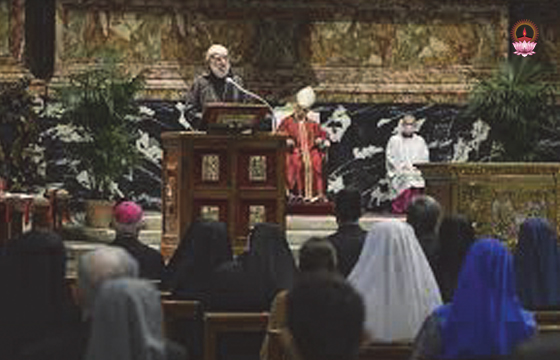
Papal Preacher says divisions have ‘wounded’ Catholic Church
After reflecting on the biblical meaning of fraternity during the Vatican’s Passion of the Lord, the papal preacher on Good Friday lamented the disunity existing among Catholics. “Fraternity among Catholics is wounded,” said Cardinal Raniero Cantala-messa. “Divisions between Churches have torn Christ’s tunic to shreds, and worse still, each shredded strip has been cut up into even smaller snippets. I speak of course of the human element of it, because no one will ever be able to tear the true tunic of Christ, his mystical body animated by the Holy Spirit.” “In God’s eyes, the Church is ‘one, holy, catholic and apostolic’, and will remain so until the end of the world,” he said. “This, however, does not excuse our divisions, but makes them more guilty and must push us more forcefully to heal them.”
The “Passion of the Lord” service is the only liturgy presided over by the pope in which he’s not the homilist. Instead, the task falls on Cardinal Raniero Cantalamessa – elevated to the Church’s most exclusive club last year, after four decades serving as the preacher of the papal household.
As has been the case since the beginning of the COVID-19 pandemic, the liturgy was almost devoid of the presence of faithful, with less than 200 participants, including cardinals, acolytes and Vatican’s gendarmes and Swiss Guards, present in St. Peter’s Basilica guarding the pope.
After processing to the Altar of the Chair in St. Peter’s Basilica in eerie silence, the 84-year-old Pope Francis prostrated himself before the altar. During the service, the Gospel recounted the last hours in Jesus’ life, from his arrest to his burial.
Leading by example, in a country currently in full lockdown due to the pandemic, the veneration of the cross, when each faithful goes in procession kiss a statue of Christ crucified, was omitted.

Irish bishops announce ‘synodal pathway’ during ‘pivotal time’
Ireland’s Catholic bishops have announced they will embark on a “synodal pathway” for the Church and hold a National Synodal Assembly within the next five years.
The bishops made the announcement at the end of their annual Spring Meeting, which took place virtually due to the COVID-19 pandemic.
The prelates called it a “pivotal time” for the Church in Ireland, and acknowledged they were “acutely aware of the huge challenges to the faith over the past fifty years from the rapid transformation and secularization of society” on the island.
Once one of the most Catholic nations in Europe, revelations about clerical sexual abuse has left public confidence in the Church at its lowest level in the history of Ireland.
Not only has Mass attendance dropped significantly over the past quarter century, the Irish people have increasingly rejected laws seen as rooted in Catholic teaching.
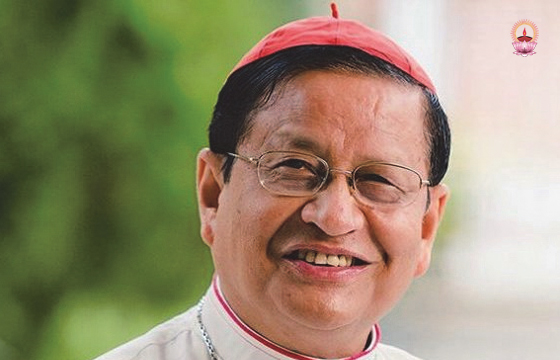
Let my country awake from culture of death to resurrection: Myanmar Cardinal
Reflecting on the passion, death and resurrection of Jesus Christ, Myanmar Cardinal Charles Maung Bo, in his Easter message, reflects on his people’s road to Calvary over past two months.
“The greatest feast of Christianity comes during the saddest days in Myanmar history. For the last two months our people have walked through a real way of the Cross. They continue to be on mount Calvary. Hundreds have been killed. A blood bath has flown on our sacred land. Young and old, and even the children have been mercilessly killed. Dark days. Thousands are arrested and thrown into prisons. Thousands are on the run escaping arrests. Millions are starving,” the cardinal laments in his Easter message released March 31.
In a note of hope, the cardinal tells, “A wounded nation can find solace in Christ who underwent all that we are undergoing: He was tortured, he was abused, and he was killed on the Cross by arrogant powers. He felt the same sense of abandonment by God, felt by so many of our Youth.”
Recalling the Gospel story of women at Jesus tomb, the cardinal says, “Three women go to the grave to anoint Jesus body. They did not find him, but they found a young man. Yes. It reminds us of what is happening around us. Women and Youth of Myanmar. Empty the tombs. The message out of them is resurrection, a new world.”
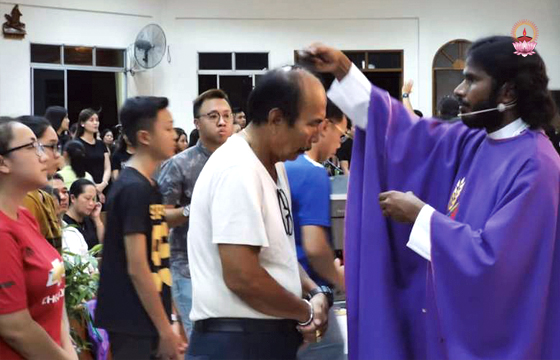
Indian missionary finds joy of Christ in Muslim-majority Malaysia
His missionary experience at St. Edmund Catholic Church in Limbang, a town in Sarawak state in Malaysian Borneo, has left an indelible mark on the life of Father Christu Kolaba-thina, better known as Ravindra Babu.
The Indian priest from St. Joseph Missionary Society of Mill Hill (popularly known as Mill Hill Missionaries) has served as the assistant pastor of a parish in Miri Diocese since September 2018.
The second of five children, Father Ravindra was educated in Catholic schools in India. The first part of his missionary and priestly formation including philosophy studies was completed in India and then he was sent to St Joseph Forma-tion Centre in Nairobi, Kenya, for theological studies.
He spent two years in a missionary experience pro-gram in the Diocese of Kroon-stad in South Africa and was ordained a priest on Feb. 3, 2016, in the Archdiocese of Hyderabad in India.
Limbang Parish is Father’s Ravindra’s second missionary assignment. He landed in his first mission as a priest for Lapok Parish, also in Miri Diocese, in June 2016.

1,100 rally to mark Easter in Kolkata
Pastors, priests, heads of schools and parishioners from various parts of Kolkata participated in an Easter Rally that was organized on April 4 evening.
The rally with 1,100-odd participants started from Bishop’s College and culminated with a thanksgiving worship service on the grounds of St James’ School.
The rally included participants from Catholic, Church of North India, Assembly of God and Baptist Churches.
“A year ago we faced the challenges of the Covid-19 pandemic and the churches were closed but our faith sustained us and this year the churches have opened. For Easter, the message is of hope and peace,” said Catholic Archbishop Thomas D’Souza of Calcutta.
“Love brings unity and peace destroys hatred and even in hopelessness we should not be in despair… and not give up. We must live as good Christians and good citizens.”
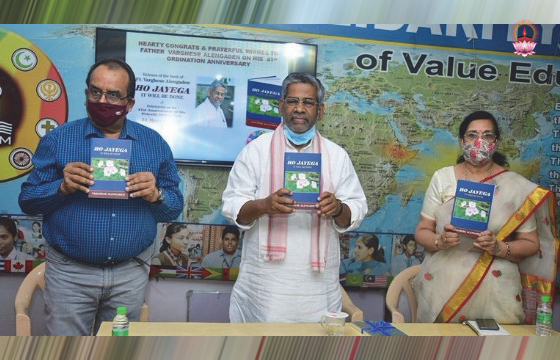
Fr Alengaden’s book released
A book written by Father Varghese Alengaden on the occasion of the 40th anniversary of his priestly ordination was released at a function March 31 at Indore. Renowned journalist Shravan Garg, who released “Ho Jayega” (It will be done), described the book as “an attitude that helps a person to overcome crises in life.”
He also said that the “Ho Jayega” philosophy enabled Father Alengaden to achieve great things in his life, especially starting the Universal Solidarity Movement of Value Education for Peace (USM) and nurturing it.