

With the “further escalation of tension in Ukraine,” the president of the Polish bishops’ conference asked Polish Catholics to continue praying for peace, but also to be prepared to welcome Ukrainian refugees.
An archbishop in Lviv, Ukraine, made a similar statement, saying people displaced from their homes already were arriving in the western part of the country, and a representative of Catholic Relief Services said the U.S. Catholic international aid organization was prepared to help.
Archbishop Stanislaw Gadecki of Poznan, president of the Polish bishops’ conference, appealed “to my countrymen for open and hospitable hearts for refugees from Ukraine who will seek refuge from war in Poland.”
He made his appeal in a statement posted Feb. 21 on the bishops’ website after news that Russian-allied separatists in Eastern Ukraine had increased artillery and mortar attacks and, Feb. 17, had hit a kindergarten in Stanytsia Luhanska, when children were in the building; according to reports, none of the children were injured, but three staff members were.
Archbishop Gadecki’s statement was posted before Russian President Vladimir Putin formally recognized the independence of separatists’ self-proclaimed Donetsk People’s Republic and the Luhansk People’s Republic, a move the U.S. government said was against international law.
Encouraging Poles to continue praying for peace, the archbishop told them: “Everyone has the right to live in peace and security. Everyone has the right to seek for themselves and their loved ones conditions that will ensure a safe life.”
Even before the threat of war became so real, the archbishop said, Poland “opened its doors to newcomers from Ukraine, who live among us, work with us, pray in Polish churches and study in Polish schools.”
Archbishop Gadecki asked Polish Catholics to give generously to Caritas Poland and their local parish Caritas agencies to help refugees; the agencies, he said, are making plans to increase refugee support programs “in case of further escalation of tension and military action.”
All posts by Light of Truth
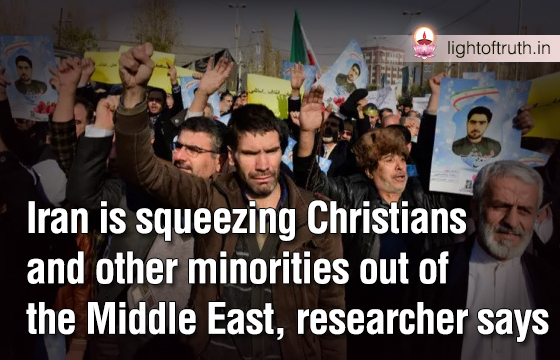
Iran is squeezing Christians and other minorities out of the Middle East, researcher says
A researcher with the Philos Project told journalists Feb 22 that Iran is using incremental strategies to squeeze non-Muslims out of the country and in nearby states such as Iraq and Syria, and that the plight of Christians in the Middle East is “truly misunderstood” by most in the West.
Senior Research Fellow Dr. Farhad Rezaei, an Iranian Kurd, is a Christian convert who fled Iran and now teaches at York University in Canada. The Philos Project is a nonprofit group that educates about and advocates for Christians in the Near East.
Rezaei said during a Feb. 22 briefing that the narrative that only jihadists have contributed to the persecution of Christians in the Middle East is “too simplistic,” and ignores the influence of Iran-backed militias in countries like Iraq.
A native Iranian, Rezaei noted that since the country’s 1979 revolution, Islamic leaders in Iran have described adherents to minority religions such as Christianity and Judaism as “pollution,” and have taken steps to shrink the size of the Christian and Jewish communities by pushing them out of the country.

Pope Francis’ cardinal advisers discuss role of women in the Church
The Holy See press office said on Feb. 23 that during the three-day meeting the seven cardinals heard and commented on report by the theologian Sister Linda Pocher, F.M.A., on “the role of women and the ‘Marian principle’ in the Church.”
Pocher, a member of the Salesian Sisters of Don Bosco, is an adjunct professor at the Pontifical Faculty of Educational Sciences “Auxilium” in Rome.
Pope Francis spoke of the “Marian principle,” which theologians often contrast with the “Petrine principle,” in a homily at St. Peter’s Basilica in 2019.
He said: “Mary is our Mother. She is the Mother of our people. She is the Mother of us all. She is the Mother of the Church, but she is also the image of the Church. And she is the Mother of our hearts, of our souls.”
“There is a Holy Father who says that what can be said of Mary, can also be said in its own way of the Church and in its own way of our souls. Because the Church is feminine and our soul has this ability to receive grace from God, and in a certain sense, the Fathers saw the Church as a woman. We cannot think of the Church without this Marian principle.”
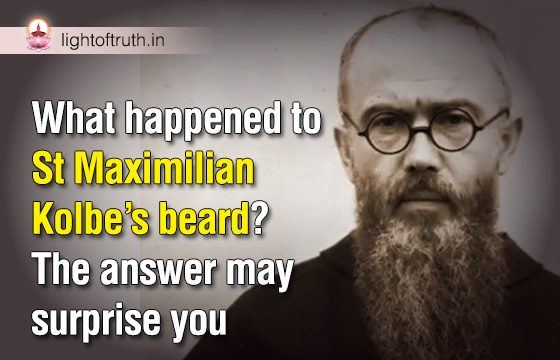
What happened to St Maximilian Kolbe’s beard? The answer may surprise you
On Feb 18, the Catholic Church in Poland shared a photo commemorating the 81th anniversary of St Maximilian Kolbe’s arrest by the Nazis. The image, the last one taken of the saint before his final arrest, was notable for what it didn’t show… Kolbe’s signature long beard.
By the time the photo was taken, Kolbe had already been arrested by the Nazis once, but was clearly resolved to continue his nationwide evangelization efforts. The monastery he had established at Niepokalanów, 25 miles west of Warsaw, had become a major Catholic publishing centre. The beard with which Kolbe is often pictured is notable for several reasons, one of which was the fact that not many of his Franciscan counterparts in Poland sported them. He shaved his signature beard in order to blend in with his fellow Franciscans, and with society at large.
The second reason is that Kolbe’s beard is the only first-class relic that exists of him. The rest of his body was incinerated in the ovens of Auschwitz after he was murdered by the Nazis in 1941.
Father James McCurry, a Conventual Francis-can and minister provincial of the Our Lady of the Angels Province, gave a homily in 2016 co-mmemorating the 75th anniversary of Kolbe’s martyrdom in which he mentioned the saint’s beard.
McCurry, author of the book “Maximilian Kolbe: Martyr of Charity,” said that Kolbe chose to keep the beard upon his return from six years of missionary work in Japan. In those days, it was customary for missionaries to grow long beards, and Kolbe wanted to keep it as a reminder of his missionary days, and as a reminder to always be a “missionary” of the Gospel. McCurry said Kolbe’s beard made him unusual among his Conventual Franciscan counterparts, who generally did not wear them. Kolbe’s fame was spreading among Poland thanks to his publishing work, and his unique beard helped him to stand out all the more.
It was for this reason that Kolbe eventually, after the 1939 Nazi invasion of Poland, made the decision to shave it, McCurry said, so as not to stand out. Kolbe’s founding of the Militia Immaculata (MI), an evangelization movement identifying with Mary, put him high on Nazi watchlists.
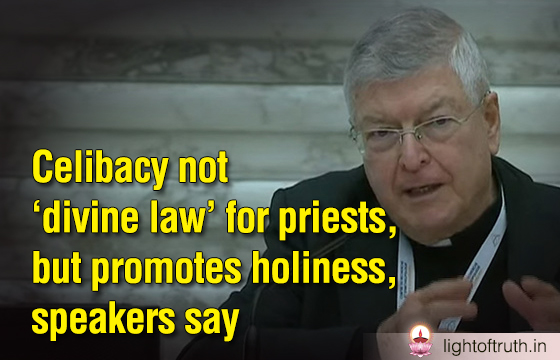
Celibacy not ‘divine law’ for priests, but promotes holiness, speakers say
The requirement that most priests in the Latin rite of the Catholic Church be celibate has theological and spiritual foundations and not only practical motivations, said speakers at an international conference on priesthood.
Jesus’ chastity, poverty and obedience were not “incidental or simply functional,” but expressed his total union with God and dedication to the salvation of humanity, Jesuit Father Gianfranco Ghirlanda, a well-known canon lawyer, said Feb. 19 at the Vatican conference.
The church has never claimed that celibacy is “intrinsic” to the priesthood, he said, and, in fact, the Eastern Catholic churches have maintained the discipline of having both celibate and married clergy, and the Latin church has welcomed married priests coming from other denominations.

Catholic women demand transparency in Church handling clergy abuse
The Sisters in Solidarity, a national forum of Catholic women in India, on February 6 demanded “absolute transparency and accountability” in the way the Church handles sex abuse cases.
The group, comprising religious and lay women, stresses revising canon law and the “theology of priesthood” to cleanse the Church of “elements that breed clericalism, which is an enabler of clerical sexual abuse.”
Such steps would prevent the recurrence of sexual harassment, abuse and abuse in the Church, asserts the solidarity in a letter sent to the Church hierarchy in the Vatican and India. The letter is written in the backdrop of the acquittal of Bishop Franco Mulakkal of Jalandhar in the historic nun rape and the continued victimization of the accuser and her supporters.
The letter, signed by 15 women and endorsed by 1,263 men and women from around the world, expresses their deep concern and shock at the judgement and the court casting “aspersions on the character of the Sister survivor.”
Judge G Gopakumar of the Additional Sessions Court in Kerala’s Kottayam town on January 14 acquitted Bishop Mulakkal saying the prosecution had failed to prove the prelate’s guilt.
The accuser, a former superior general of the Missionaries of Jesus, a congregation under the diocese of Jalandhar, in June 2018 filed a police complaint alleging the bishop had sexually abused her multiple times between 2014 and 2016.
The group urges the Church authorities to keep Bishop Mulakkal away from any administrative responsibilities and spiritual leadership until the case is decided in appellate courts.
The defence lawyers in the case and groups such as the Save Our Sisters plan to appeal against the verdict in the Kerala High Court within two months’ time given by the trial court.
The group also also want the Church to keep Bishop Mulakkal away from Jalandhar lest he uses his “powerful influence to intimidate the sister survivor and her companions.”
All this will uphold the integrity and credibility of the Catholic Church, the women assert. They regret that the judgement over-looked that the bishop was “within a fiduciary relationship of power and authority over the victim as the patron of her congregation.”
The group says the judgment does not take into account the accuser’s “multiple vulnerabilities as a religious nun .Minor discrepancies in her statement are relied upon to project the survivor as a manipulator and a power hungry person who has filed a false complaint only to tarnish the image of the bishop at the instigation of his rivals.” Thereare are 1263 signitaries.
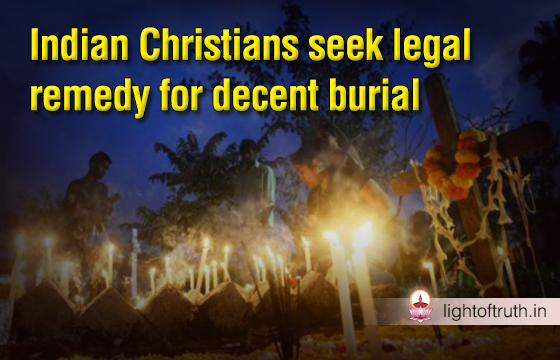
Indian Christians seek legal remedy for decent burial
The top court in the western Indian state of Maharashtra has served notices on government officials seeking an explanation for the lack of burial grounds for Christians in Thane district.
The officials have been directed to file their replies on the contention that local Christians lacked sufficient space for burying their dead made in a public interest litigation by Melwyn Fernandes, a member of the Association of Concerned Catholics.
The bench of Chief Justice V.G. Bisht of Bombay High Court in its Jan. 31 order asked the officials to file their affidavits on or before March 11.
Christians in Thane, adjoi-ning the state capital Mumbai, formerly Bombay, are facing a severe lack of burial grounds, though some 10 plots of government land are earmarked for Christian cemeteries, Fernandes told on Feb. 2.
A right to information query filed by him revealed the reserved plots were located in Kalwa, Kopari, Navpada, Dawale and Daighar under the Thane Municipal Corporation, which had failed to allot them to the community.
Fernandes said these plots were now “either encroached by slum dwellers or handed over to builders, apparently in connivance with the government officials.” Christians, he said, approached the local authorities for releasing these reserved plots to the community but to no avail. “I was thus forced to move the high court seeking its intervention,” he said.
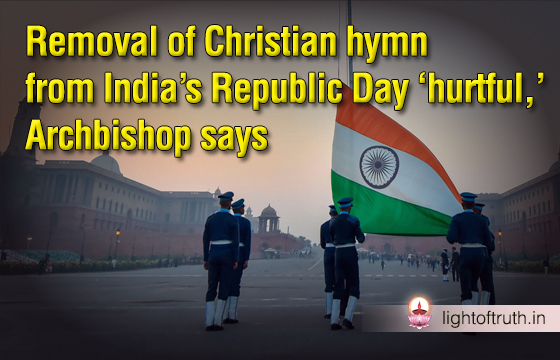
Removal of Christian hymn from India’s Republic Day ‘hurtful,’ archbishop says
Christian leaders in India have lamented the dropping of the hymn “Abide With Me” from the annual celebrations marking Republic Day. The song is traditionally played during the Beating Retreat that takes place on Jan. 29, three days after Republic Day, which is observed Jan. 26.
The Beating Retreat is a special performance by military bands common in former British colonies belonging to the Commonwealth of Nations.
“Abide With Me” – written by Scottish composer Henry Francis Lyte in 1847 – was the favorite Christian hymn of Mahatma Gandhi and has been a fixture in the Beating Retreat ceremony since 1950. It is famous for being played at Elizabeth II’s wedding to Prince Philip in 1947 and is said to have been played by the band on the Titanic as the ship sunk in 1912.
The Christian hymn was dropped by Hindu nationalist Prime Minister Narendra Modi in favor of Kavi Pradeep’s “Aye Mere Watan Ke Logon,” a patriotic song written after the 1962 India-China war.
Government officials have said there was no reason to play a British hymn 75 years after independence, despite its connecting to Gandhi. Archbishop Emeritus of Guwahti, Thomas Menamparampil, told Crux that an average Indian would “be severely hurt at any effort to downgrade the image of Mahatma Gandhi,” who popularized “Abide With Me” in India. “And yet there is fringe element in Indian society today that is dead set on doing precisely this.
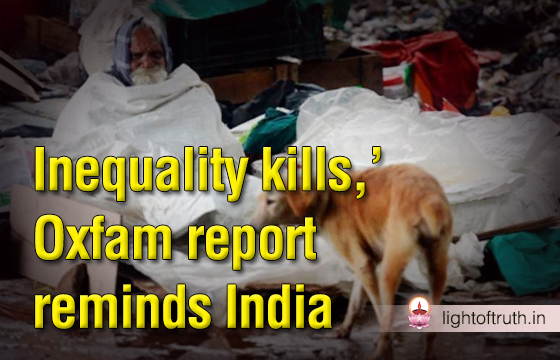
Inequality kills,’ Oxfam report reminds India
The poor became poorer while the rich became richer in India during 2021, says a survey by Oxfam International.
Indian billionaires increased their wealth by 39 percent in 2021 and are getting richer at a much faster pace, but the poor saw their annual income drop by 53 percent and are still struggling to earn a minimum wage and access quality education and health care, the report revealed. Titled “Inequality Kills: India Supplement 2022,” the report said that the richest 98 Indians own the same wealth as the bottom 555 million people.
Indian billionaires grew from 102 in 2020 to 142 in 2021 even though the country witnessed yet another year of pandemic. This was also the year when the share of the bottom 50 percent of the population in national wealth was a mere 6 percent.
The combined wealth of the richest 100 Indians on the Forbes list stands at more than half a trillion US dollars. There were only three women among the 100 richest Indians.
India had the third-highest number of billionaires in the world, just behind China and the United States. It now has more billionaires than France, Sweden and Switzerland combined; indeed, there was a 39 percent increase in the number of billionaires in India in 2021. In 2020, India’s top 10 percent held close to 45 percent of the country’s national wealth. The Oxfam report once again confirmed that while India is one of the fastest-growing economies in the world, it is also one of the most unequal countries with inequality continuing to rise sharply for the last three decades.
Since 2015, more and more of India’s wealth has gone to its richest one percent. Globally, too, wealth increased during 2021 to make the world’s billionaire elite richer when common people struggled against the pandemic for the second consecutive year.
“The massive gap between rich and poor will continue to increase to unimaginable proportions if the elected representatives of people in parliament do not take their job seriously,” said A.C. Michael, convener of the United Christian Forum. This deliberate inequality was bound to continue, said Michael, a former member of Delhi Minorities Commission.
“The massive gap between rich and poor will continue to increase to unimaginable proportions if the elected representatives of people in parliament do not take their job seriously,” said A.C. Michael, convener of the United Christian Forum.Top of Form
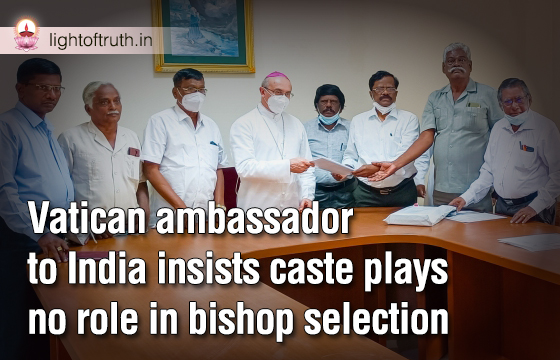
Vatican ambassador to India insists caste plays no role in bishop selection
In a statement sent to Crux, the Apostolic Nunciature in India said it wanted to make “clarifications” about a February 2 meeting of the Dalit Christian Liberation Movement (DCLM) with the Apostolic Nuncio, Italian Archbishop Leo-poldo Girelli.
Dalits were formerly known as “Untouchables,” the lowest level on the Hindu caste system. In India, it is common for caste discrimination to exist even in non-Hindu religions, including Christianity.
The DCLM had said it was “highly disappointed” with the meeting, which touched on the situation of the Church in the jurisdictions of Tamil Nadu and Pondicherry, a former French colony that was taken over by India in 1954. Dalit Catholics comprise about 70 percent of the Catholics in Tamil Nadu and Pondicherry, but there is only one Dalit bishop now among the 18 dioceses in this region. During their meeting with the nuncio, the DCLM stated that much progress was made in the appointment of bishops between 1993-2007, when four Dalit bishops were appointed in Pondicherry and Tamil Nadu.
“It all happened only because of the conscious decisions and efforts of then Apostolic Nuncios and the Vatican Dicasteries concerned. It was a historical moment for the Dalit Catholics,” the Dalit group said in a letter given to the nuncio.
“But unfortunately, in the next fifteen years from 2007, even this progress initiated was reversed by the two Nuncios during this period and so we are now left with only one Dalit Bishop representing the Dalit Catholics who comprise more than 70 percent of the Catholics here. Your Excellency, we recall to you that historical moment, only to appeal that this progress initiated is continued now during your tenure,” the letter continued.