
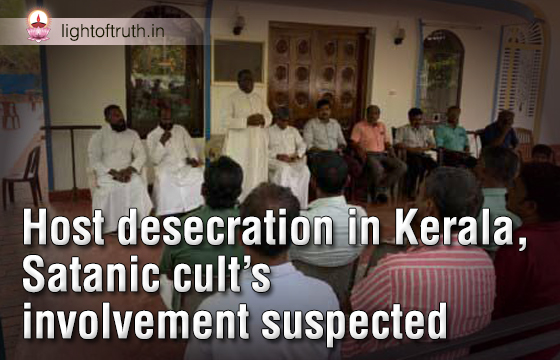
A diocese in the southern Indian state of Kerala is out-raged after some miscreants broke into a chapel and dese-crated sacred Hosts kept inside a tabernacle.
While the diocese of Co-chin views the incident as part of hate activities spreading in Kerala, a senior Catholic journalist suspects the involvement of the satanic cult growing in the southern Indian state.
Father Johney Xavier Puthukkattu, the diocesan public relations officer, says the sacristan of St Jacob chapel in Arookutty found the tabernacle broke open on the morning of March 29 and informed the priest, who lives a nearby house.
After a search, they found the Hosts scattered in a marshy land, some 200 meters away. The chapel’s donation box was also found abandoned there.
The chapel is a substation of St Anthony’s Church Padu-vapura at Arookutty, 13 km southeast of Kochi, the commercial capital of Kerala.
All posts by Light of Truth
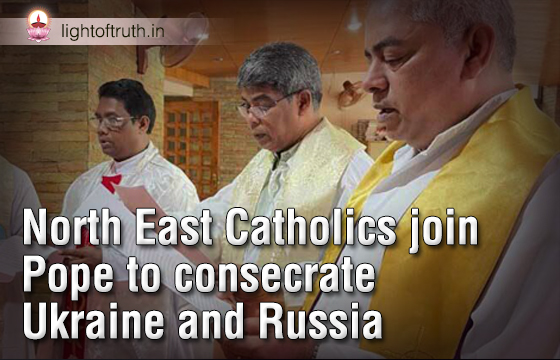
North East Catholics join Pope to consecrate Ukraine and Russia
The Catholic bishops of northeastern India on March 25 responded to the appeal of Pope Francis and spiritually joined him in consecrating Ukraine and Russia to the Immaculate Heart of Mary.
In the wake of the ongoing war between Russia and Uk-raine, the Pope had requested Christians and bishops across the world to join him spiritually in the penitential celebration ’24 Hours for the Lord’ where he consecrated the warring neighboring countries to Mother Mary.
Inviting the people in his archdiocese to pray along with the rest of the world, Arch-bishop John Moolachira of Guwahati said, “We need peace. We are pained by the suffering of people in both these countries. The leaders of these two countries need our prayers that they may have the gift of wisdom and courage to take steps towards peace.”
The archbishop also noted that the prayer of consecration prepared by the Pope has been translated into many tribal languages and made available to the public.
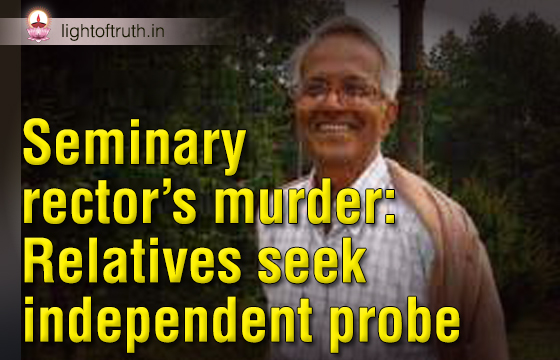
Seminary rector’s murder: Relatives seek independent probe
The relatives of a former rector of Bengaluru’s St Peter’s Pontifical Institute have sought an independent probe nine years after his mysterious death on an Easter Sunday.
Father K J Thomas, who had taught theology in the major seminary for 25 years, was found murdered on April 1, 2013.
“This April 1 it will be nine years since my uncle was phy-sically tortured and murdered in the most inhuman way,” says a letter from Joyson Mathew, one Father Thomas’ nephews, to Archbishop Peter Machado of Bangalore.
“You knew him personally and so you know well that he did not die due to his personal hostility with anyone. My uncle was an innocent victim of the language dispute and the dispute over the ownership of the seminary which was a boiling issue before the murder,” says March 27 letter.
The nephew says the past nine years have been a time of grief and sorrow for the slain priest’s immediate family members. “We still miss him dearly,” he added.
The police had arrested 12 people, including eight Catholic priests, in connection with the murder.
Mathew regrets that the trial of the case has not been begun because of some legal hurdles.
Indian Christians tell govt to avoid exam on Easter Sunday
Christians in the central Indian state of Chhattisgarh have appealed to the provincial government to reschedule a selection exam for postings in the revenue department to be held on Easter Day. The Chhattisgarh Professional Examination Board (CPEB) had earlier decided to hold the examination for the selection of Patwaris – officials entrusted with maintaining land records in villages – on April 10.
The date was subsequently changed as April 10 happened to be Ram Navami, a Hindu spring festival that celebrates the birthday of Lord Ram. The new date announced was April 17, which happened to be Easter Sunday. “We are deeply concerned and pained by the decision of the CPEB to hold the examination on Easter Day,” said Guruvinder Singh Chadda, president of the Akhil Bharati Isai Samudaya Adhikar Sangathan, an organization working for the welfare of Christians in the state.
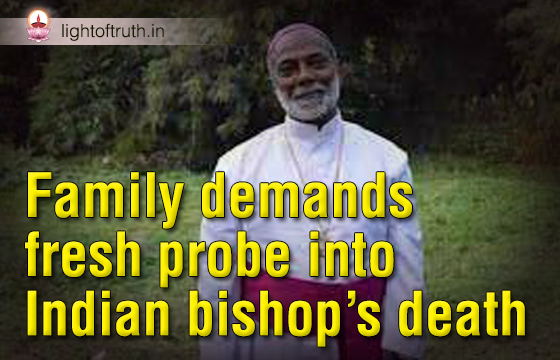
Family demands fresh probe into Indian bishop’s death
Family members of an Indian Bishop who died in a road accident three years ago have demanded an impartial probe into his death amid suspicions of foul play. Bishop Thomas Thennatt, 65, of Gwalior Diocese in the central Indian state of Madhya Pradesh, died in a car crash on Dec. 14, 2018.
“We have serious doubts over his accidental death. We believe he was killed,” said Clara-mma Constatine, a younger sibling of the bishop.
A retired nurse, Constatine, accompanied by her son-in-law, Pastor Lovers Masih, held a press conference in the state capital Bhopal on March 27 to announce the family’s plan to move the high court requesting a probe by the Central Bureau of Investigation (CBI).
Speaking to us, she claimed that diocesan officials had intimidated the family after the accident. “My brother’s body was buried in a hurry, without the mandatory post mortem, and the diocese denied us permission to take his body to our home state Kerala,” she added.
Constatine alluded to the fact that there were three others including the driver traveling in the car at the time of the accident. But none of them suffered even a minor scratch on their bodies and gave contradictory statements about the whole incident, raising suspicions.
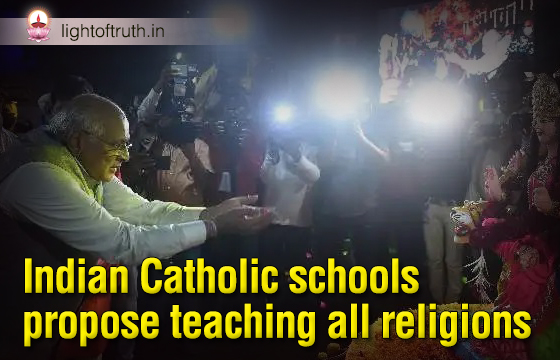
Indian Catholic schools propose teaching all religions
Catholic schools in the western Indian state of Gujarat have sought to include all major religious scriptures along with the Hindu scripture Bhagavad Gita in their academic curriculum.
The provincial government in Gujarat had last week announced the teaching of the Bhagavad Gita in classes 6-12 across the state for the new academic session.
“We are not against teaching the Bhagavad Gita but want the government to introduce the sacred texts of other major religions to uphold the secular and democratic credentials of the nation,” said Father Teles Fernandes, secretary of Gujarat Education Board of Catholic Institutions.
Father Fernandes told on March 22 that the Catholic institutions have approached Gujarat Chief Minister Bhupendra Patel to apprise him of their concerns.
The pro-Hindu Bharatiya Janata Party (BJP) government in the state said it wanted to promote a sense of pride and connection with India’s rich traditions through the teaching of the Bhagavad Gita.
The Catholic institutions in a memorandum sent to the chief minister on March 18 said the introduction of Hindu scriptures in the school curriculum was “not an issue in itself” but given the diversity and religious plurality of India “it would be imperative that impressionistic minds of the young students are also given the taste of other holy scriptures of major world religions.”
The memorandum mentioned the Quran, Bible, Guru Granth Sahib, Avesta, Tripitaka and Agamas among others. “All these holy books speak of the language of love, brother-hood/sisterhood, kindness, charity, tolerance, forgiveness, etc. We are all children of the same God. This will instill harmony, broadmindedness, acceptance, sensitivity and oneness in our society,” it added.
The Catholic institutions further lauded the government for its decision to introduce the English language as a compulsory subject from Class 1 onwards, calling it “a move in the right direction as India is fast becoming a global player and the English language is an international accepted mode for trade and communication.”
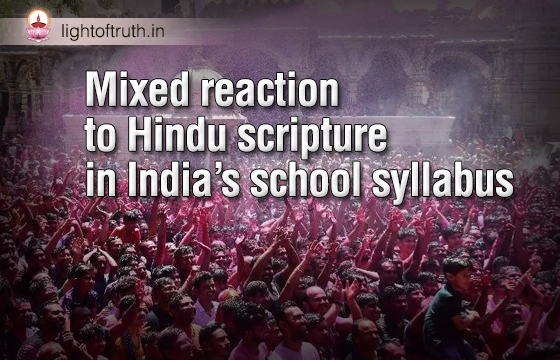
Mixed reaction to Hindu scripture in India’s school syllabus
A Catholic priest and human rights activist from the western Indian state of Gujarat has welcomed the inclusion of a Hindu scripture, Bhagavad Gita, in the school syllabus but warned against growing majoritarianism.
“The study of any and every religious or holy book needs to be welcomed all at all times. However, introducing only the study of Bhagavad Gita smacks of majoritarianism, which is violative of the secular fabric of the country,” Jesuit Father Cedric Prakash told.
The provincial government in Gujarat announced on March 17 that the Hindu scripture will be taught to students from classes 6-12 to cultivate a sense of pride and connection with their traditions.
The government in southern India’s Karnataka state has also hinted at introducing Bhagavad Gita to its school syllabus. Both states are ruled by the pro-Hindu Bharatiya Janata Party (BJP).
Father Prakash said the decision “though not totally unexpected” was “yet another step toward the establishment of a Hindu Rashtra (Hindu nation).”
The Catholic priest said the government must reconsider and instead introduce a well-planned course involving the study of all major world religions and their holy books including the Bible, Quran, Guru Granth Sahib, Avesta, Tripitaka, Agamas and others along with the sacred Hindu scriptures.
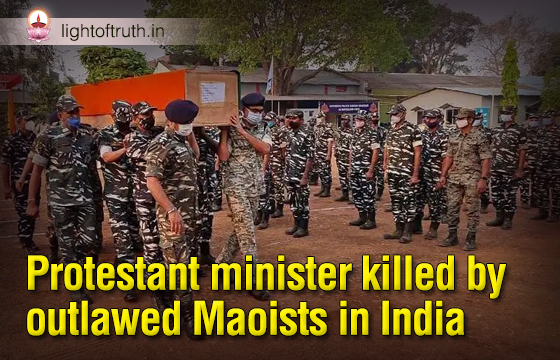
Protestant minister killed by outlawed Maoists in India
Christians are concerned for the security of the family of a Protestant minister who was brutally stabbed to death by outlawed Maoist rebels in the central Indian state of Chhattisgarh.
The bloodsoaked body of Pastor Yalam Shankar, who was in his fifties, was found in the Maoist-infested South Bastar forests in Bijapur district on March 17.
Local news outlets quoted a statement from the Maoists claiming responsibility for the killing and alleging the deceased pastor was a police informer working against the interests of the outlawed rebels since 2018 in the area falling under the jurisdiction of Madded police station.
The armed outlaws reportedly forced their way into Pastor Shankar’s house and dragged him out before stabbing him to death. They justified their action by saying the pastor was warned many times in the past but to no avail.
Police denied the Maoists’ claim that the pastor was their informer but the incident shocked the Christian community in Chhattisgarh.
“We are shocked to know about the murder of the pastor,” said Guruvinder Singh Chadda, president of Akhil Bharati Isai Samudaya Adhikar Sangathan, an organization working for the welfare of Christians in Chhattisgarh.

Indian journalists demand halt to hatred against Muslims
Leading media figures have urged India’s top constitutional bodies “to step in and uphold their mandate” amid rising threats to religious minorities, especially Muslims.
They issued a statement condemning the alarming rise in “open calls from various quarters for attacks on India’s religious minorities, especially Muslims” and said that “silence is not an option.”
Senior journalist and writer Mrinal Pande, N. Ram, former editor-in-chief of English daily The Hindu, R. Rajagopal, editor of The Telegraph, and Vinod Jose, executive editor of Caravan magazine, were among the 28 media persons who signed the March 23 statement.
“Sometimes the occasion is an election, at other times it is a political gathering, a so-called Dharam Sansad [religious parliament], or a controversy over clothing, or even the screening of a movie,” they stated, adding that “these calls for violence — which have been widely reported in the media — have been met with a cold and calculated silence from the country’s top leaders.”
Referring to the latest controversy in Karnataka state over the hijab or veil worn by Muslim girls, the journalists highlighted the systematic hate being propagated against Muslims under the pretext of Covid-19, including calls by legislators for their socioeconomic boycott.
“Disturbingly, the term ‘corona jihad’ was fabricated and amplified by sections of the media establishment,” they said.
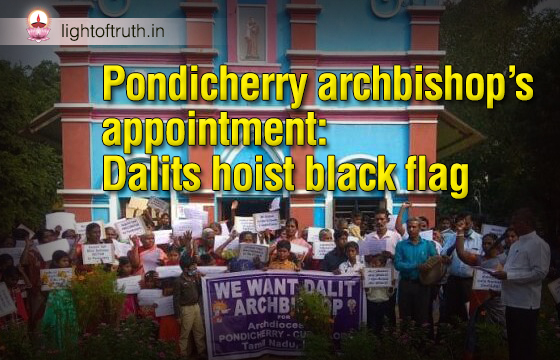
Pondicherry archbishop’s appointment: Dalits hoist black flag
Dalit Catholics in Tamil Nadu have pro-tested the appointment of a non-Dalit as an archbishop in the southern Indian state.
The Dalit Christian Liberation Movement, which leads the protest, on March 20 hoisted a black flag in the Church of Our Lady of Fatima in Vrithachalam parish of Pondicherry-Cuddalore archdiocese.
A day earlier, the Vatican announced the transfer of Bishop Francis Kalist of Meerut to Pondicherry-Cuddalore in Tamil Nadu as its archbishop, ignoring Dalit Catholic groups’ demand for a prelate from their community.
Although the Archbishop-elect is Tamil, he is a non-Dalit who has been serving a northern Indian diocese for decades. The Dalit groups also posted a hashtag on Twitter, “FRANCIS KALIST GO BACK.”
What has upset the Dalits is that Bishop Kalist has ignored their plea to him to not accept the new post.
A rumor spread in Tamil Nadu weeks earlier indicated Bishop Kalist coming to Pondicherry. S Anandaraj, the movement’s communication secretary, on March 1 wrote to Bishop Kalist warning him that the Dalit Christians would not allow him to take charge if he agreed to the Vatican proposal. “We shall continue to fight,” he wrote.