
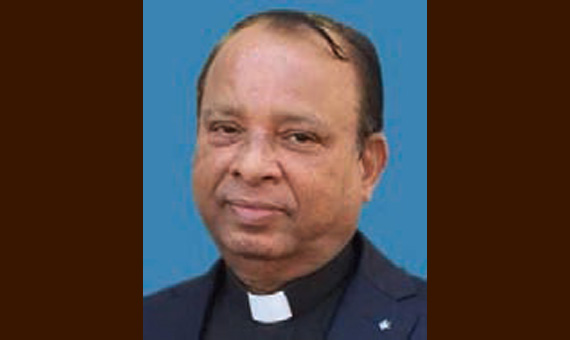
Church leaders in Assam on April 21 mourned the death of Father Varghese Kizhakkevelil, who had played a key role in nurturing Guwahati archdiocese and other dioceses in the northeastern Indian state. “The Archdiocese of Guwahati is what it is because of him,” Archbishop Thomas Menamparampil, the archdiocese’s first prelate, told Matters India mourning the death of his former vicar general.
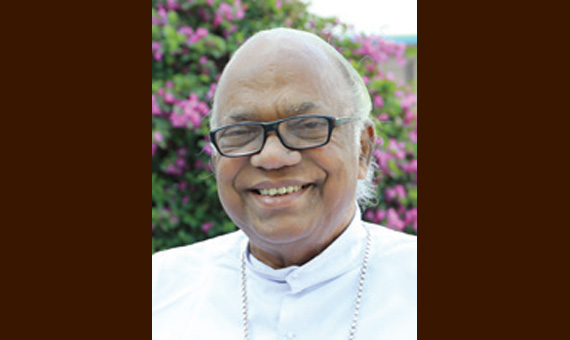
Bishop Mar Mathew Anikuzhikattil passed away
Most Rev. Mar Mathew Anikuzhikattil (78) Bishop Emeritus of Idukki Syro Malabar diocese passed away on Friday, 1 May 2020 at 1.38 am at Medical Mission Hospital, Kolenchery, Ernakulam district, Kerala. He had been under treatment for aged-related ailments for the last few years. The funeral details are awaited.
He was appointed as the first bishop of the diocese of Idukki. He was ordained Bishop on 2 March 2003. He was retired from the pastoral governance of the diocese of Idukki at the age of 75 on 12 January, 2018.
Covid-19: Religious leaders to hold joint-prayer in Kerala
Leaders of various religions in Kerala on April 29 appealed their people to observe a joint-prayer day to pray for Covid-19 patients, deceased, health-care workers and administrators amid the pandemic out-break.
They have suggested May 3, the day a nationwide lock-down is scheduled to end after 40 days, to observe the prayer program.
The leaders say Kerala’s efforts to prevent Covid-19 have become a model for the rest of the world. Unity of public irrespective of religious or caste discrimination is necessary in the battle against the virus.
Hence, the religious leaders decided to observe a joint-prayer day.
Hindu leaders expected at the prayer day observation are Kozhikode Advaithashramam founder Swami Chidananda Puri, Swami Sadbhavananda from Thrissur Sreeramakrishna Math, Sivagiri math general secretary Swami Sandrananda, and Thrissur Thekkemadom head Vasudevananda Brahmanandabhoothi.
Muslims will be represented by Panakkad Sayed Hyderali Shihab Thangal, Kanthapuram AP Aboobacker Musliyar, Hussain Madavoor, and Thiruvananthapuram Palayam Imam V P Suhaib Moulavi.
Leaders of all prominent Christian denominations will also attend the prayer.
Covid-19 Positive Nun Accepts “God’s Will”
A Catholic nun, who was tested Covid 19 positive, spends her time in prayer and meditation at the government quarantine center in Delhi.“I accept God’s will. I am not afraid of death if that is what God wants,” the Sisters of Destitute nun, whose identity cannot be disclosed legally, told Sister Celine, a council member of the congregation’s Santidham province based in Ghaziabad, Uttar Pradesh.
Sister Celine, who is in touch with the quarantined nun, told Matters India on April 29 that her companion was tested positive for coronavirus infection on April 28. She now stays at a government-managed quarantine center at Delhi’s Narela area.
Earlier, Archbishop Kuriakose Bharanikulangara of Faridabad urged his people to pray in a special for the infected nun. The convent where the nun lived comes under the Syro-Malabar diocese. All parishes have conducted special prayers and adoration to obtain God’s grace to deal with corona pandemic.
According to Sister Celine, the infected nun was afraid and panicky when a government ambulance came suddenly on April 28 to pick her from their convent in Jahangirpuri, a slum area in Delhi’s northern region.
“But now she has been well settled and mentally prepared to face whatever comes ahead,” said Sister Celine and added that the quarantined nun has a separate room at center.
Mob Disrupts Christian NGO’s Food Distribution In Uttar Pradesh
Some unidentified people on April 17 disrupted a Christian NGO’s distribution of food kits among those affected by the nationwide lockdown in western Uttar Pradesh.
“We were distributing provision for about 3,000 families in Electronic City in the Sector 62 of Noida when a mob disrupted our work. Seeing the crowd the police asked us to wind up and we complied,” said Indian Missionary Society Father Joson John Tharakan, director of the Board for Research Education and Development (BREAD).
The Noida-based NGO is managed by the Delhi province of the Indian Missionary Society. It supports some 40,000 school children in six states with education and meals.
Vatican donates ventilators to hospitals in Syria, sets up emergency fund
In the name of Pope Francis, the Congregation for Eastern Churches said it is sending 10 ventilators to Syria and three to St. Joseph’s Hospital in Jerusalem to respond to the coronavirus pandemic. The donations were among the first items announced by the congregation as it launched an emergency fund in response to the pandemic. The Congregation for Eastern Churches supports the Eastern Catholic churches throughout the world and also looks after the needs of Catholics of all rites in Egypt, Eritrea and northern Ethiopia, southern Albania and Bulgaria, Cyprus, Greece, Iran, Iraq, Lebanon, Palestine, Syria, Jordan and Turkey.

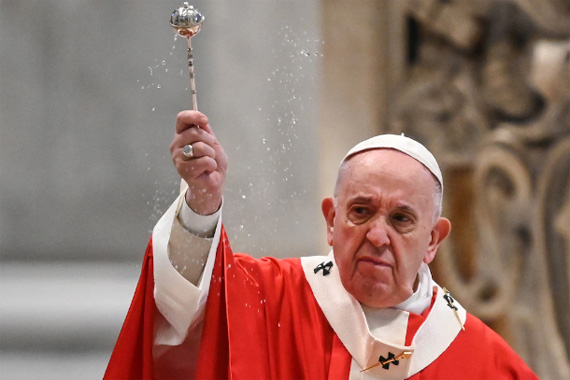
Pope Francis attacks Hitler-style populists
Pope Francis has accused some European leaders of embracing Hitler-style populism as the world tackles the Covid-19 pandemic. The 83-year-old bishop of Rome made the controversial comments in an interview with UK-based Catholic weekly The Tablet.
Speaking as Christians around the world prepare to celebrate Easter, the pope said: “At this time in Europe when we are beginning to hear populist speeches and witness political decisions of this selective kind, it’s all too easy to remember Hitler’s speeches in 1933, which were not so different from some of the speeches of a few European politicians now.”
He added: “This crisis is affecting us all, rich and poor alike, and putting a spotlight on hypocrisy. I am worried by the hypocrisy of certain political personalities who speak of facing up to the crisis, of the problem of hunger in the world, but who in the meantime manufacture weapons. This is a time to be converted from this kind of functional hypocrisy. It’s a time for integrity. Either we are coherent with our beliefs or we lose everything.”

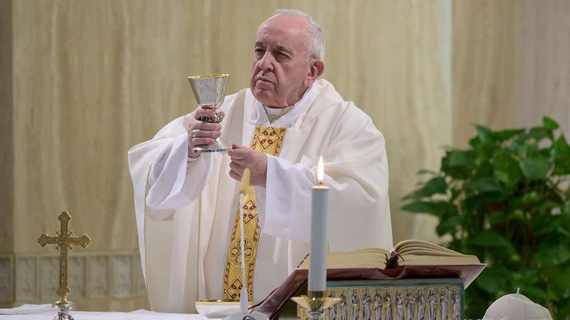
The coronavirus crisis forces us to choose between life and love of money, says pope
We face a fundamental choice as we seek to resolve the coronavirus crisis, Pope Francis said during his morning Mass Monday.
Commenting on the day’s Gospel reading (Mt 28:8-15), which describes the risen Christ’s appearance to Mary Magdalene and Mary of Clopas, the pope said April 13: “The Gospel proposes a choice that also applies today: the hope of Jesus’ resurrection and nostalgia for the tomb.”
“Thus, in finding solutions to this pandemic, the choice will be between life, the resurrection of the people, and the god of money.”
“If you choose money, you choose the way of hunger, slavery, wars, arms factories, uneducated children… there is the tomb. Lord — it is the prayer of the pope — help us to choose the good of the people, without ever falling into the tomb of mammon,” he said, according to a transcription of his homily by Vatican News.
He began the Mass by praying that researchers and political leaders would make the correct choices for those they serve.
He said: “Let us pray today for the rulers, the scientists, the politicians, who have begun to study the way out, the post-pandemic, this ‘after’ that has already begun: that they find the right way, always in favour of the people.”

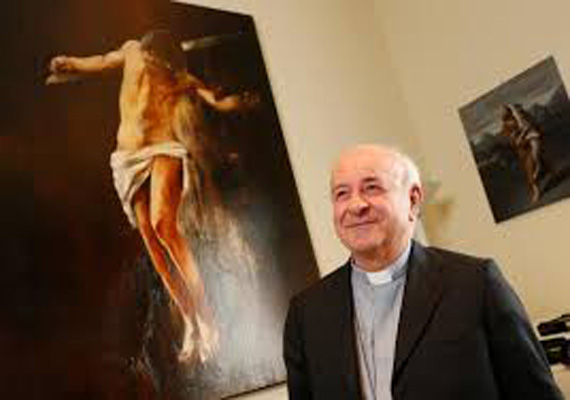
Virus reveals elderly as victims of a ‘throw away culture,’ Vatican official says
With the elderly representing the largest demographic cohort of lives claimed by the coronavirus, the Vatican’s top official on life issues has warned against selective care practices that prioritize young patients.
Archbishop Vincenzo Paglia, President of the Pontifical Academy for Life, in an interview with Crux noted that with many hospitals facing shortages of essential equipment such as ventilators at times give preference to patients with better perceived odds of survival, which generally disadvantages the elderly.
“This is the ‘throwaway culture’ in action, forcefully condemned by Pope Francis. [It’s] ‘justified’ by the lack of medical instruments, in turn due to healthcare policy choices that cut costs,” Paglia said, calling the decision to base healthcare and educational funding on cost-saving measures “wrong and misleading.”
He also noted this is happening at the same time courts in Italy, which still leads the world in deaths due to the virus, are debating a possible liberalization of the country’s euthanasia law.
Euthanasia itself is not permitted in Italian law, but in 2017 lawmakers passed a bill allowing adults, together with their doctors, to determine their own end-of-life care, including the terms under which they are able to refuse treatment. The law also allows citizens to write living wills and to refuse medical treatment, artificial nutrition and hydration.
In September 2019, courts ruled it is not always a crime to assist someone in “intolerable pain” to kill themselves. The case involved music producer FabianoAntoniani, who became tetraplegic and blind after a 2014 car accident and three years later was driven by a member of Italy’s Radical Party to Switzerland, where he underwent assisted suicide.
“It is delusional to place age as the only and decisive criterion for care, for salvation or condemnation, which, obviously, relegates the elderly to being too many. Can the weak and elderly be ‘discarded?’
The lack of medical instruments forces choices and do younger people and those with greater hope of recovery receive assistance first? This is the “throwaway culture” in action, forcefully condemned by Pope Francis. It’s “justified” by the lack of medical instruments, in turn due to healthcare policy choices that cut costs.

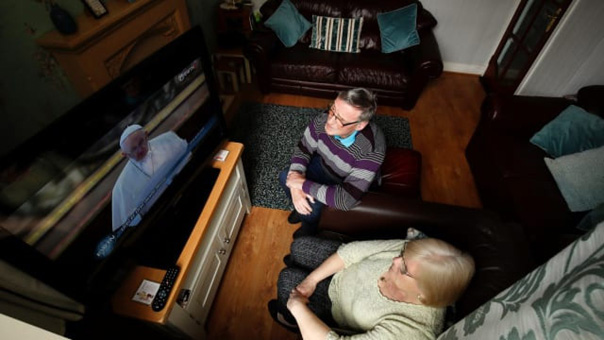
Vatican registers huge growth, engagement online for Holy Week, Easter
Holy Week and Easter events broadcast and shared by Vatican media reached millions of people around the world, attracting new viewers, followers and fans inspired by Pope Francis’ words and gestures.
“We have been struck by the many emails we have received, comments and posts on our social media from people, even agnostics and nonbelievers, who say they have been moved by the words and gestures of the Holy Father during this very difficult period,” Alessandro Gisotti, vice-editorial director of Vatican media, told Catholic News Service by email April 14.
Huge spikes in online visitors, views, follows and comments on their numerous platforms showed that “many people, not just the Catholic faithful, were able to follow and ‘encounter’ the Holy Father and, through him, the Word of God thanks to this technology and especially to streaming services and social media,” he said in a response to a request for information about online engagement during Holy Week and Easter.
Gisotti told CNS that Vatican media outlets tried to put into practice that “creativity of love that the pope asks of us in order to overcome the isolation caused by the pandemic.”
Their Vatican News site, which offers video, radio, podcasts, images, news and audio services in more than 30 languages, saw its number of visitors and page views quadruple from the same liturgical period last year.
Nearly 5.5 million users registered more than 14.5 million views on the vaticannews.va website between April 5 and April 13 versus Holy Week last year, which saw 1.5 million users and some 3.5 million page views.
Vatican News livestreamed all the major events on its YouTube channels with live commentary in six languages, plus, for the first time, a channel featuring a sign-language interpreter.
Easter events broadcast on YouTube, Gisotti said, had more than 2.1 million views.
The social media accounts for Vatican News and Pope Francis also saw huge growth, he said.
Over Holy Week the @Pontifex Twitter accounts surpassed 50 million followers, while the @FranciscusInstagram accounts exceeded 7 million followers.
The Vatican News Instagram account gained 27,000 new followers over Holy Week, bringing them to more than 436,000 followers. Vatican News tweets, over its different Twitter accounts in six languages, had 61 million views and received 31,000 mentions.