
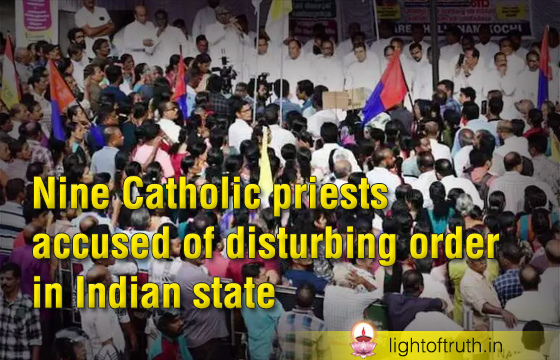
Police have charged nine Catholic priests and a lay leader with unlawful assembly in southern India’s communist-ruled Kerala state, after the accused joined a protest seeking safety for people threatened by coastal erosion. “This is totally a false case and we cannot be silenced with it,” said Joseph Jude, vice-president of Kerala Region Latin Catholic Council. The lay leader was among those accused, along with the priests, of obstructing public movement through their unlawful assembly. He said the issue is of urgent concern as several thousand people, including fisher folks, mostly Catholics in the area, will be rendered homeless. “The state government, instead of ensuring the safety of the people, is trying to silence those who raise their voice for a public cause,” Jude told UCA News on June 23. Some 5,000 people, mostly Catholics, including over 150 priests of the Latin diocese of Kochi and Allappuzha, joined in the public rally in the coastal town of Chellanam in Ernakulam district on June 20. They allege the state government failed to protect around 500 homes from possible submergence in the Arabian Sea due to coastal erosion. Some families have already relocated to safer areas as the monsoon is intensifying. The sea wall in the area, spanning over 17 kilometres, was washed away in 2017 during Cyclone Ockhi.
“The government promised to rebuild it immediately, but completed work on only seven kilometres in 2023 and later discontinued the work,” a protest leader said. Sherry J. Thomas, president of the Kerala Latin Catholic Association, condemned the police action against the priests and the lay leader.
Expelled Indian tribal Christians endure hardships
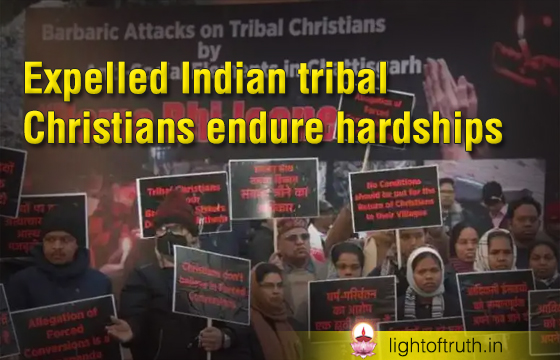
Tribal Christian families in the central Indian state of Chhattisgarh have been passing days in hardship after they were expelled from their village by other villagers allegedly linked with right-wing Hindu groups. Expelled Christians alleged they faced increased hostilities and persecution from religious radicals for their faith before being made homeless earlier this week. Lachhan Dugga from Huchadi village in Kanker district is among those driven out of their village in Bastar region, infamous for Naxalites, the armed Maoist insurgents fighting government forces.
Dugga said he and six family members became Christians a few years after he was cured of ‘bad stomach pain thanks to Christian prayers. “Now, we have been driven out of home for our faith in Jesus,” Dugga told on June 18. He said that the village head led a mob that locked their home and ordered them to leave the village on June 16. “They threatened to kill us if we returned to the village without renouncing Christianity,” he lamented. The family has moved to a house of a relative in another village, abandoning their house and one hectare of farmland. Parameshwari Kanwar, another family member, said the mob chased them to a public road half a kilometer away after they refused to leave and dumped their belongings. “We have lodged a complaint with the local police, but we are not getting any help,” she told UCA News, adding that two more Christians in the village were also expelled on June 18. “Now our village is Christian-free as a two-member family, the last among the six Christian families was chased away from it on June 18,” she added.
Persecution surges as BJP completes one year in Indian state
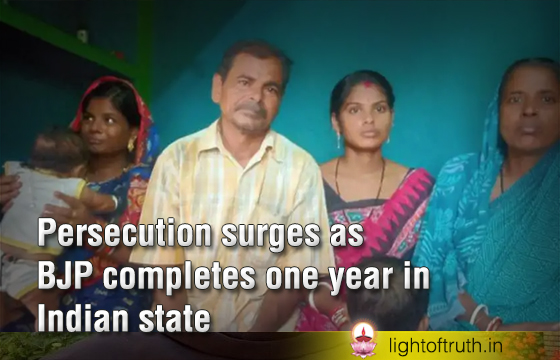
Attacks on Christians in eastern India’s Odisha have surged since the Bharatiya Janata Party (BJP) took power in this state a year ago, their leaders say. “Not a single week passes in Odisha without some violent attack aimed at Christians to renounce their faith and return to Hinduism,” says Father Ajay Kumar Singh, a social activist from Cuttack-Bhubaneswar archdiocese. After the BJP party came to power in Odisha in June 2024, “systematic persecution” against Christians began, particularly in areas where tribal and socially disadvantaged Dalit people dominate.
The BJP formed a government on its own in June 2024 for the first time after winning 78 of the 147 seats in the state legislature. It ousted Naveen Patnaik, who was the state chief minister for 24 years. After the BJP took power, the state recorded several incidents of Christian harassment, including disrupting prayer services in churches, denying burial of their dead, and social boycott in villages, Singh said. Christian leaders say that in these incidents, Hindu groups that support the BJP and work to make India a Hindu nation demanded that Christians renounce their faith and become Hindus. The latest such incident occurred on June 16, when a Christian couple — Gouranga Bai, 50, and his wife Ritanjali Bai, 42 — were harassed, forcing them to abandon their Christian faith. Bishop Pallab Lima, who heads the United Believers Council Network of India (UBCNI) told UCA News on June 18 that the couple were the only Christians in Kontia Ichhapur, a village comprising some 1,000 Hindus in Bhadrak district. “I have spoken to one of the village leaders, and the ritual ceremony of returning to the Hindu faith has been postponed,” he said
Church in India launches mental health program to confront present challenges
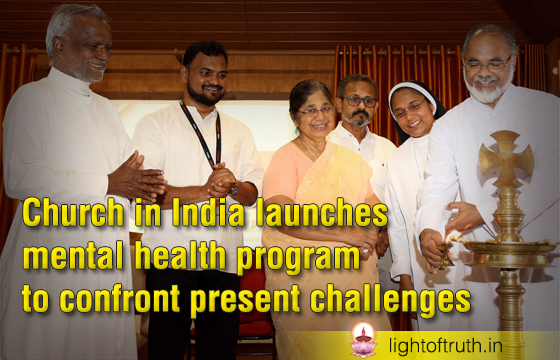
The Catholic Church in Kerala has launched a dedicated mental health ministry to help communities respond to increasing psychological and emotional challenges, including substance abuse, suicidal tendencies, and family-related issues. The initiative, led by the Catholic Mental Health Ministry (CMHM) under the Catholic Bishops’ Conference of India (CBCI) Office for Healthcare, was formally introduced through a seminar held at the Alappuzha Pastoral Centre. The half-day event gathered mental health professionals, clergy, and Church workers in a collective effort to promote healing and support. Titled ”Manassinu Oru Karuthal” (A Care for the Mind), the program aimed “to empower individuals and communities” in addressing pressing mental health concerns through a “collective and compassionate approach.
Fr M Julian Fernando Appointed Administrator of Caritas India
The Catholic Bishops’ Conference of India (CBCI) has officially appointed Fr M Julian Fernando as the new Administrator of Caritas India. The announcement was made during the 149th Standing Committee meeting of the CBCI. Born in 1970, Fr Julian Fernando was ordained a priest of the Diocese of Varanasi in 2000. He holds a Bachelor of Arts degree in Philosophy and a Master’s degree in History from Madurai Kamaraj University, Tamil Nadu, as well as a Master of Social Work from Loyola College, Chennai. Fr Fernando began his priestly ministry as Assistant Parish Priest at St. Mary’s Cathedral in Varanasi. Over the years, he has served in various capacities including Secretary of the Prison Ministry and Assistant Director of the Social Welfare Society in the Diocese of Varanasi. His experience extends to roles such as Director of CBR Programs in Uttar Pradesh, Manager of Amar Vani School for the Hearing-Impaired in Mau, Secretary of the Society for Handicapped in Varanasi, and since 2018, Director of the Social Welfare Society in the Diocese of Varanasi.
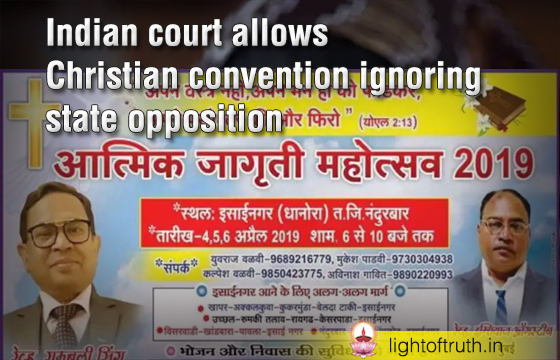
Indian court allows Christian convention ignoring state opposition
A state court in central India has granted permission to conduct an annual Christian convention, protecting the right to practice faith despite opposition from the Madhya Pradesh state administration. “We feel relieved and happy,” Pastor Kamesh Solanki said after the Madhya Pradesh state High Court admonished the state officials on June 16 not to deny permission to the convention on “frivolous grounds.” Solanki, who leads an independent church, petitioned the court to challenge the Khargone district administration’s ongoing refusal to conduct a three-day annual Christian convention that began in 2010. Since the convention, scheduled for May 16-18, could not be conducted, the court instructed the petitioner to file a new application with a revised schedule. When “such an application is filed, the respondent (district administration) shall allow the same and also provide proper security as and when required, and shall not reject the same on frivolous grounds,” the court ruled. Solanki said the permission was denied, stating that the convention, named Atmik Jagrati Mahotsav (Spiritual Awareness Program), could not be conducted due to the India-Pakistan tension.
Let Christians pray, Indian court tells state authorities
Christians have welcomed a court order calling on authorities to approve requests for prayer gatherings in Uttar Pradesh, the most populous Indian state, amid a rise in persecution against Christians. A two-judge bench of the Allahabad High Court, the top court in the northern state, directed state authorities to “consider” representations from Christians for holding religious prayer meetings and “decide as per the law” after taking opinion from the local police, on June 20. The judges said that they found that the “holding of religious prayers is not violative of any law that has been shown to us”. “Under the constitution every citizen has a right to practice and perform his faith and religious congregation that is, of course, subject to public order,” they said. The court asked the petitioners to file fresh applications to the state authorities which they should “consider and decide” as per the law by taking opinion from the local police. The order came in response to petitions from different Christian groups accusing government officials of denying them permission to hold routine prayer meetings. “I was forced to approach the top court after the local police did not allow me to hold a prayer meeting on the premises of my legally registered society,” Pastor Sukesh Kumar, one of the petitioners, told UCA News on June 23. “The risk involved in holding such a prayer meeting without the consent of police is too high as they level false charges of religious conversion,” Kumar said. It is common for police to arrest and jail prayer leaders and others without bothering with “a preliminary probe,” he said. Getting bail or quashing the case become tiresome and troublesome, and it takes many years and lot of time and money to get the name cleared, he alleged. Seeking protection from the top court is “the best way” and Christians are glad the court granted “required relief,” he added.

Indian Church seeks greater safety for Hindu pilgrims
Indian Church leaders have urged the government of northern Uttarakhand state to boost safety following several air accidents that have killed Hindu pilgrims in less than two months. In the latest tragedy, a helicopter carrying pilgrims from Kedarnath in the Rudraprayag district crashed on June 15, killing all seven people on board including the pilot. Following initial investigations, the authorities said the helicopter fell victim to bad weather in the Himalayan region. The tragedy prompted a call by Indian bishops for the state government to improve safety measures. “The Catholic Bishops’ Conference of India (CBCI) expresses its deepest condolences to the families of pilgrims who lost their lives in the recent helicopter crash during Kedarnath Yatra. May the departed souls rest in peace,” conference spokesman Father Robinson Rodrigues told. “We are perturbed by the series of helicopter accidents in a short span, carrying pilgrims. The CBCI urges the government to investigate these incidents and take immediate measures to ensure the safety and security of our Hindu brothers and sisters, undertaking this sacred journey,” Rodrigues said.
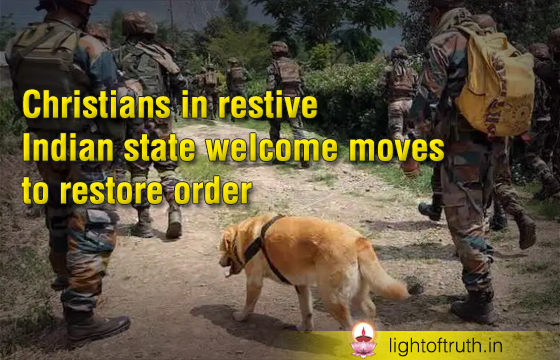
Christians in restive Indian state welcome moves to restore order
Christian leaders in India’s strife-torn Manipur state have expressed hope that peace will gradually be restored after authorities seized large caches of arms and ammunition from areas dominated by the Hindu majority Meitei ethnic group. The seizure of arms “gives us an assurance that the state administration under the direct control of the federal government is serious about restoring peace,” an indigenous Christian leader told, on condition of anonymity. Security forces seized 328 weapons and more than 9,000 assorted rounds of ammunition from Meitei-dominated districts in the Imphal Valley on June 13-14. The state has experienced a bitter armed ethnic conflict between the Meitei people and the Christian-dominated Kuku-Zo tribal group over the past two years. It has claimed at least 260 lives and displaced 60,000 people, mostly Christians. Christian leaders say the radical Meitei group Arambai Tenggol looted weapons and ammunition from government stores, including police stations, and used them to unleash violence against Christians. According to reports, more than 5,000 weapons such as machine guns, AK 47, and 406 Carbines were among the looted weaponry, besides some 60,000 rounds of ammunition. Critics also say the previous state government, run by the pro-Hindu Bharatiya Janata Party (BJP), tacitly supported the Hindu violence since it began on May 3, 2023, after Meitei people attacked a Kuki protest march that opposed a move to grant tribal status to Meiteis. The state was brought under federal rule on Feb. 13 after the then-chief minister, N. Biren Singh, was forced to resign due to his failure to contain the violence and restore peace.
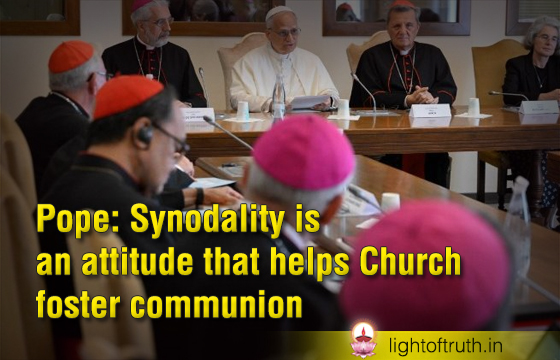
Pope: Synodality is an attitude that helps Church foster communion
On June 26, Pope Leo XIV met with the Ordinary Council of the General Secretariat of the Synod of Bishops. In his brief remarks, the Pope reflected on a “thought that I consider central,” before listening to reflections from the Synod Secretariat. He said Pope Francis gave new impetus to the Synod of Bishops by drawing inspiration from Pope St. Paul VI.
“The legacy he has left us, in my view, is above all this: that synodality is a style, an attitude that helps us to be Church by promoting authentic experiences of participation and communion,” said Pope Leo.
The Holy Father said Pope Francis carried this vision of the Synod forward in various assemblies, especially, said Pope Leo, “those on the family.” “He then brought it to full expression in the most recent path, dedicated precisely to synodality,” said the Pope.
“The Synod of Bishops naturally retains its institutional identity, while at the same time being enriched by the fruits matured in this season,” concluded Pope Leo XIV. “And you are the body entrusted with gathering these fruits and engaging in forward-looking reflection.”