
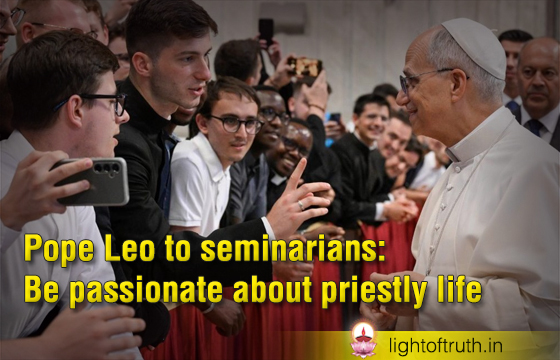
Seminarians who have come to Rome for the Jubilee are not only pilgrims, but witnesses of hope, who “fuel the flame of hope in the life of the Church”, Pope Leo said on June 24.
In a meditation delivered in St Peter’s Basilica, Pope Leo told seminarians they are called to bear witness “to Christ’s gratitude and gratuitousness, to the exultation and joy, the tenderness and mercy of His Heart, to practice a style of welcome and closeness, of generous and selfless service, allowing the Holy Spirit to ‘anoint’ their humanity even before ordination.”
The Holy Father emphasized, too, the importance of formation “centred on the heart”, of learning “to love as Jesus loved”. This must be done through the development of the interior life, the first work of discernment, and involves returning to the heart, where we find “traces of God” and where God speaks to us.
Pope Leo said that formation of the interior life involves recognizing the deepest sentiments of the heart, “which help you discover the direction of your life.” He noted that the “privileged path” that leads to interiority is prayer, because without an encounter with God, “we cannot truly know ourselves”. And he invited them to invoke the Holy Spirit frequently, “so that He may shape in you a docile heart, capable of perceiving God’s presence” in nature, art, literature, music, and science.
“Above all”, Pope Leo said, “learn how to listen, as Jesus did, to the often silent cry of the little ones, of the poor and the oppressed, and of the very many people, especially young people, who are searching for meaning in their lives.” The Holy Father called on seminarians to learn to preserve and meditate on the events of their lives, as Mary did, in order to learn “the art of discernment”.
Finally, Pope Leo invited seminarians to be meek and humble of heart, as Jesus was; and like Paul, to adopt the sentiments of Christ in order to grow in human maturity, and to reject all pretence and hypocrisy. The task of seminarians, the Pope said in conclusion, is to “never settle for less, never be satisfied, not be passive recipients, but to be passionate about the priestly life, living in the present and looking to the future with a prophetic heart”.
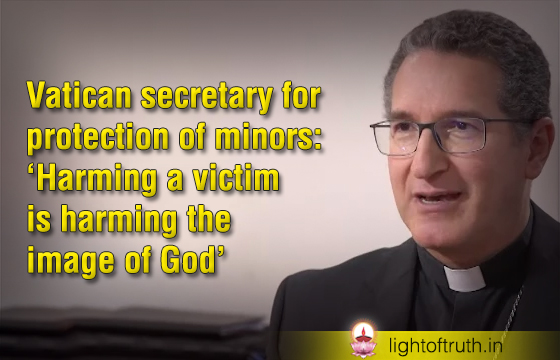
Vatican secretary for protection of minors: ‘Harming a victim is harming the image of God’
Auxiliary Bishop Luis Manuel Alí Herrera, secretary of the Pontifical Commission for the Protection of Minors (PCTM, by its Italian acronym), contends that instead of a single reparative action, victims of abuse within the Church require “an in-depth process that listens to, welcomes, and accompanies.”
Alí Herrera explained that the harm done to such victims is “disastrous” as it harms “the very image of God, the [victim’s] relationship with the Church, interpersonal relationships, and one’s very identity. A victim sees their life plans and their ability to bounce back damaged,” Alí explained in an interview with “EWTN Noticias,” the Spanish-language broadcast edition of EWTN News.
The auxiliary bishop of Bogotá — who, along with the other members of his team, met with Pope Leo XIV two weeks ago — stated that the voice of survivors is at the centre of the Church’s work and that the presence of victims within the commission itself is key to moving toward a true culture of prevention. “We have victims on the pontifical commission; they are part of it as members. Their voice is essential to knowing how to speak to all victims and survivors, and also to guiding our responses in prevention processes,” he noted.
Since its creation in 2014, the PCTM, led by Cardinal Seán O’Malley, has been one of the Church’s most practical instruments for combating sexual abuse and promoting a culture of prevention. The prelate shared that his pastoral perspective on this issue changed completely after hearing the testimony of a person who had suffered abuse. “I had read, studied, and analysed it. But it’s another thing entirely to be faced with the real pain, the tears, the despair of someone who has been deeply wounded. That transformed me,” he related.
For the commission’s secretary, a key part of the work of prevention begins with adequate psycho-affective formation of a candidate for the priesthood beginning at the very outset of seminary. “Affective, communal, and sexual formation must be present from the preparatory phase to the end of theological formation. It must be across the board, continuous, and closely connected to the emotional world and interpersonal relationships,” he noted.
Regarding the impact of the abuse crisis on priestly vocations, Alí acknowledged that it has had painful but also positive effects. “It has had an impact, because many pull back [from considering a priestly vocation] when they see news of cases. But it has also helped, because it has forced us to rethink vocation ministry and recognize that the priest is, above all, a human person, with wounds, crises, and emotions that he must learn to integrate,” the bishop explained.
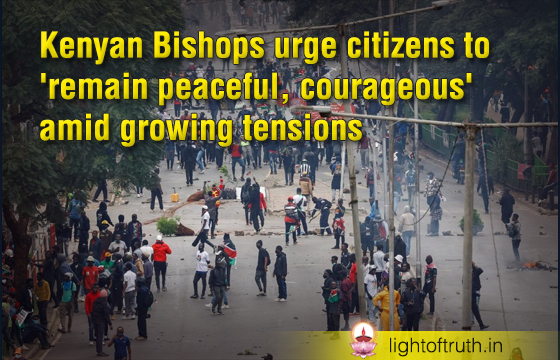
Kenyan Bishops urge citizens to ‘remain peaceful, courageous’ amid growing tensions
In a statement issued on 24 June, the Bishops of Kenya said they are seriously concerned about the grave disregard for human life in the country. The statement was released ahead of protests in memory of the victims of last year’s demonstrations against the Finance Law. The Vatican’s Fides news agency reports that the Bishops’ statement laments that episodes of mysterious disappearances, extrajudicial killings, and violent intimidation have become too frequent.
In their statement, the Bishops recall the names of some of those killed or disappeared, emphasizing that these are not just names, but “brothers, sisters, priests, sons, daughters, and friends who deserve protection and justice.” In particular, the Bishops highlighted the recent murder of Boniface Kariuki, a protester “shot at close range by a police officer.” The 21-year-old was shot dead during demonstrations demanding justice for the death of blogger Albert Ojwang in a security cell. “Security officers have taken an oath to protect the population and not to harm it,” the statement reads.
In the face of the serious economic problems they face, the bishops ask the authorities to listen to the protests of young people, “Generation Z,” who, they say, are expressing legitimate demands. While recognizing the legitimacy and seriousness of resolving these issues, the Bishops urge young people not to resort to violence and to demonstrate peacefully. “Remain peaceful, sincere, and courageous,” they said. “The Church loves and cares for you. Beware of those who seek to manipulate or influence you for evil purposes.”
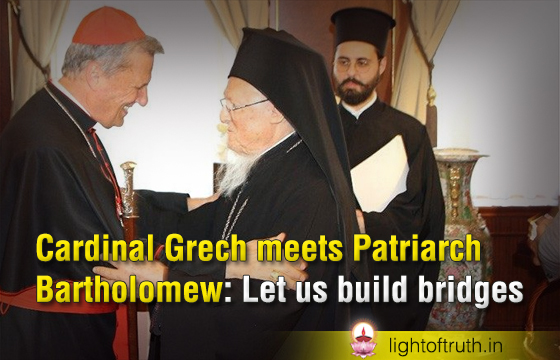
Cardinal Grech meets Patriarch Bartholomew: Let us build bridges
A fraternal meeting—marked by an embrace reminiscent of those often exchanged with Pope Francis—took place on the afternoon of June 17 at the Phanar between Ecumenical Patriarch of Constantinople Bartholomew I and Cardinal Mario Grech, Secretary General of the Synod, who is currently in Istanbul for the meeting of the General Secretaries of the Bishops’ Conferences of Europe (CCEE).
During the gathering, Cardinal Grech presented to all participants the process accompanying the implementation phase of the Synod. His itinerary also included a stop in Nicaea, present-day Iznik—the site of the First Ecumenical Council, whose 1700th anniversary is approaching, and where a visit by Pope Leo XIV is anticipated, continuing the intention of his predecessor, Francis.
In his address to the participants of the CCEE meeting, Patriarch Bartholomew recalled Pope Francis and expressed his “great anticipation” for a possible visit by Pope Leo XIV. First, the Patriarch conveyed his gratitude “for the personal friendship and the unwavering commitment of Pope Francis” (whom he described as “a true friend of Orthodoxy”), noting that his pontificate “has been a time of warmth and mutual encouragement.”
Patriarch Bartholomew dedicated significant attention to the theme of dialogue—ecumenical and interreligious—especially in “a time marked by divisions, fear and violence” when “we are called to be builder of bridges, not walls.” In particular, he underlined the importance of the relationship with the Roman Catholic Church, and the theological dialogue that resumed nearly half a century ago following the revocation of mutual anathemas in 1965.
This relationship is essential to pursue “a steady and serious path of encounter”—a journey that, while not without challenges, is also “marked by moments of grace, deepening understanding, and a sincere desire for the unity that Christ wills.”
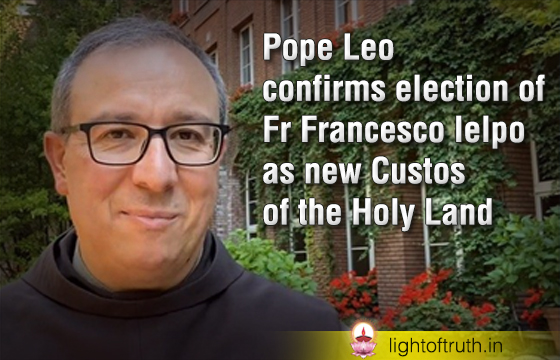
Pope Leo confirms election of Fr Francesco Ielpo as new Custos of the Holy Land
Pope Leo XIV has confirmed the election — conducted by the Minister General of the Order of Friars Minor together with his Definitory — of the Most Reverend Father Francesco Ielpo, OFM, as Custos of the Holy Land and Guardian of Mount Zion. The Minister General of the Franciscan Order, Friar Massimo Fusarelli, announced the news in an official letter sent to the friars of the Custody of the Holy Land.
Br Francesco Ielpo, an Italian national, was born in Lauria (PZ) on May 18, 1970. He professed his solemn vows in 1998 and was ordained to the priesthood in 2000.
Since 2014, he has served on the Board of Directors of the Pro Terra Sancta Association. Since 2022, he has also held the role of President of the Holy Land Foundation, while simultaneously serving as Delegate of the Custos of the Holy Land for Italy and as General Delegate for the restructuring of the Provinces in Campania, Basilicata, and Calabria.
In a press release announcing the election, the Custody of the Holy Land extended “heartfelt wishes for a fruitful service in this ‘Pearl of the Missions'” of the Franciscan Order. The statement also expressed “the profound gratitude of the Minister General and his Definitory to Br Francesco Patton, who concludes his dedicated and generous nine-year service to the mission in the Holy Land.”
In a statement to the Vatican media, Father Ielpo emphasised how “the service that the Order and the Church have asked of me immediately made me realise the enormous disproportion between my humble self and the duty required of me, particularly at this moment in history”. He recalled the words of his spiritual father, who told him, “This disproportion, this inability, is beautiful! Because it means that there is room for someone else to act, for the Holy Spirit to act!'”
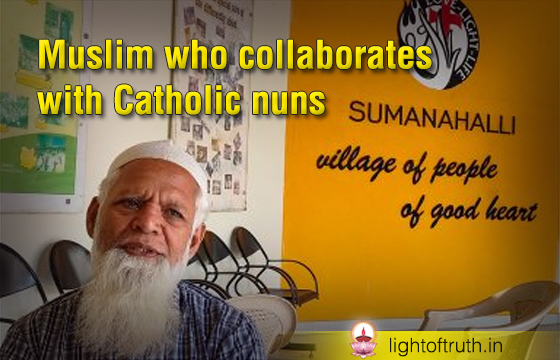
Muslim who collaborates with Catholic nuns
Masthan Sahib has worked with Catholic nuns for four decades in a leprosy rehabilitation centre in Bengaluru, the capital of the southern Indian state of Karnataka. The centre, Sumanahalli, is under the Bangalore Archdiocese, aided by the state government, and managed by nuns and priests of different congregations. Sahib, a resident of Palamaner, a remote village in the Chittoor district of Andhra Pradesh state, Karnataka’s eastern neighbour, was trained by Catholic nuns from overseas to assist their work among leprosy patients. The 65-year-old Muslim shared with Global Sisters Report how he serves mostly Hindus and Catholic nuns without compromising his faith.
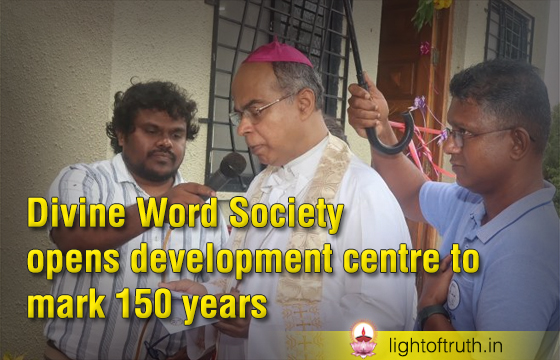
Divine Word Society opens development centre to mark 150 years
More than 200 people have attended the opening of the Community and Human Resources Development Centre at Tala in Maharashtra’s Raigad district to mark the Divine Word Society’s 150 years of service. Archbishop John Rodrigues of Bombay led the thanksgiving Mass on June 18 at the Janseva Society Campus in Tala, some 115 km south of Mumbai, the capital of the western Indian state of Maharashtra. The archbishop encouraged all present to remain steadfast in uplifting the marginalized with dignity and love. He described the new centre as a “sanctuary of transformation,” a space born from faith in action. The occasion also marked the Janseva Society’s 13 years of serviced to Katkari tribe, a Particularly Vulnerable Tribal Group in Maharashtra. The Archdiocese of Bombay in collaboration with the Indian Mumbai province of the Society of the Divine word made an agreement on June 1, 2012, to begin a mission station at Tala. It aimed to spread Christ’s mission in Tala Taluka. The society works among 22 Kathkari tribe hamlets and three shepherd group villages. It deals with illiteracy, alcoholism, child labour, bonded labour, issues of health and hygiene, lack of road and water facilities.
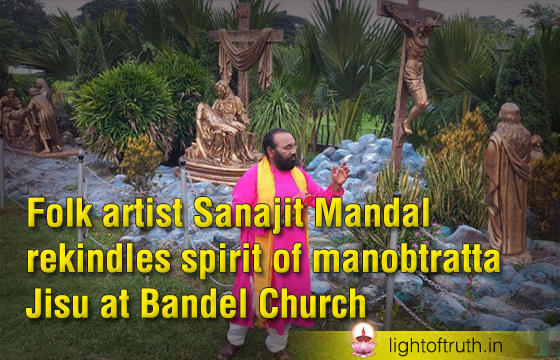
Folk artist Sanajit Mandal rekindles spirit of manobtratta Jisu at Bandel Church
The historic Marian shrine of Bandel Church, standing sentinel on the banks of the Hooghly since 1599, became the backdrop for a spiritual and musical homecoming as Baul Samrat Sanajit Mandal reimagined two seminal tracks from Bengali Gospel classic. The music video shoot on June 21, 2025 by Song of Gospel YouTube Channel featured Mandal performing Kaatar Mukut (Crown of Thorns) and Dhike Dhike Shona Jai (Heard All Over) – songs that have resonated deeply with Bengali-speaking Christians for over two decades. This new rendition blends faith, folk, and film in a moving tribute to a legacy that continues to inspire. “In these songs, I find not just melody, but prayer,” said Sanajit Mandal. “Kaatar Mukut carries the pain of sacrifice, while Dhike Dhika Shona Jai bursts with the joy of resurrection. Singing them again at Bandel felt like coming full circle.”
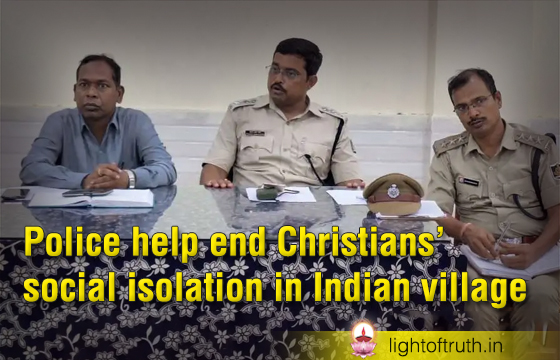
Police help end Christians’ social isolation in Indian village
The police and administrative intervention helped end the social isolation that Hindus had imposed on a group of Christians in a village in Odisha, India, a police official has confirmed. The one-month social boycott was lifted at a meeting of government officials, police, and some 60 villagers on June 24 in Rangamati of Keonjhar district, said Prasant Kumar Behera, sub-divisional police officer. “We told the leaders and villagers nobody wants fights and violence between the Hindus and Christians and igniting the spark with frivolous issues,” he told UCA News on June 26. The boycott has been lifted with Hindu leaders promising “that there will be no violence or aggression,” he added. The Hindus imposed a social boycott on a total of 23 Christian families after they allegedly refused to abandon their faith and return to their “original Hindu religion.” The social isolation meant that Christian was denied access to all shared facilities in the village, including the village well and grocery stores. The villagers also refused to hire them for work in the farmlands. It prompted Christians to seek assistance from the police. Christian leaders say that violence against Christians has risen since the pro-Hindu Bharatiya Janata Party (BJP) took power last May. Hindu groups that support the BJP consider the political gain a mandate to push for their idea of making India a Hindu nation, they say. Police officer Behera said government officials and police “sensitized villagers” that the national constitution recognizes rights of every citizen and attempts to take laws into their own hands can trigger punitive measures.
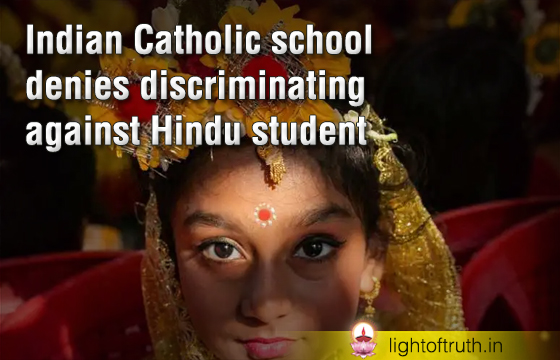
Indian Catholic school denies discriminating against Hindu student
An official from a Catholic school in India’s northeastern Assam state has dismissed an allegation that a teacher forcibly removed a ‘tilak’ — a red circular sacred Hindu mark — from the forehead of a student. Salesian priest Ethelbert Minj, in-charge of Don Bosco School in Sonitpur district, said the allegation levelled by the family of a Hindu student was fabricated and prompted by a right-wing Hindu group. The response came after the uncle of the child lodged a complaint with local police that a schoolteacher forcibly removed the ‘tilak’ from her forehead on June 23 and thus hurt the religious sentiments of Hindus. Minj alleged the child’s uncle was prompted by the right-wing Bajrang Dal group which he claimed seeks to tarnish the hard-earned reputation of the institute. “Our school has been in this locality for more than a decade and no such incident was reported in the past. The school does not discriminate children on the basis of caste, creed and religion,” the priest told UCA News on June 25. “This incident is purely influenced by groups who wants to divide people in the name of religion, caste and creed,” he claimed, adding the school would cooperate with the police to establish the truth. Quoting the parents, some local media reported the incident left the child traumatized. In the police complaint, the child’s uncle accused the teacher of violating the constitutional right to religious freedom. Allen Brooks, spokesperson of the ecumenical group, Assam Christian Forum, said such an allegation is unprecedented and hard to believe. “Our institutions have always respected and accommodated all religions and cultures, maintaining a peaceful and tranquil atmosphere,” Brooks told