
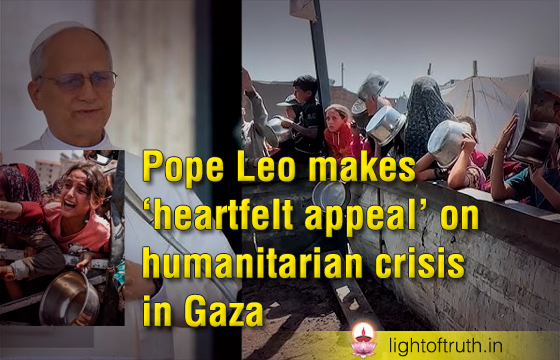
Pope Leo XIV has said that he is following the humanitarian crisis in Gaza with “great con-cern” while also renewing his “heartfelt appeal for a ceasefire.” Speaking on July 27 in St. Peter’s Square after giving his Angelus address, the Pope described how the civilian population in Gaza is being “crushed by hunger and continues to be exposed to viol-ence and death.”
His comments come shortly after the Israeli military began a system of pausing military ope-rations for limited periods – 10 hours a day – in three populated areas of the Gaza Strip in order to facilitate humanitarian assis-tance. On July 25, the UN Office for the Coordination of Humani-tarian Affairs (OCHA) said that the starvation crisis is deepening across Gaza.
Pope Leo in his address also renewed his “heartfelt appeal for a ceasefire” and called for the release of hostages and full respect of humanitarian laws. “Every human person has an intrinsic dignity conferred on him or her by God himself: I urge the parties in all conflicts to recognise it and to stop any action contrary to it,” said Pope Leo. “I urge you to negotiate a future of peace for all peoples and to reject anything that could jeopardise it.” He added: “I entrust to Mary, Queen of Peace, the innocent victims of conflicts and the rulers who have the power to put an end to them.”

Church in Mexico warns of demographic change, calls for protection of families
The Catholic Church in Mexico called on Latin American society and authorities to care for the family, emphasizing that “protecting the family is prote-cting the future of our society.” In a recent editorial in its weekly publication Desde la Fe (From the Faith), the Primatial Arch-diocese of Mexico City noted that the region is facing “a profound and silent demographic transfor-mation, but at an accelerated pace, and its consequences are already being felt in the social fabric.”
The reflection is based on the study “Changes in Demographic Structures,” prepared by the Net-work of Latin American Univer-sity Institutes on the Family, which examines new forms of family organization in the region. According to the editorial, the report’s conclusions show that “birth rates are steadily declin-ing, marriages are decreasing, divorces are increasing, single-person households are multiply-ing, and an aging population has ceased to be a distant threat and has become a palpable reality.”
Given this scenario, the arch-diocese called for people to view the phenomenon not merely as a matter of numbers but as a reality “that profoundly transforms daily life, human relationships, and the very foundations of coexistence.” “The family, understood as the primary nucleus of society, is the great protagonist – and also the greatest victim – of this transition. When bonds weaken, when loneliness replaces belonging, and when aging is not accompanied by structures of support and affection, the result is a more fragmented, more vulnerable, and less resilient society,” the editorial stated.
The archdiocese also high-lighted that the data portray a region where “aging is occurring without sufficient generational offset and with increasingly fragile family ties” and warned that “the number of deaths now exceeds the number of births.” The archdio-cesan publication also warned that “without strong family structures – based on love, commitment, co-responsibility, and mutual care – the entire society deteriorates” and urged authorities to ensure that public policies “must treat the family as a social priority.”

Italian police confiscate 13 million unauthorized religious articles sold around the Vatican
As the 2025 Jubilee Year unfolds, Rome is experie-ncing not only a surge in pilgrims but also an un-welcome flood of counterfeit religious merchandise and labour law violations. Since the opening of the Holy Year on December 24, authori-ties have seized a staggering 24 million fake items across the city – with over half being religious goods, from rosaries to medallions, aimed at unsuspecting tourists and pilgrims. The figures, revealed by Italian financial police and reported by La Repubblica, highlight the darker underside of the city’s booming religious tourism sector. Among the items confiscated were 13 million objects with spiritual significance – often adorned with imagery or text designed to mimic Vatican-issued products. As Rome braces for the Jubilee Youth Encounter at the end of July, preparations have shifted into high gear. The upcoming event, scheduled to bring nearly a million young pilgrims to the Vati-can and Tor Vergata, has prompted stepped-up inspections and security controls. Giancarlo Franzese, provincial commander of the Guardia di Finanza in Rome, confirmed that enforcement actions have already uncovered some 750 undocumented or illegally employed individuals, particularly in the hospitality sector that thrives on the influx of visitors.
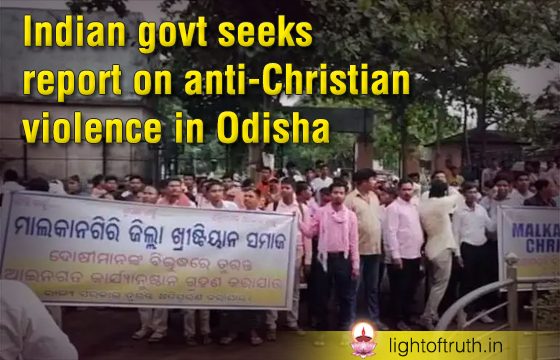
Indian govt seeks report on anti-Christian violence in Odisha
India’s federal agency responsible for protecting the interests of religious minorities has sought details about the rising anti-Christian attacks in eastern Odisha state, following the latest incident where a Hindu mob attacked and injured 30 Christians. The National Commission for Minorities (NCM) on June 27 sent a letter to the chief secretary, the state’s top bureaucrat, instructing him to “get the matter investigated and send the report to the Commission within 21 days.”
The statutory body’s response followed a June 26 complaint from A.C. Michael, a Christian leader and rights activist based in New Delhi, the national capital. Michael, in his complaint, said a crowd of approximately 400 people “launched a coordinated assault” against Christians in remote Kotamateru village in Odisha’s Malkangiri district on June 21. The village has some 70 households, but only 11 of them are Christian. “More than 30 Christians were injured in the violent attack, and among them, 20 sustained grievous injuries,” he said. Michael termed it “a violent and targeted attack,” adding that tensions in the region had been escalating for several days prior to the incident, with Christians receiving repeated threats.
The Christians were attacked while they gathered to pray over the seeds they were preparing to sow, seeking God’s blessing for a fruitful harvest and the upcoming season. “It was during this peaceful gathering that the mob attacked them without provocation,” he stated in the complaint.
The news of the attack reached authorities late due to the village’s remote location and limited communication options. “One resident managed to contact a pastor from outside the village, who immediately informed the Malkangiri Police Station. Police arrived shortly afterward,” the complaint said.
The injured were moved to the district hospital, while others sought refuge in a nearby church building, which is now serving as a temporary shelter, Michael said, while seeking adequate compensation and rehabilitation for the victims. Michael told on July 1 that he was happy about the commission’s “swift response” to his complaint.
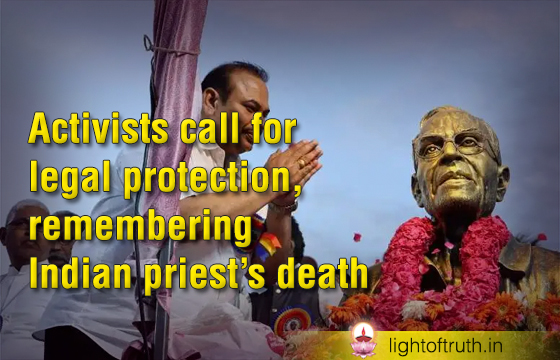
Activists call for legal protection, remembering Indian priest’s death
A call to protect Indian activists from state repression was made on the death anniversary of Father Stan Swamy, an 84-year-old Jesuit priest and tribal rights activist who died as an undertrial five years ago. Political leaders from the ruling alliance in the southern Indian state of Tamil Nadu, Swamy’s home state, endorsed the call by Jesuits and rights activists for legal measures to protect activists working for the socially and financially disadvantaged. Swamy, weakened by age and Parkinson’s disease, died in a Mumbai hospital on July 5, 2021, after being repeatedly denied bail on medical grounds despite suffering from multiple age-related ailments. At a memorial gathering on July 5 in Swamy’s native village of Viragalur in Tamil Nadu, activists and priests called for the enactment of a special law to protect human rights activists in the country. The demand for law was among seven resolutions adopted at the gathering of more than 5,000 people, including Catholic bishops, priests, nuns, and political leaders.
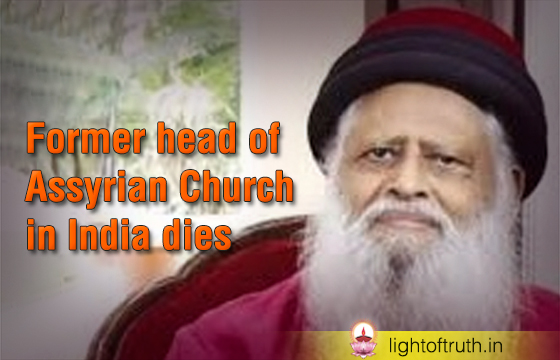
Former head of Assyrian Church in India dies
Mar Aprem Metropolitan, who had led the Assyrian Church of the East in India for five decades, died on July 7 following a brief hospitalization for age-related ailments in Thrissur, Kerala. He was 85. The metropolitan was born as George Mookken on June 13, 1940, in Thrissur, which was then in the Kingdom of Cochin under British India. Educated in India, England, and America, Mar Aprem specialized in Church History. He obtained master’s degrees in Church History from both the United Theological College, Bangalore, and the Union Theological Seminary, New York. He studied theology at Leonard Theological College, Jabalpur. He was ordained a deacon on June 25, 1961, and a priest on June 13, 1965. He was consecrated bishop on September 21, 1968, by Mar Thoma Darmo, Catholicos Patriarch of the Ancient Church of the East. He took the name Mar Aprem Mooken, and was promoted as a Metropolitan of the Ancient Church of the East eight days later in Baghdad. In 1999, he rejoined the Assyrian Church of the East and was instrumental in healing the rift that had developed in the church over the question of hereditary appointments since the 1960s. He served as the president of the Church History Association of India during 1976-1982. Mar Aprem was a prominent personality in Thrissur. He promoted religious harmony. His speech, filled with fun and wisdom, had won several fans across Kerala. He served as the head of the Chaldean Syrian Church in India for about five decades. He wrote some 65 books, prominent among them is his Syriac translation of Daiva Dashakam (Ten Verses To God: The Universal Prayer).
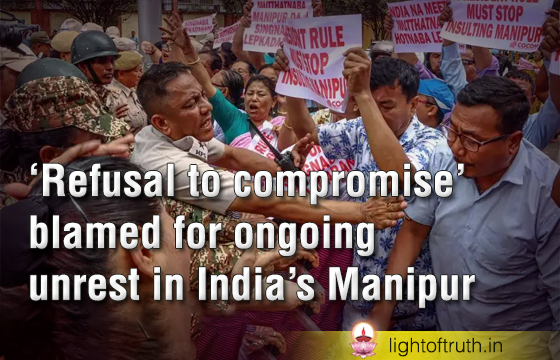
‘Refusal to compromise’ blamed for ongoing unrest in India’s Manipur
A refusal to compromise by Hindu-majority Meitei and pre-dominantly Christian tribal groups have dampened hopes of esta-blishing a lasting peace in India’s sectarian conflict-torn Manipur state, Christian leaders say. The latest round of talks between Federal Home Ministry officials and a 19-member delegation, mostly from Meitei-run civil society organizations, failed to produce a roadmap for peace in the north-eastern state. The talks were held in the national capital, Delhi, on June 30.
Earlier on June 9, a five-member delegation representing Kuki-Zo tribal groups held a meeting with Home Ministry officials. These and other peace talks involving federal government officials and the warring Manipur groups followed a two-year-old deadly Meitei-tribal conflict that claimed more than 260 lives and displaced about 60,000 people, mostly tribal Christians. During the meetings, the Meiteis insisted on maintaining the “territorial integrity of the state of Manipur” contrary to the stand of the tribals who want to “divide the state with a separate administration” for them. Christian leaders say both the Meitei and tribals tend to “stick to their guns,” which makes peace elusive. “As long as both sides continue to stick to their demands, we do not know how long it will take to restore peace,” one Church leader told, expressing frustration over the stalemate.
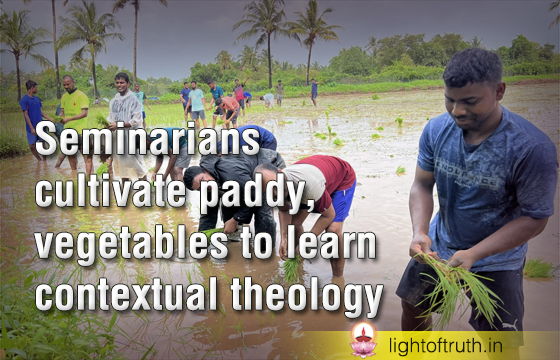
Seminarians cultivate paddy, vegetables to learn contextual theology
A major seminary in the western Indian state of Goa has made its 21 theology students work in farms so that they learn better what is taught in classes. The students of the second, third- and fourth-year theology classes of the Pilar Theological Institute spent the afternoons of July 5 and 6 cultivating paddy and vegetables on a two-acre land owned by the Society of Pilar. “It helps the seminarians gain a deeper understanding of what they learn in class; to have a more contextualised approach to theology,” explained Father John Bennet, director of studies of the seminary, also known as the All India Mission Seminary of the Society of Pilar.
“This exposure can be particularly valuable for the future clergy who may be called to serve where agriculture is a central part of life,” he told Matters India July 7. This way of doing theology, Father Bennet added, emphasizes the importance of the specific cultural, social, and historical context in which Christian faith is understood and lived.
“It acknowledges that theological reflection is not done in a vacuum but is shaped by the unique experiences, perspectives, and challenges of a particular community.”
The students belonged to the dioceses of Dumka and Daltonganj in Jharkhand, Purnia and Patna in Bihar, Krishnagar in West Bengal, besides the Pilar theology students.
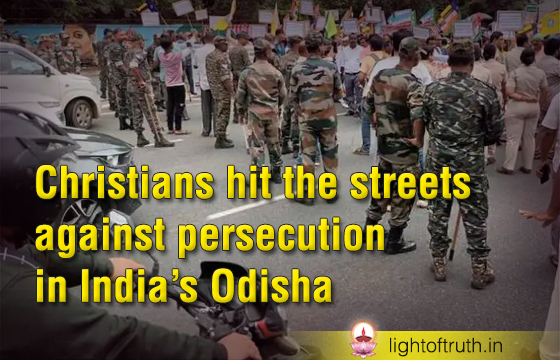
Christians hit the streets against persecution in India’s Odisha
Several thousand Christians marched on the streets and blocked highways in the eastern Indian state of Odisha to demand justice and protection from increasing attacks against them by Hindu mobs.
Protest rallies, attended by 1,000 to 5,000 Christians, were held in 20 out of 30 district centres in the state on July 1, according to Aravind Kachhap, an orga-nizer and president of the Rashtriya Christian Morcha or National Christian Front. Some 300 people walked through the state’s capital, Bhubaneswar, and blocked a road, said Jugal Ranjit, a Christian leader, who attended the rally. “It was the first time Christians had rallied in such huge numbers and blocked a road in the capital city,” he said. “Normal life was disrupted in many cities and towns, sending a clear message that Christians will not tolerate any more attacks,” said Father Ajay Singh, a social activist from the Cuttack-Bhubaneshwar archdiocese.
Christian leaders at the rallies demand-ed an end to Hindu groups’ oppression, discrimination, and violence against Christians, who belong to indigenous and Dalit (formerly untouchable) communities.

Tej-Prasarini unveils Jubilate Jesus, Volume 2
After the resounding success of Jubilate Jesus, Volume 1–launched on New Year’s Day 2025 with vivacious Jubilee Anthem–Tej-Prasarini, Don Bosco Communications, officially released Volume 2 in honour of the 2025 Jubilee of Jesus’ birth, on July 3.
The event held in the auditorium of Don Bosco High School, Matunga was graced by chief guest, Auxiliary Bishop Dominic Savio Fernandes of Mumbai, the Provincial of the Mumbai Province Fr. Savio Silveira and several other dignitaries.
The album opens with Tej-Pra-sarani anthem, You Are the Light of the World, this new volume encapsu-lates the very identity and mission of Tej-Prasarini– “Tej” meaning light, and “Prasarini” meaning to radiate. Staying true to its name, the produ-ction centre continues to spread the Light of Christ through music and media, inviting people of faith and goodwill to walk in His footsteps.
The dual-volume initiative, released within the same Jubilee year, springs from a deep pastoral desire: to keep Jesus at the heart of every thought, word, action, and relationship throughout this spiritual milestone. “These songs are more than melodies–they are medita-tions,” said Director of Tej-Prasarini Salesian Fr. Joyston Machado. “Each track is crafted to help listeners encounter Jesus in a deeply personal and joyful way.”