Dubia cardinals make public plea for audience with Pontiff

The four cardinals who last year submitted dubia requesting clarification of Amoris Laetitia have now made public a letter pleading for an audience with Pope Francis. In a clear sign of frustra-tion with the Pope’s failure to respond to their request for a meeting, Cardinal Carlo Caffarra, one of the four cardinals who submitted the original dubia, has released the text of a letter in which he again requests an audi-ence with the Pontiff. Cardinal Caffarra’s letter was hand-deli-vered on April 25: eight months after the cardinals’ original request for an audience. Neither message has been answered.

The four cardinals—Caffarra, Raymond Burke, Walter Brand-müller, and Joachim Meisner—wrote to Pope Francis in Septe-mber, pleading for clarification of Amoris Laetitia and pointing to tensions between the papal document and traditional Catholic teachings on marriage. When the Pope did not respond, the cardinals made public their request for clarification and the text of the dubia they had submitted.

In an essay published by “Vatican Insider” on June 27 in three languages, a British Catholic author has challenged the four cardinals who submitted a set of dubia, or doubts, about Amoris Laetitia to Pope Francis to drop their opposition, arguing they’re largely wrong on the merits and fuelling abuse directed at the pontiff and his supporters.

Christian population of Iraq, Syria halved since 2011

The number of Christians living in Syria and Iraq has been cut in half—and perhaps significantly further—since the onset of the Syrian civil war in 2011, according to a new report.

The report by Open Doors and Middle East Concern finds that Syria’s Christian population, which stood at 2 million before the civil war, is now perhaps 1 million. In Iraq, where an offensive by the Islamic State drove Christians out of the Nineveh Valley, at least 100,000 have fled the country. Of course who remain, many are now displaced; some are considering a return to their homes now that the Iraqi government has regained control of the Nineveh Valley.

Christians should always expect opposition, Pope tells audience

Pope Francis told his public audience on June 28 that “the proclamation of the Kingdom of God always involves opposition,” and “the confession of faith always takes place in a climate of hostility.” Reflecting on the words of Jesus, “Behold, I am sending you like sheep in the midst of wolves,” the Holy Father remarked that in a sinful world the message of the Gospel will always encounter resistance. He reminded his audience that the term “martyr” refers to a witness to the Gospel. Martyrs endure through opposition, he said, and “whoever endures to the end will be saved.”

One key sign of authentic Christian witness is poverty of spirit, the Pope said; the Christian who proclaims the Gospel is detached from any worldly power and left to rely solely upon God. The Pope cautioned that while Christians are called to be prudent and “even at times cunning,” they must never stoop to the use of violence or other immoral means. “To overcome evil, one cannot share the methods of evil,” he said.

Vatican considers excommunicating the mafia

Pope Francis has instructed a Vatican commission to draft a new doctrine for excommunicating Catholics convicted of corruption or mafia-related crimes.

More than 50 prosecutors, bishops, United Nations representatives and victims of organized crime came together for a Vatican conference this week to hammer out the Church’s new legal doctrine concerning “the question of excommunication for corruption and mafia association.”

“Our effort is to create a mentality, a culture of justice, that fights corruption and promotes the common good,” said Archbishop Silvano Tomasi, the Vatican’s retired ambassador to the U.N. in Geneva, who was one of the conference participants.

While Pope Francis has bluntly called for the excommunication of mobsters before, it is the first time mafia and corruption crimes are being considered together – not worthy of pardon because they are habitual criminal ways of life, as opposed to a single act of sin.

Within the mafia clans of Italy, but also inside the narcos culture of the Mexican and Colombian cartels, pseudo-religious rituals rich with Catholic imagery and references are an integral part of the cultural tradition.

Pope Francis railed against the mafia’s “adoration of evil and contempt for common good” in a high-profile visit to the region plagued by the brutal ‘Ndrangheta mafia organisation in 2014, declaring mobsters automatically excommunicated. Nonetheless, his remarks have failed to halt the “padrino” system of naming children after mobster godfathers or detours of religious processions in front of the homes of known mob bosses as a sign of honour.

Excommunication, which bans Catholics from participating in the sacraments or communion, is one of the most several penalties within the church. It has been used in the past to isolate a number of religious sects, such as the ultra conservative followers of French archbishop Marcel-Francois Lefebvre.

Priests and nuns have right to ancestral property: Kerala HC

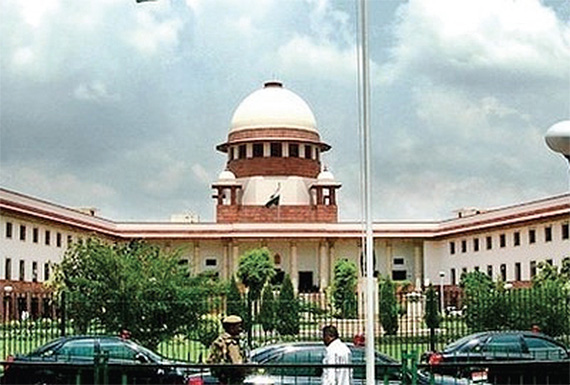
In a landmark ruling, the Kerala High Court has held that Christian priests and nuns have right to ancestral property and that their vow of poverty does not deprive their rights.

The ruling was given by a division bench after considering an appeal (AS No. 460/2000) challenging a lower court’s ruling that a priest does not have right to ancestral property as he takes a vow of poverty as part of attaining priesthood.

In the judgment, the court said, “To hold that one would suffer a ‘civil death’ and be deprived of his property on entering into the Holy Order would be a naked infringement of Article 300-A of the Constitution of India (right to property). Of course it is the volition of a Hindu ascetic or a Christian priest to relinquish his right over his personal property in favour of a Mutt or Monastery in a manner known to law.

But there cannot be any automatic deprivation of property acquired by way of intestate or testamentary succession by the mere fact that one has entered into the religious order and renounced his worldly pleasures.”

There is absolutely no statutory prohibition for a Christian priest or nun in the matter of intestate or testamentary succession of property in his or her personal capacity, the judgment delivered on June 7 stated.

Ban on cattle slaughter insult to Christians, Muslims: Manipur Congress

Manipur Congress on May 28 said Centre’s ban on sale of cattle for slaughtering was a direct attack on Christians and Muslims. The ban of cattle slaughter was against Muslims and Christians and a challenge to the two communities by the BJP-led NDA government at the Centre, said Congress spokesperson and sitting MLA Md Fajur Rehman.

Addressing a news conference at Imphal Congress Bhavan, the spokesperson alleged that the recent move of the Central government has insulted secularism of the country.

He said that India as a secular country has now been put at stake by a “dictator government.”

“Congress will fight tooth and nail the challenge in the fore of the minority Muslims and Chri-stians,” the Muslim leader said. Alleging that BJP as a commu-nal minded party is infusing communal venom among the different communities, particu-larly among the minority co-mmunities, the Congress spokesperson called upon the people to join hands with the Congress in rooting out such party from the soil of the state.

Former deputy mayor of Imphal Municipal Corporation (IMC) Meibon Phaomei who also attended the news conference alleged that the latest move of the Central government once again showed anti-Christian activities which the BJP has been indulging across the country.

Northeast Christians won’t accept beef ban: Meghalaya BJP leader

A rebel-turned-politician from Meghalaya said the BJP would reduce the price of beef if voted to power in the state while insisting that the Centre should take the public’s view before putting any restriction on the sale or consumption of beef. Bernard Marak, who is BJP’s Tura unit president, said the beef ban should not apply to states with a Christian-majority.

“Meghalaya has a huge demand for beef but the prices are not regulated. Neither is there any slaughter house nor is the meat certified by doctors. As such, sometimes old meat is mixed with fresh meat. If BJP is voted to power, it will look into the issues and regulate the prices so that people don’t have to buy meat at a high price,” Marak told the New Indian Express.

“The Centre wants to ban beef consumption but it should not apply to the Christian-majority states where most people consume meat including beef. Any ban has to be on public consensus.

Meghalaya being a tribal State, we want the sentiments of the people to be respected,” he said. Marak, who co-founded insurgent group Achik National Volunteer Council, said any restriction on beef consumption in Meghalaya would create a big impact. Rival political parties are criticising the BJP by calling it a “Hindu party,” he said.

Bengal church vandalized, looted 

Unidentified mis-creants vandalized a church in West Bengal in the early hours of June 6.

Police said they have launched search to find the culprits who attacked the 127-year-old St Luke’s Church at Dayabari Mission Gate in Ranaghat in the Nadia district. The miscreants stole old religious items and 3,000 rupees, the church authorities said.

“The Holy Sacrament was torn to pieces by miscreants. The other religious items, like the chalice and bronze candle stands were damaged and a few were taken away along the cash. They took the cash after breaking open a cupboard,” pastor Kishor Mondal told reporters.

“The stolen and damaged articles are very old. It is a blow for us,” he added.

Christian leader blasts Chhattisgarh’s tribal sterilization rules

A Christian leader in Chhattisgarh alleges that the eastern Indian government’s move to protect primitive tribes infringes personal freedom.

On May 26, the Chhattis-garh government passed an order amending the 1979 rule passed by then undivided Madhya Pradesh to protect primarily vulnerable tribal groups.

The amendment “is an attack on the free thought of an individual,” Arun Pannalal, president of the Chhattisgarh Christian Forum, told Matters India June 6.

The new rule stipulates tribals who want sterilization should apply for permission from their subdivisional magistrate.

While making the law in 1979, the government officials said the order was necessary to protect primitive tribes that had extremely low health indicators. The tribes also showed a negative rate of growth and there was fear of them dying out.

The state has seven primitive tribes that are on the verge of extinction.

The Chhattisgarh govern-ment officials say the amend-ment is a “step forward,” but Pannalal and other activists denounce it continu-ation of an inhuman practice of denying the tribes “autonomy over their own bodies.”

“It is up to the individual or the family to decide whether they want to procreate or not. There should not be any interference from anybody from outside,” the Christian leader asserts.

If the government is serious about primitive tribes’ welfare, it should provide them better health care and educate them to improve their living conditions to enhance their population, Pannalal says.

Gujarat textbook calls Jesus demon, Christians submit memorandum

Christians in Gujarat have demanded withdrawal of a school textbook that refers to Jesus Christ as a demon whose stories would be remembered forever.

The lesson appeared in the Hindi textbook for ninth grade under the Gujarat State Board.

The education minister and the chairperson of the textbook board have said that the error will be rectified soon. Officials said that the mistake was caused by a misprint.

The reference to Jesus Christ as a demon is made in chapter 16 of the book titled “Bharatiya Sanskriti Mein Guru-Shishya Sambandh” (the teacher-disciple relationship in the Indian culture).

On page 70, the line referring to Jesus Christ reads – “Iss sambandh mein haivan Isa ka ek kathan sadaa smaraniya hain.” Translated, it means that in this context, an incident of demon Jesus will always be remembered. The underlined sentence translates to “an incident of demon Jesus will always be remembered.”

Subramaniam Iyer, a lawyer who noticed the mistake, says that the error attracts section 295 (a) of the Indian Penal Code, which pertains to deliberate and malicious acts intended to outrage religious feelings of any class. Speaking to News18, Iyer said, “Jesus is being portrayed as a demon to students. Quite clearly, this is a case that attracts section 295(a) of the IPC that pertains to hurting the religious sentiments of any class.”

Iyer said that the error may be unintentional, but it can create a rift between communities and cause a law and order problem. “This simply is unacceptable and should be removed immediately,” he added.

The news channel contacted Education Minister Bhupendrasinh Chudasama who said he was aware of the error and added that it will be corrected.

Nitin Pethani, chairperson of the Gujarat State Board of School Textbooks, said that it was a typographical error. “The word “haiva,” a disciple of Jesus Christ, got misprinted as “haivan,” meaning a demon,” he said, adding that “Aadam Isa” and “Haiva Isa” were the two disciples of Christ and an “n” inadvertently got printed in the book.

Christians from across the city and district submitted a memorandum to the district collector over the class IX Hindi Textbook published by Gujarat State School Textbook Board (GSSTB) that had printed adjective ‘hevaan’ or demon for Jesus Christ.

Christians from Syrian Church, Pentecost, Brethren Mission, Protestant, Roman Catholic and other denominations have expressed shock over the Textbook referring Jesus Christ as a demon.

Christians took out a rally and submitted a memorandum to district collector Mahendra Patel here on June 12.

Official Website

Exit mobile version