Perversion of conversion ‘used to beat down Christians’

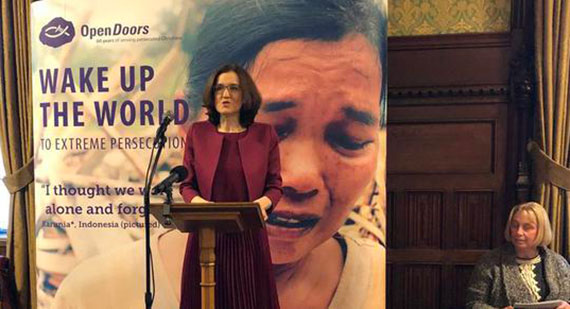
Two recent cases have vindicated church leaders’ belief that Christians are being targeted falsely in “kidnapping for conver-sion” cases to tarnish their image and handicap their work, lawyers say. A state court in Indore, Madhya Pradesh, on Oct. 30 released seven children taken to a shelter a week earlier. Two women traveling with them, Anita Joseph and Amrit Kumar, were arrested and accused of kidnapping them.

Police said the women were arrested after a group called Dharma Jagran Manch (Vigilant Group for Hindu Religion) complained that the children, all aged under 14, were being taken to Mumbai by train for conversion to Christianity.

The two women are still in jail as their bail application was not heard by the court.

Six other Christians from Simdega in eastern Jharkhand state arrested on charges of religious conversion were granted bail October 27. They were detained a month earlier and accused of distributing money for the purpose of converting villagers.

Parents of the seven children released from the shelter said at a October 30 press conference, that all the youngsters were baptized Christians and the women were taking them to Mumbai with their permission.

The group of some 200 Hindu hardliners who went to the rail station had also attacked some of the parents who had come to see off their children. Police who detained the children and two women, sent the youngsters to a shelter without allowing their parents to go with them.

The pro-Hindu Bharatiya Janata Party (BJP) has governed Madhya Pradesh state for the past 14 years.

“This is becoming a politically motivated pattern to harass Christians,” said A.C. Michael, an official of the Alliance Defending Freedom (ADF), a forum of volunteer lawyers providing legal advice to Christians.

Michael said the false accusation is “deliberately done knowing very well that such accusations will not stand up in a court of law.”

After 50 years, bell rings at Kashmir’s 120-year-old church

For the first time in five decades, a church bell rang on Sunday at the largest Catholic church in the main city of India’s portion of Muslim-majority Kashmir.

Members of Srinagar’s tiny Christian community assembled at the 120-year-old Holy Family Catholic Church and celebrated the installation of the new bell, weighing 105 kilograms.

The church lost its original bell 50 years ago in an arson attack.

According to church officials, the church and its belfry were damaged in the attack by protesters demonstrating against the 1967 Mideast war.

The bell was badly damaged and rendered useless in the incident, said Sydney Rath, a local Christian member of the church. He said the bell was not installed all these years because “the community didn’t have enough resources to order a new bell after its damage.” He said one of the roughly 30 Christian families living in Srinagar donated the bell.

People from other faiths, including Muslims and Hindus, also participated in the event on Sunday.

Rani Maria beatification to inspire persecuted Christians

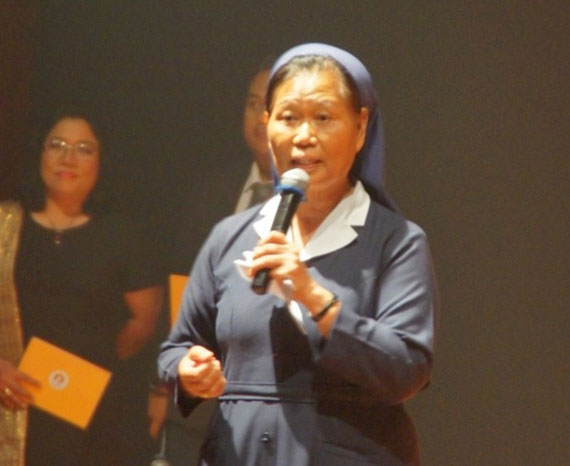
The upcoming beatification of an Indian nun murdered over 20 years ago, will be an inspi-ration for India’s persecuted Christians, say local church leaders. Indian Catholics are preparing for the Nov. 4 beati-fication ceremony of Sister Rani Maria Vattalil who was killed in a knife attack on Feb. 25, 1995 as she travelled on a bus near the city of Indore on her way to her home state Kerala for a vacation.

Sister Rani Maria was a member of the indigenous Franciscan Clarist Congregation in Indore Diocese situated in the central Indian state of Madhya Pradesh. She was 41 years of age when she was murdered.

Her “beatification, obvious-ly, is going to be a great source of inspiration for the Church in India that faces persecution,” said Paul Abraham, a Catholic writer based in Madhya Pradesh where attacks on Christians are frequently reported.

Abraham, a former journalist who closely followed the cause of the heroic nun, said her life and death will become a focus for local Christian communities.

Despite hate-mongering, church ‘must stay out of politics’

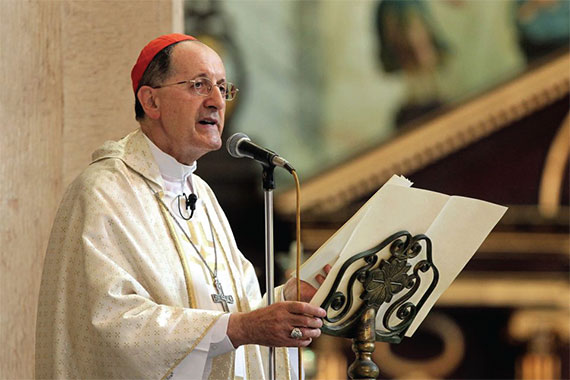
The Catholic Church in India cannot become directly involved in politics, but it can help guide its members to make politically mature judgments, says Cardinal Baselios Cleemis, president of the country’s Catholic bishops’ conference.

He said hate-mongering political ideologies and crimes that target Christians in India are best countered when Christians live out their faith heroically. The cardinal, 58, said a minority of Hindus are aggressively opposed to other religious communities. “They take aggressive steps to curtail the freedom of other religions. That is something very, very alarming,” said Cardinal Cleemis of the eastern rite Syro-Malankara Church.

Christian leaders have accused hardline Hindu groups of targeting Christians after the pro-Hindu Bharatiya Janata Party (BJP) came to power in 2014 in a landslide victory. These groups, who consider BJP their political wing, took the electoral victory as a mandate to accelerate turning India, which under the constitution is secular, into a Hindu nation. Christians, who make up only 2.3 percent of India’s 1.2 billion population, cannot change the development, the cardinal said.

Priest criticizes Vatican over Indonesian bishop case

A British-born priest who has served in Indonesia for more than 40 years has called on the Vatican to end its tradition of keeping disciplinary cases involving the clergy confidential and demanded changes to the way bishops are appointed.

In an opinion piece published in Hidup, a weekly magazine published by the Jakarta Archdiocese, Divine Word Father John Mansford Prior, a missiology lecturer at the Catholic School of Philosophy in Maumere on the Catholic majority island of Flores said the handling of moral cases involving clergy must be “completely transparent, just like in the state system.”

“If the Holy See compels a bishop to withdraw, the results of the trial [of a bishop] must be officially announced,” he argued.

Father Prior, who also works at the Candraditya Centre for the Study of Religion and Culture in Maumere is a former consultor of the Pontifical Council for Culture and the Federation of Asian Bishops’ Conference (FABC). His article, published in the Oct. 29 edition of Hidup, specifically addressed the resignation of Bishop Hubertus Leteng of Ruteng.

Pope Francis approved Bishop Leteng’s resignation on Oct. 11 after an investigation into allegations of misappropriating more than US$100,000 of church funds and an illicit relationship with a woman. In its official announcement, the Vatican did not give a reason for Bishop Leteng’s resignation.

Father Prior told ucanews.com on Nov. 1, that in addition of transparency, the church should also encourage due process.

“If there were credible accusations, the clergy, whether it’s a priest or bishop being accused, should be immediately discharged, certainly with innocent prejudice,” he said.

The church is not credible in handling such cases, he argued because “priest investigates priest, bishop investigates bishop and it is done in private.” “Who can really believe in the results of such a process?”

Filipinos back bishops’ call for national healing amid drug war

Thousands of Filipino Catholics are expected to join a religious procession to call for “national healing” that will be held in a major thoroughfare in Manila on Nov. 5. A statement from the Bishops Conference of the Philippines said the event will be a “prayerful gathering for the healing of the nation.”

The country’s bishops declared Nov. 5 as “Lord Heal Our Land Sunday” that is highlighted by the procession on Epifanio delos Santos Avenue, site of the 1986 “people power” revolution. An image of the Our Lady of Fatima, which was brought by devotees during the revolt that toppled the 20-year rule of Ferdinand Marcos, will be carried in next week’s procession.

Abp Socrates Villegas, president of the bishops’ conference, said the activity is not meant to encourage attempts to destabilize the government.

“We ask the Lord for healing of our land, healing of our people so we can move forward in peace, in prosperity, for all,” said the Archbishop of Lingayen-Dagupan. “Healing does not mean turning a blind eye but being conscious to what is happening in our societies and owning to our mistakes,” added the prelate. He said the “signs of the times” is calling Filipinos back to God’s fold because “we turned our back to God.”

Indonesian Protestants embrace papal teaching document

Indonesian Protestants celebrating the start of the Reformation 500 years ago have embraced Pope Francis’ Apostolic Exhortation on the Proclamation of the Gospel in Today’s World, calling it a document that can significantly help mend ties among Christians in a country blighted by growing religious intolerance.

The Protestant Reformation began on Oct. 31, 1517, when Martin Luther, a German pastor sent his Ninety-Five Theses on the power and Efficacy of Indulgences to the Archbishop of Mainz in which he criticized the Catholic Church and the papacy.

During celebrations in Jakarta on Oct. 31 to mark the event Indonesian Protestant leaders said the pope’s message in his 2013 Apostolic Exhortation Evangelii Gaudium or The Joy of the Gospel, in which he a called for churches to avoid blaming each other, held special meaning in Indonesia as fears grow over rising intolerance in the country.

“The invitation by Pope Francis in the document is very relevant, asking churches to distant ourselves from blaming and slandering attitudes,” Rev. Herniette T. Lebang, chairwo-man of Communion of Churches in Indonesia, said at the Oct. 31 gathering.

Christian prisoners denied visits from chaplain

In Pakistan, Christian prisoners are denied the consolation of faith offered by chaplains denounces The World Watch Monitor, granted permission to visit detainees in prisons across the country. The Rev. Maurice Shahbaz, director of the Prison Mission Society of Pakistan, says he has been trying to get consent for visits to prisoners by missionaries, evangelicals, and pastors for more than a year. This would allow Christians, already discriminated against by cell companions because of their faith, to have at least the consolation of faith.

Tariq Mehmood Khan Babar, deputy general inspector, says the ban on imam visits to detainees dates back to early 2015, in conjunction with the approval of the National Action Plan. This is the terrorism prevention plan launched by Islamabad following the Taliban massacre at the Peshawar military school in December 2014, which resulted in the deaths of 132 children.

After Marawi, terrorists remain threat in Philippines, officials say

The threat of violent extremism remains in the predominantly Catholic Philippines even after the end of a five-month siege by terrorists in a southern city, said Catholic and Muslim officials.

Fr. Jerome Secillano, executive secretary of the Philippines bishops’ Public Affairs Committee, told Catholic News Service that, according to some analysts and the president, “terrorist cells are already everywhere. It’s not only concentrated in Marawi, but there is a presence also in other parts of Mindanao.”

The historically peaceful Marawi on Mindanao Island in the South was the site of a sustained siege by Islamic State loyalists, who wanted to claim it as an IS caliphate. More than 1,100 people — mostly IS fighters — died in the battle where the fighters, fortified with munitions and provisions, withstood a military offensive backed by intelligence and special training from the United States, Australia and other countries.

The military killed two local leaders who headed the fight, prompting the president to declare the siege over.

Days later, Mindanao’s Cardinal Orlando Quevedo of Cotabato told reporters “the threat of terrorism is still there” and that extremist ideology and plans for a caliphate continue.

Manila-based terrorism analyst Rommel Banlaoi told CNS the fall of the IS-held capital of Raqqa, Syria, Oct. 17 meant the terror group would end moves to set up a worldwide caliphate in Iraq and Syria and decentralize. We value your input. Please help us improve NCRonline.org by taking this quick survey.

Banlaoi, executive director of the Philippine Institute for Peace Violence and Terrorism Research, said the caliphate would instead be in the “hearts and minds” of its fighters. He predicted IS would become more of a “franchise operation,” using the internet to urge followers to carry out terrorism acts against “the infidels and crusaders” in their home countries.

“ISIS is planning to set up a strong foothold in Asia,” he said. “And in Asia, the epicenter of their plan is the southern Philippines.”

Pope: ‘The Mass is not a show,’ put away the phones!

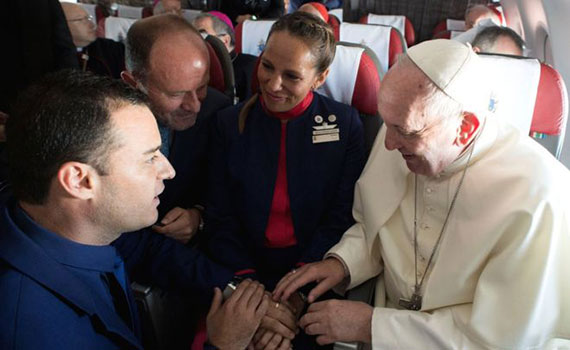
On November 8th 2017, on Wednesday a fiery Pope Francis chastised those who spend Mass talking to others, looking at their phone or even taking pictures during papal liturgies, saying these are distractions that take focus away from the “heart of the Church,” which is the Eucharist.

“The Mass is not a show: it is to go to meet the passion and resurrection of the Lord,” the Pope said. “The Lord is here with us, present. Many times we go there, we look at things and chat among ourselves while the priest celebrates the Eucharist… But it is the Lord!”

In particular, Francis condemned the use of cell phones to take photos at papal Masses. At one point during the Mass the priest says, “we lift up our hearts,” he said. “He does not say, ‘We lift up our phones to take photographs!’”

“It’s a bad thing! And I tell you that it gives me so much sadness when I celebrate here in the Piazza or Basilica and I see so many raised cellphones, not just of the faithful, even of some priests and even bishops.” “But think: when you go to Mass, the Lord is there! And you’re distracted. But it is the Lord!”

Official Website

Exit mobile version