CHINESE BISHOP CONFIRMS VATICAN SACKED HIM IN BEIJING

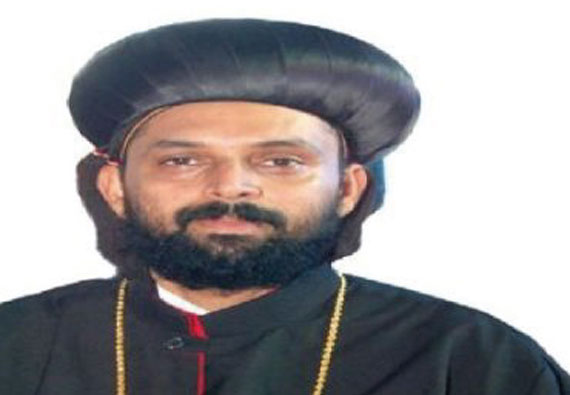
Sacked Chinese Bishop Peter Zhuang Jianjian, who is at the centre of the latest storm around the Holy See’s controversial talks with China’s communist government, has broken his silence on being called in to Beijing by Vatican diplomats.

The confirmation of the Vatican’s role in replacing two bishops originally appointed Rome, with two bishops who were appointed by the Communist Party controlled Catholic Patriotic Association including one who has been excommunicated by Rome has continued to rock China’s so-called under-ground Catholic Church.

“But these acts, in fact, are scarifying the underground community for the benefit of half the China Church, which is the open community, not the whole,” said a researcher who does not want to offend the Vatican.

GermanTrappists who went Old Rite close monastery for lack of novices

Germany’s only Trappist monastery — which attempted to revert to the gruelling, pre-Vatican II monastic schedule and worshipped exclusively in the Tridentine Rite — is to be closed by the end of the year.

The Vatican congregation that deals with religious orders said Mariawald Abbey, located in Westphalia near the today’s border with Belgium, had dwindled to just ten monks. With an average age of 84, the congregation said the monks could no longer look after themselves.

Mariawald was founded in the 15th century and, like other Benedictine orders of strict observance, had adapted to the monastic reforms implemented in the wake of the Second Vatican Council (1962-65).

WHY ARE YOUNG NIGERIANS ABANDONING THE CHURCH FOR PENTECOSTALISM?

Susan Onyedika was born 22 years ago into a Catholic family in Lagos, Nigeria’s bustling commercial city. When she was a child, she took part in the Block Rosary Crusade (where an image of the Virgin Mary visits family homes), as well as catechism classes in her parish. But as she matured into a teenager she started having doubts about the faith she had practised from childhood. In her secondary school, she met Pentecostal Christians and began to compare their beliefs with those of Catholics.

“I needed more spiritually,” she tells me. “I needed to understand the Scriptures. They [the Catholic Church] don’t break down the Bible for you. They don’t pray the way most Pentecostals pray.

“I also had issues with praying through Mary because I feel that you can reach God directly, you can talk to him directly. You don’t have to go through someone to intercede for you.”

Susan joined her secondary school fellowship without telling her parents or siblings. “They didn’t know I joined the Pentecostals,” she remembers. “They were not aware. Just my close friends were.”

With 186 million people, Nigeria is Africa’s most populous country. The population is evenly distributed between Christians in the south and Muslims in the north. Of the roughly 80 million Christians, around 20 million are nominally Catholic. But many of the baptised are leaving the Church in their teens and twenties for Pentecostal denominations.

Throughout the 20th century, the Catholic, Anglican and Methodist churches were dominant. But as the century came to an end, there was an explosion of Pentecostal and Evangelical churches, such as the Redeemed Christian Church of God, Living Faith Church Worldwide, Deeper Christian Life Ministry and Christ Embassy.

China-Vatican deal shocks Chinese Catholics

Chinese Catholics have reacted with shock to the news that the Vatican and China’s communist government intend to sign an agreement soon over the appointment of bishops.

Under the agreement, the Vatican would be given a say in the appointment of bishops in China, while an agreement could allow Chinese authorities more control over the country’s underground churches.

Catholics are particularly concerned that seven illicit Chinese bishops, who are backed by the government and unrecognized and excommunicated by the Holy See, would be recognized by the Holy See.

They were angered recently when two recognized bishops in Shantou and Mindong dioceses were asked to make way for illicit ones.

“We know that China and Vatican have been actively engaged in a dialogue, but we never expected that legitimate bishops would be asked to step down,” a Chinese Catholic who requested anonymity told uncanews.com.

She said that in exchange for the agreement signed by the Holy See with the government, “the underground community needs to be sanctified.”

She added: “Our faith tells us that God so loved the world that everything was best arranged by Him and He can bring good from evil, but now what is our future? Where is the church? And who is the shepherd? It is a burden for Catholics to have the game of politics imposed on them.”

The woman thinks the Holy See’s decision will make many Catholics leave the church. “We have no choice but to obey,” she said.

“Both want to extinguish our underground community,” he said, adding that “bishops who join the association are forced by the Holy See.”

Chinese in Manila can eat meat on first Friday of Lent

Chinese Catholics in Manila Archdiocese will be allowed to eat meat on the first Friday of Lent on Feb. 16 as it coincides with Chinese New Year.

Cardinal Luis Antonio Tagle of Manila has issued a circular granting dispensation from the Lenten discipline of abstinence to Chinese Catholics in his jurisdiction.

“In view of the celebration of Chinese New Year, its cultural and spiritual importance, and the traditional practices associated with it, we therefore grant dispensation from the Lenten discipline of abstinence to our Chinese-Filipino and Chinese Catholics in the Archdiocese of Manila and their guests,” read the prelate’s circular.

This year’s observance of the Spring Festival or Chinese New Year falls on a Friday two days after Ash Wednesday on Feb. 14, the start of the Lenten season.

Cardinal Tagle, however, reminded those who will avail of the dispensation to “engage in some other forms of penance, acts of mercy and charity, especially to the poor and those who suffer in keeping with the penitential spirit of Lent.”

Catholic activists get harsh sentences in Vietnam

Two Catholic environmental activists have been jailed in Vietnam after helping hundreds of fishermen to sue a Taiwanese steel plant for polluting coastal waters.

Hoang Duc Binh, 35, was sentenced to 14 years in prison for “resisting officials on duty” and “abusing democratic freedoms to infringe the interests of the state, the legitimate interest and
rights of organizations and citizens.”

Fellow activist Nguyen Nam Phong, 38, was also charged with opposing officials on duty and was sentenced to two years in jail.

Both defendants were tried on Feb. 6 by the People’s Court in Dien Chau district of Nghe An province.

Binh’s 10 relatives were detained and allegedly beaten by police in plain clothes when they asked to attend the trial. Only Binh’s mother and Phong’s wife were allowed to enter the court.

“The court violated basic regulations and showed no evidence linking the defendants to the crimes. The court sentenced them based on accusations made by the procuracy,” said Ha Huy Son, one of three lawyers supporting the defendants.

Son, one of a few lawyers who dare to defend rights activists in Vietnam, said the defendants asked the judge to provide videos and proof but their request was denied. The judge used police as witnesses at the trial, he added.

Cardinal says Rohingya need international help, because Myanmar doesn’t want them

Cardinal Charles Bo predicts that the roughly 600,000 members of Myanmar’s Rohingya Muslim minority probably will never return to the country, in part because a Buddhist majority inflamed by “propaganda and hate speech” won’t accept them, and says it’s urgent for the international community to find a solution for this “stateless” people that “the world doesn’t want.”

“It has to be the work of the international community, and not just left to Bangladesh or Myanmar,” Bo, the cardinal of Myanmar’s national capital Yangon, said on February 9.

“In Myanmar, the Buddhist majority, because of the propaganda against them, because of the hate speech and all of that, they wouldn’t accept people coming back from Rohingya,” he said. “In addition, many of these people don’t wish to come back because of trauma and they don’t feel safe to return.”

Illustrating the anti-Rohingya climate in Myanmar, Bo referred to a recent comment by a member of the country’s parliament.

“Just two days ago, a member of parliament of Myanmar made a statement that among the 135 ethnic groups in the country, the existence of the Rohingya was never part of that
history,” he said.

“Because of the oppression of the past, many of them tried to run away to Bangladesh, Indonesia and Malaysia [and became trafficking victims],” he said.

“There have been people who’ve tried to traffic them, to get them out of Myanmar, and many have died in smuggling boats that capsized,” Bo said.

Churches in Pakistan province to get weapon licenses

A provincial government in southwest Pakistan plans to issue churches in the region with weapon licenses and has donated millions of rupees to a Methodist church to support victims and families of a suicide bombing that killed nine worshippers in December.

The Balochistan government notified all 41 churches in the provincial capital of Quetta on Jan. 24 to nominate security volunteers for special training under the Civil Defence Directorate.

The notices were issued following a meeting between the Implementation Minority Rights Forum (IMRF) and officials and police in Quetta last week.

“The Balochistan Home Department will issue weapon licenses in the name of the churches,” IMRF Chairman Samuel Pyara told ucanews.com.

“This will further enable a special force of volunteers to assist local police when services are held. We will form a committee to monitor these developments and settle the problems of those affected,” he said.

The Home and Tribal Affairs Department of the provincial government also granted 26.4 million rupees (US$239,000) to the Bethel Memorial Methodist Church of Quetta to compensate victims of the Dec. 17 bombing of the church.

The Federal Ministry for Religious Affairs and Interfaith Harmony announced earlier it would allocate 5 million rupees to assist with the repairs after a government delegation visited the building at the end of last year.

100 Christians sent to ‘re-education’ camps in China

More than 100 Christians have been sent to “re-education” camps in China’s north-western Xinjiang Uyghur Autonomous Region in the past few months, World Watch Monitor has learned.

In these camps, also known as “study centres” or “mind-transformation centres”, they are taught how to be loyal to the communist ideology.

Most of those detained are from the Uyghur ethnic minority group and have a Muslim background. In recent years the Uyghurs they have been the prime targets of the government’s “anti-terror” campaign, aimed at cracking down on both separatist groups and militant Islamists. But those who have converted to Christianity have also been caught up in the crackdown.

A source told World Watch Monitor that members of his church were sent to such a camp without knowing when they would come back. Some stayed there for a month, others for half a year or even longer, the source said. Christian families were torn apart as one or both parents were taken for “re-education”.

One woman, married to a leader of a community with many Christians from a Muslim background, told World Watch Monitor: “I don’t know where my husband is right now, but I believe that God still uses him in prisons or camps. Sometimes I am worried that he doesn’t have enough clothes to keep warm in the prison.”

“I am afraid it will affect my children too,” said another woman whose husband has been taken for re-education and who now supports other women in her situation. “The teacher in the school is paying special attention to my children after the authorities told the school about my husband,” she added.

POLICE SHOOT MAN DURING SWORD ATTACK ON INDONESIAN CHURCH

Sleman: Police in Indonesia have shot a sword-wielding man who attacked a church congregation during Mass, injuring four people.

The reason for the attack Sunday morning in Sleman district in Yogyakarta province is not immediately clear.

Churches are a common target for Islamic militants in Indonesia, the world’s most populous Muslim nation. Video shows people in the church throwing books at the man as he lunges towards them with his sword.

Witnesses say the injured include a police officer who tried to subdue the attacker and a priest. The suspect has been hospitalized.

Official Website

Exit mobile version