WHY CHRISTIAN FOOT-WASHING RITUAL IN INDIA IS A BIG DEAL


A husband washes his wife’s feet as part of a special ritual organised by the Kerala State unit of the Indian Christian Women’s Movement (ICWM) on March 28, 2018, one day before Maundy Thursday. The ICWM works to promote the equality of both genders and all castes, among other agendas.

Amid fears of possible adverse consequences, the Kerala State unit of the Indian Christian Women’s Movement (ICWM) organized foot-washing rituals on March 28, 2018, the day before Maundy Thursday. The idea was to promote the equality of both genders and all castes.

FOR PROTESTANT LEADER, THE GOVERNMENT THREATENS POOR AND MINORITIES

India’s central government is a threat to the poor and minorities, this according to Mgr Thomas K. Oommen, moderator of the (Protestant) Church of South India.

Msgr Thomas K. Oommen is the moderator of the Church of South India. With 4.5 million members, it is the second largest Christian denomination in the country. For him, “the current government [. . .] follows the Hindutva supremacist ideology,” and the federal administration is “pro-corporate and unkind to the poor.”

The Anglican bishop wrote an open letter addressed to all citizens dated 6 April, anniversary of the Salt March, the non-violent demonstration led by Mahatma Gandhi in 1930 against the British colonial government.

According to Msgr Oommen, living in India in the last four years, since the Hindu nationalist government of the Bharatiya Janata Party led by premier Narendra Modi took office, “has become a nightmare to the poor and the minorities in India.”

He wants to share his fears “As an Indian Citizen and the head of the second largest Church in India, with more than 4.5 million members, most of them being Dalits, Adivasis, poor farmers and fisherfolks.”

“It is true and sad fact that the current government that follows the Hindutva supremacist ideology seems to have consciously discounted what is stated in the Preamble of our Indian Constitution that declares liberty, equality, and fraternity as its ideals and assures social, economic and political justice to the citizens of India.” Hindutva promoters want to turn India into a Hindu state.

According to the bishop, the government has proven “to be pro-corporate and unkind to the poor by waiving [. . .] loans of rich people and corporate [interests] while not waiving [. . .] the loans of the poor farmers, not giving Minimum Support Price (MSP) to them, not addressing the issues of economic distress, joblessness, price rise by forcefully implementing policies like ’demonetisation’ and GST,” the Goods and Service Tax. “In fact, corruption and scams/scandals have become a hallmark of this government.”

HINDU PRAYERS REVERBERATE IN GOA CATHEDRAL ON GOOD FRIDAY

Nine Hindus converged on the 17th century Se Cathedral in Old Goa and recited prayers from ancient Hindu scriptures to pay their respects to Jesus Christ on Good Friday, when Catholics commemorate his death on the cross.

The five women and four men sang verses from an ancient Narayana Upanishad text of Hindu scriptures acknowledging the superiority of God. The text stresses the unity of all gods and teachings as a way of attaining salvation.

The nine are members of the Swadhyay Parivar (self- study family) group that was founded in 1954 by Pandurang Sashtri Athavale (1920–2003), a social revolutionary and philosopher. The group has been associated with peace movements. Inside the cathedral, they quietly paid obeisance to the suffering Christ, away from the attention of the Catholic faithful sitting in the pews.

Following the five-minute recital at the rear of the cathedral, a group member read out a brief message from the pulpit through the sound system a few minutes before the start of the pious ritual.

DON’T EXPLOIT RELIGION, SAY FAITH LEADERS

Leaders of six major reli- gions in India have made a joint call to end branding people as patriotic or unpatriotic based on religion amid increasing attempts to exploit religious sentiments for political purposes ahead of a crucial election.

Leaders of Buddhist, Christian, Hindu, Jain, Muslim and Sikh communities gathered on April 5 in the western state of Goa to express their distress at communal tension in several areas of the country.

“We strongly object to anyone taking control of individual decisions. No one is to be categorized as anti- national or non-patriotic based on his religion, region or community,” said a statement issued at the end of a meeting initiated by Catholic priests in collaboration with the Indian bishops’ conference.

Every Indian has dignity, respect and the right to decide what to eat, who to marry and their faith, the statement said, alluding to pro-Hindu groups imposing restrictions on Christians, Muslims and socially poor Dalit groups.

India is preparing for a national election next year as reports emerge of religion- based tensions in the major states of West Bengal, Bihar and Rajasthan.

SYRO-MALANKARA CHURCH ELECTS TWO COADJUTOR BISHOPS

The Synod of Bishops of the eastern- rite Syro-Malankara Catholic Church, headquartered in Kerala, has elected coadjutor bishops to the dioceses of Pathanamthitta and Muvattupuzha Auxiliary Bishop Samuel Mar Irenios (Kattukallil) of Trivandrum has been elected Coadjutor Bishop of Pathanamthitta, while Bishop Yoohanon Mar Theodosius (Kochuthundil), the Curial Bishop of the Major Archdiocese of Trivandrum has been elected the Co- adjutor of the Diocese of Muvattupuzha.

NEW FILM TELLS STORY OF IRISH NUN TEACHING IN INDIA FOR 70 YEARS

Sister India, a documentary produced by Irish film-maker Myles O’Reilly and currently being screened at a number of film festivals in Ireland and India, is the story of an Irish Presentation nun who has spent 70 years teaching in India.

Sr Loreto Houlihan, born Peg Houlihan in Ireland’s Co Tipperary in 1927, reached India in 1944. Recently she celebrated her 91st birthday at St Joseph’s Anglo-Indian School in Perambur in north Chennai where she has spent most of her life as a primary school teacher.

O’Reilly said that he is not very religious but was invited to follow Sr Loreto Houlihan, and found her deep love of India and its people absolutely heart- warming and deeply resonant. “I learned from her that India and its culture retains more of the life she left 70 years ago in Ireland than the country of her birth today, and so she chooses to live the rest of her days in India for that natural famili- arity,” he said.

The idea for the film was sparked by another Irish woman, Áine Edwards, who has been living in India since 2003 where she runs a business consultancy service. “The adults I meet nowadays who attended schools, where Irish brothers and sisters were teachers, talk fondly of them and their education. The late chief minister of Tamil, Nadu Jayalalitha, has spoken of her school days at Church Park as being the happiest of her life,” she added.

SAY NO TO DIVISIVE FORCES: BISHOPS

The Catholic Bishops’ Conference of India (CBCI) and Odisha Bishops have urged people of Sundargarh district not to give in to divisive forces.

On 1, April 2018, in the late night of Easter Sunday, some miscreants vandalized a grotto outside the compound of St. Thomas Church, Salangabahal in Raurkela diocese, Odisha, mutilated the statue of Our Lady, and broke the head of the statue of Child Jesus in the grotto. They smashed a statue of Our Lady in another Grotto in Gyanpali village and attempted to burn the Church of the Victory of the Cross in Bihabandh.

The antisocial elements had also chopped off the head of a statue of a bull at the Shiva Temple in the vicinity.

On April 7, a delegation of Bishops which comprised of Bishop Theodore Mascarenhas SFX, the Secretary-General of the CBCI, Archbishop John Barwa SVD, Regional Chairman of the Odisha Catholic Bishops’ Council, Bishop Kishor Kumar Kujur of Rourkela, Bishop Telesphore Bilung SVD of the Archdiocese of Ranchi, Bishop Emeritus Alphonse Bilung of Rourkela, visited the affected areas.

PONTIFICAL COMMISSION FOR LATIN AMERICA PROPOSES SYNOD ON WOMEN

The Catholic Church in Latin America must recognize and appreciate the role of women and end the practice of using them solely as submissive labourers in the parish, said members of a pontifical commission.

In addition, at the end of their plenary meeting March 6-9 at the Vatican, members of the Pontifical Commission for Latin America proposed that the church hold a Synod of Bishops “on the theme of the woman in the life and mission of the church.”

“There still exist ‘macho,’ bossy clerics who try to use women as servants within their parish, almost like submissive clients of worship and manual labour for what is needed. All of this has to end,” said the final document from the meeting.

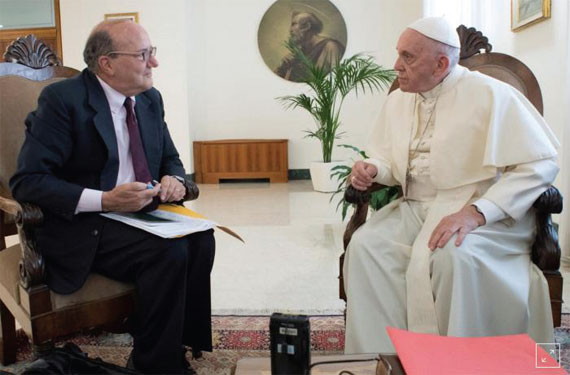
L’Osservatore Romano, the Vatican newspaper, reported April 11 that the theme of the four-day meeting, “The woman: pillar in building the church and society in Latin America,” was chosen by Pope Francis.

In addition to 17 cardinals and seven bishops who are members of the commission, the Pope asked that some leading Latin American women also be invited; eight laywomen and six women religious participated in the four- day meeting and in drafting its pastoral recommendations, the newspaper said.

OVER 80 PERCENTAGE OF CHRISTIANS HAVE DISAPPEARED FROM IRAQ

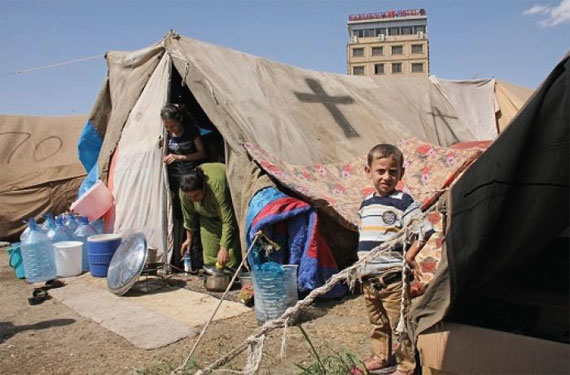
St Matthew Monastery, a Syriac Orthodox monastery overlooking the Nineveh Plains towns of Bashiqa and Bartella, in between the Kurdistan Region and Iraq. Christians in Iraq and other parts of the Middle East are being wiped out on an unprecedented scale due to ethnic cleansing campaigns by the likes of the so-called Islamic State (IS), the Gatestone Institute reports on its website.

It said the IS has killed over 1,130 Christians and destroyed 125 of their churches in recent times, with many of the murders apparently going unreported in Western mainstream media.

Eighty-one percentage of Iraq’s Christians have now disappeared from the war-torn country, according to a new report from the Iraqi Human Rights Society.

The society described the status quo as a “slow genocide” with minorities including Christians, Yazidis and Shabaks facing alarming levels of religious and ethnic persecution.

The Gatestone Institute quoted French Chief Rabbi Haim Korsia as likening the situation to the Holocaust as he appealed to Europe and other Western countries to defend non-Muslims in the region.

YOUNG ENGLISH ADULTS STILL VALUE CHURCH WEDDINGS, SURVEY SHOWS

Research conducted for the Church of England suggests that almost three quarters of unmarried adults under the age of 35 still dream of getting married. The figure is taken from a survey conducted by 9 Dot-Research for the C of E’s Life Events team. It would appear to contradict statistics for the actual number of weddings which show a continuing decline in both absolute numbers and in the rate: figures for opposite-sex marriage in 2015 show that there were 21.7 marriages per thousand unmarried men and 19.8 marriages per thousand unmarried women – the lowest rate on record.

The research company surveyed 1,085 unmarried people between the ages of 18 and 35 on 14th and 15th November 2017. Just 07% of this initial sample said that they “had no intention of ever being married.” They were excluded from the latter part of the survey on factors that would influence their wedding plans, giving a sample size of 1,012. Almost six in 10 (59%) said that they would like to marry at some point. Just over one in 10 (12%) said they were engaged and planning their upcoming nuptials. Significantly, the survey also suggests that millennials – a nickname given to people reaching young adulthood in the early 21st century – attach a special importance to church weddings, with more young people preferring to marry in a church or chapel (47%) than a register office or town hall (34%).

Those who would consider a church wedding were asked why it appealed to them from a list of options. Almost a third said that it felt like a “proper” wedding (31%). Marry- ing before God or receiving a blessing, was also in the top 10 (the seventh most chosen option). Millennials were also strongly drawn to “traditional / conventional” wedding venues (72%).

The research shows that for those considering marriage, almost one in six (17%) said that faith or religion had influenced their wedding ideas. The survey also shows that of those hoping to marry, just under half (43%) had thought about their wedding day by the time they reached 16. Women were more likely to have envisioned their wedding by that age (54%) than men (32%).

Official Website

Exit mobile version