INDIA’S TOP COURT PRESSURES BJP TO REIN IN MOB VIOLENCE

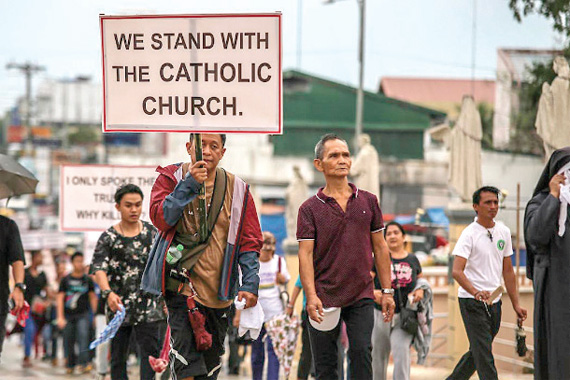
India’s Supreme Court has asked federal and state governments to comply with its two- month-old instructions to end mob violence and lynching, which activists say shows the government’s failure to check hard-line Hindu violence.

The country’s top court on Sept. 24 asked all state governments to file action reports on its July 17 directions for governments to check mob violence, especially those linked to acts by vigilante groups protecting cows, a revered animal in Hinduism.

“There is a collapse of governance and law and order. Since the government is not taking the court direction seriously, the court has to intervene,” said Father Denzil Fernandes, director of the Jesuit-run Indian Social Institute in New Delhi.

The court directions included using media to tell masses that the street violence and mob killings will attract legal action and punishment. In order to check violence, it also asked to appoint district level police officers to stop the spread of irresponsible messages and to punish police who derelict their duty.

POPE APPOINTS ADMINISTRATOR FOR JALANDHAR DIOCESE

Pope Francis on September 20 appointed Retired Auxiliary Bishop Agnelo Rufino Gracias of Bombay as the temporary administrator of Jalandhar diocese in the absence of Bishop Franco Mulakkal, who is now in Kerala facing a sexual abuse case.

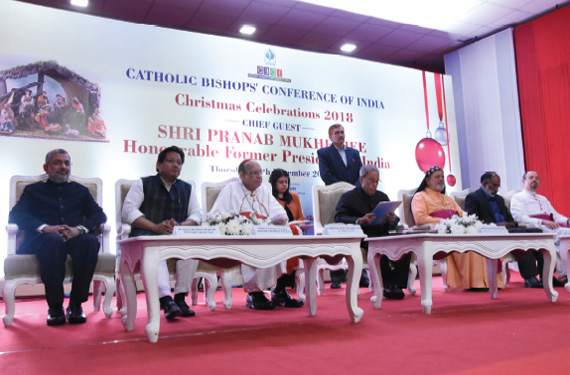
“Our prayers accompany Bishop Gracias as he takes on this responsibility,” says a press release from Cardinal Oswald Gracias, president of the Catholic Bishops’ Conference of India announcing the appointment.

The Vatican acted on Bishop Mulakkal’s on September 16 request to the Pope for temporary relief from his episcopal ministry.

The appointment was announced as Bishop Mulakkal, 54, was undergoing the second day of questioning by police at a high tech police station in Thripunithura, some 10 km east of Kochi, Kerala’s commercial capital.

He was accused by a member of the Missionaries Charity, a diocesan congregation under the diocese of Jalandhar, of subjecting her to rape and unnatural sex for 13 times during 2014-2016. The nun filed the case on June 28 in Vaikom, a town in the Kottayam district of Kerala.

The bishop has denied the charges, calling them “concocted” and said the nun holds a vendetta against him after he had initiated disciplinary action against her.

Bishop Gracias, 79, thus becomes the apostolic administrator of the diocese of Jalandhar “sede plena et ad nutum Sanctae Sedis.” The Latin term which refers to any circumstance involving a conflict of ecclesiastical jurisdiction, where Rome decides to take the matter under its jurisdiction and reserves to itself the right to make a final judgment on the matter.

POPE FRANCIS IN LATVIA: DON’T LET CHRISTIANITY BECOME AN ARTIFACT

During an ecumenical prayer service in Latvia on Sept 24, Pope Francis warned Christians to not let the faith turn into another piece of history, but to keep it an active part of their lives and communities.

“This is a recurring danger for all of us,” the Pope said on Sept. 24. “We can take what gives us our very identity and turn it into a curio from the past, a tourist attraction, a museum piece that recalls the achievements of earlier ages. … The same thing can happen with faith.”

“We can stop feeling like ‘resident’ Christians and become tourists,” he continued. “We could even say that our whole Christian tradition can run the same risk: the risk of ending up as a museum piece, enclosed within the walls of our churches, and no longer giving out a tune capable of moving the hearts and inspiring the lives of those who hear it.”
Pope Francis spoke during an ecumenical

prayer meeting in the evangelical Lutheran cathedral in Riga, Latvia. The cathedral is one of the country’s most recognizable landmarks and houses a pipe organ considered among the best in the world.

Though the organ has been renovated and rebuilt several times over the years, it is also considered one of the oldest in Europe and was at one time the largest in the world.

During the prayer service, Francis referenced the organ, pointing out how it must have “accompanied the life, the creativity, the imagination and the devotion of all those who were moved by its sound.”

“It has been the instrument of God and of men, for lifting of eyes and hearts to heaven. Today it is a symbol of this city and its cathedral,” he said. “For those who live here, it is more than a monumental organ; it is part of the life, traditions and identity of this place.”

He said the organ can be a symbol of the Christian faith, which, as St Luke says, “is not to be hidden away, but to be made known and to resound in the various sectors of society.”

IN PAKISTAN, A MUSLIM CONVERT CONFRONTS GREAT RISKS IN BECOMING A CHRISTIAN

This is the story of Kainut, a brave 20- year-old girl who grew up a Muslim, with a Christian mother and a Muslim father, but she chose to become a Catholic. As a result, she and her family are suffering harassment, discrimination and worse. According to Islamic law, if someone leaves Islam, that person can be killed with impunity. Kainut, who is studying medicine, speaks about her life and the momentous choice she made:

“This is what happened to my mother: as a student, she was kidnapped by Muslims who forced her to accept Islam and compelled her marry my father. It is a very common practice in my province to forcefully convert Hindu and Christian girls to Islam. My mother admitted my father as her husband and started living a normal life with him. They had four children—there are two younger brothers and a sister. I am the eldest. Kainat (far right) with fellow students at university.

“However, my mother secretly went to church and I often went with her. She read the Bible in the home; it was clear that she didn’t embrace Islam; in her heart she was still a Christian. I also started reading the Bible and going to church regularly with my mother. Once I was in church and people were standing in line for taking Holy Communion; I joined the line, but someone told me I was not allowed to take Communion because I was not a Christian. That incident made me cry….

“Still, I went to church with my mother and asked a priest to baptize me; but he was not sure: ‘this is very risky; sorry, I am not in a position to baptize you.,’ he said; the priest was afraid that my relatives and other Muslim fanatics would kill us if they found out he baptized me; and he did not want to create a problem for his parishioners either. I told him: ‘Father, I am ready to die for Christ …

“Then came a summer vacation and we went to another province to visit my aunt, my mother’s sister; we went to church with her and, again, I met with a priest and told him of my wish to embrace Christianity. He was very nice and gave me some books for study. We spent three months at my aunt’s house, going to church every day. And, one Sunday, after Mass, the priest asked me: ‘child, are you ready for baptism?’ I was very happy and said yes. Finally, in 2013, my two brothers, my sister and I all received the Sacrament of Baptism. It was easier in that church as we were far from home.

“Yet, our problems aren’t over yet. In October of 2017, my Muslim relatives shot one of my brothers; the bullet wounded his lungs and ribs and he is still in the hospital, struggling for life. My family is facing threats to our lives and I don’t know what is going to happen with us in future—but our hope is in our Lord Jesus Christ.

CATHOLICS IN PUNJAB DEMAND NATIVE BISHOP FOR JALANDHAR

Native Catholics of the northern Indian State of Punjab have demanded a Dalit as their next bishop. “We demand a spiritual, well educated, co- operative and energetic Dalit bishop installed in Jalandhar diocese,” Roshan Joseph, the spokesperson of the Catholics of Punjab, told Matters India on September 25.

The Jalandhar diocese covers Punjab and four districts of neighbouring Himachal Pradesh.

On September 24, several lay leaders met with the native priests to discuss the diocese’s future in the wake of a sexual abuse case against their bishop. They expressed distress after Bishop Franco Mulakkal, earlier in the day, was remanded to 14 days of police custody by a court in Kerala, southern India.

“The diocese has suffered too much insult because of the rape case in Kerala,” Joseph explained the reason for the meeting called by Punjabi priest Father Martin Sadiq. All Punjabi priests and lay leaders of the diocese attended the meeting at the Pastoral Council Centre in Jalandhar.

NUN SURVIVOR OF ANTI-CHRISTIAN VIOLENCE IN INDIA RISES FROM TRAUMA

Sr Meena Barwa, a child migrant and member of the Handmaids of Mary, was the victim of rape 10 years ago during anti-Christian violence in Kandhamal, a district in the India state of Odisha. Her court case is largely unresolved. At the recent conference on migrant workers in New Delhi, she told her story of being a young migrant and undergoing persecution to a crowd of some 160 attendees, who afterward fell into complete silence. Following is her address, which she consented to share with Global Sisters Report.

“I share my experience and pilgrimage with gratitude to God.

I recount my suffering and triumph for thousands of girls, women, dalits, tribals who suffer – maybe more than I do.

I am a victim of migration, as many of these people are…..

I was among those who suffered during the unprecedented attacks on Christians that lasted for months. More than 100 were killed while thousands abandoned their land and houses to protect their lives.

I was abused sexually, and paraded half-naked in the street by forces inimical to Christians. It was a miracle that I survived the ordeal. I escaped death and managed to file a First Information Report, the first step in filing a case with the police….

The first trial in the court traumatized me again. I could not sleep for days after that. I felt humiliated, offended, accused falsely, intimidated and tortured mentally. I developed an aversion for the court and its process. Despite such turmoil, I passed my three-year degree course. I stayed in a convent, where, except for the sisters, no one knew my identity.

I do think often about Kandhamal, where I had lived for two years, sharing life with the local people. For four days, starting on Aug. 23, 2008, I saw people, including little children and women, running away to the forest. I saw Christian houses in villages going up in flames.

All this did not put me down, but steeled my resolve to do something for people who suffered with me. Nothing much has been done for Kandhamal. I was nagged by thoughts: Who will speak for the Kandhamal people? Who will fight on their behalf for justice, which still eludes them even after 10 years?…

CARDINAL ZEN RUES ‘BETRAYAL’ OF CHINA’S UNDERGROUND CHURCH

Cardinal Joseph Zen Zekiun believes the provisional Vatican- China agreement on appointing bishops will allow the Chinese government to eliminate the underground church with the help of the Vatican. Quoting from a Hungarian theologian, the Hong Kong emeritus bishop said the agreement seems not to violate canon law on issues related to pontifical power but gives discretionary power to Beijing on bishop appointments. “This is an atheistic government which wants to suppress the church more than ever,” he told reporters invited to a meeting at Salesian House in Hong Kong on Sept. 26.

“The Chinese government will succeed in eliminating the underground church with the help of the Vatican. Now that it is strengthening its suppression of religions, how could you think this will lead to a good agreement? Just like St John the Baptist negotiated with King Harold, how could this be a good out- come? To say that the agreement is a good thing is very superficial.”

HOLY SEE, CHINA REACH ACCORD ON APPOINTMENT OF BISHOPS

The Vatican has signed an agreement with China, giving the Beijing government a role in the appointment of new bishops.

Although the terms of the accord were not made public, informed sources at the Vatican have confirmed that under the agreement, the Beijing government will name candidates for episcopal office, with the Pope allowed a choice from among the government’s nominees.

In announcing the agreement on September 22, the Vatican said that the agreement is “provisional” and “foresees the possibility of periodic reviews of its application.”

In a statement explaining the accord—recorded in English, in a departure from his usual pattern—the Vatican Secretary of State, Cardinal Pietro Parolin, stressed that “the objective of the Holy See is a pastoral one: the Holy See intends just to create the condition, or help to create the condition, of a greater freedom, autonomy, and organization” for the Catholic Church in China.

ABUSE SCANDALS DRIVING YOUNG PEOPLE AWAY FROM CHURCH : POPE FRANCIS

Pope Francis admitted that sex abuse scandals surrounding the Catholic Church have driven younger people away.

“We know – and you have told us – that many young people do not turn to us for anything because they don’t feel we have anything meaningful to say to them,” he told a group of Catholic, Lutheran and Orthodox young people in Estonia on September 25.

“They are upset by sexual and economic scandals that do not meet with clear condemnation, by our unpreparedness to really appreciate the lives and sensibilities of the young, and simply by the passive role we assign them.”

Surveys commissioned by the Vatican, of a bishops meeting to discuss how to better minister to young Catholics, have been filled with similar complaints.

Francis said that the church wanted to respond to the criticism in an honest and transparent way. “We ourselves need to be converted,” he said.
“We have to realise that in order to stand by your side
we need to change many
situations that, in the end,
put you off.” The Pope was
speaking during the fourth
and final day of his tour of
the Baltics. The public
admission coincided with a devastating new report into decades of sex abuse and cover- ups in Germany. The document, produced by the German bishops’ conference, found that around 3,677 people were abused by clergy between 1946 and 2014.

Over half of those abused were 13 or younger. Nearly a third were altar boys.

University researchers compiled the report and found evidence that some files on the abuse were destroyed, many cases were not brought to justice and some bishops were simply moved to other dioceses when complaints were made, without congre- gations being informed about the accusations. The sex abuse scandal began in Ireland in the 1990s but has returned to the headlines recently after a former Vatican ambassador accused the Pope of knowing about abuse allegations against Theodore McCarrick, an American cardinal.

Francis is accused of rehabilitating Mr McCarrick despite the allegations.

GERMAN BISHOPS APOLOGIZE FORMALLY, RELEASE SEX ABUSE DATA

The head of the German bishops conference formally apologized for sexual abuse in the church, saying it “has been denied, turned away from and covered up for far too long.”

“Sexual abuse is a crime,” Cardinal Reinhard Marx of Munich and Freising told a news conference on September 25 in Fulda, Germany. “And whoever is guilty of it must be punished by law.”

The bishops met in a plenary session in Fulda and released a study, conducted on behalf of the Bishops’ Conference from 2010 to 2014, on abuse. The study, leaked earlier in September, researched an estimated 3,700 sex abuse cases in the German church.

Marx said that, although prevention measures had been put in place by the Bishops’ Conference, it was not enough.

“I feel shame for looking away from many who did not want to believe what happened and who did not provide care for the victims. That also applies to me,” the cardinal said. “We did not listen to the victims.”

“As a church, we want to build up new trust. I know that many people do not believe us anymore. And I understand that,” he said. “But I hope very much that we can earn trust again.”

Criminologists who conducted the study were present in a panel to discuss their findings and answer media questions.

The details of the research project’s findings in all 27 German dioceses were released. Ten dioceses were selected for research dating back to 1946. Within the remaining 17 dioceses, the research focused only on abuse dating from 2000. The names of those accused were withheld from the document.

Official Website

Exit mobile version