
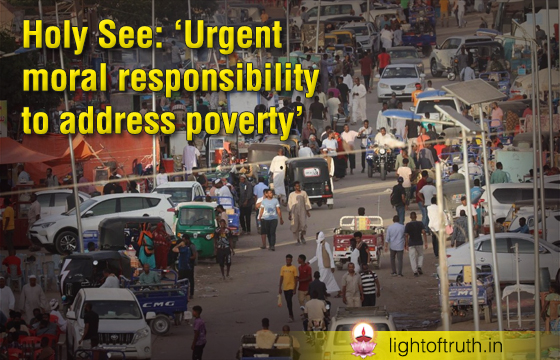
“The Holy See remains concerned about the ever-growing military expenditure, which diverts significant resources from investments in development sectors such as healthcare, education and infrastructure.” Monsignor Marco Formica, Chargé d’Affaires, a.i., of the Permanent Observer Mission of the Holy See to the United Nations, expressed this during the United Nations Security Council’s Open Debate on Poverty, Underdevelopment, and Conflict: Implications for the Maintenance of International Peace and Security in New York on 23 June 2025.
The Holy See official began his remarks acknowledging that the open debate aims to draw attention to the “interconnected challenges” of poverty, underdevelopment, and conflict, observing that these realities, “which often fuel one another, pose serious obstacles” to the maintenance of international peace and security.
He recalled that in the 2030 Agenda for Sustainable Development, the international community acknowledges that the eradication of poverty in all its forms and dimensions is “the greatest global challenge and an indispensable requirement for sustainable development, ” and that “this shared commitment underscores the urgent moral responsibility to address the root causes of poverty, which are frequently associated with injustice, exclusion, and the denial of fundamental rights.”
Msgr. Formica concluded by underscoring that lasting peace “requires a commitment to integral human development, upholding the God-given dignity of every person and promoting the conditions necessary for justice, solidarity, and the flourishing of all,” and reiterating that the Holy See “emphasizes the importance of placing integral human development at the centre of the ongoing review of the Peacebuilding Architecture,” and of “promoting strengthened cooperation among Member States in the service of peace.”
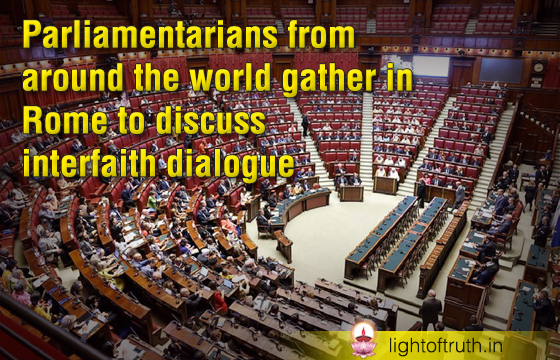
Parliamentarians from around the world gather in Rome to discuss interfaith dialogue
Parliamentarians and religious leaders from around the world have issued a powerful call for peace, hope and solidarity at the conclusion of the Second Parliamentary Conference on Interfaith Dialogue: Strengthening trust and embracing hope for our common future.
The event, jointly organized by the Inter-Parliamentary Union (IPU) and the Parliament of Italy with support from Religions for Peace, was held in Rome from 19 to 20 June 2025, marking the Jubilee Year declared by the late Pope Francis. Delegates had a private audience with the Pope on June 21.
The Conference brought together hundreds of MPs, including Speakers, as well as religious leaders, UN officials, civil society representatives, and international experts from close to 100 countries, responding to the motto of the Jubilee Year to be “pilgrims of hope” amid a climate of growing conflict, polarization and the weaponization of religion.
Amid escalating wars and global unrest, Rome was the epicentre of parliamentary diplomacy and interfaith dialogue this week with the IPU and the Italian Parliament creating a unique space to unite parliamentary and religious leaders from around the world to find new and badly needed avenues for peace.
In their final declaration, the Rome Communiqué, the parliamentarians and religious leaders unequivocally condemn the misuse of religion or belief to incite hatred or violence. The Communiqué emphasizes that interfaith dialogue — grounded in human dignity, inclusivity and respect for the rule of law — can prevent division, foster healing and build trust between communities. It highlights the shared roles and joint responsibility of parliamentarians and religious leaders in advancing justice, dignity and human development, working together for peaceful coexistence. Parliamentarians and religious leaders are urged to uphold democratic values, protect vulnerable groups, and promote ethical leadership through inclusion, compassion, accountability and solidarity.
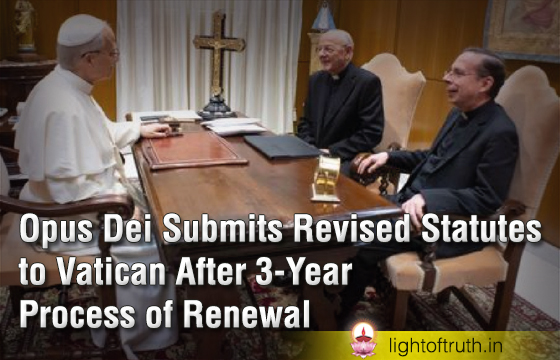
Opus Dei Submits Revised Statutes to Vatican After 3-Year Process of Renewal
On June 11, 2025, Monsignor Fernando Ocáriz, Prelate of Opus Dei, marked a significant in the institution’s history. In a message to members of the prelature, he confirmed that a new proposal of statutes has been formally submitted to the Holy See, concluding a lengthy process initiated after Pope Francis issued the motu proprio «Ad charisma tuendum» in 2022. The development is more than procedural. It represents the culmination of three years of discernment, consultation, and adaptation—an exercise in ecclesial fidelity that has unfolded against the backdrop of both papal transition and internal evolution. The Vatican’s 2022 directive called for a clearer legal alignment of personal prelatures like Opus Dei with the broader canonical structure of the Church. This entailed re-examining how the prelature understands its own identity, governance, and mission in light of the Church’s ongoing emphasis on synodality and pastoral transparency.
For decades, Opus Dei’s canonical configuration as a personal prelature—granted by St. John Paul II in 1982—has stood as a unique model of clerical and lay collaboration. The current revision aims not to undo that framework, but to refine it under the evolving legal and pastoral priorities of the universal Church.
The Vatican will now examine the proposed statutes, a process that could take several months. In the meantime, Opus Dei continues its ordinary work of formation, spiritual direction, and evangelization across the world. But internally, the act of submitting the revised statutes signals a symbolic closure of one chapter and the cautious opening of another—an era of clarified identity, deeper communion, and renewed purpose under the guidance of the Holy See.
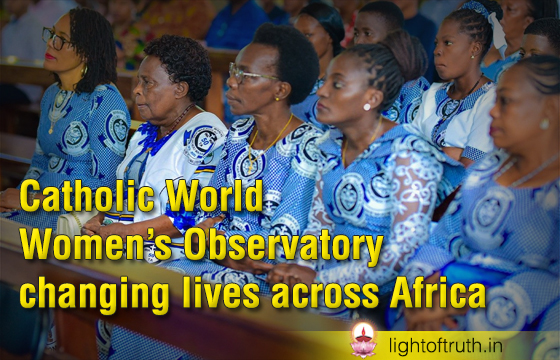
Catholic World Women’s Observatory changing lives across Africa
Operated by the World Union of Catholic Women’s Organisations (WUCWO), the World Women’s Observatory (WWO) aims to amplify the voices of women who are often unheard, particularly those living in fragile and marginalized communities. Founded in 1910, WUCWO represents more than 100 Catholic women’s organisations worldwide, uniting over 8 million members. The WWO, its flagship initiative, focuses on making women’s lived realities visible and informing Church and public policies through a Catholic lens centered on human dignity. Under the vision “Women Custodians of Mother Earth,” WWO has extended its reach across Africa, with notable activity in Tanzania, Kenya, Uganda, and Malawi.
Speaking to Vatican News, Aveline Malisa Ntenga, President of WWO Africa, said the organization’s work on the continent centres on empowering women through trauma recovery, entrepreneurship training, and reintegration support for survivors of trafficking. These programmes are run in collaboration with WUCWO-affiliated organizations in countries such as Nigeria, Cameroon, Eswatini, Ivory Coast, and Guinea Conakry, among others. Partnerships with Caritas, religious congregations, and lay associations further strengthen outreach.
The World Women’s Observatory has outlined a set of strategic recommendations for the coming year. These include organizing a continental coordination meeting for all WWO representatives in Africa, expanding digital training and ambassador networks, creating a resource library of best practices and case studies, and strengthening partnerships with religious congregations and lay movements.
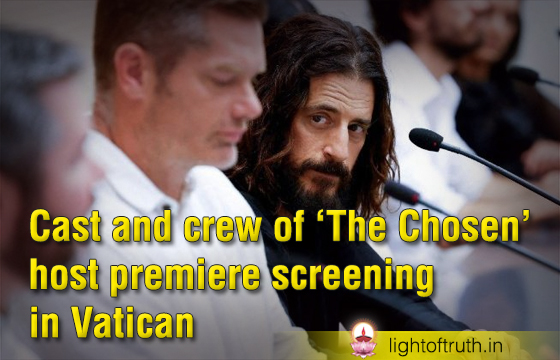
Cast and crew of ‘The Chosen’ host premiere screening in Vatican
On June 23, the cast and crew of The Chosen TV series made a special appearance in Rome for a press conference during their break from filming in Matera, Italy. Castmates Jonathan Roumie, George Xanthis, Elizabeth Tabish, Vanessa Benavente, and series creator Dallas Jenkins discussed the fifth season and what it means to the entirety of the show. Episodes of the newest season have already premiered in the US, and The Chosen is currently one of the top ten shows for viewership on Amazon Prime Video.
During the press conference, the cast and crew shared how important this season is to them as it depicts prominent biblical moments, including the events of Holy Week. For actor Jonathan Roumie, who has the role of Jesus, being a part of this project has been both eye-opening and surreal. During the conference, he commented on how he felt “sitting in the Vatican is a testament to how God wants to continue to further this mission to bring more people to Jesus.”
The show’s creator, Dallas Jenkins, also discussed key points about his ultimate goal in creating The Chosen. He shared that producing a successful show was just the start for him, but his ultimate mission has always been to point viewers in the direction of who Jesus really is. Over 30% of The Chosen’s audience do not identify with the Christian faith, and for Jenkins, being able to introduce them to the Gospel stories is the most rewarding part of his work. Jenkins explained that the show “gets us to ask questions, and that’s not just non-believers. Those of us who are believers still have so many things to learn.”
During the press conference, the conversation with the cast and crew extended beyond just the details of the new season. They also spoke about the growing unrest and tension around the world and how following the Gospel message could bring peace to the world.
Roumie argued that if “we were able to connect with each other in our humanity, the world would be a different place.” He urged world leaders to “use Jesus as an example of how to address the problems of the world.”
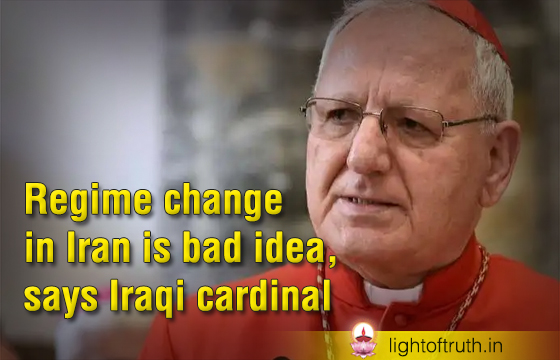
Regime change in Iran is bad idea, says Iraqi cardinal
Iraqi Cardinal Louis Raphael Sako says Israel’s attempted “regime change” strategy in Iran could “only worsen the situation” in the Middle East, where a US-brokered ceasefire has paused hostilities between Israel and Iran. The patriarch of the Chaldean Church in Iraq recalled Iraq’s bitter experience with the regime change and the US-led invasion during an interview with the Vatican’s Fides news service.
Regime change “is a matter for the citizens of the country” to decide, Sako said according to a June 25 Fides report. Sako said that Iraqi people, including the Christian community, suffered heavy losses in the past, and they feared that another war would only destroy the fragile peace.
“What has happened is sad. We have all experienced difficult moments of worry and fear. The world has lost its international order. Now we must regain common sense and reject the discourse of hatred, violence, and war.” “It is a pity if we destroy life and what has been built. Peace is a gift; we must welcome it and preserve it with enthusiasm, making the defense of peace an authentic life commitment,” Sako noted.
The cardinal said Israel’s military actions to weaken the Iranian regime were flawed from the beginning, recalling the experience of the Iraqis. “The sovereignty of countries must be respected, and problems should be resolved through sincere and courageous dialogue. Regime change is a matter for the citizens of a country. Imposing another regime would only worsen the situation,” he said. “Change must come from within if the citizens deem it necessary. Twenty-two years after the fall of the regime in Iraq, there is still no true citizenship, no law, no security, and no stability. Corruption and sectarianism persist,” he insisted. Despite the hardships and persecution faced by Iraqi Christians, they remain hopeful about the future, Sako said.
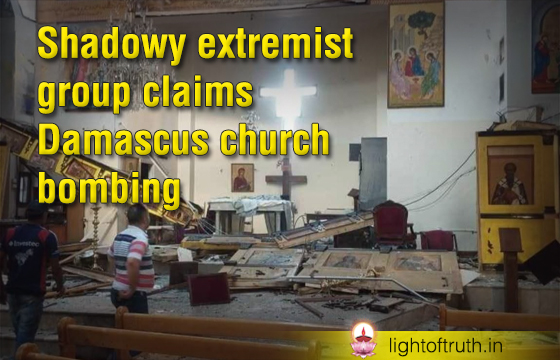
Shadowy extremist group claims Damascus church bombing
A little-known Sunni Muslim extremist group claimed responsibility on June 24 for a weekend suicide attack against a church in Damascus, while the Syrian government insisted they were part of the Islamic State group.
The June 22 attack killed 25 people and wounded dozens, striking terror into Syria’s Christian community and other minorities. A statement from Saraya Ansar al-Sunna said an operative “blew up the Saint Elias church in the Dwelaa neighbourhood of Damascus,” adding that it came after an unspecified “provocation.”
Syria’s Islamist authorities, who took power after ousting long-time ruler Bashar al-Assad in December, had quickly blamed the attack on the Islamic State group and announced several arrests on June 23 in a security operation against IS-affiliated cells.
IS did not claim responsibility for the attack. The Saraya Ansar al-Sunna statement, on the messaging app Telegram, said the government’s version of events was “untrue, fabricated.” The spokesman for the interior ministry, Nureddine al-Baba, said during a press conference on June 24 that the cell behind the attack “officially follows Daesh,” adding that Saraya Ansar al-Sunna was “not independent… as it follows Daesh.” Daesh is the Arabic acronym for IS.
At the funeral of some of those killed in Damascus’s Holy Cross Church, Greek Orthodox Patriarch of Antioch and All the East John X called the attack an “unacceptable incident.” Addressing Sharaa, the patriarch said, “The heinous crime that took place at Mar Elias Church is the first massacre of its kind in Syria since 1860,” referring to the mass killings of Christians in Damascus under the Ottoman Empire. “We refuse for these events to take place during the revolution and during your honourable era.”
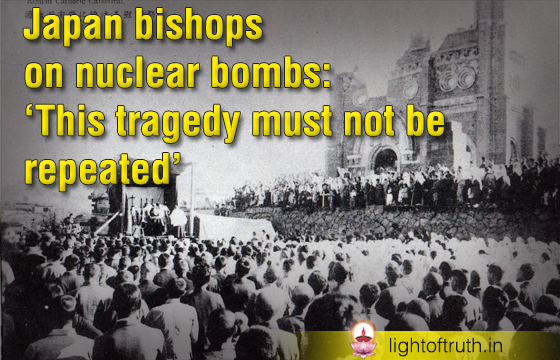
Japan bishops on nuclear bombs: ‘This tragedy must not be repeated’
The Catholic Bishops’ Conference of Japan, as “the only bishops from a country to have suffered atomic bombings in war,” is urging the international community to abolish nuclear weapons once and for all in 2025.
“As we mark the 80th anniversary of the end of World War II,” the bishops wrote in a June 20 statement, “[we] carry deeply engraved in our hearts the heavy history and pain that atomic bomb survivors and citizens of Hiroshima and Nagasaki have suffered, and hereby declare our strong commitment to the abolition of nuclear weapons.”
Hiroshima is the site of the world’s first atomic attack on Aug. 6, 1945, while Nagasaki was bombed three days later. The bombings resulted in the estimated deaths of 140,000 people in Hiroshima and 74,000 people in Nagasaki by the end of 1945 alone.
In the years that followed, many of the survivors in Japan faced leukemia, cancers, and other terrible side effects from radiation, according to the International Campaign to Abolish Nuclear Weapons.
In their “Declaration on the Abolition of Nuclear Weapons 2025,” the bishops of Japan pledged their commitment to “convey the reality of the atomic bombings to the world and declare the inhumanity of nuclear weapons” as well as to “stand in solidarity with domestic and international movements for the abolition of nuclear weapons and promote actions to achieve this goal.” The statement came amid rising tensions in the Middle East over Iran’s growing nuclear capabilities.
The bishops pointed out that many still suffer the aftereffects of the bombings and that the environmental destruction caused by the explosions has continued to have “an enormous negative impact on global ecosystems.”
The bishops further slammed nuclear deterrence as an “ineffective” tactic. “The concept of nuclear deterrence is not only an ineffective means of resolving conflicts, but it also plunges the world into a ‘security dilemma’ that in reality pushes the world toward the brink of nuclear war. We cannot tolerate this kind of thinking,” they wrote.
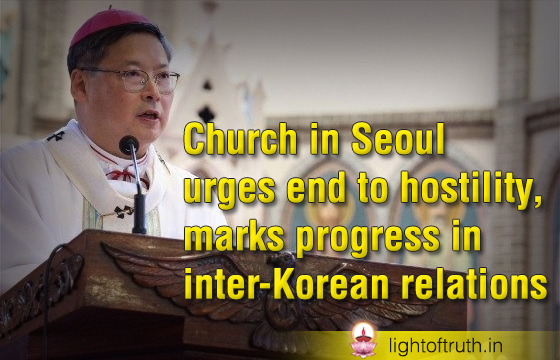
Church in Seoul urges end to hostility, marks progress in inter-Korean relations
More than a thousand faithful gathered at the Myeongdong Cathedral for the annual “Day of Prayer for the Reconciliation and Unity of the Korean People,” an observance held by the Korean Church on the Sunday nearest June 25—the anniversary of the outbreak of the Korean War.
In his homily, Archbishop Peter Chung Soon-taick of Seoul said the prolonged division between North and South Korea has fuelled hostility and estrangement. “North and South have lived divided for over 80 years, nurturing hatred and animosity amid constant tension and confrontation,” he said. “In the South, indifference is growing, with people asking, ‘Why should we concern ourselves with the North?’ But we are one Korean people,” the prelate added. The Archbishop called on Catholics to take the first step toward reconciliation, citing the example of Jesus. “To overcome conflict and division, we must be the ones to reach out first, just as Jesus told us, ‘You give them something to eat,’” he said.
Archbishop Chung pointed to a recent development in inter-Korean relations, highlighting the mutual suspension of loudspeaker broadcasts along the border. He described the move as a modest yet significant step that helped ease long-standing tensions and created space for reimagining future ties between the two Koreas. He urged the faithful to begin the work of peace by abandoning animosity. He said peace on the Korean Peninsula and a new relationship between North and South “must begin by laying down hostility and hatred.”
Later in the day, the Archdiocese held a symposium at the Myeongdong Cathedral Spirituality Centre to commemorate the 30th anniversary of the Reconciliation Committee, which was established in 1995 by the late Cardinal Stephen Kim Sou-hwan.

Philippines gripped by online gambling crisis, says cardinal
Filipino Cardinal Pablo Virgilio David has denounced online gambling as the cause of “a new mental health crisis” in the Philippines. David, the 66-year-old bishop of the Diocese of Kalookan, attributed the problem to recycled hardware from now-outlawed Chinese gaming operators in the country.
In a Facebook post, Cardinal David shared an Inquirer newspaper editorial titled “Online Gambling and Broken Lives,” and said he was “calling attention to a new mental health crisis plaguing our country today”. The problem, said the cardinal, involved “fully legalized online gambling platforms using the recycled digital hardware of outlawed POGOs, short for Philippine offshore gaming operators, owned by licensed casino operators.”
POGOs are controversial gambling firms that were mostly owned by the Chinese and linked to human trafficking and other crimes. POGOS, which boomed during the presidency of Rodrigo Duterte, have been banned by President Ferdinand Marcos Jr., but are said to have resurrected in other forms.
Taking over from POGOs, online gambling is “now victimising not foreigners, but our own people, made available 24/7 online, more lucrative than traditional casinos, promoted by paid celebrities, accessible to Filipinos of all age levels, totally unregulated,” said David.
It is “wrecking the lives of poor people who get addicted to it”. “Jesus once warned those who cause the ‘little ones’ in society to stumble: ‘It would be better for him if a millstone were put around his neck and he be thrown into the sea’ (Luke 17:2),” said Cardinal David, the president of the Catholic Bishops’ Conference of the Philippines.