Civilta Cattolica inspired counterproductive debate, American critics say

A prominent Jesuit publication’s essay on American religion and politics continues to provoke responses from critics concerned its two authors fundamentally misunderstand the situation of Catholics in the United States.

“Their essay is bad but important,” said New York Times columnist Ross Douthat Aug. 2, saying its apparent intention is to warn about Catholic support for “the darker tendencies in Trumpism” like xenophobia, stigmatization of enemies, the “prosperity-gospel inflected worship of success,” and a “crude view of Islam.”

For Douthat, however, the authors’ understanding of American religion “seems to start and end with Google searches and anti-evangelical tracts.” In his view, secularization and political polarization have made the place of Catholics in the U.S. “more difficult and perplexing.” Both Catholic support for Trump and more radical Catholic critiques “are not the culmination of the Catholic-evangelical alliance but rather a reaction to its political and cultural failures — and the failures of liberal religious politics as well.”

On July 13 the Jesuit-run journal La Civilta Cattolica published an analysis piece co-authored by its editor, Father Antonio Spadaro, S.J., and Marcelo Figueroa, a Presbyterian pastor who is editor-in-chief of the Argentine edition of L’Osservatore Romano, the daily newspaper of Vatican City.

The piece, titled “Evangelical Fundamentalism and Catholic Integralism in the USA: A Surprising Ecumenism” made a number of claims, alleging that many conservative Christians have united to promote an “ecumenism of hate” in policies that contradict Pope Francis’ message of mercy. They claimed that, that “Evangelical fundamentalists” and “Catholic Integralists” are being brought together in a “surprising ecumenism” by a shared desire for religious influence in politics.

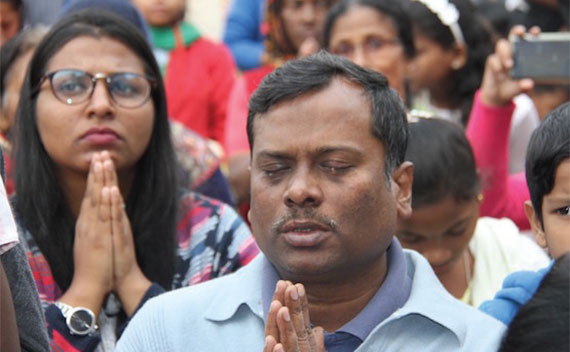
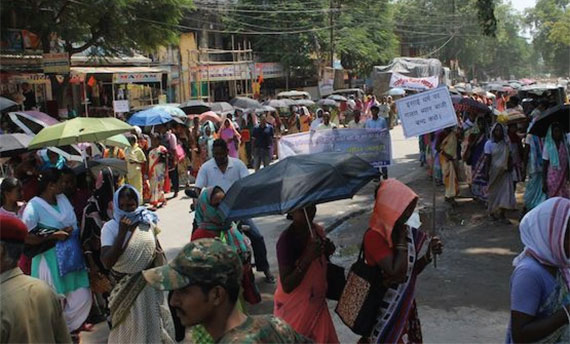
Dalit Christians to observe August 10 as ‘Black Day’

The Archdiocese of Pondi-cherry and Cuddalore and the Commission for Scheduled Castes and Tribes will observe August 10 as a ‘black day’ in protest against denial of SC status to Dalit Christians and Muslims.

Fr. A. Arputharaj, Secretary, SC/ST Commission, Puducherry, told reporters that the presidential order issued on August 10, 1950 not granting SC status for Dalit converts was unjust. Therefore, August 10 has been deemed as a ‘black day,’ he said. The order holds that only Dalits who practise Hinduism can be treated as SC.

‘Gene editing’ poses threat of eugenics, ethicist warns

The director of the Anscombe Bioethics Centre in England has raised the alarm about recent experiments in “genetic editing” of human embryos, saying that the procedure involves the acceptance of eugenics.

David Albert Jones re-marked that the experiment also involved “the reprodu-ctive exploitation of women” who contributed eggs for the research and the “experi-mentation on and destruction of embryos” in the process.

While the “genetic editing” experiments have been hailed as a means of preventing disease, Jones pointed out that the procedure aims “not to make people better but to make ‘better’ people.” He explained that in the “editing” technique, a modified embryo is created; since the embryo did not exist before the modification, the procedure “cannot be said to be therapy.”

Jones warned: “Instead of treating existing human beings in ways that respect their rights and do not pose excessive risks to them or to future generations, we are manufacturing new human beings for manipulation and quality control, and experi-menting on them with the aim of forging greater eugenic control over human repro-duction”

14.5 million Christians remain in Middle East

The Christian population in nine Middle Eastern states is 14,526,000, down from 14,740,000 in 2010, according to a report published by the Vatican newspaper. The total population of Cyprus, Egypt, Iraq, Israel, Jordan, Lebanon, Palestine, Syria, and Turkey is 258 million. The report draws on a recent study by the Catholic Near East Welfare Association on Christians in the Middle East. The study documented sharp recent and historical declines in Christian population:
• in Syria, from 2.2 million (2010) to 1.2 million
• in Egypt, from 19% of the population (1910) to 10%
• in Lebanon, from 53% (1932) to less than 40%
• in Jerusalem, from 20% (1946) to less than 2%
• in Palestine, from 20% (1948) to 1.2%

Canadian cardinal would approve funeral after assisted suicide

Cardinal Gerald Lacroix of Quebec City has indicated that he would approve funerals for Catholics who opted for physician-assisted suicide.

Cardinal Lacroix, the primate of Canada, told America magazine that he might deny a funeral for someone who had been a public advocate of euthanasia. But he reasoned that an elderly individual might chose to end his life in a moment of weakness, perhaps under pressure. “So who are we to judge why they are like this?” he said.

The cardinal also remarked that the family of the deceased might have disapproved of the choice for suicide, and the family deserved consolation. “We accompany everybody,” he said.

The sociology of French Catholics

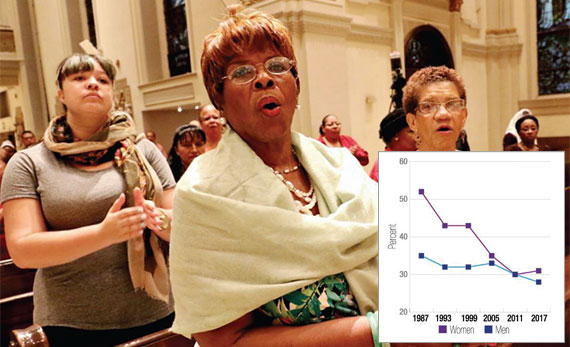
A wide-ranging sociological study commissioned by the Bayard group and published jointly by La Croix and Pèlerin sheds unpre-cedented light on the makeup of French Catholicism. The two authors have distinguished six profile types, which provide tools for understanding the logic of a Catholic world that is far more diverse than may have appeared.

Who are the real Catholics in France? The five percent who attend Mass regularly, according to opinion polls, or the 53% who describe themselves as Catholic? The broad survey carried out by Ipsos under the direction of sociologists, Philippe Cibois and Yann Raison du Cleuziou, shows that there is also a third possi-bility. Thus, 23% of French peo-ple can be characterized as “involved” Catholics, i.e. people who feel attached to the Church by means of their donations, their family lives or their commit-ments.

As a result, the study sets aside the traditional distinction between practising and non-practising Catholics and includes those who do not attend Mass regularly “but who consider themselves all the same as Catholics because they live out their lives differently,” as the authors note.

Religious leaders condemn lynching, stress restoration of law

Around 40 spiritual leaders and intellectuals in the national capital on July 16 urged Indians to check an environment of hate, violence and disregard for the rule of law spreading across the country.

They met under the aegis of the Catholic Bishops’ Conference of India (CBCI) and called upon the government to end impunity, which they noted, was at the root of the atmosphere of fear that stalks the land today. They also said these developments threatened not just secularism, but the country’s Constitution as well as the democratic fabric.

They want people to draw from India’s deep spiritual reservoirs to check increasing cases of lying that have claimed “many innocents of religious and marginalized communities.”

The meeting welcomed Prime Minister Narendra Modi’s assurances to leaders of Opposition parties on the eve of the Monsoon session of Parliament.

However, the leaders noted that lynching in various states on the pretext of protecting cows have shocked majority of Indians from all communities. The Prime Minister must now see that state governments and their police forces acted against the guilty in an impartial manner, they assert-ed. The meeting agreed two of five of urgent program of action:

• The ideology of hate is a reality and needs to be challenged by governments, political parties, civil society activists, the criminal justice system and religious communities in a concerted manner.

• Religious leadership must act at the grassroots to assert the inherent unity of the people. This will help restore public confidence and remove the mutual suspicion that had started growing.

Kerala nurses strike called off after government agrees to hike minimum pay

Following intense protests for almost two months, private hospital nurses in Kerala called off their strike on July 16 after the government agreed to enforce a hike in their minimum pay to Rs 20,000.

The decision was taken in a meeting of the representatives of nurses’ associations with Chief Minister Pinarayi Vijayan at his office on July 20 evening. The Chief Minister’s office said that the decision on the wage hikes was unanimous.

“The decision was unani-mous. It has been decided to hike the minimum pay of nurses working in hospitals with a bed strength of up to 50 to Rs 20,000. The government will appoint a committee to decide on the salary of nurses working in hospitals where the number of beds is more than 50,” a statement from the Chief Minister’s office said.

“There will be timely increase in the stipend of nursing trainees. The committee will also consider and submit recommendations on the trainees’ stipend and the period of training. The committee will submit its report in a month,” the statement added.

Cathedral dedicated to Mother Teresa due to be consecrated

A cathedral dedicated to St Teresa of Calcutta is due to be consecrated on September 5, the 20th anniversary of the saint’s death. Pope Francis has appointed Cardinal Ernest Simoni to be his delegate at the consecration in Pristina, the capital of the partially recog-nised State of Kosovo.

Although the building has been a place of worship for Catholics since 2010, the shrine will be formally dedicated to Mother Teresa at the consecra-tion. The Italianate-style build-ing has been under construction since 2007 and remains unfini-shed. When complete, it will have two bell towers, each standing at 230 feet tall, making it one of the tallest buildings in the city.

Among the designs on its stained-glass windows are depictions of St Teresa with Pope St John Paul II, and Pope Benedict XVI embracing Pope Francis.

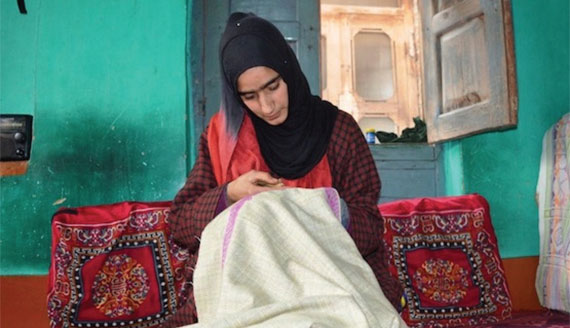
Church group launches peace education for Kashmir students

Jammu-Srinagar Diocese has launched a project to educate young people on the need for peace on the Indian side of the India-Pakistan border where hostilities between the two countries have killed hundreds of people.

The diocese covers the entire Indian State of Jammu and Kashmir, a disputed territory between the two neighboring countries. Both India and Pakistan claim the region and each administer part.

The two nuclear-power rivals have fought at least three major wars over Kashmir. The border area is prone to occasional exchange of fire between the armies of India and Pakistan, often adversely impacting the local people living there. The region has been a sensitive issue for both India and Pakistan ever since they become two different nations in 1947 when British rule ended in the subcontinent.

Official Website

Exit mobile version