
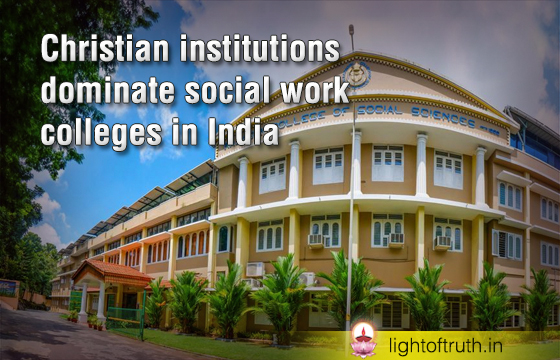
Rajagiri College of Social Scien-ces (Autonomous), managed by the Carmelites of Mary Immaculate congregation in Kerala’s Kochi, has ranked second among 25 best social work institutes in India. The top rank in the list of “India Today Best Colleges 2025” has gone to Mumbai’s Tata Institute of Social Sciences.
The list was published on July 11 to help aspiring social workers to choose the right college for a Master of Social Work course. As many as 11 among the 25 colleges are under Christian management.
“These colleges typically invest in experienced faculty, well-equipped classrooms, and partnerships with NGOs and government bodies to offer practical exposure. Factors such as hands-on training, faculty background, internship opportunities, and campus support services are important when identifying the top private MSW colleges in India,” said the introduction to the list.
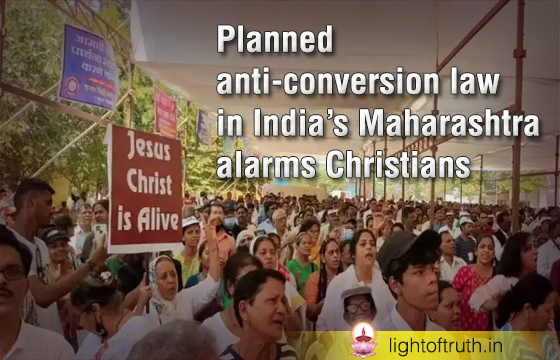
Planned anti-conversion law in India’s Maharashtra alarms Christians
Christian leaders have expressed concerns over curbs on religious freedom after the government in India’s second-most populous Maharashtra state announced plans to enact a law to tackle alleged conversions. The reactions came after the state’s Revenue Minister Chandrashekhar Bawankule told the state legislature on July 9 about the plan for introducing a stringent anti-conversion law.
“A strict law to prevent religious conversions will be enacted in the state,” Bawankule from the ruling Bharatiya Janata Party (BJP) reportedly told fellow lawmakers. He said the move came following allegations of Christians converting poor Hindus and tribal people in the state.
The minister said he would speak to Chief Minister Devendra Fadnavis on how to bring about an anti-conversion law with stringent provisions, but did not elaborate on a timeline. If the law is enacted, Maharashtra would become the 13th state in India to enforce the anti-conversion law. Most of these states are ruled by the BJP and its allies.
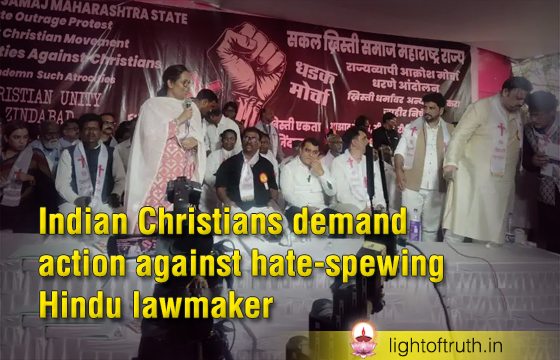
Indian Christians demand action against hate-spewing Hindu lawmaker
About 7,000 Christians marched on the streets of India’s commercial hub Mumbai, demanding the arrest and punishment of a pro-Hindu lawmaker who recently declared huge bounties for attacking and killing pastors and missionaries. The marchers chanted slogans and displayed banners during the July 11 rally at Azad Maidan grounds in Mumbai, the capital of the western Indian state of Maha-rashtra, asking authorities to slap criminal charges against Gopich and Padalkar from the ruling Bharatiya Janata Party (BJP). The rally was organized by the ecumenical group, Sakal Christi Samj Maharashtra (All Maharashtra Christian Coali-tion), and joined by members of various Christian organiza-tions, said Cyril Dara, the coalition’s convener.
During the demonstration, Christian leaders condemned Padalkar for disregarding the law and inciting violence agai-nst the Christian community. “Padalkar publicly announced the bounties a fortnight ago, which has outraged and deeply hurt our religious sentiments,” Dara told on July 11.
He said the protesting Christians also demanded the expulsion of the legislator from the party of Prime Minister Narendra Modi. “This action will help curb future atrocities on the Christian community, like the vandalism of churches and attacks on religious leaders. The community needs protection from the government and action against the culprit,” the coali-tion said in a statement.
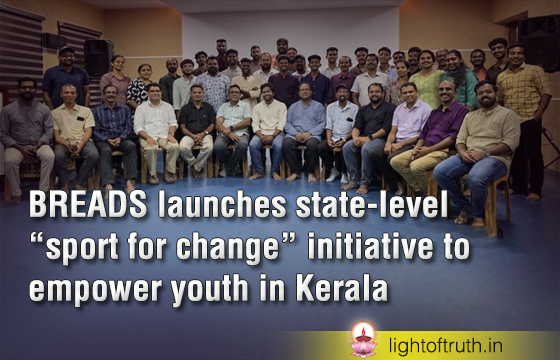
BREADS launches state-level “sport for change” initiative to empower youth in Kerala
BREADS Bangalore con-vened a state-level strategic meeting on July 3, 2025 to launch its pioneering “Sport for Change” initiative–an ambi-tious youth empowerment pro-gramme operating across seven locations in five districts of Kerala. Rooted in a dynamic anti-drug campaign, the initiative leverages the unifying and transformative power of sports to steer young people away from substance abuse and anti-social influences, fostering instead a culture of discipline, purpose, and resilience.
BREADS stands for Banga-lore Rural Educational and Development Society. It’s the official development wing of the Salesian Province of Bangalore, working primarily in Karnataka and Kerala to uplift margina-lized communities–especially children, youth, and women. The gathering brought together an inspiring constellation of stakeholders committed to youth development through sport.
BREADS Executive Director, Fr George P. S., remarked, “Sport is not just a game–it’s a gateway to transformation. When young people are given the right environment, they discover their strength, discipline, and dignity.”
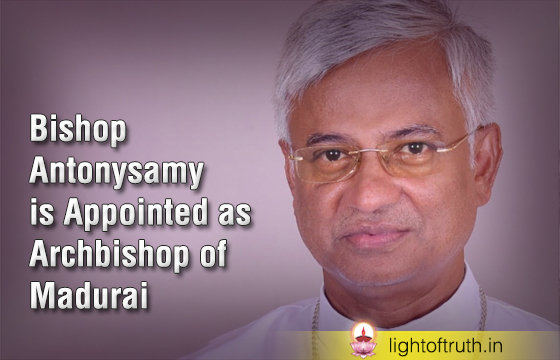
Bishop Antonysamy is Appointed as Archbishop of Madurai
The Holy Father Pope Leo XIV has appointed Bishop Antonysamy Savarimuthu, until now Bishop of Palayamkottai and the Chairman of the CCBI Commission for Canon Law as the Metropolitan Archbishop of the Archdiocese of Madurai on July 5, 2025. Bishop Antony-samy Savarimuthu was born on 8 December 1960 in Vadakku Vandanam, in the District of Tuticorin, Tamil Nadu. He was ordained a priest on 26 April 1987, for the Diocese of Pala-yamkottai. On 20 November 2019, he was appointed Bishop of Palayamkottai and ordained bishop on 15 December. Since 2024, he has served as Apostolic Administrator of Madurai
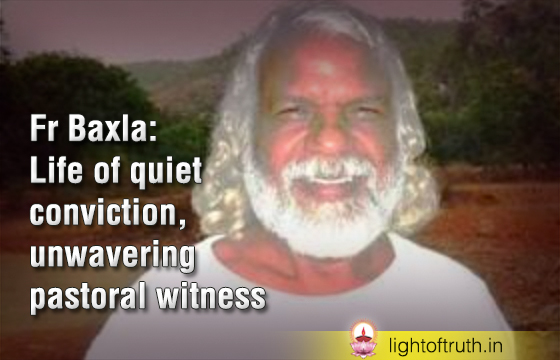
Fr Baxla: Life of quiet conviction, unwavering pastoral witness
Salesian Father Zephyrinus Baxla, a trailblazer in Adivasi cultural revival and education, died on July 7 due to kidney ailments. Father Baxla would have turned 75 in August. Father Augustine Tirkey, a companion of Father Baxla, said his confrere “was a man of quiet conviction. He never raised his voice, but his presence commanded respect,” said. “I remember him spending hours listening to villagers, never rushing, always attentive. His pastoral heart was his greatest gift.” Born in August 1950 into a humble tribal family, Father Baxla’s early life was shaped by cultural rootedness, simple piety, and an innate call to serve, Salesian Shillong provincial Father John Zosiama said. Drawn to the Salesian charism, he entered formation and was ordained a priest when the Church in eastern India was taking bold steps in grassroots evangelization and social transformation, the provincial recalled. A professor of Scripture at Sacred Heart Theological College Shillong, over the decades, Father Baxla’s ministry spanned remote missions, parishes, formation houses, and educational initiatives. In every assignment, he embodied the heart of a true pastor – faithful, unassuming, and wholly dedicated to walking with his people. Father Baxla’s contribution to Adivasi education and cultural revival was particularly profound. During his time in Kurukh-speaking regions, Father Baxla championed the Tolong Siki script, not merely as a linguistic tool, but as a symbol of identity and dignity, the provincial said.
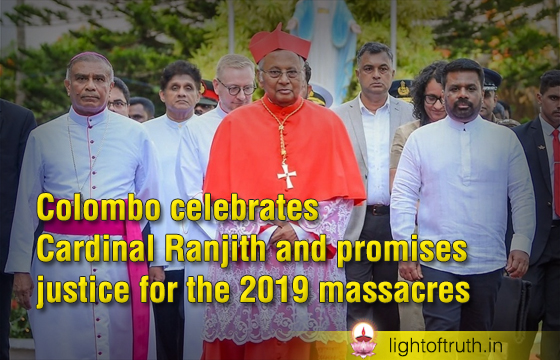
Colombo celebrates Cardinal Ranjith and promises justice for the 2019 massacres
A ceremony for the 50th anniversary of the priesthood of the Archbishop of Colombo, Cardinal Malcolm Ranjith, 77, was held on 7 July, at the Auditorium of the Archbishop’s House in Colombo.
Also present was President Anura Kumara Dissanayake, who addressed the assembly in no uncertain terms: ‘The government will have to undergo an investigation to uncover the truth behind the Easter Sunday attacks (21 April 2019, ed.). It is a challenging task. However, we will ensure that justice is done to the victims.’
The event was also attended by Sri Lankan Prime Minister Harini Amarasuriya and other government ministers, religious leaders, ambassadors, commanders and the Inspector General of Police.
Dissanayake added that the government will listen to Cardinal Ranjith’s frequent requests for justice for the victims of the tragic attacks that left nearly 300 people dead. ‘The cardinal sometimes makes a quiet request, other times he becomes influential when he speaks about the victims of the Easter Sunday attacks. However, we will listen to him,’ he said.
Ranjith has always acted to demand transparency and accountability from the Colombo government, also criticising political leaders and institutions for failing to properly investigate and prosecute those responsible, acting as a moral voice and advocate for the affected families.
The second most senior cardinal in Sri Lanka after Cardinal Thomas Cooray, the Archbishop of Colombo and former Prefect of the Congregation for Divine Worship and the Discipline of the Sacraments, was ordained a priest on 29 June 1975 by Pope Paul VI in St Peter’s Square in the Vatican.
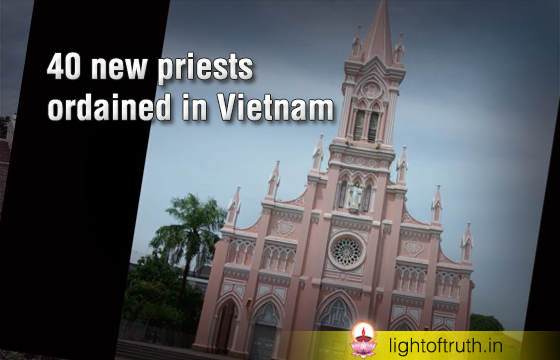
40 new priests ordained in Vietnam
The Catholic Church in Vietnam welcomed with great joy and hope the ordination of 40 new priests during June, the month of the Sacred Heart of Jesus.
According to the Vatican news agency Fides, the Diocese of Da Nang welcomed six new priests, “consecrated to be each an ‘alter Christus’ [‘another Christ’], to become pastors of the people of God, not to live for themselves but to be all things to all people,” said Archbishop Joseph Dang Duc Ngan, archbishop of Huế and apostolic administrator of Da Nang, in his homily at the ordination Mass on June 24 in the local cathedral before numerous faithful.
“A priest does not become perfect from the day of his ordination. The priesthood is a journey of daily growth in Christ and constant strengthening in the Holy Spirit to fulfill the mission of God and the Church with joy and true love,” the prelate emphasized.
Bishop Peter Le Tan Loi celebrated the ordination Mass of 13 new priests on June 25 at the Soc Trang Cathedral in the Diocese of Can Tho. During the Eucharist, the prelate invited the faithful present to “unite in prayer and accompany the new priests, so that they may always lead a life faithful to their pastoral identity: humble, holy, and dedicated to the flock.”
On June 27, the feast of the Sacred Heart of Jesus and the Day for the Sanctification of Priests, 21 new priests were ordained for the Archdiocese of Ho Chi Minh City (formerly Saigon). Archbishop Joseph Nguyen Nang said in his homily that “the priest is not like a robot of the modern age. In his ministry, the priest takes God’s will seriously so that, in every action — liturgical, pastoral, and charitable — he may transmit the good news.”
Fides also reported that at the Shrine of Our Lady of Bai Dau in the Diocese of Ba Ria, Bishop Emmanuel Nguyen Hong Son ordained six new deacons, also on June 27.
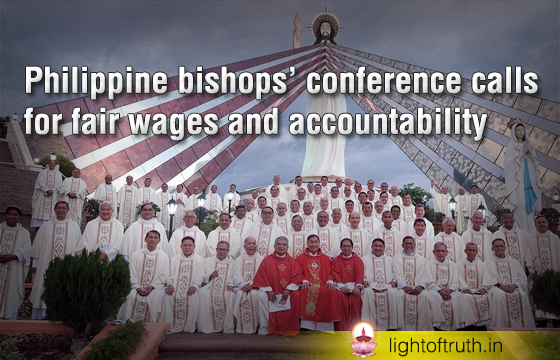
Philippine bishops’ conference calls for fair wages and accountability
Closing the 130th Plenary Assembly of the Catholic Bishop’s Conference of the Philippines, the bishops release a letter urging the government and Church institutions to bring awareness to the ongoing issue of decreasing minimum wage in the country and the harsh labour conditions.
In the midst of the ongoing disagreement on labour conditions and wages, the Catholic Bishops’ Conference of the Philippines (CBCP) released a pastoral letter, describing these issues as urgent and calling for immediate change. The bishops cited the prophet Micah 6:8, “act justly, love kindness, walk humbly with your God” as the foundation of their message.
The current minimum wage in Metro Manila, the largest metropolitan area in the Philippines, is 650 pesos, roughly equivalent to 9 euros for an eight-hour workday. These wages are insufficient for families to live off of, and as a result, many are suffering. “The Church must lead by example,” the letter stated, calling for religious establishments to offer adequate wages and fair labour conditions in the workplace.
Along with poor working conditions, the bishops also called for a change in political leadership. They raised concerns regarding the lack of political accountability, as the country’s Senate recently delayed pursuing the impeachment process of Vice President Sara Duterte. The bishops described impeachment as a democratic tool that must be upheld to ensure truth and justice in a government.
Outgoing CBCP president Cardinal Pablo Virgilio David, Bishop of Kaloon, signed the letter to show his support, while simultaneously concluding his term with the Conference. He will be succeeded by Archbishop Gilbert Garcera of Lipa, who will start in the role in November 2025.
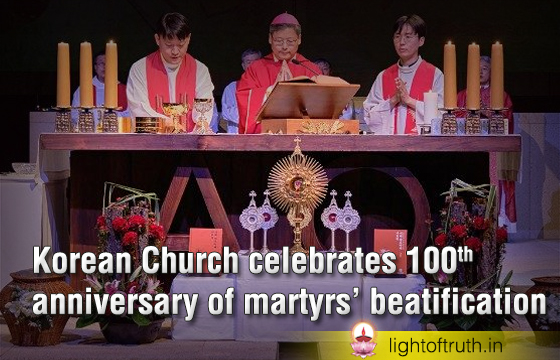
Korean Church celebrates 100th anniversary of martyrs’ beatification
On July 5, the Archdiocese of Seoul, South Korea, marked the 100th anniversary of the beatification of the 79 Korean martyrs of the Gihae (1839) and Byeong-o (1846) persecutions with a Mass, the release of a new report on their martyrdom and a special exhibition, a press release of the Archdiocese’s website states.
“Even in the trials of persecution, these martyrs never abandoned their faith in the Lord. Their endurance deepened their faith, which ultimately bore fruit as true hope that overcame even death”, said the Archbishop of Seoul, Peter Soon-taick Chung, during his homily.
The 79 Korean martyrs of the Gihae and Byeong-o persecutions were beatified by Pope Pius XI in St. Peter’s Basilica on July 5, 1925. Paul VI then beatified a second group of 24 martyrs in 1968, and both groups, totaling 103 people, were canonized collectively by Pope John Paul II in 1984.
More than 1000 faithful gathered for the liturgy, at the Seosomun Shrine History Museum in Seoul, where 41 of the 79 martyrs lost their lives. According to the Fides news agency, in the 19th century the Korean Church estimates that approximately 16,000 Catholics were killed. Religious freedom was not granted to Catholics in Korea until 1895.
The press release explains that during the mass a new report titled “The Documentation of the Gihae and Byeong-o Persecutions” was also published by the Martyrs Elevation Committee of the Archdiocese of Seoul. This work drew from the royal chronicles, judicial records and state archives of the Joseon Dynasty who ruled at the time of the persecutions. The official documents and data from the time featured in the report have also been translated into Korean to make this information more accessible to scholars and the Catholic community.
“This is the first time that historical facts from official records—interrogations, reports, and directives from institutions like the Royal Secretariat and the State Council—have been carefully extracted, translated, and compiled, rather than relying solely on testimonies,” said Archbishop Chung. “Even though these were records written by the persecutors, the courageous faith and deep conscience of the martyrs stand out all the more clearly within them”.