

St Anne’s Girls’ High School Ma-ndar, near Ranchi, won the National Inter-School Band Competition 2019-2020 in the girls’ category. Ministry of Human Resource Development, Department of School Education and Literacy organized it on January 23 at Thyagaraj Stadium, New Delhi.

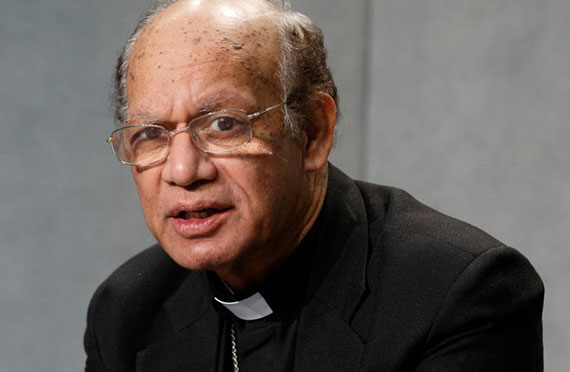
Pope asks Cardinal Gracias to continue as Bombay archbishop
Church leaders in India have welcomed Pope Francis asking Cardinal Oswald Gracias to continue as the Bombay archdiocese. “It is good news. We welcome the cardinal’s extension as the Archbishop of Bombay,” Bishop Allwyn D’Silva told Matters India on January 28, responding to the Pope’s decision.
Cardinal Gracias had on November 30, 2019, submitted to the Pope in person his resignation from the archbishop’s post as he was to complete 75 years on Dec. 24 the same year.
A letter from the Congregation for the Evangelization of Peoples to Cardinal Gracias says the “Holy Father has asked you to continue ‘donec aliter provideatur (until other provision is made).”
The congregation’s on Dec. 6 letter expresses its gratitude to the cardinal for what he is doing for the service of the Church in Mumbai, in India and the Universal Church. “Permit me to add my own personal esteem and affection,” said Cardinal Filoni Fernando, prefect of the Vatican congregation.
Study finds bishops are satisfied with their life and ministry
Catholics may be surprised to learn that many U.S. bishops describe their lives as both all-consuming and satisfying, a priest-researcher said.
“These are guys who generally get up very, very early in the morning, pray about two hours every day and work about 10 hours a day,” said Father Stephen Fichter, a research associate at the Centre for Applied Research in the Apostolate in Washington, which conducted the survey. “(They) just really do some interesting things and there are a lot of difficulties that they’re dealing with all the time.”
A priest of the Archdiocese of Newark, New Jersey, Fichter explained the results of a 2016 survey of active and retired U.S. bishops in a talk at St Mary’s University of Minnesota’s Minneapolis campus on Jan. 15. The survey was the first to look at the lives of bishops since 1989.
The study is the subject of a 2019 book published by Oxford University Press, Catholic Bishops in the United States: Church Leadership in the Third Millennium. Fichter is one of four co-authors of the book.
The researchers wanted to carry out a comprehensive study, develop a profile of bishops and chronicle the experiences of prelates in their ministerial roles, Fichter said.
The average age of active bishop respondents was 66. They are white and theologically moderate or traditional. Some bishops described themselves as moderately progressive.
Of 429 surveys sent, 213 recipients responded. They included bishops ministering in the Latin and Eastern rites. Respondents included bishops who head a diocese or archdiocese; auxiliary bishops; and retired bishops.
The survey, Fichter said, revealed demo-graphic changes among the bishops. Of the 126 Latin-rite bishops heading archdioceses or dioceses who responded, 97percent were born in the United States. Meanwhile, 76% of the 33 Latin-rite auxiliary bishops who responded were U.S. born. (Because of the foreign-based nature of their churches, Eastern-rite bishops are more likely to be born outside of the U.S. than those in the Latin Church).
Bishops ask Kerala state to end anti-Christian policy
The Synod of India’s eastern rite Syro-Malabar Church has appealed to the Kerala State government to end discrimination against Christians in distributing benefits intended for religious minorities.
The Synod’s call came in the concluding statement issued on Jan 15. Of the 64 bishops, 57 attended the Jan. 7-15 assembly at Church headquarters in Kochi, the state’s financial capital.
The bishops’ said 80 per-cent of the federal grants meant for religious minorities “went to one minority community (Muslims), and the remaining 20 percent is divided among the other five minority communities in the state.”
Muslims, Sikhs, Christians, Buddhists, Parsis, and Jains are classified as minorities who together make up 20 percent of India’s 1.3 billion people. Some 80 percent of Indians are Hindus.
The federal government offers individual grants for education, scholarships, and tuition, among other things aiming to improve the socioeconomic development of religious minorities.
Christian among seven murdered in Indian tribal village
Police have confirmed the murder of seven tribal people, at least one of them Christian, four days after they were reported missing from their village in eastern India’s Jharkhand State. The seven, who opposed the Pathalgadi movement for autonomy, were kidnapped on Jan. 19, reportedly by rivals, and murdered, official Murari Lal Meena told media on Jan. 23.
Youth engage in Salesian social projects around world
Starting mid-January, 1,157 young people will have an opportunity to give back through civil service volunteering. Salesians per il Sociale (Salesians for Social) coordinates the Universal Civil Service in Italy and other countries, which enables youth to have these life-changing volunteer experiences.
Bengaluru church desecrated, archbishop calls for reparation
Abp. Peter Machado of Bangalore on January 21 urged Catholics in his archdiocese to observe a day of reparation after miscreants desecrated sacred Hosts in a church. “I am not only terribly shocked and greatly grieved that desecration was done to the Eucharistic Lord in that church,” the archbishop said in a press note.
Rights violations in Chile: Archbishop’s installation interrupted
During the Jan. 11 installation Mass of CelestinoAós as the new archbishop of Santiago, Chile, a small number of protesters opened backpacks near the front of the church and dumped tear gas canisters on the floor.
An Instagram post by portadasoñada, which describes itself as “an independent and self-managed media outlet” included a video of the incident, which it said was intended to “denounce in the face the highest Catholic authority in the country for his silence and complicity with the government.”
The United Nations has warned of evidence of numerous human rights violations committed by police and military personnel in Chile since October. These include excessive and unnecessary use of force, sometimes resulting in injury or death, as well as torture, rape, and arbitrary detention.
Demonstrations against the government began in mid-October in Santiago over a now-suspended increase in subway fares. Other regions joined in the protests, expanding their grievances to inequality and the cost of healthcare.
In Iceland, composer and Polish Carmelite sisters turn saints’ poetry into music
A community of 12 Polish Carmelite sisters in Hafnarfjördur, Iceland, opened 2020 with big goals in sight: This year, they will release two CDs created with the help of distinguished Icelandic composer and pianist Jónas Sen. A former keyboardist for Björk, Sen is a prominent music critic and also the author of a notable biography on Icelandic pianist and mystic Halldór Haraldsson published in 2017.
The Carmelite convent is based in Hafnarfjördur, the third-largest town in Iceland, known for its lively annual Viking festival. Located an estimated 7.5 miles outside Reykjavik, the small community of Polish sisters celebrated its 35th anniversary in 2019. The sisters enjoy meditating on Carmelite mystical poetry and singing, according to Sister Miriam of the Child Jesus and the Holy Face.
‘Grave situation’ as Wuhan virus infections soar
As the spread of the Chinese respiratory coronavirus (2019-nCoV) continues to accelerate, a global pandemic and ensuing massive humanitarian tragedy are threatening the country and surrounding territories.
The virus has spread to almost every province in mainland China, while Hong Kong, Taiwan and Thailand are the worst affected outside the mainland, whose Spring Festival holiday has been extended by three days to March 2 to delay travel by up to 500 million people.
China’s President Xi Jinping held a politburo meeting on Jan. 25 to discuss steps to contain the epidemic, saying on state television that the outbreak is accelerating and that the country is facing a “grave situation,” Voice of America reported.
At the time of writing, 81 deaths had been confirmed with 2,827 more infected and over 30,000 people in China alone under watch; the number has jumped each day over the past 10 days and is expected to continue the same trajectory. At least 44 cases have been confirmed offshore including in Thailand, Singapore, the United States and Australia as Chinese Premier Li Keqiang travelled to Wuhan to visit hospitals.