
Catholic Sisters Help Children Living with HIV Build a Better Future
Faith Brings New Hope to Assam Village Once Known for Alcoholism
Cardinal Tagle: Friendship reveals the face of Jesus and the Church
Israel prepares ‘extensive’ West Bank operation after deadly shooting near Tal
Pope: Visit to Türkiye and Lebanon teaches that peace is possible
Thousands protest corruption in Philippines as Church leaders call for accountability
Pope: Nicaea invites Christians to unity in face of violence, conflict
Writing the name of an enemy on the bottom of one’s footwear can give a person the psychological satisfaction of trampling over that enemy with every step. It appears that during the Iraq War, many Iraqis and Americans wrote the names of George Bush and Saddam Hussein, respectively, on the soles of their shoes. Throughout history, some people have done this privately to show deep disdain for autocrats or dictators. Archaeological evidence shows that even a pharaoh himself once practiced it.
It is reported that in the tomb and associated temples of Pharaoh Thutmose III (c. 1479–1425 BCE)—a powerful Egyptian ruler who fought numerous campaigns in the Levant—the names of the Canaanite kings were inscribed on the soles of his sandals and those of his army. In ancient cultures, this act was often linked to superstition, intended to bring harm or curses upon the enemy. Later, it came to be practiced for emotional satisfaction, and in the modern period it has become a symbolic expression of disdain for those one despises.


Some Jews still maintain a similar custom: during the festival of Purim, the name of Haman—the wicked and powerful Persian official who sought to annihilate the Jews during their exile—is written down on the bottom of their shoes, and congregants stamp their feet whenever his name is mentioned in synagogue readings. In some other Jewish communities, they make noises when the name of Haman is read from the synagogue lectionaries.
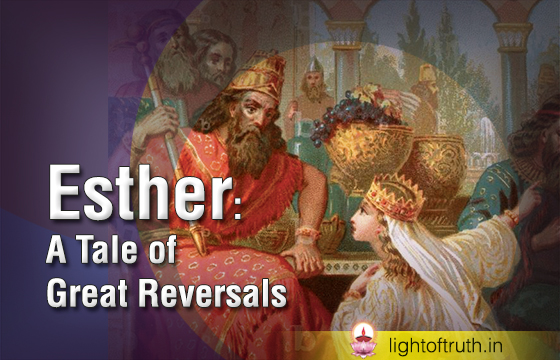
The origin of Purim is traced to the miraculous deliverance of the Jews from the genocide plotted by Haman, the highest-ranking official in the court of King Ahasuerus of Persia. Proud and ambitious, Haman persuaded the king to issue a decree requiring everyone to bow before him as a sign of respect. Mordecai, a Jewish servant in the royal court, refused to bow, considering it an idolatrous act. Enraged, Haman devised a plan to exterminate all the Jews of Persia. He offered 10,000 silver talents to the royal treasury and convinced the king to set a specific date for their destruction.


Distressed by the decree, Mordecai urged Esther— a Jewish orphan girl adopted by Haman and who later became the wife of Ahasuerus—to plead with the king to rescind it. However, appearing before the king without a summons was a capital offense, punishable by death. Nevertheless, Esther, at the risk of her life, approached the king and secured a new decree that empowered the Jews to defend themselves and attack their enemies. The day set for their annihilation instead became a day of victory over their foes. Purim was established to commemorate this miraculous deliverance.
Mainstream Bible scholars generally do not regard the story of Esther as strictly historical. Yet it remains an inspiring account of great reversal. Some Protestant authors consider Esther a prototype of Jesus, while Catholic scholars view her as an antetype of the Blessed Virgin Mary. Mary’s Magnificat can be seen as a poetic depiction of Esther’s life, for it too is a song of great reversals. In the Magnificat, Mary exalts God’s action in raising the lowly from the dust—just as the orphaned, exiled Jewish girl Esther was elevated to become queen of Persia. Mary also celebrates God’s justice in dethroning the mighty; likewise, the proud and powerful Haman, driven by selfish ambition to destroy the Jews, was in God’s justice stripped not only of his position and power but also of his life. He was hanged in the gallows he got set up for Mordecai.


By God’s grace, Esther effectively interceded with King Ahasuerus for the preservation of her people. In this role as mediator, she prefigures the Blessed Virgin Mary, the powerful intercessor of Christians. Esther embraced her mission at the risk of her own life, proving herself a courageous woman of self-sacrifice. Likewise, Mary boldly accepted God’s will and endured immense suffering to bring to completion the redemptive work of her Son, Jesus.
The Book of Esther remains a source of profound comfort for all who feel crushed and powerless under the heel of arrogant and oppressive rulers. It assures the “little flock” of the righteous that God works behind the scenes for the protection and well-being of His chosen ones, bringing about great reversals to the shock and downfall of the power-abusing and insolent.



Leave a Comment