
Catholic Sisters Help Children Living with HIV Build a Better Future
Faith Brings New Hope to Assam Village Once Known for Alcoholism
Cardinal Tagle: Friendship reveals the face of Jesus and the Church
Israel prepares ‘extensive’ West Bank operation after deadly shooting near Tal
Pope: Visit to Türkiye and Lebanon teaches that peace is possible
Thousands protest corruption in Philippines as Church leaders call for accountability
Pope: Nicaea invites Christians to unity in face of violence, conflict
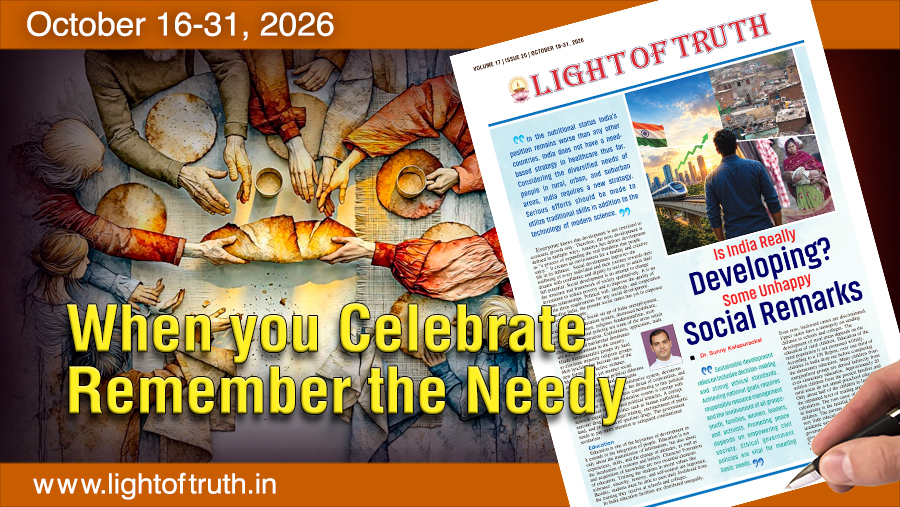
Celebrations! Get togethers! are very common now. For majority celebrations are to show power and might and also the projection of self-imposed ego. Celebrations ofcourse are not new. There were celebrations, those were often on the basis of some memorable functions like marriage, betrothal, house warming, memorial days, temple or parishchurch feasts or some of the cultural and religious festivals. There was genuineness and simplicity in those celebrations rendering to the village and rural contexts. Friends, relatives, well-wishers and invited guests come together and participate in the celebrations. This custom and culture is changing rapidly. Now new equations are creeping in the feasts and celebrations. For everything and sometimes for nothing there are celebrations. It may start with peer groups, classmates, alumni, co-workers, neighbours, birthday parties, gathering of the same name people, feast celebrations and also big functions like marriage, jubilee, retirement etc. In the psychophysical analysis celebrations trigger the release of neurotransmitters such as dopamine and serotonin, which are associated with pleasure, motivation, and emotional stability. Dopamine reinforces positive behaviours and creates a sense of satisfaction, while serotonin helps maintain mood balance and reduces anxiety, contributing to overall emotional well-being. Celebrations also allow individuals to focus on joy and achievement, which can buffer against burnout and depression.
From the social point of view celebrations are powerful tools for social bonding. During shared joyful experiences fosters trust, connection, and deeper relationships. Strong social networks built through celebrations are linked to lower rates of anxiety and depression, higher self-esteem, and greater empathy. Celebrating together also encourages pro social behaviour, such as volunteering or supporting others, enhancing community cohesion.
Regularly engaging in celebrations helps maintain a positive outlook, reinforces achievements, and creates lasting memories that can be drawn upon during challenging times. Celebrations, whether large or small, contribute to resilience, self-worth, and a sense of belonging, which are essential for both mental and physical health. They also establish personal and cultural traditions that foster creativity, companionship, and a sense of purpose.
Celebrations are more than festive events – they are essential for emotional, social, and physical well-being. By promoting happiness, reducing stress, strengthening relationships, celebrating both personal and communal milestones enriches life and builds resilience for future challenges.
The Christian attitude towards celebrations is one of joy, gratitude and communal expressions. It is also seen as expressions of worship and remembrance. They are not just social events but related to spiritual significances that invite believers to engage in joyful expressions of praise and thanksgiving. Most of the celebrations in the Christian ambient is related to God’s steadfast love towards humankind and his proclamation of faithfulness and gratitude. It is also the foretaste of ultimate celebration in the presence of God as presented in the Book of Revelations: ‘let us rejoice and be glad and give Him glory for the marriage of the Lamb has come, and his bride has made herself ready (19: 7). Celebration in the Christian ambient is an expression of faith and in a way act of worship. It invites the families and community to engage in joyful expression of praise and thanksgiving both individually and collectively as an act of devotion to God.
At this point it is good also to make an examination of conscience on our celebrations in the familial and community levels in various occasions. If these celebrations are act of thanksgiving for what God has done for families and humankind it is a vital duty of those who celebrate to remember the poor, marginalized, abandoned, less privileged and the needy people in the community and society. Community celebrations, family celebrations, Jubilee, annual convocations, church blessings, episcopal and priestly ordinations, commemorational days, death anniversaries, parish feasts are to be celebrated not only in mundane – worldly standards but doing charity by sacrificing the pleasure giving caterings sections, illuminations, fireworks, unnecessary decorations and such extravagances. There, the words of our Lord in the Gospels might be fulfilled ‘when you did it for the needy and poor you did it for me…. you remembered me.
When individuals or small groups often spend much money for celebrations according to their possible opportunities, they do irresponsibly because they forget that their opportunity is not because of their merit it is also the sacrifice of many. So they have to spend it responsibly. Their opportunities must be channelized for the betterment of the other. Save the sum spending for the extravagance and celebrations for some practical charitable purposes. It will really give satisfaction…it will take away stress and weariness… it is the true Christian spirit…it is the true humanitarian community bonding…It is the true and genuine type of celebration…




Leave a Comment