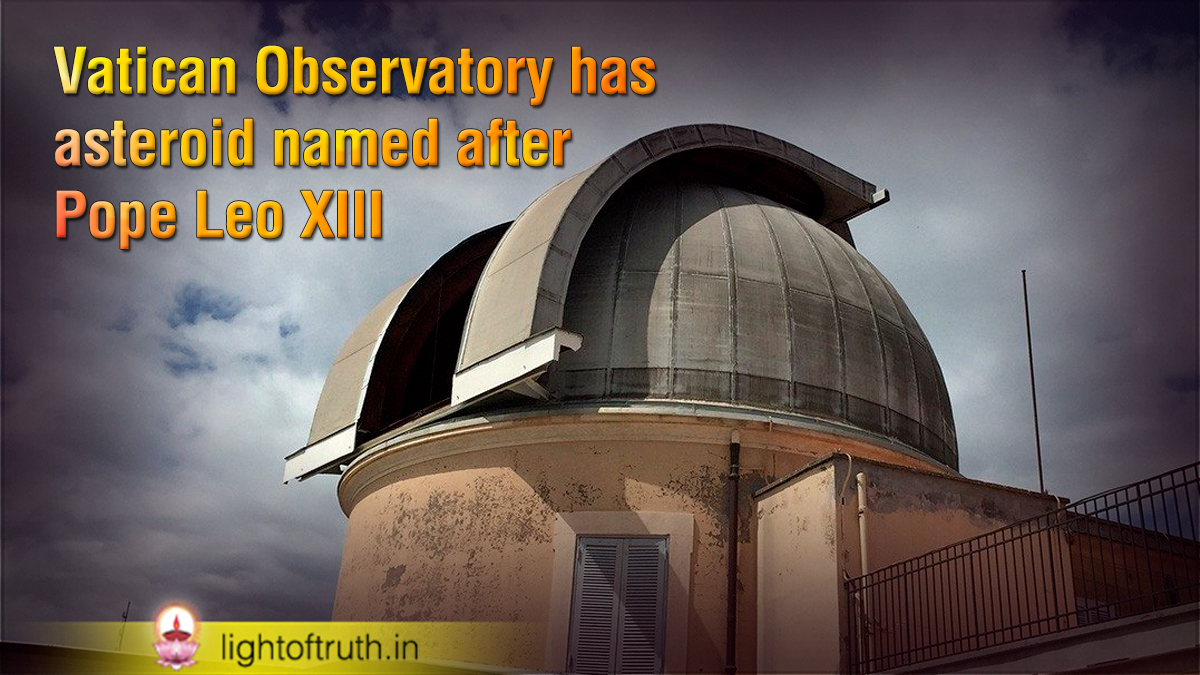
Vatican Observatory has asteroid named after Pope Leo XIII

The Vatican Observatory announced that four asteroids have been named after important figures in its history-including Pope Leo XIII, who re-founded the organization in 1891-in a press release published on Wednesday, April 29.

All four asteroids were discovered by Lithuanian astronomer Kazimieras Černis and Vatican Observatory astronomer Father Richard P. Boyle, using the Observatory’s Vatican Advanced Technology Telescope (VATT), located on Mount Graham in Arizona, United States.

The asteroids are “(858334) Gioacchinopecci”, “(836955) Lais”, “(836275) Pietromaffi”, and “(688696) Bertiau”, and the names were recently announced in Volume 6, issue 4, of the International Astronomical Union’s WGSB Bulletin, the statement explains.

The “(858334) Gioacchinopecci” honors Pope Leo XIII, baptized Gioacchino Vincenzo Raffaele Luigi Pecci, who was Pope from 1878 until his death in 1903.

Pope Leo XIII was instrumental to the development of the Vatican Observatory, as he re-established it following the loss of papal territories and the highly productive astronomical facilities that had been located within them.

This included the observatory of Father Angelo Secchi, which was located atop the Church of St. Ignatius in Rome. Photographs of the Vatican in the early 20th century also show the domes of observatory telescopes atop the walls of the Vatican and the “Tower of the Winds”.

In the 1930s, because of electric lighting brightening the night skies over Rome, the telescopes were moved to the Apostolic Palace in Castel Gandolfo, around an hour south of Rome. Their domes are still there, visible for kilometers in all directions. Further brightening of the Roman skies led to the construction of the Vatican Advanced Technology Telescope on Mount Graham in Arizona in the 1990s.

The statement notes that in his 1891 Motu Proprio “Ut Mysticam” establishing the Vatican Observatory, Pope Leo XIII highlighted how this entity would help to show the world that the Church’s current and historic attitude toward “true and solid science” was to “embrace it, encourage it, and promote it with the fullest possible dedication,” contrary to what detractors had been stating. 

He underlined that the Observatory would be “helping to promote a very noble science which, more than any other human discipline, raises the spirit of mortals to the contemplation of heavenly events.”

This is not the first case of an asteroid being named after a Pope. “(560974) Ugoboncompagni” honors Pope Gregory XIII for his work on reforming the calendar and was also discovered with the Vatican Advanced Technology Telescope. In 2000, German astronomer Lutz Schmadel named “(8661) Ratzinger”, after Pope Benedict XVI, who at the time was a Cardinal and had not yet been elected Pope. It was named after him in honour of his work to open the Vatican archives in 1998, in order to allow researchers to investigate judicial errors against Galileo.
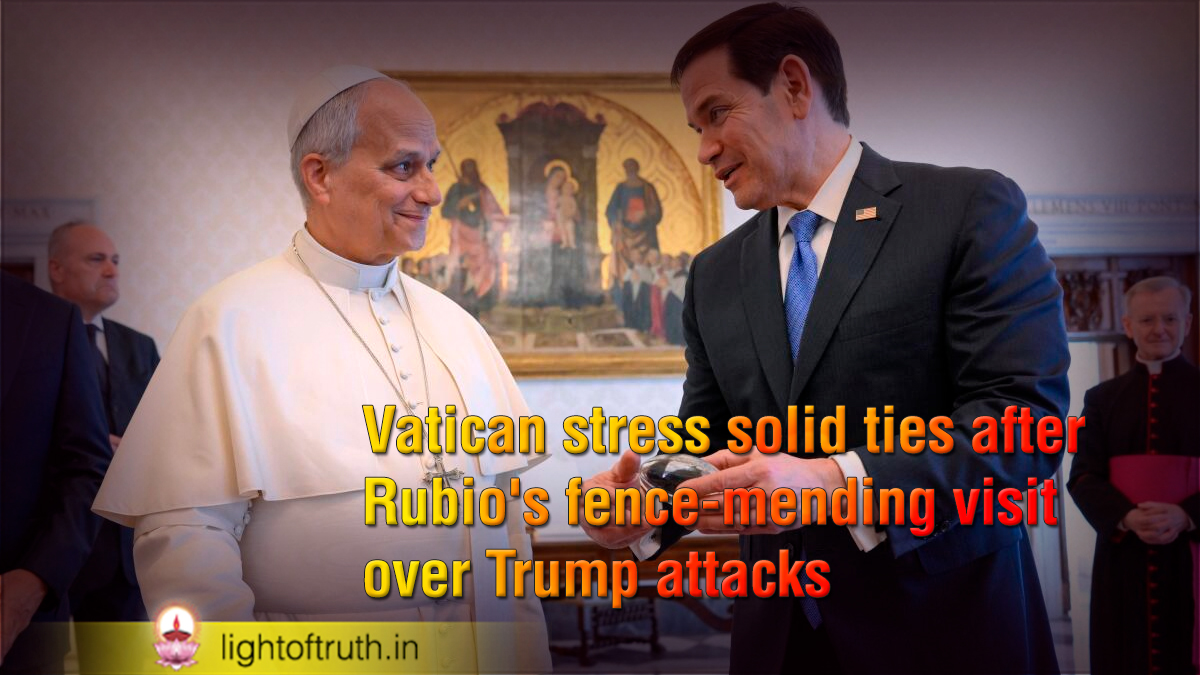
Vatican stress solid ties after Rubio’s fence-mending visit over Trump attacks

VATICAN CITY – The Vatican raised the “need to work tirelessly in favour of peace” in talks Thursday with U.S. Secretary of State Marco Rubio. Both the Vatican and the U.S. State Department stressed that Rubio’s meeting with Leo and the Vatican’s top diplomat underscored strong bilateral ties. Those relations, though, have been strained over Trump’s repeated broadsides about Leo’s calls for peace and dialogue to end the U.S.-Israeli war.

Rubio, a practicing Catholic, has often been called on to tone down or explain Trump’s harsh rhetoric. He had an audience first with Leo, which was complicated at the last minute by Trump’s latest criticism of the Chicago-born pope. During a 2 1/2-hour visit, Rubio then met with the Vatican secretary of state, Cardinal Pietro Parolin, who on the eve of his visit had strongly defended Leo and criticized Trump’s attacks.

“Attacking him like that or criticizing what he does seems a bit strange to me, to say the least,” Parolin said Wednesday.

After the meetings, the U.S. State Department said that Rubio and Parolin discussed “ongoing humanitarian efforts in the Western Hemisphere and efforts to achieve a durable peace in the Middle East. The discussion reflected the enduring partnership between the United States and the Holy See in advancing religious freedom.”

In a separate statement about the audience with Leo, U.S. State Department spokesperson Tommy Pigott said that the two discussed the situation in the Middle East and the Western Hemisphere. “The meeting underscored the strong relationship between the United States and the Holy See and their shared commitment to promoting peace and human dignity,” he said.

The Vatican, for its part, said that during Rubio’s meetings with both Leo and Parolin, “the shared commitment to fostering good bilateral relations between the Holy See and the United States of America was reaffirmed.”

It said the two sides exchanged views on the current events “with particular attention to countries marked by war, political tensions, and difficult humanitarian situations, as well as on the need to work tirelessly in favor of peace.”

Rubio also has meetings Friday with Italian Premier Giorgia Meloni and Foreign Minister Antonio Tajani. Those meetings might not be much easier for Washington’s top diplomat, given both have strongly defended Leo against Trump’s attacks and have criticized the Iran war as illegal…

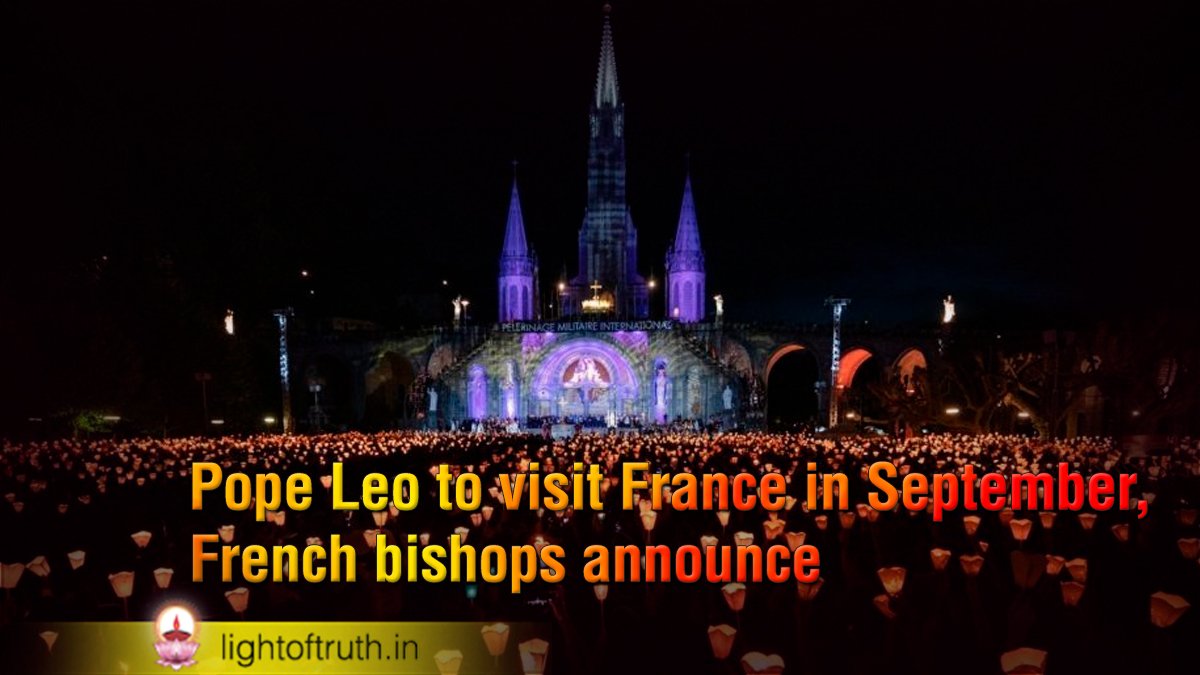
Pope Leo to visit France in September, French bishops announce

Ahead of the first anniversary of his election to the chair of St. Peter, it was announced that Pope Leo XIV is officially expected to visit France in late September, the French Bishop’s conference confirmed May 6.

During the visit, French bishops suggested Pope Leo will travel to Paris and to the Marian Sanctuary of Our Lady of Lourdes. Cardinal Jean-Marc Aveline of Marseille, president of the French bishops’ conference, said in the press release.

The French bishops have not yet announced the exact date of the papal visit. For several weeks now, rumours have been circulating in the Paris region that it could take place around Sept. 19. Some bishops have communicated this date to their parish priests so they can adjust their parish schedules accordingly. But this remains to be confirmed by the Vatican. In March, Cardinal Aveline, who frequently visits the Vatican, had already openly informed the bishops of France during their spring plenary assembly that he had invited Pope Leo.

The visit would fall just before the start of the campaign for the upcoming presidential elections, which will take place in the spring of 2027, and which will bring an end to Emmanuel Macron’s two five-year terms as president of the republic.

On April 10, President Macron confirmed that he, too, had invited Pope Leo during his meeting with the pope at the Vatican. Among the members of the delegation accompanying Macron to the Vatican was the rector of the Sanctuary of Lourdes, Father Michel Daubanes.

“It is absolutely clear that the pope is coming to Lourdes!” he later exclaimed in a video interview from the Sanctuary of Lourdes, broadcasted April 24. “We are eagerly awaiting him!”

As of May 6, the day of the announcement, logistical preparations for the pope’s visit were well underway in Lourdes. “We have developed a preliminary program with the presidency of the bishops’ conference and with the Archdiocese of Paris,” Bishop Jean-Marc Micas of Tarbes and Lourdes told OSV News. “It is planned that the pope will celebrate a solemn Mass on the sanctuary’s lawn and preside over the torchlight procession in the evening, before spending the night there, though we are awaiting confirmation from the Vatican.”

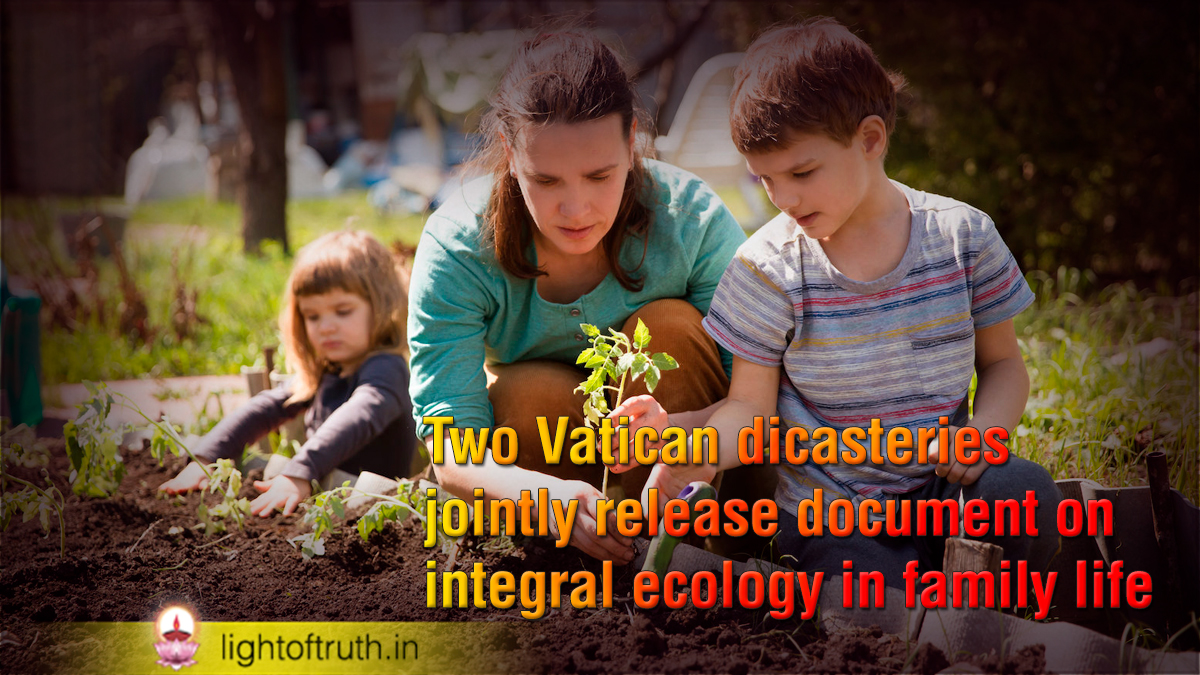
Two Vatican dicasteries jointly release document On integral ecology in family life

The Vatican Dicastery for Promoting Integral Human Development and the Dicastery for Laity, Family and Life have jointly published a new document offering guidelines for families related to the care for creation and human life.

The 79-page document, titled “Integral Ecology in the Life of the Family,” draws from the principles of Pope Francis’ post-synodal exhortation “Amoris Laetitia” and the teachings of the encyclical “Laudato Si’: On Care for Our Common Home.”

“Family values are the fruitful soil from which all of society grows. In order to care properly for our common home and for all people, families must be the model,” Cardinal Michael Czerny and Cardinal Kevin Farrell, prefects of the two dicasteries, respectively, wrote in a joint press release to promote the document April 27.

“Many families are attentive in caring for our common home and caring for others, their minds set on the hope that is Jesus Christ. The values of the family are consistent and fundamental to the care of our common home and of our neighbors,” the cardinal prefects of the two dicasteries added.

“What are the values of the family? Members of the family learn selflessness, patience and dedication, openness and protection of life, so that they can flourish, complementarity and reciprocity, intergenerational connections and solidarity with other families, and the transmission of knowledge and traditions.” The document offers guidelines to families, Church groups and individuals to help them address the current environmental challenges and to promote the integral development of every person.

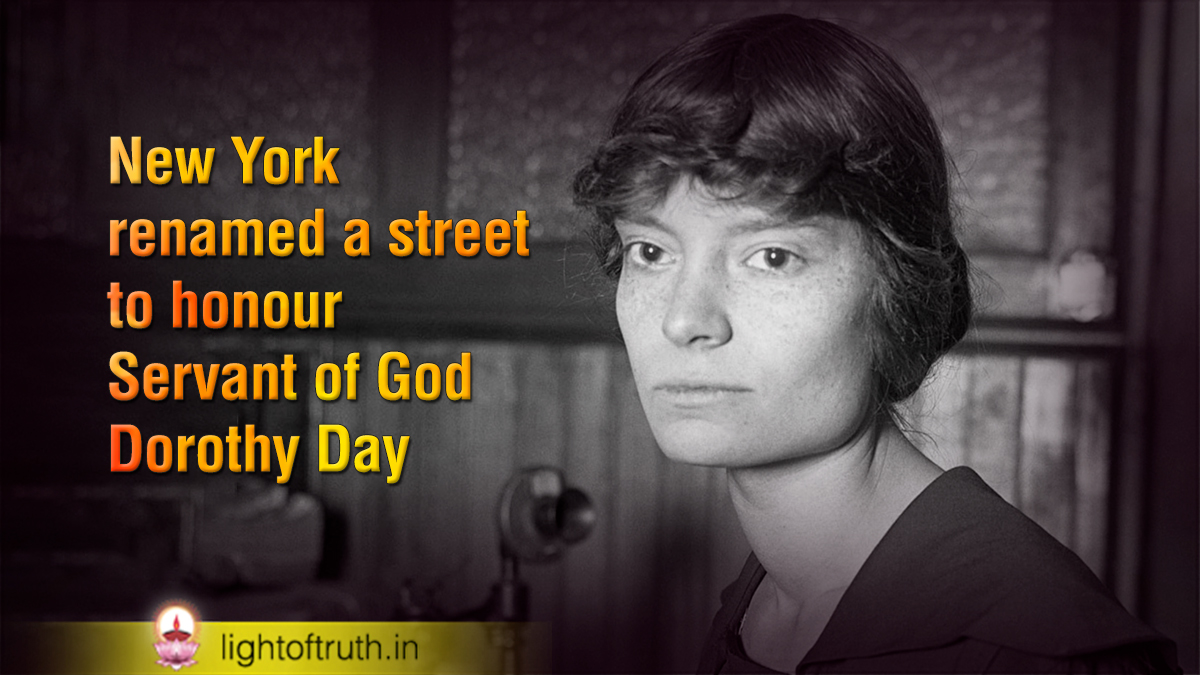
New York renamed a street to honour Servant of God Dorothy Day

A street corner in Brooklyn, New York, is now honouring Catholic social activist and journalist Servant of God Dorothy Day. The intersection of Pineapple and Henry streets in Brooklyn Heights was renamed to “Dorothy Day Way” on May 2.

Born in Brooklyn and raised in Chicago, Day was baptized Episcopalian at the age of 12. From a young age she showed signs of caring deeply about religion and justice. As a young woman, she was shaped by the social upheavals of the 1910s and influenced by works like Upton Sinclairʼs book “The Jungle,” which exposed the harsh realities of industrial labour. She left college and moved to New York, working as a reporter for a socialist newspaper and immersing herself in radical political and artistic circles, including a relationship with anarchist Forster Batterham.

In the 1920s, Day settled on Staten Island, where she raised her daughter, Tamar, and gradually deepened her spiritual life. Drawn to Catholicism, she began praying regularly and had her daughter baptized before entering the Catholic Church herself in 1927. After becoming a single mother, her concern for the poor took on new urgency. In 1933, she partnered with Peter Maurin to launch the Catholic Worker Movement, combining direct service with a radical commitment to living out the Gospel through voluntary poverty.

Through the movement, Day helped establish houses of hospitality, soup kitchens, and farming communities, serving those in need throughout the Great Depression and beyond. A lifelong pacifist, she spoke out against war, including the Vietnam War, and supported labor rights and civil rights efforts. Day never took a salary for her work and remained committed to serving the marginalized for decades. She died in 1990 and her legacy continues through Catholic Worker communities worldwide”. Her cause for canonization opened in 2000, and she is now recognized as a servant of God, the first step in the process toward possible sainthood.

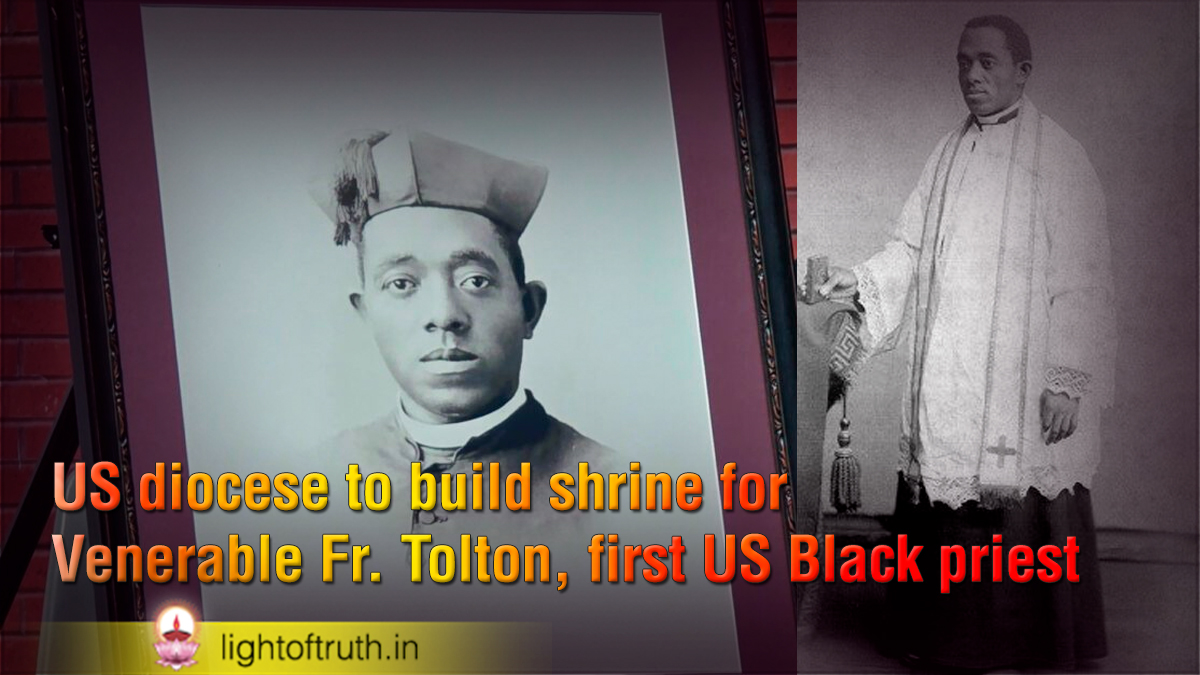
US diocese to build shrine for Venerable Fr. Tolton, first US Black priest

Venerable Father Augustine Tolton-the first publicly recognized Black priest in the United States-surmounted racial tensions and divisions that marked the country in the 19th century and lived a full life serving the Church and its faithful, while being loved by many. 

Fr. Tolton was born into slavery in 1854 in Missouri. When he was still a child he escaped with his mother and siblings to Illinois and settled in Quincy. Although slavery was officially abolished in 1865, African Americans continued facing a lot of discrimination and even in Quincy Fr. Tolton had to change schools twice to be able to pursue an education.

He was also confronted with religious divisions, as when he was 24-years-old he opened the first school for Black children in Quincy but was met with opposition from African American Protestants who refused to send their children there as he was Catholic.  It didn’t brought him down; but rather he used it “as an opportunity to continue to reach across and welcome all peoples to show them the gift of education in the life of the faith.”

As he grew older, Fr. Tolton discerned a call to the priesthood but no American seminary would accept him as a Black man. He was thus admitted in 1880 to the Pontifical Urban University in Rome as a seminarian for the Congregation for the Evangelization of Peoples (Propaganda Fidei), the entity of the Roman Curia responsible for missionary work and which today has become the Dicastery for Evangelization. He was ordained on April 24, 1886, in the Basilica of St. John Lateran in Rome and sent back to his home diocese to serve the faithful there.

The construction of the Shrine is an opportunity for Venerable Tolton’s story to go beyond Quincy and the United States and encourage more people to get to know him and turn to him in prayer.

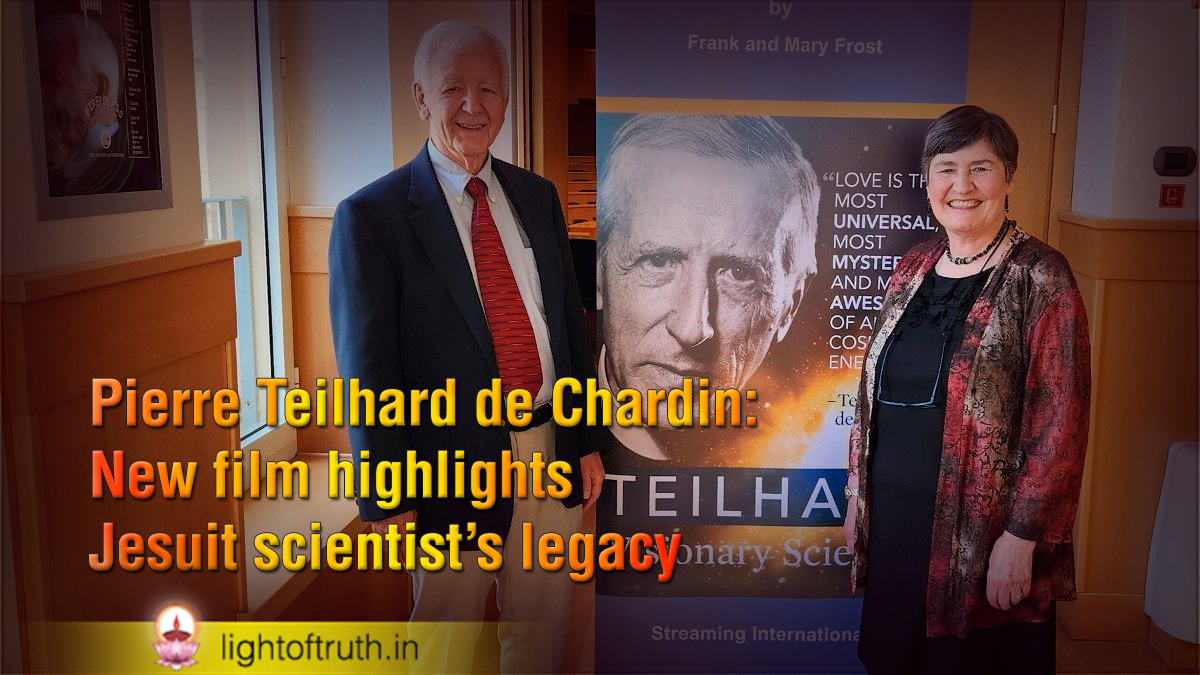
Pierre Teilhard de Chardin: New film highlights Jesuit scientist’s legacy

The recent screening of the film “Teilhard: Visionary Scientist” at the Vatican’s Filmoteca, then at the Jesuit Curia and Rome’s Pontifical Gregorian University, drew much applause and appreciation. The American filmmakers, Frank and Mary Frost, spoke to Vatican News about the film.

Frank and Mary Frost’s two-hour film, “Teilhard: Visionary Scientist,” is about the life, scientific thought, and spiritual vision of Pierre Teilhard de Chardin, a French Jesuit priest who lived from 1881 to 1955. The film is a compelling human story filled with drama, centred on this priest-palaeontologist and visionary thinker. It focuses on his lifelong struggle to reconcile evolutionary science with Catholic faith and theology. Teilhard was telling that we must engage the world as a way to Christ, to a spirituality.

Frank and Mary Frost have said: It has been an adventure. It has been an honour. It’s been exciting. We tried to make Teilhard understandable to the world. And so, this allows us to have a very wide exposure, and nothing is higher in our estimation than being accepted in Rome by the Vatican, the Jesuits, and the Gregorian University.  

It is not intended for a Catholic or religious audience. It was designed to be seen by the general public, people who are, in some way, searching for spirituality, for something spiritual in their lives. Teilhard was a man who had struggled to discover for himself the reconciliation of science and faith.

The film has been translated into eight languages. Worldwide, it has achieved a certain measure of success as well. We have a direct international streaming link that people can use. One of the interesting things is that the first people who wanted to translate it into their language were the Chinese. We were surprised to receive requests from satellite broadcasters to air it in the Middle East and North Africa. In these regions, the film has been translated it into Arabic, Turkish, and Farsi. That tells the universal appeal of Teilhard.

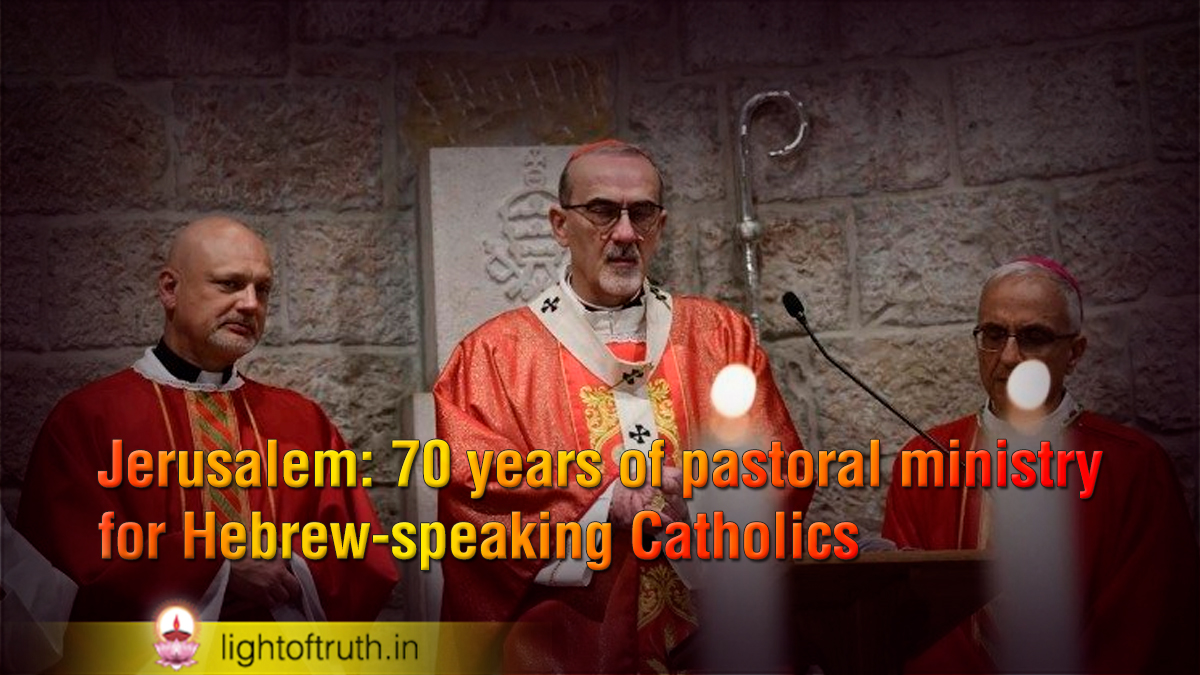
Jerusalem: 70 years of pastoral ministry for Hebrew-speaking Catholics

The Saint James Vicariate for Hebrew-speaking Catholics in Israel is marking the 70th anniversary of its founding. The jubilee, celebrated on May 2 at the Notre Dame Center in Jerusalem, brought together around 350 parishioners and guests. The Mass for the feast of St. James the Apostle was presided over by Cardinal Pierbattista Pizzaballa, Latin Patriarch of Jerusalem.

The Saint James Vicariate is a distinctive sign of the Church’s presence in Israel: it speaks the language of daily life and of the heart-Hebrew-while remaining firmly rooted in the universality of the Catholic Church.

Celebration of the 70th anniversary of the pastoral ministry for Hebrew speaking Catholics, Cardinal Pizzaballa, who served as vicar of the Saint James Vicariate from 2005 to 2008, stressed the importance of “understanding [the people of Israel]” and of “recognizing the responsibility of communities to help the Church understand and look ahead.” He noted that this relationship “is more important today than ever.”

The Vicariate gathers Catholics living within Israel’s Hebrew-speaking society: faithful of Jewish and non-Jewish origin, local Christians, migrants, and Russian-speaking groups. Its communities are active in Jerusalem, Tel Aviv–Jaffa, Haifa, Be’er Sheva, and Tiberias.

As highlighted during the jubilee, the Vicariate lives out its mission daily: translating, accompanying, listening, and serving. Its purpose is not to build a separate Church, but to serve the one Church of Jesus from within.  “Seventy years is a gift. It is also a responsibility,” said Fr. Piotr Żelazko, vicar of Saint James since 2021. He added that the task of the communities is “to remain faithful, attentive and courageous—to listen to the signs of the times, care for the next generation, and continue building bridges of faith, dialogue and compassion.”

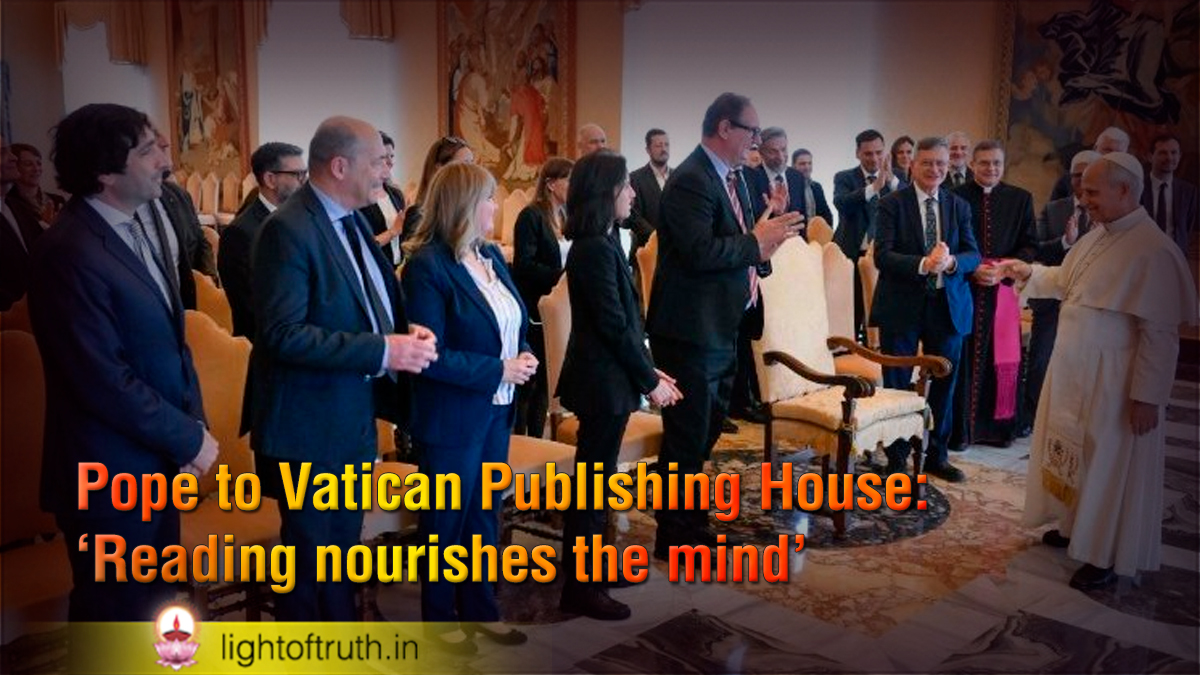
Pope to Vatican Publishing House: ‘Reading nourishes the mind’

“In these hundred years of activity, the Vatican Publishing House has served nine Pontiffs, disseminating their Magisterium as a contribution to spreading the Gospel throughout the world. “Pope Leo XIV expressed these words of gratitude during his meeting with members of the Vatican Publishing House in the Vatican. The Pope recalled that in 1926 the Vatican Publishing House became independent from the much older Vatican Printing Press, originally founded in 1587.

The Holy Father said books offer an opportunity to think. Especially in the digital age, the physical nature of a book reminds people of the importance of thought, reflection, and study. “Reading,” the Pope said, “nourishes the mind” and “helps cultivate a conscious and well-formed critical sense, guarding against fundamentalism and ideological shortcuts.”

The Pope reflected on books as an opportunity to encounter others. “When we hold a book in our hands,” he observed, “we encounter its author in an ideal sense”… Recalling Pope Francis’ frequent emphasis on a “culture of encounter,” Pope Leo suggested that books serve as bridges toward others, fostering dialogue, enriching understanding, and broadening perspectives.

Finally, Pope Leo underscored that, for Christians, books are also an opportunity to proclaim Christ. “We know well how reading the biography of a saint or a well-presented spiritual reflection can touch the heart”.