Khammam Bishop Calls for SC Reservation Benefits for Dalit Christians

Bishop Sagili Prakash of the Diocese of Khammam has asked the Supreme Court of India to review the exclusion of Dalit Christians from Scheduled Caste reservation benefits.

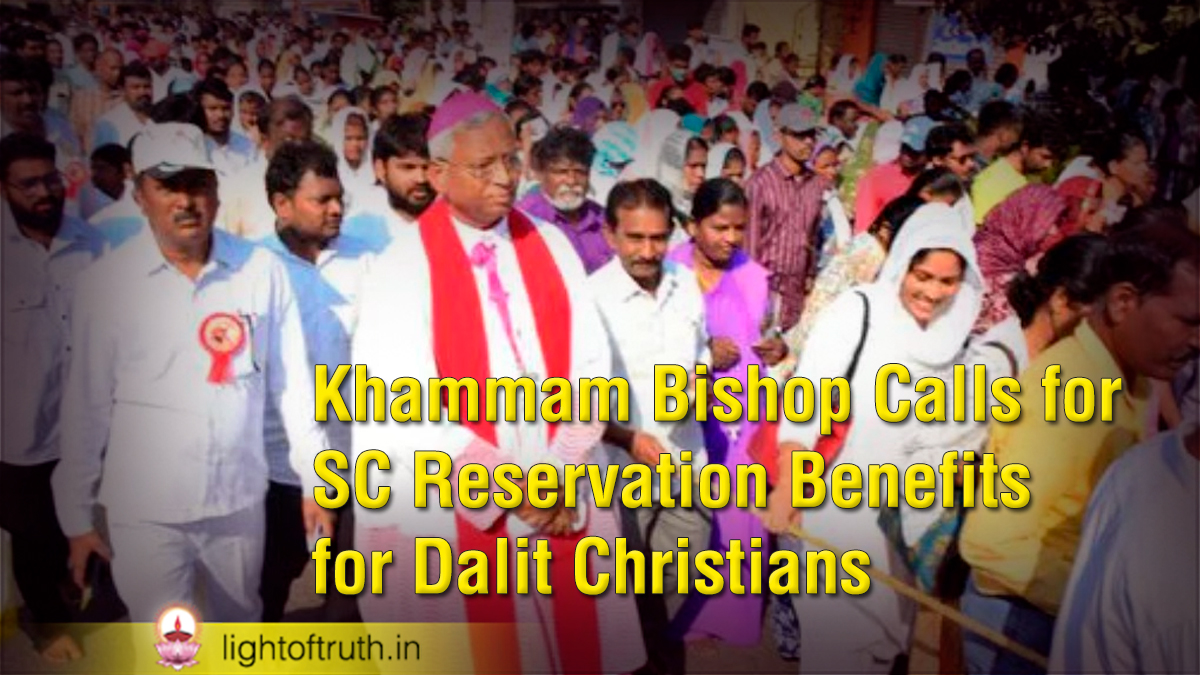
Speaking during a Good Friday gathering in Khammam on April 3, the bishop said that Dalit Christians continue to face social and economic discrimination and should not lose reservation benefits after converting to Christianity.

He said the Indian Constitution guarantees equality and freedom of religion under Articles 13, 14, and 25. According to the bishop, people who choose to become Christians do so freely, but their conversion should not take away benefits linked to their historical social disadvantage.

Bishop Prakash criticised the Presidential Order of 1950, which limits Scheduled Caste status mainly to Dalits who follow Hinduism. The benefits were later extended to Sikhs and Buddhists, but not to Christians or Muslims.

He said this exclusion prevents Dalit Christians from receiving reservation benefits in education and government jobs.

“For generations, Dalits have faced discrimination and untouchability. Denying reservation benefits makes their suffering worse,” the bishop said.

The bishop spoke after leading a “Way of the Cross” procession in Khammam that was attended by more than 5,000 people.

During his address at Ambedkar Centre, he also spoke about peace, unity, and the idea of the world as one family.

Bishop Prakash said he has raised this issue many times with national leaders, including prime ministers, presidents, and members of parliament.

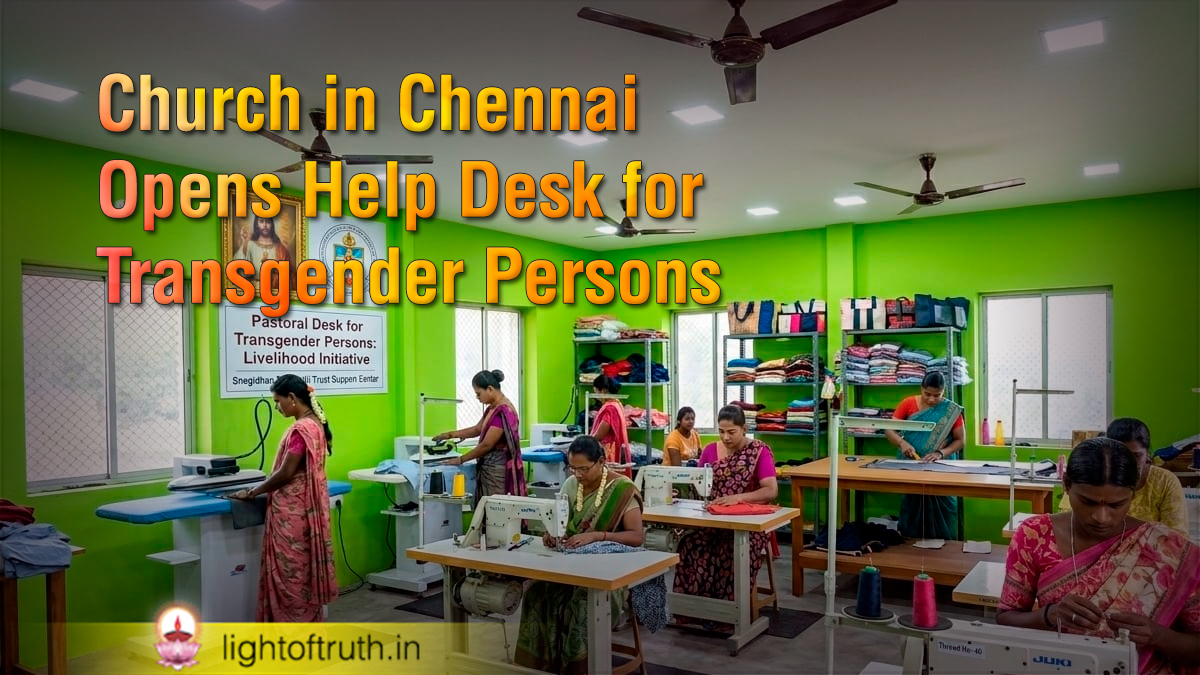
Church in Chennai Opens Help Desk for Transgender Persons

The Archdiocese of Madras-Mylapore has opened a special help desk for transgender persons at Kadarkarai Sagaya Madha Church in Ennore, Chennai.

The new initiative was blessed and opened by Archbishop George Antony Samy. The help desk aims to offer spiritual support, mental health counselling, and help with employment for transgender persons, especially in and around Chennai.

The desk is located inside the parish premises and is seen as one of the first efforts of its kind in the Catholic Church in India. It hopes to support a community that has often faced rejection and discrimination in society and even within the Church.

The initiative is led by Fr. Leo Joseph along with Inba Ignatius, founder of the Snegidhan Snegidhi Trust. The trust is known for helping transgender persons with shelter and job opportunities.

Fr. Joseph said he began this work after seeing the struggles faced by many transgender people during his earlier ministry in Chennai. He said many were afraid to take part in Church activities because of past experiences of exclusion.

Inba Ignatius also shared that she had once been an active Catholic but later felt rejected after her gender transition.

An eight-member committee of priests, religious sisters, laypeople, and transgender representatives has been formed to guide the project.

Church leaders hope the new desk will help transgender persons feel accepted, respected, and welcomed in parish life.

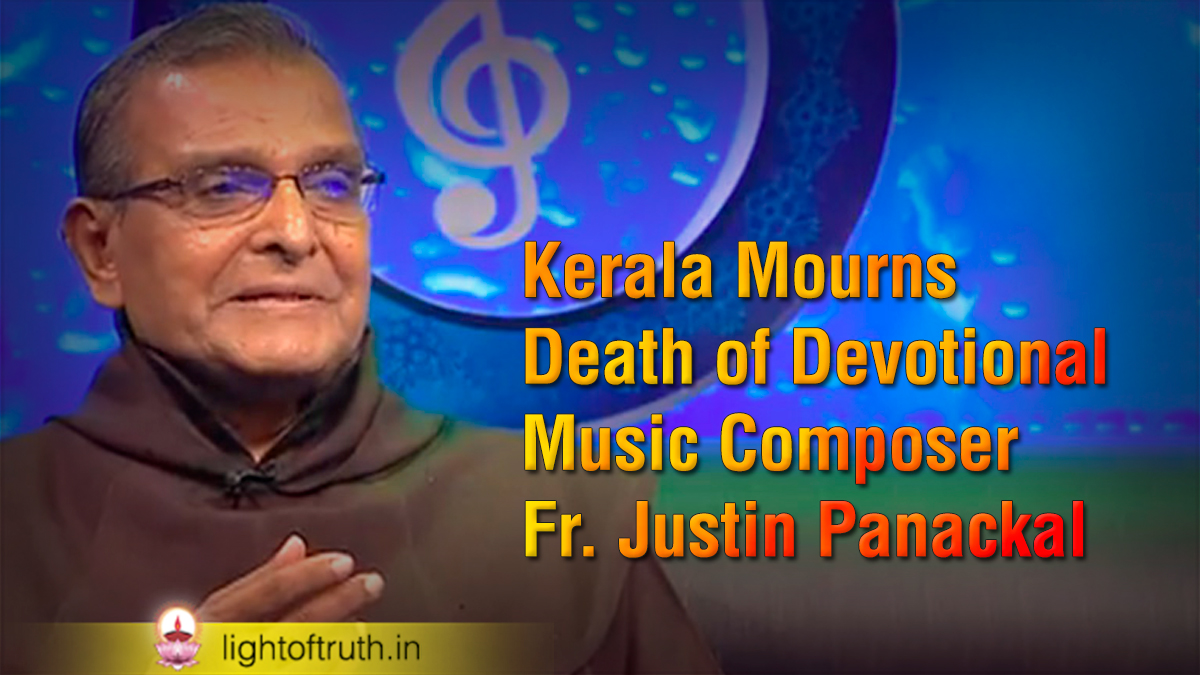
Kerala Mourns Death of Devotional Music Composer Fr. Justin Panackal

Fr. Justin Panackal, the famous Carmelite priest and composer of the beloved devotional song Paithalam Yeshuve, passed away on Maundy Thursday at the age of 91.

A member of the Discalced Carmelites congregation, Fr. Panackal was one of the most important figures in Christian devotional music in Kerala. He composed 28 songs, many of which became popular through the voice of K. J. Yesudas.

Some of his best-known songs include Paithalam Yeshuve, Manju Pozhiyunna Maamaram, Navyamaya Oru Kalpana, and “En Jeevithamaam Ee Marakkombil.” These songs continue to be sung in churches and prayer gatherings across Kerala.

Fr. Panackal was born on August 10, 1935, in Kumbalangi near Kochi. After losing his father at a young age, he was raised in Alappuzha, where his talent in music was noticed early.

He joined the seminary in 1954 and was ordained a priest in 1962 at Mangalapuzha Seminary. Later, he studied in Rome and earned a doctorate in Carmelite spirituality.

For many years, he taught theology and music at St. Joseph’s Pontifical Seminary in Aluva. He also wrote 17 books and more than 125 articles.

His death on Maundy Thursday was seen as especially meaningful because one of his well-known songs, Navyamaya Oru Kalpana, is traditionally sung in churches on that day.

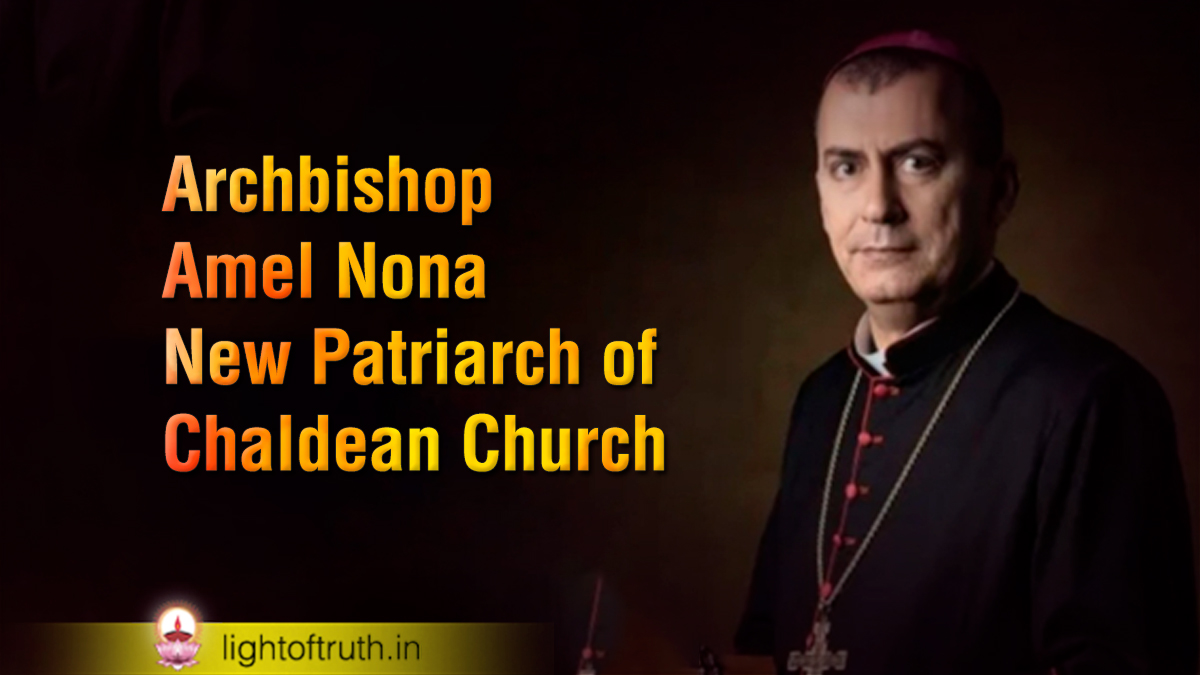
Archbishop Amel Nona New Patriarch of Chaldean Church

The Chaldean Synod has elected Archbishop Amel Shamon Nona as the new patriarch of the Chaldean Catholic Church, succeeding Cardinal Louis Raphael Sako, who submitted his resignation to Pope Leo XIV on March 9 amid a financial and legal scandal concerning a former Chaldean bishop in San Diego. The election took place during the synod’s meetings held in Rome since April 9. This election comes at a critical time for both the Chaldean Church and the wider region amid ongoing political challenges, in Iraq and the Middle East, as well as internal ecclesial issues related to unity, and the organization of Church life both locally and in the diaspora.

Following the election, the Chaldean bishops issued a statement saying: “After deep spiritual and fraternal deliberations, conducted in a spirit of prayer and ecclesial discernment, and mindful of the apostolic responsibility entrusted to them, the fathers of the synod elected the patriarch of the Chaldean Church according to the established canonical procedures. After completing the required ballots, and in accordance with the will expressed by the synod, His Excellency Archbishop Amel Shamon Nona was elected patriarch of the Chaldean Church and chose for himself the name His Beatitude Patriarch Mar Paul III Nona.”

The statement continued: “His Beatitude accepted the election in accordance with canonical norms, expressing his reliance on God’s grace and his commitment to exercise his patriarchal ministry with fidelity and responsibility, in full communion with the fathers of the synod, in service of the unity of the Chaldean Church and its mission in the homeland and the diaspora.” “The fathers of the synod raise their prayers to the Lord Jesus Christ, the good shepherd, asking that he grant the elected patriarch wisdom and strength”. They affirm their confidence that “this ministry will contribute to strengthening the faithful in their faith, enhancing their unity, and revitalizing the Church’s mission in bearing witness to the Gospel.”

The synod also called on all members of the Chaldean Church – clergy and faithful alike – to unite around the new patriarch and support him through prayer and shared responsibility for the good of the Church and the growth of its mission.

Nona was born in Alqosh in northern Iraq in 1967. He was ordained a priest in 1991 after completing his studies at the Patriarchal Seminary in Baghdad. He later pursued higher studies in Rome, earning a doctorate in theological anthropology from the Pontifical Lateran University. He served in the parishes of Alqosh before being appointed archbishop of Mosul in 2009, during a period marked by escalating violence against Christians in Iraq. During the events of 2014, he left Mosul along with his faithful following the takeover of the city by the terrorist group ISIS, marking a pivotal moment in the modern history of the Chaldean Church. In 2015, the Holy See appointed him head of the Chaldean Eparchy of St. Thomas the Apostle in Australia and New Zealand, where he continued his pastoral ministry among the Chaldean diaspora.

His appointment comes following the resignation of Cardinal Raphael Sako, who announced that he submitted his resignation to Pope Leo XIV of his own free will on the morning of March 9 so he could “dedicate himself quietly to prayer, writing, and simple service.” The timing sparked controversy within the Chaldean community. Pope Leo XIV on March 10 accepted the resignation of Bishop Emanuel Shaleta, a Chaldean Catholic bishop arrested in San Diego in March on charges of embezzling Church funds. Sako had allegedly attempted to support or transfer the embattled bishop to a higher position, leading many to question whether the financial scandal played a role in the patriarch’s decision.(EWTN news)

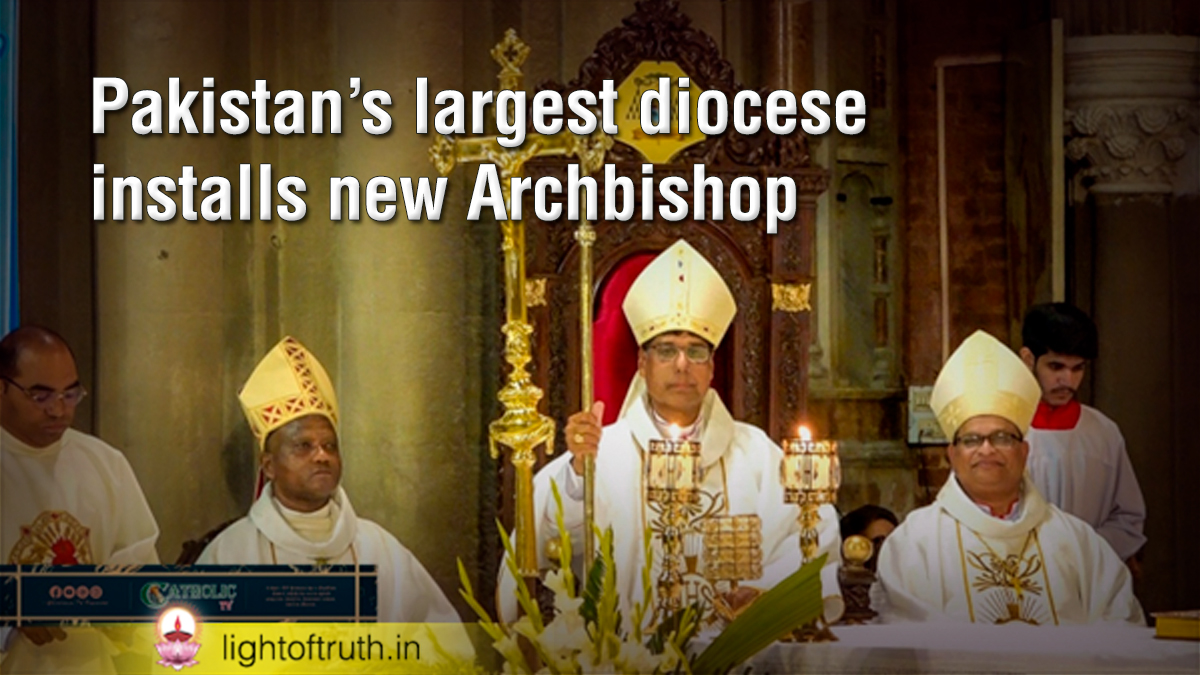
Pakistan’s largest diocese installs new Archbishop

The installation of Archbishop Khalid Rehmat closes a turbulent chapter for Pakistan’s largest Catholic diocese. A Capuchin Franciscan friar has been installed as archbishop of Lahore, assuming leadership of Pakistan’s largest Catholic diocese after a turbulent period marked by the removal of his predecessor. Archbishop Khalid Rehmat, OFM Cap, 57, was installed as head of the Archdiocese of Lahore on March 28 in a ceremony that acknowledged a period of “particular difficulties and challenges” following the removal of Archbishop Sebastian Shaw, OFM, in August 2024 – an unprecedented development in the country’s Catholic history.

During the liturgy, Vicar General Father Asif Sardar read the Urdu translation of the papal bull, which referenced the trials faced by Pakistan’s largest Catholic diocese, home to an estimated 577,000 faithful. “We devote all our energies to the governance of the ship of the Church, which for different reasons is sometimes assailed by waves, requiring the guidance of both ourselves and the devoted pastors appointed by us. For this reason, we have turned our attention to the metropolitan see of Lahore,” he said, quoting Pope Leo XIV.

The remarks were widely interpreted as an indirect reference to Shaw, who was appointed apostolic Vicar of Quetta and installed at St. Mary’s Catholic Church on March 24. Prior to that, he had been residing at the Franciscan Friars Minor house in Karachi while on what Church authorities described as a sabbatical. Shaw has faced multiple allegations in recent years, including claims of financial mismanagement and misconduct involving Church funds and properties, circulated in media reports and on social media. In 2017, he drew criticism for allowing a political address by Maryam Nawaz, now chief minister of Punjab, at Sacred Heart Cathedral during an election campaign. Further controversy emerged in 2021 when a Christian activist shared on social media photographs and documents alleging irregular land transactions linked to Shaw. (EWTN News.)

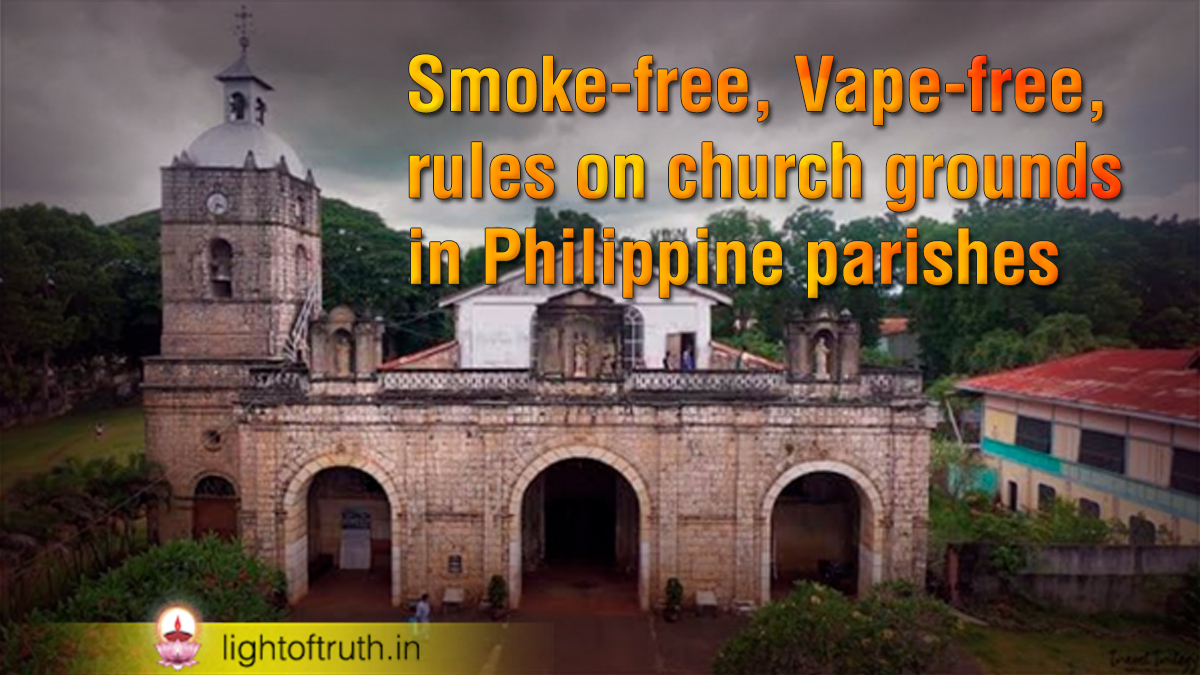
Smoke-free, Vape-free, rules on church grounds in Philippine parishes

Catholic bishops’ health official is urging parishes nationwide to enforce smoke-free and vape-free rules out of respect for sacred space and concern for public health.

Several parishes in the Philippines have begun enforcing smoke-free and vape-free policies on church grounds, citing both the sacredness of the premises and the health of parishioners.

“I support the smoke-free and vape-free policies in church premises for the good of all,” Maria Christina Jomen, a parishioner of St. John the Baptist Parish in Jimenez, Misamis Occidental, told. “Having a healthy environment is a responsibility for all, especially in places of worship.”

This particular church, some 755.89 kilometers (469.69 miles) south of Manila, is among the parishes implementing the smoke-free policy in response to health initiatives from the Catholic Bishops’ Conference of the Philippines (CBCP) in collaboration with local governments. The executive secretary of the CBCP Episcopal Commission on Health Care, Camillian Father Dan Vicente Cancino Jr., issued a statement directing parishes nationwide to adhere to smoking bans as a sign of respect for sacred spaces. The Department of Health later circulated a video message from Cancino on its platforms.

Cancino said tobacco use leads to preventable disease, premature death, and suffering, and called on all parishes to strictly enforce smoke-free and vape-free policies. The bishops’ conference has voiced alarm at the prevalence of smoking and vaping among Filipinos, particularly among the young. “This initiative is in accordance with our existing laws, and the move is also out of respect for the sacred and concern for community health,” the priest said, noting that smoking in public places such as churches endangers both individual and community health. “These habits pose serious threats to both individuals and the community. I hope that all our parishes and communities strictly enforce smoke-free and vape-free policies in accordance with existing laws”.

The National Shrine of Our Mother of Perpetual Help, Parañaque City, Manila, has enforced a no-smoking policy on its premises since 2015, partly in response to Pope Francis’ encyclical on care for creation, Laudato si. Other parishes have moved in step with municipal anti-smoking ordinances in cities including Baguio, Davao, Balanga, and Iloilo, pairing health-conscious campaigns with what Church officials describe as “green” initiatives to protect public health and the environment.

According to the World Health Organization’s 2025 Global Report on Trends in Prevalence of Tobacco Use, roughly 1 in 5 Filipino adults – about 19.7% of those aged 15 and over – currently smoke, with the rate among men (35.6%) more than eight times higher than among women (4.2%).

The 2021 Philippines Global Adult Tobacco Survey, conducted by the Philippine Statistics Authority and the Department of Health with WHO support, similarly found that 18.5% of Filipino adults currently smoke tobacco. WHO estimates that smoking causes roughly 88,000 deaths in the Philippines each year?

Data from the Food and Nutrition Research Institute of the Department of Science and Technology indicate that 4.8% of Filipinos aged 10 to 19 smoked in 2023, up from 2.3% in 2021. The World Health Organization has reported that, globally, children aged 13 to 15 are using e-cigarettes at higher rates than adults. The Philippine Department of Health has urged the public to reject vaping products, warning they are not a safer alternative to cigarettes and citing the rising trend of nicotine use among young Filipinos (EWTN News)

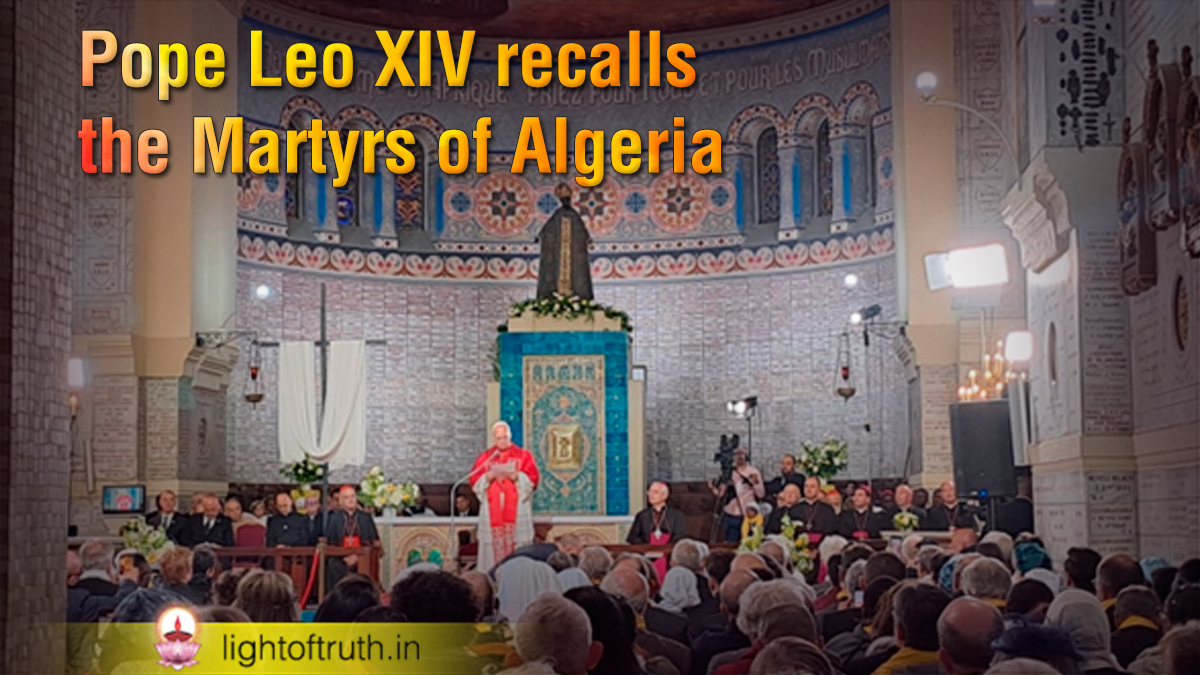
Pope Leo XIV recalls the Martyrs of Algeria

The first day of Pope Leo XIV’s international apostolic journey to Africa concluded with an encounter with the Algerian community at the Basilica of Our Lady of Africa in Algiers. The meeting in the Catholic Basilica of Our Lady of Africa concluded the first day of the journey to Africa.

“It is with profound joy and fatherly affection that I meet with you today, you whose discrete and precious presence in this land is marked by an ancient heritage and by luminous witnesses of the faith,” Pope Leo said after listening to several testimonies.

“Your community has deep roots indeed. You are the heirs of a host of witnesses who gave their lives, motivated by love for God and neighbour. “I am particularly reminded of the 19 men and women religious who were martyred in Algeria, choosing to stand alongside this people in its joys and sorrows. Their blood is a living seed that never ceases to bear fruit.”  Pope Leo on Monday afternoon received the embrace of the Algerian Catholic community, present despite heavy rain. At the opening of the meeting, the pope knelt in adoration in front of a tabernacle containing the Eucharist.

“You are also heirs to a still more ancient tradition, dating back to the early centuries of Christianity,” he said in a speech delivered in French. “In this land resounded the fervent voice of Augustine of Hippo, preceded by the testimony of his mother, St. Monica, and of other saints. Their memory shines as a call to be authentic signs of communion, dialogue, and peace today.”

“To all of you, dear friends, and to those who are not able to be present but are following this meeting from afar, “I express my gratitude for your daily commitment to manifest the maternal heart of the Church.” The pope invited those present to reflect on three essential aspects of Christian life. “First, prayer. We all need to pray. … Prayer unites, humanizes, strengthens, and purifies the heart. Through prayer, the Church in Algeria sows humanity, unity, strength, and purity, reaching places known only to the Lord”.

 Turning to charity Leo emphasized that mercy and service are not merely practical assistance but places of grace and mutual growth. “After all, it is precisely love for their brothers and sisters that inspired the witness of the martyrs we have commemorated. In the face of hatred and violence, they remained faithful to charity even to the point of sacrificing themselves alongside many other men and women, Christians and Muslims. They did so without ostentation or fanfare, with serenity and steadfastness, neither falling into presumption nor despair, for they knew the One in whom they had placed their trust.

 Addressing peace and unity, Pope Leo recalled that this was the central theme of his visit “In a world where division and wars sow pain and death among nations, in communities, and even within families, your experience of unity and peace is a compelling sign. Together, you spread fraternity and inspire a deep longing for communion and reconciliation with simplicity and humility.”

“A considerable part of this country’s territory is desert, and in the desert, no one can survive alone. The hostile environment dispels any presumptions of self‑sufficiency, reminding us that we need one another, and that we need God. “When we acknowledge our fragility, our hearts become open to supporting one another and to invoking the One who can grant what no human power can ensure: the profound reconciliation of hearts and, with it, true peace.”

Before reaching the Basilica of Our Lady of Africa, Pope Leo XIV stopped at the Great Mosque of Algiers and earlier at the centre of hospitality and friendship of the Augustinian Missionary Sisters in Bab El Oued. There, the pope paid homage to the memory of several religious sisters of this community killed during the civil war in the 1990s. After praying with the sisters and listening to the words of their superior, Leo XIV recalled the martyrs as a precious presence in the land and as a sign of the heart of Augustinian life: witness, even unto martyrdom. “Your presence here means a great deal,” the Holy Father said, recalling a previous visit and highlighting the legacy of St. Augustine in the region: promoting respect for the dignity of every person and affirming that it is possible to live in peace while valuing differences. Before departing, he thanked the sisters and encouraged them to persevere, recalling that the feast of the 19 martyrs of Algeria falls on May 8 – the day of his election. (EWTN news)

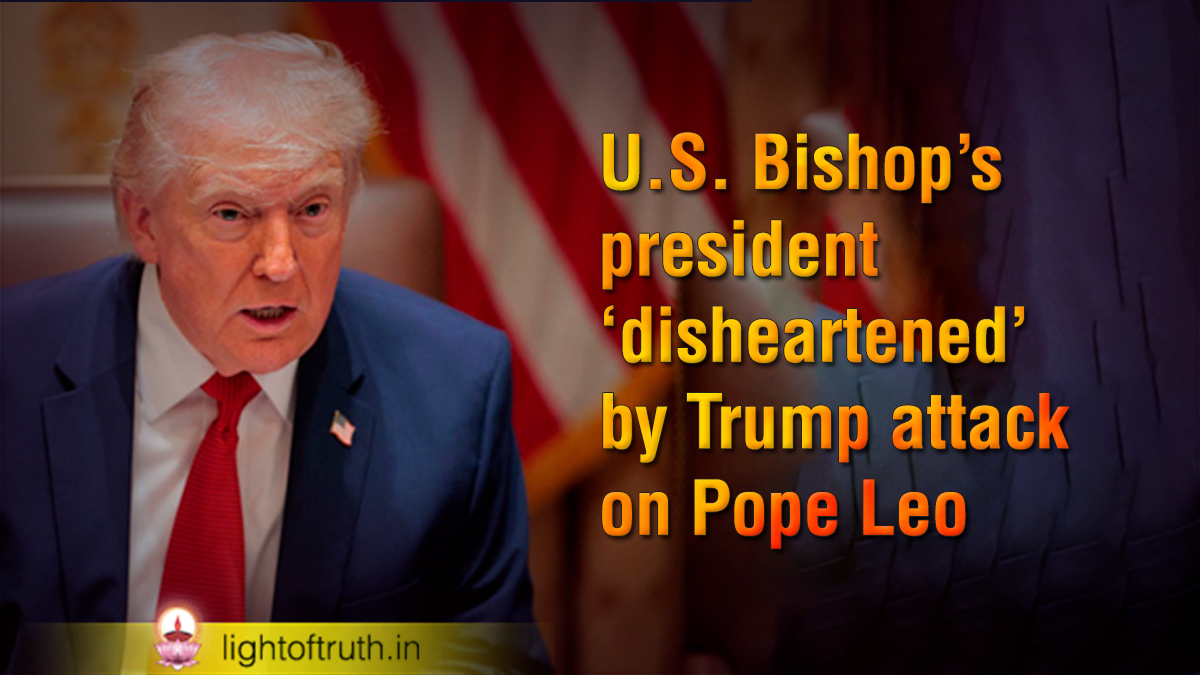
U. S Bishop’s president ‘disheartened’ by Trump attack on Pope Leo

President Donald Trump publicly attacked Pope Leo XIV on social media Sunday evening, calling the pontiff “weak on crime, and terrible for foreign policy” in a lengthy post that appeared to be reacting to the Holy Fatherʼs recent appeals for peace and an end to war. In comments to reporters at Joint Base Andrews shortly afterward, Trump said: “I don’t think he’s doing a very good job. … I am not a fan of Pope Leo.” He added: “He’s a very liberal person.”

Trump accused Leo of being soft on Iran and criticized the pope’s opposition to U.S. military operations. “I don’t want a pope who thinks it’s OK for Iran to have a nuclear weapon,” the president wrote. He also criticized the pope for opposing the U.S. intervention in Venezuela that ousted President Nicolás Maduro in January. Leo has not said Iran should possess nuclear weapons. He has called the U.S.-Israel war in Iran “unjust” and on April 7 called Trump’s threat to destroy an entire “civilization” in Iran ‘truly un acceptable’. Trump also claimed credit for Leo’s election to the papacy in May 2025, writing: “He wasn’t on any list to be pope, and was only put there by the Church because he was an American.”

 He added: “If I wasn’t in the White House, Leo wouldn’t be in the Vatican.” The post on Truth Social came hours before Leo was scheduled to depart Monday for an 11-day trip to four African countries and one day after the pope presided over a globally broadcast prayer vigil for peace at St. Peter’s Basilica.

The president of the U.S. Conference of Catholic Bishops said he was “disheartened” by Trumpʼs public attack on Pope Leo XIV, defending the pontiff as the vicar of Christ who speaks for the Gospel and the care of souls. “I am disheartened that the president chose to write such disparaging words about the Holy Father,” Coakley said. “Pope Leo is not his rival; nor is the pope a politician. He is the vicar of Christ who speaks from the truth of the Gospel and for the care of souls.”

The president said he preferred the pope’s older brother, Louis Prevost, a Port Charlotte, Florida, resident who has described himself as a “MAGA type.” “I like his brother Louis much better than I like him, because Louis is all MAGA,” Trump wrote. Trump also criticized Leo for meeting April 9 with David Axelrod, a former chief strategist for President Barack Obama, calling Axelrod “a loser from the left.”

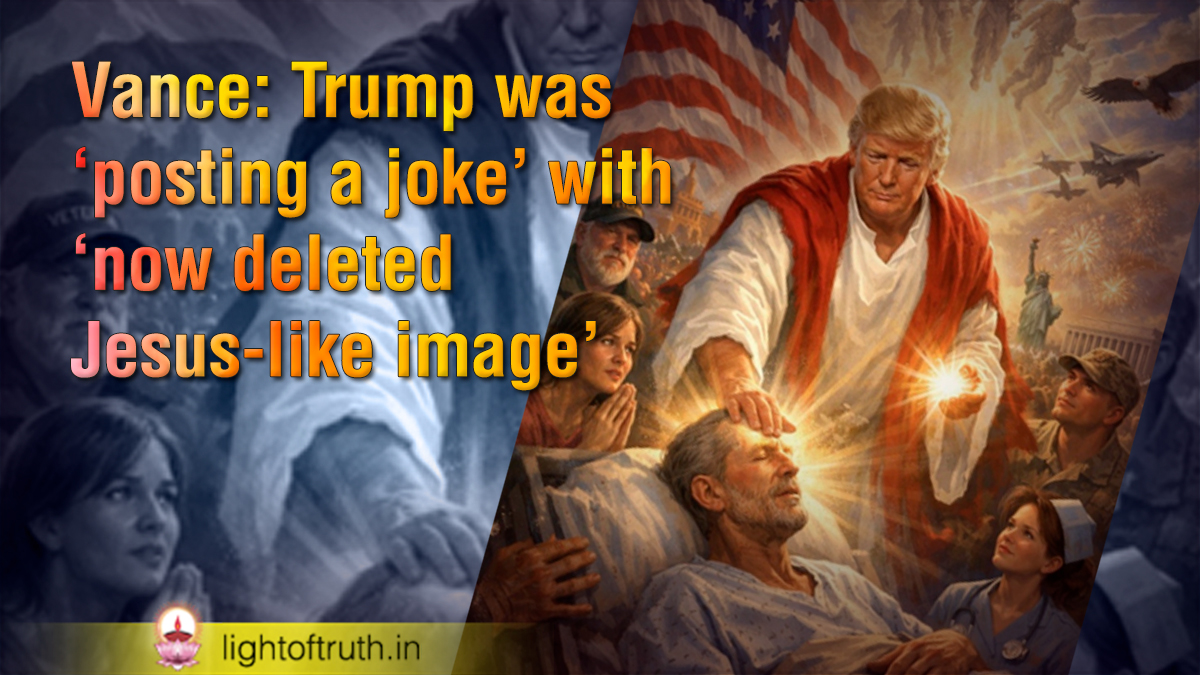
The Vatican has previously confirmed the audience but did not disclose what was discussed. Trump also posted an image that commentators said depicted him as Jesus Christ, wearing a biblical-style robe and laying hands on a bedridden man as light emanates from his fingers, while admirers look on and eagles and military jets fill the sky above an American flag.

The public clash comes after weeks of growing friction between the White House and Catholic leaders since the United States and Israel launched military operations against Iran on Feb 28.

 Pope Leo’s appeals for peace intensified over Holy Week, culminating in Saturday’s vigil, where he denounced a “delusion of omnipotence” and warned that “the holy name of God” was being “dragged into discourses of death.” At a special Mass for peace held in Washington on April 11, Cardinal Robert McElroy argued that the current war fails to meet the strict criteria of just war theory, particularly in light of civilian suffering and the risk of disproportionate harm. The Vatican has not yet publicly responded to Trumpʼs post. The pope is expected to arrive in Algiers on Monday. (EWTN news)

Vance: Trump was ‘posting a joke’ with ‘now deleted Jesus-like image’

The vice president said Trump removed the AI-generated image because “a lot of people weren’t understanding his humour.

Vice President JD Vance on Monday defended President Donald Trumpʼs decision to post and later delete an AI-generated image that critics said depicted the president as Jesus Christ, calling it a joke that people misunderstood. “I think the president was posting a joke and, of course, he took it down because he recognized that a lot of people weren’t understanding his humour in that case,” Vance told publically. “I think the president of the United States likes to mix it up on social media,” Vance added. “And I actually think thatʼs one of the good things about this president, is that he is not filtered.” Earlier Monday, the president told reporters at the White House that the image depicted him as “a doctor” and “a Red Cross worker,” not as Jesus, as many understood it. He added: “Only the fake news could come up with that one.”

 “I did post it, and I thought it was me as a doctor and had to do with the Red Cross as a Red Cross worker there, which we support,” Trump said. The apparently AI-generated image, posted to Trumpʼs Truth Social account on Sunday evening on Orthodox Easter, showed the president in a white robe and red sash. Both hands emitted a golden light, with one resting on the forehead of a man in a hospital bed. The American flag, the Statue of Liberty, military jets and floating human figures in the sky filled the background. The post contained no caption. Trump shared the image shortly after publishing a series of posts attacking, calling the pontiff “weak on crime, and terrible for foreign policy” over his opposition to U.S. military operations in Iran. He now-deleted drew swift backlash from across the political spectrum, including from prominent conservative and Christian commentators who are typically supportive of the president. The post was deleted later on Monday.

Vance — a Catholic convert — also addressed the broader friction between the White House and the Vatican. “When it comes to the disagreements with the Vatican, look, weʼre going to have disagreements, from time to time,” Vance said. “I think itʼs a good thing actually that the pope is advocating for the things that he cares about.”

He added: “We can respect the pope. We certainly have a good relationship with the Vatican. But weʼre also going to disagree on substantive questions from time to time. I think thatʼs a totally reasonable thing. It isnʼt particularly newsworthy.”

Pope Leo XIV, speaking to journalists aboard the papal flight to Algiers on Monday, responded to the controversy: “I have no fear neither of the Trump administration nor of speaking out loudly about the message of the Gospel,” The President of the U.S Conference of Catholic Bishops, Archbishop Paul S. Coakley of Oklahoma City, said he was “disheartened” by Trumpʼs remarks about the pope, calling Leo “the vicar of Christ who speaks from the truth of the Gospel and for the care of souls.” It is not the first time a Trump social media post depicting himself in religious imagery has caused controversy.

In May 2025, the president posted an AI-generated image of himself dressed as the pope shortly after the death of Pope Francis. That post drew condemnation from Catholic leaders, including Cardinal Timothy Dolan. Vance at the time dismissed that controversy as well, saying he was “fine with people telling jokes.” (EWTN news)

College students launch ‘Acutis AI’ to bring Catholic teaching to artificial intelligence

Two college students in the United States have developed a new artificial intelligence platform inspired by Catholic teachings, aiming to offer a faith-based and responsible approach to technology.

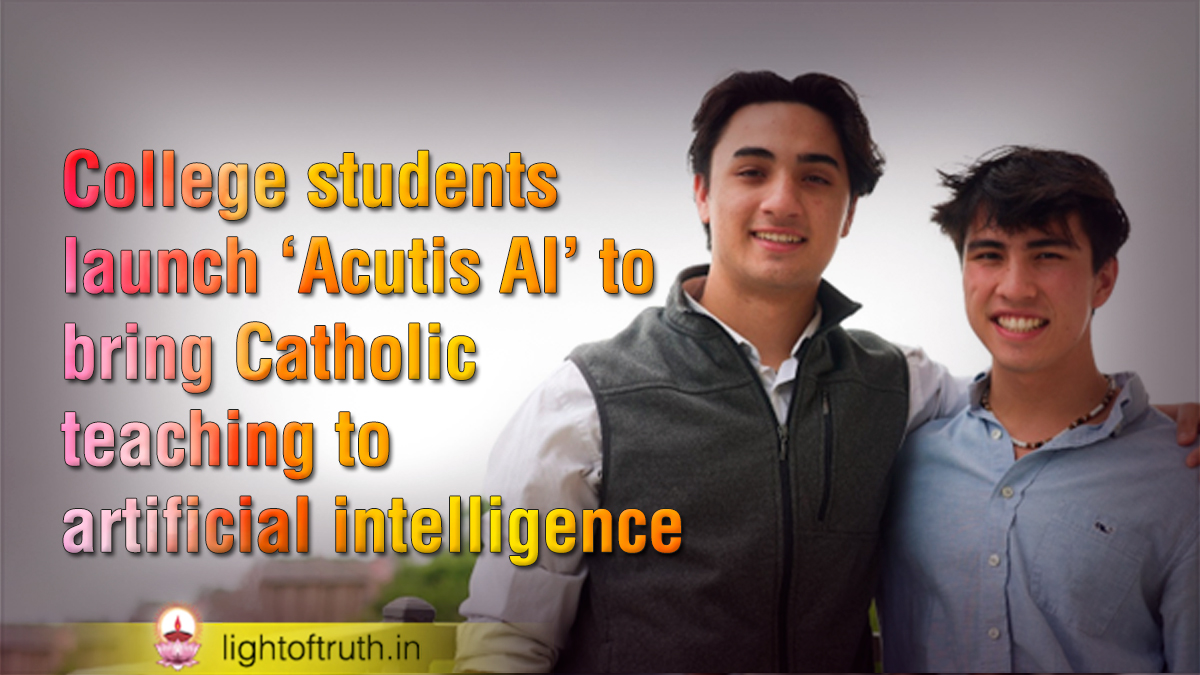
The platform, called Acutis AI, was created by brothers Peter and Thomas Cooney, students at the University of Dallas and Baylor University. The initiative seeks to provide answers rooted in Catholic morality, helping users find guidance they can trust.

The developers said they were concerned that many existing AI platforms present morally sensitive issues in a neutral way that may not align with Church teachings. They also warned that such tools can lead to dependency, especially among young users who may become emotionally attached to AI companions.

To address these concerns, Acutis AI has been built using key Church documents, including the Catechism of the Catholic Church and the Summa Theologica. The platform is designed to answer questions on faith and morals based on these sources, while general questions are handled through broader searches.

The platform also includes parental control features, allowing families to monitor usage, set time limits, and receive alerts about sensitive topics. This is intended to help parents guide their children in using technology responsibly.

The brothers believe artificial intelligence can be a helpful tool if used wisely, especially in education, such as creating study guides or quizzes. However, they stressed that AI should never replace critical thinking or real human relationships.

Inspired by Carlo Acutis, the project aims to show how technology can be used to serve faith and bring people closer to God.