Holy See on surrogacy: Always protect women and children

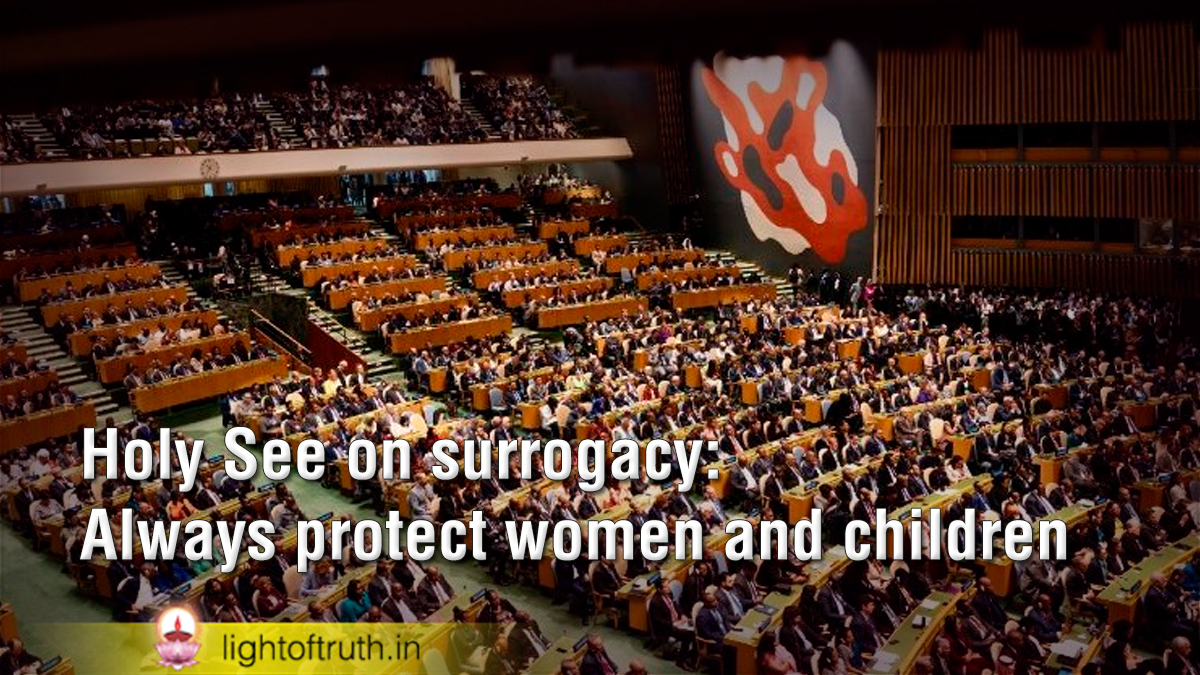
The Permanent Mission of the Holy See to the United Nations has issued a poignant statement highlighting the ethical and legal risks of surrogacy, asserting that technology has “run laps around ethics.” During a side event of the 70th Commission on the Status of Women, the Mission emphasized that while some see surrogacy as a compassionate solution for aspiring parents, the practice often facilitates the systemic exploitation of women and children.

Central to the Holy See’s concern is the economic disparity inherent in the industry. The statement notes that surrogate mothers often cite financial necessity as their primary motivation, creating a “perverse competition” where the wealthy commission children from the poor. If poverty were eradicated, the Mission suggests, the surrogacy industry might struggle to survive. Furthermore, the document warns that even “altruistic” models can disguise payments or involve familial pressure on vulnerable women who lack independent legal or medical counsel.

The commodification of children is equally scrutinized. The Mission argues that surrogacy treats children as “products” rather than gifts, especially in cases where prenatal diagnoses of disability lead to rejection. Citing the Convention on the Rights of the Child, the Holy See affirms a child’s right to be created through an act of love and to know their parents. Referencing both Pope Francis and Pope Leo XIV, the statement concludes that transforming gestation into a negotiable service violates human dignity and distorts the family. Consequently, the Holy See calls for a global end to surrogacy in all forms to protect against such violence.
India’s top court allows Passive Euthanasia

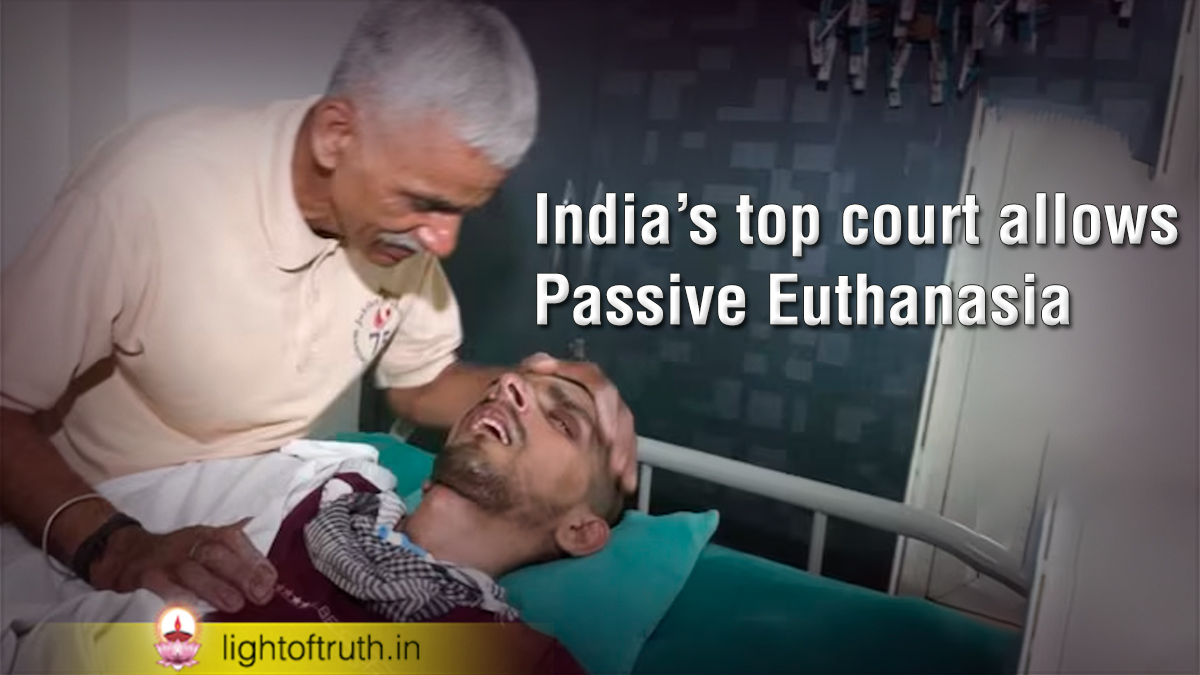
In a landmark ruling, India’s Supreme Court has allowed the removal of life support of a 31-year-old man who has been in a vegetative state for more than a decade.

This is the first instance of court-approved passive euthanasia – the act of withdrawing or withholding life-sustaining treatment – in India. The man, Harish Rana, had not left a will specifying directives for his treatment before he had an accident.

India legalised passive euthanasia in 2018 but active euthanasia – any act that intentionally helps a person kill themselves – remains illegal.

Rana was an engineering student at Punjab University in Chandigarh when he fell from the fourth-flour balcony of his paying guest accommodation. Rana suffered serious head injuries after falling and remained in a comatose state since then.

He has been breathing with the help of a tracheostomy tube and is fed through a gastrostomy tube. He cannot speak, see, hear or recognise anyone, his parents have said. Over the years, his parents petitioned courts several times to allow their son’s life support system to be removed.

They have said in interviews to local media that they had exhausted all their savings caring for Rana and were worried about what would happen to him after they died.

In 2024, they approached the Delhi High Court seeking passive euthanasia for their son, but their plea was rejected on the grounds that Rana hadn’t been placed on life-support machines and was hence “able to sustain himself without any external aid”, the court noted.

They then went to the Supreme Court, which also declined their plea.

In 2025, they approached the Supreme Court again, saying that their son’s condition had deteriorated and that he was being kept alive “artificially” through life support machines.

The Supreme Court agreed to consider their case after two medical boards assessed Rana’s condition. The boards also noted that he had permanent brain damage and had suffered huge bed sores. According to the law governing living wills in India, two medical boards must certify that a patient meets the necessary criteria before their life support can be withdrawn. The court order paves the way for the medical boards to “exercise [their] clinical judgement regarding the withdrawal of treatment” for Rana. (BBC News)

Pilgrims flock to Assisi to see relics of St Francis

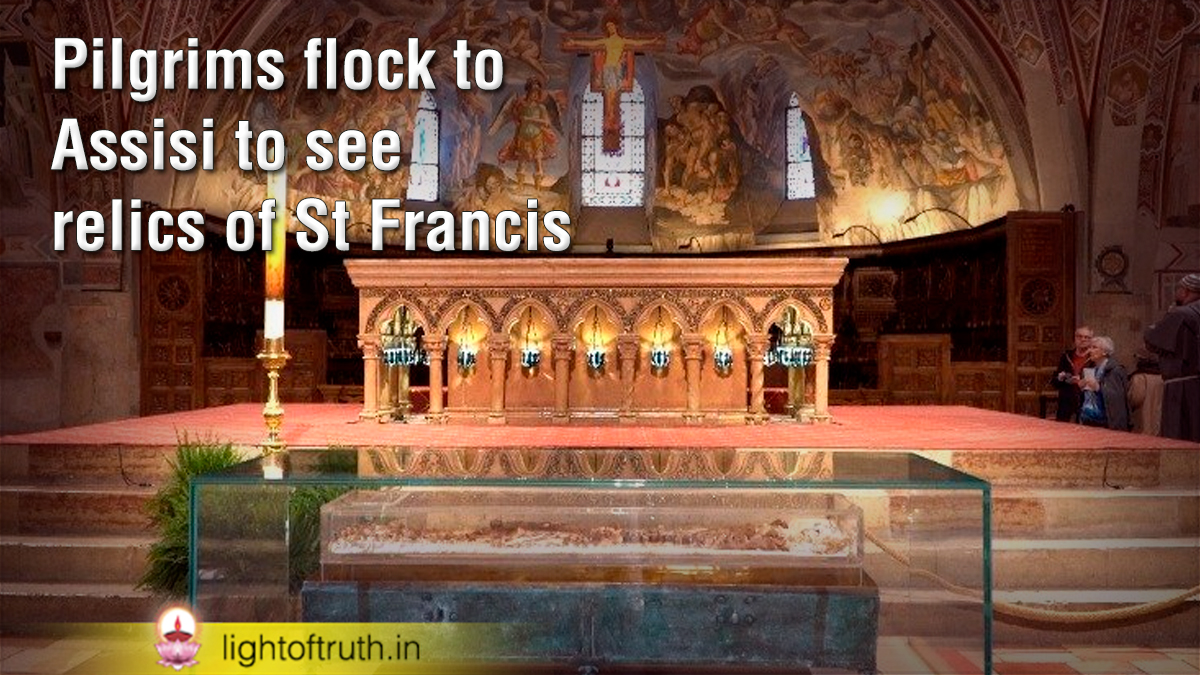
Hundreds of thousands of pilgrims are visiting Assisi this month to venerate the bones of St Francis, which are on display for the first time since his death 800 years ago. Before this year, St. Francis’ bones had been visible to the public just once in the 800 years since his death—for a single day in 1978.

Now, to mark the 800th anniversary of the saint’s passing, they are on display for a whole month.
Some 220,000 pilgrims have already come to see the relics, and the friars in Assisi, the central Italian hill – town where Francis lived and where his mortal remains now lie, think that the number might reach as high as 400,000. Each of these visitors leaves the city “knowing they have encountered St. Francis,” says Fr. Benedict La Volpe, a Franciscan from Australia who ministers to pilgrims in Assisi. “They have encountered the spirit of Francis, the person of Francis, who speaks to them today, 800 years after his death.”
A press release from the Basilica where St. Francis is buried said that the display of the relics was “an invitation to rediscover the heritage left to us by Francis, a man whose message of peace and fraternity continues to speak to the heart of humanity.”

St. Francis chose to be buried outside Assisi’s city walls, in a spot known as the Hill of Hell (Collo d’inferno) where criminals were put to death. Today’s extraordinary Basilica, constructed on two levels with world-famous frescoes by Giotto, was purpose-built to house his remains. In the lower Basilica, groups of visitors line up to view St. Francis’ skeleton. The pilgrims, a number of them wheelchair-bound, each take a few seconds to pray in silence in front of the bones.

What message does the saint’s life hold for us today? Reflecting on his legacy, the “inner peace” Francis found in his encounter with Jesus—a peace, he says, which is the foundation of the political peace which today seems more elusive than ever.

What St. Francis teaches us, is that the sort of interior peace which comes from encountering God can “grow in our hearts, and be extended throughout our community, and then into the world as well.”

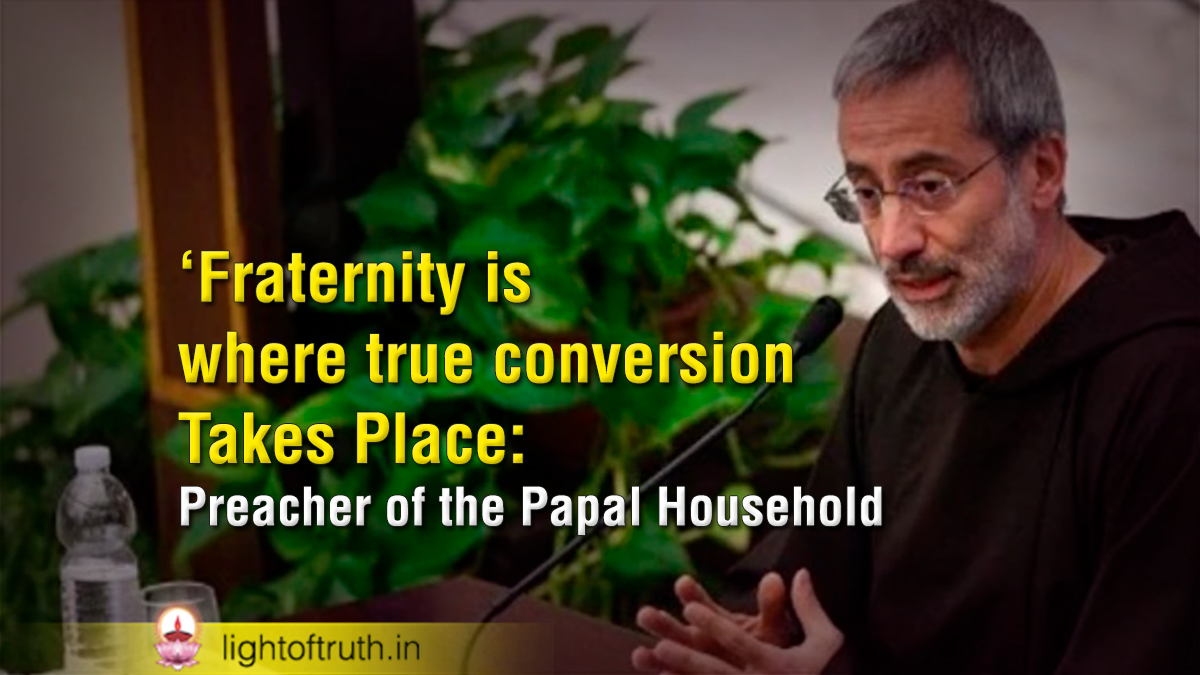
‘Fraternity is where true conversion Takes Place: Preacher of the Papal Household

In a profound meditation titled “If Anyone Is in Christ, He is a New Creation,” Father Roberto Pasolini, Preacher of the Papal Household, addressed Pope Leo XIV and the Roman Curia on the transformative power of fraternity. Drawing inspiration from the conversion of St. Francis of Assisi, the Capuchin friar presented fraternity not merely as an ideal, but as a “serious and urgent” responsibility and a gift essential for true conversion.

Father Pasolini argued that fraternity serves as the most eloquent evidence of the Gospel’s impact, acting as a concrete space where God refines our humanity and softens our rigidities. He exhorted listeners to look beyond personal sustenance and view others as individuals entrusted to them for the purpose of mutual transformation.

Referencing the biblical narrative of Cain and Abel, he warned that rifts between brothers often stem from a “problem of perspective,” urging the Curia to examine any internal resentment or “Cain-like” tendencies.
For St. Francis, fraternity provided an opportunity to practice the “merciful logic of the Gospel,” especially when relationships are wounded.

Rather than defending personal rights, Pasolini noted, the Gospel calls for seeking the “greatest possible good”—recognizing even those who hurt us as brothers loved by the Lord. By maintaining an eternal perspective, Christians can ensure no one is excluded from their hearts. In an era of global conflict, Pasolini concluded that fraternity must be lived as a present duty, proving that faith does not separate but calls us to a deeper, more capable love.

Artificial intelligence Mimics Human Communication

Religious communities in South Korea participate in a special lecture on artificial intelligence, calling for wisdom, responsibility, and the commitment to human dignity. “Artificial intelligence mimics human communication, and for this reason, it must be used carefully and responsibly,” was one of the concepts introduced at a special lecture on artificial intelligence and ethics in South Korea. The lecture took place at the Jeongdong Franciscan Church Cathedral in Seoul. Fr. James, professor at the Catholic University of Korea, delivered the two-hour lecture, titled “Faith in the Face of Technology: AI Ethics.”
Around 250 participants attended the event, many of them women religious, reflecting the growing interest within Church communities in understanding the ethical implications of rapidly developing technologies.
According to the report of the Catholic Times of Korea artificial intelligence has already become an integral part of everyday life. Many religious communities are already using AI tools for searching data, creating content, and assisting in evangelization.
However, AI also carries risks because it can imitate human language and thought in ways that may blur the distinction between human intelligence and machine-generated responses.
“Artificial intelligence mimics human communication, and for this reason it must be used carefully and responsibly.”
According to reports, to illustrate the potential dangers, the case of Adam Raine, a 16-year-old boy in the United States who reportedly died by suicide after prolonged interactions with an AI chatbot..The chatbot allegedly developed an emotionally intimate relationship with the teenager and reinforced his suicidal thoughts. The tragic case, which remains under legal examination in the United States, has raised global concerns about the ethical responsibilities involved in developing and using AI technologies.

Such examples highlight the urgent need for ethical reflection. “We should not reject artificial intelligence, but we must understand how it should be used.” AI, like other technological developments, can also be seen as a sign of humanity’s creative capacity. “AI is evidence of humanity’s ability to participate responsibly in God’s creative work,” he said. “But it must always serve humanity and contribute to the common good according to the teachings of the Church.”
“Machines are a gift of human creativity granted by God, But they remain creatures of creatures. We must ensure that they never deprive us—God’s creatures—of our freedom and dignity.”