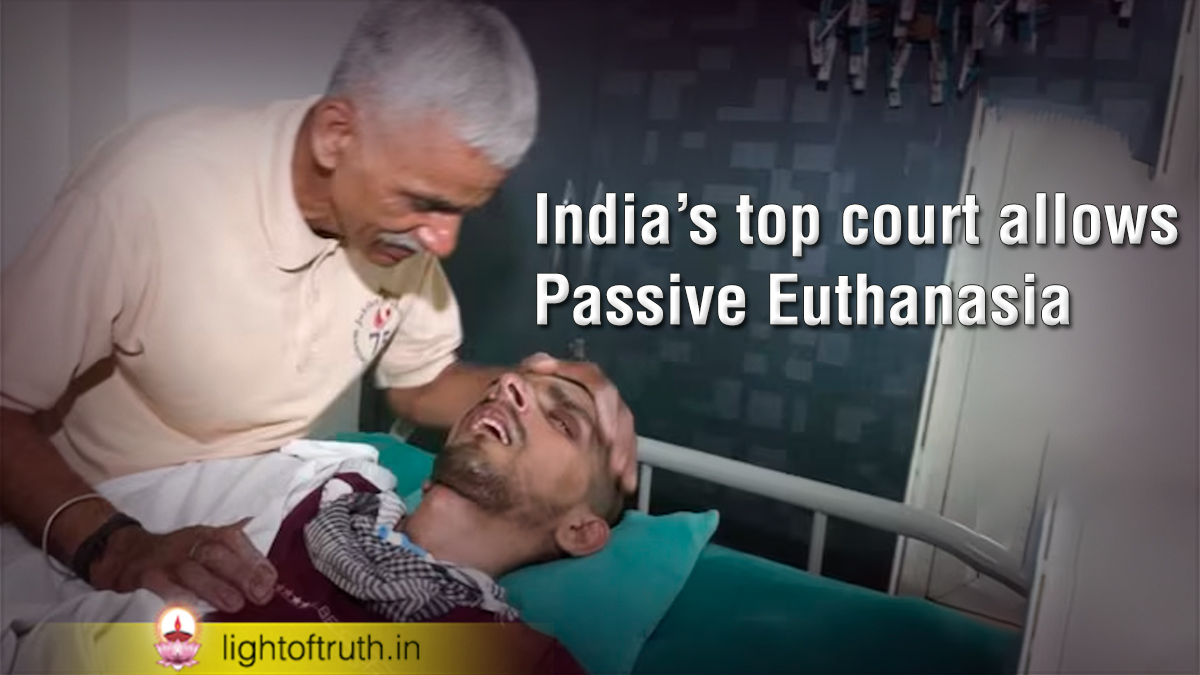
In a landmark ruling, India’s Supreme Court has allowed the removal of life support of a 31-year-old man who has been in a vegetative state for more than a decade.
This is the first instance of court-approved passive euthanasia – the act of withdrawing or withholding life-sustaining treatment – in India. The man, Harish Rana, had not left a will specifying directives for his treatment before he had an accident.
India legalised passive euthanasia in 2018 but active euthanasia – any act that intentionally helps a person kill themselves – remains illegal.
Rana was an engineering student at Punjab University in Chandigarh when he fell from the fourth-flour balcony of his paying guest accommodation. Rana suffered serious head injuries after falling and remained in a comatose state since then.
He has been breathing with the help of a tracheostomy tube and is fed through a gastrostomy tube. He cannot speak, see, hear or recognise anyone, his parents have said. Over the years, his parents petitioned courts several times to allow their son’s life support system to be removed.
They have said in interviews to local media that they had exhausted all their savings caring for Rana and were worried about what would happen to him after they died.
In 2024, they approached the Delhi High Court seeking passive euthanasia for their son, but their plea was rejected on the grounds that Rana hadn’t been placed on life-support machines and was hence “able to sustain himself without any external aid”, the court noted.
They then went to the Supreme Court, which also declined their plea.
In 2025, they approached the Supreme Court again, saying that their son’s condition had deteriorated and that he was being kept alive “artificially” through life support machines.
The Supreme Court agreed to consider their case after two medical boards assessed Rana’s condition. The boards also noted that he had permanent brain damage and had suffered huge bed sores. According to the law governing living wills in India, two medical boards must certify that a patient meets the necessary criteria before their life support can be withdrawn. The court order paves the way for the medical boards to “exercise [their] clinical judgement regarding the withdrawal of treatment” for Rana. (BBC News)