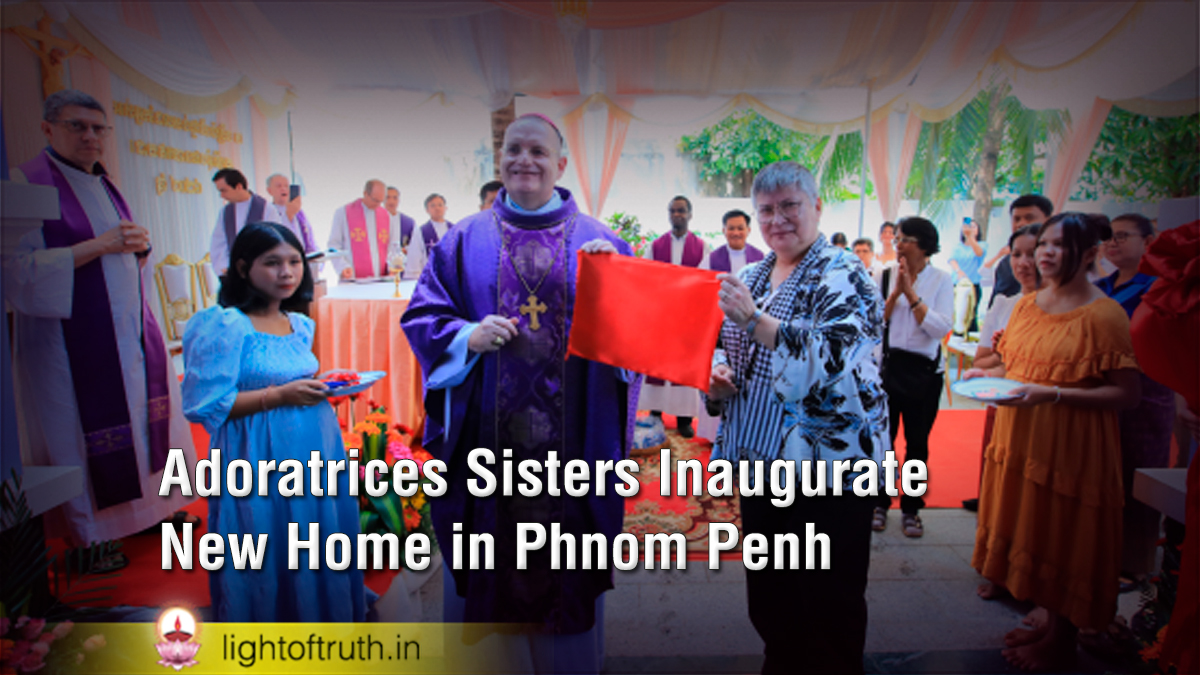
Adoratrices Sisters Inaugurate New Home in Phnom Penh

On March 20, 2026, the Adoratrices Sisters (Handmaids of the Blessed Sacrament and of Charity) reached a significant milestone with the inauguration of their new permanent home in Phnom Penh. The blessing ceremony was led by Bishop Olivier Schmitthaeusler, Apostolic Vicar of Phnom Penh, and Coadjutor Bishop Pierre Suon Hangly, joined by local authorities and international guests. This new facility represents the culmination of a vision that began when the Sisters first arrived in Cambodia in 2002.

Since 2007, the Sisters have operated the “Renacer: Walk with Women” program, initially in Siem Reap and later in rented spaces in Phnom Penh. Their mission focuses on providing sanctuary for survivors of violence, abandoned pregnant women, and those seeking to exit the sex trade. Bishop Pierre Suon Hangly emphasized that the home is a vital foundation for helping marginalized women and children rediscover their self-worth and reintegrate into society. The center will provide essential services, including psychological counseling and education.

Sr. Pilar Casas Navarro, Superior General of the Adoratrices, highlighted the intentional design of the residence, which features glass walls to symbolize openness and the “rebirth” (Renacer) of the residents’ hearts. She affirmed that the Sisters are driven by a mission to love and serve rather than just manage a project. This permanent home is described as a “dream come true,” offering a familial environment where the vulnerable can finally reclaim their dignity and find hope for a new life.

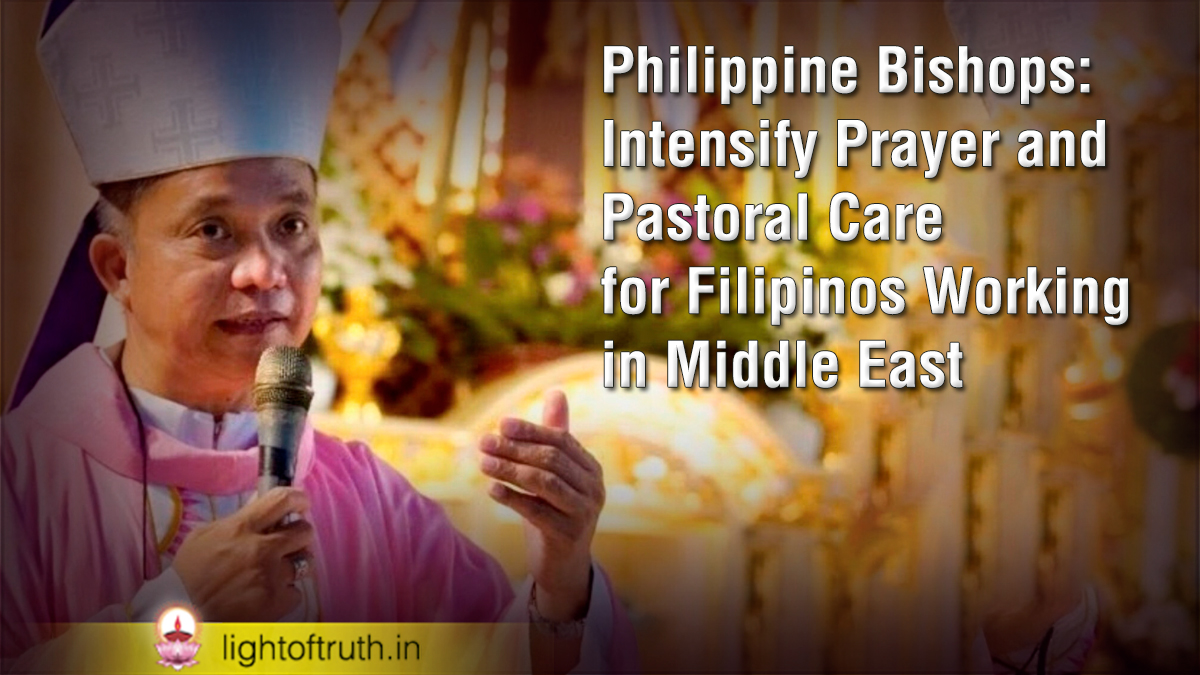
Philippine Bishops: Intensify Prayer and Pastoral Care for Filipinos Working in Middle East

The Catholic Bishops’ Conference of the Philippines (CBCP), through its Episcopal Commission for the Pastoral Care of Migrants and Itinerant People (ECMI), has issued an urgent appeal for intensified prayers and pastoral support for Overseas Filipino workers (OFWs) caught in the ongoing Middle East conflict. Commission Chairman Bishop Mesiona highlighted that ordinary civilians and vulnerable workers are bearing the heaviest burden of this “protracted conflict,” which has left many Filipinos in dire straits, separated from their families and facing profound uncertainty.

While the Church commended the Philippine government and the Department of Migrant Workers for their relief efforts, Bishop Mesiona emphasized the unique role of the Church in providing essential moral and spiritual accompaniment. He specifically called upon diocesan migrant offices to mobilize their resources, monitor the well-being of OFW families within their jurisdictions, and extend concrete pastoral care.

Beyond social action, the CBCP is urging a unified spiritual response, requesting that bishops organize special prayers for peace at both diocesan and parish levels. This appeal underscores the Church’s commitment to embodying compassion and solidarity during geopolitical crises. As thousands of Filipinos remain vulnerable to regional tensions, the CBCP maintains that the safety, dignity, and well-being of these migrant communities must remain a priority for both Church and State through sustained prayer and collaborative action.

Global Push to Lock Kids out of‘Dangerous’ Social Media

Indonesia has become the latest nation to block children under 16 from social media, following pioneering bans in Australia and Malaysia. This regional crackdown aims to protect underdeveloped minds from online abuse, pornography, and addictive algorithms. Communications Minister Meutya Hafid emphasizes that the government is intervening so parents no longer face the “giants of algorithm-driven platforms” alone.

Proponents argue these controls are vital for safeguarding teen mental health and preventing cyber-bullying. However, the movement remains controversial. Critics warn that such bans may drive minors toward unregulated “darker” corners of the web, compromise privacy through age-verification, and hinder digital literacy. While Australia reports millions of closed accounts, the efficacy of these measures remains debated as teens find ways to bypass restrictions.

Despite these challenges, global momentum is growing. Health experts like Jane Rowan note that widespread change requires international cooperation, with the UK and other nations considering similar age limits. Some countries have even moved to fine parents for non-compliance. Ultimately, the initiative reflects a shifting global landscape where governments are increasingly prioritizing child safety over the unrestricted reach of tech companies.

Amazonia and the Moral Imagination of Our Time

In a recent message to the VI Assembly of the Ecclesial Conference of Amazonia (CEAMA) in Bogotá, Pope Leo XIV posed a radical question inspired by the prophet Isaiah: “Something new is being born—can you not see it?” Amidst a global landscape defined by relentless news cycles, unresolved wars, and cascading crises, the Pope challenges us to shift our perspective to notice the fragile but real signs of emerging life.

Aligning himself with Pope Francis’ Querida Amazonia, Leo XIV describes the Amazon as a wounded yet resilient mirror reflecting our relationship with the earth and the future. He utilizes the striking imagery of the shihuahuaco tree—the jungle giant that grows with imperceptible slowness to become a thousand-year-old ecosystem. This serves as an invitation to abandon the obsession with immediacy and embrace long-term processes of patience and care.

Central to this message is the responsibility to “safeguard” creation and respect life in all its forms. The Pope envisions the Church as a sanctuary of “unity in diversity,” offering a refuge that protects rather than consumes. By focusing on what is coming into existence rather than what is ending, Leo XIV offers a defiant vision against contemporary fear and division. Ultimately, he leaves us with a profound inquiry: are we still capable of recognizing the quiet, holy growth occurring right in our midst?

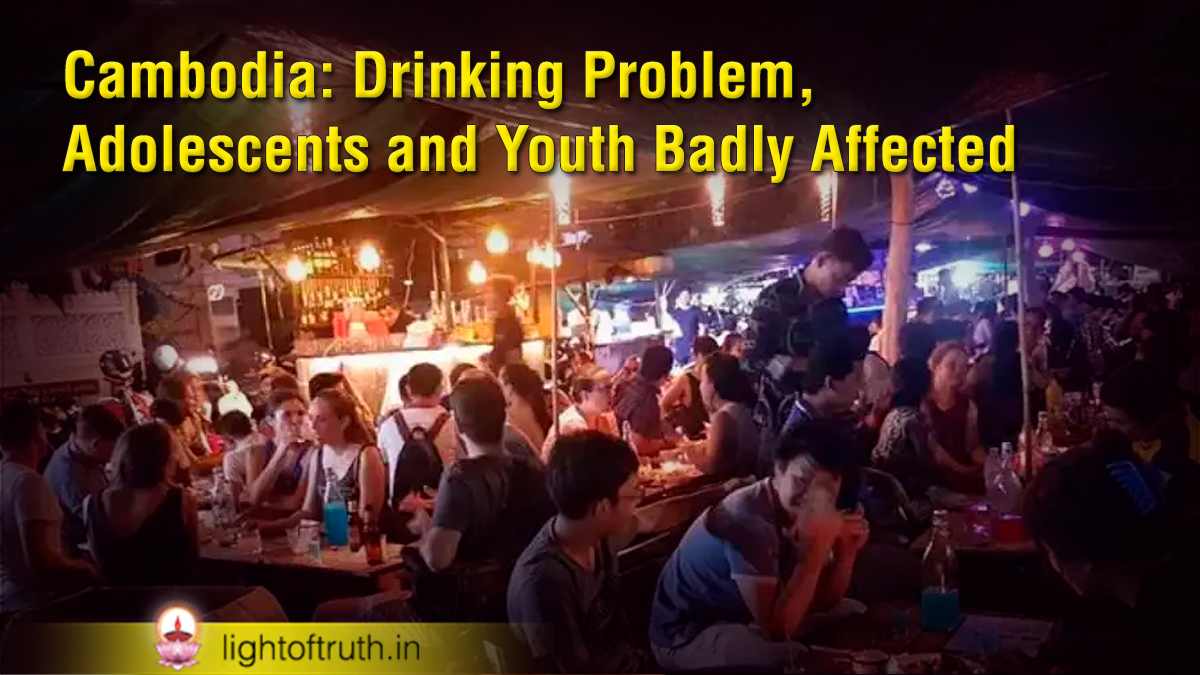
Cambodia: Drinking Problem, Adolescents and Youth Badly Affected

Cambodia faces a severe and largely unregulated alcohol crisis, according to experts from the Cambodian People Centre for Development and Peace and Caritas. Yong Kim Eng and Father Conroy highlight a troubling lack of oversight, noting there is no minimum legal drinking age and no license required to sell alcohol. This accessibility allows consumption to permeate even sacred spaces like monasteries and affects children as young as thirteen.

The consequences are devastating and multifaceted. Alcohol serves as a primary driver of domestic violence and acts as a “gateway” to drug use and gang involvement, leading to school dropouts and fractured families. Father Conroy also emphasizes the cyclical link between alcohol abuse and mental illness. In rural areas, the lack of formal rehabilitation often leads to the archaic and inhumane practice of chaining individuals suffering from alcohol-induced psychosis.

Three systemic factors drive this normalization. First, exceptionally low taxation makes beer—costing as little as 45 cents—cheaper than or equal to the price of soft drinks. In contrast, neighboring countries like Vietnam and Singapore impose significantly higher levies. Second, aggressive marketing dominates the landscape; alcohol advertisements featuring celebrities and prize promotions frequently air during prime time and appear near schools. Finally, the sheer availability of alcohol without legal age restrictions encourages early onset drinking.

Data from the World Health Organization and national health surveys confirm the scale of the problem, revealing that over 30% of drinkers are aged 15 to 18, and 70% of men consume alcohol. Despite these alarming statistics and the clear barriers alcohol poses to education and social stability, regulation remains absent from the government’s immediate agenda. Both experts argue that the current trajectory treats alcohol as a standard social norm rather than a public health emergency, leaving vulnerable populations without the necessary legal protections or medical support.

Pope Leo XIV opens the judicial year of the Vatican Tribunal

 Pope Leo XIV in his first address to the Vatican judiciary, noted that authentic justice cannot be based simply on positive law, but must rather be understood as the “exercise of an ordered form of charity”. Drawing heavily on the teachings of St. Augustine, Pope Leo said justice is a cardinal virtue that lies at the heart of personal and communal life. “When love is rightly ordered—when God is placed at the centre and one’s neighbour is recognized in their dignity—then the whole of personal and social life regains its proper orientation,” he said. The order of love, he added, gives rise to the order of justice, since authentic love is never arbitrary or disordered, but recognizes the truth of relationships and the dignity of every person.

“Theological wisdom has expressed this relationship with the affirmation that caritas perfecta, perfecta iustitia est (‘perfect charity is perfect justice’), because in the fullness of charity justice finds its most authentic fulfilment,” he said.  Justice requires us to respect the rights of every person, leaving space in ordered relationships for the highest fruit of love to be born.

“Justice, when exercised with balance and fidelity to the truth, becomes one of the firmest factors of unity in the community,” he said. “It does not divide; rather, it strengthens the bonds that unite persons and helps to build that mutual trust which makes ordered coexistence possible.”

 Pope Leo XIV said the judicial process contributes to upholding the credibility of institutions, beyond merely resolving disputes. The conditions required to fulfil this task, he added, include observance of procedural guarantees, judicial impartiality, right to defence, and reasonable duration of proceedings.

Quoting St. Augustine, the Pope said, “Without justice, one cannot administer the State; it is impossible for there to be law in a State in which there is no true justice.”

By carefully examining the facts of each case, the Vatican judiciary fulfils its ecclesial mission to serve the people of God, since every proceeding and judgement must reflect the “search for truth which lies at the heart of the Church’s life.”

Pope Leo XIV concluded his address to members of the Vatican judiciary authentic justice provides a factor of stability and trust within society. “May justice always be illumined by truth and accompanied by mercy, since both find their fullness in Christ,” he said. “Law, thus applied with uprightness and ecclesial spirit, becomes a precious instrument for building communion and strengthening the unity of the people of God.”

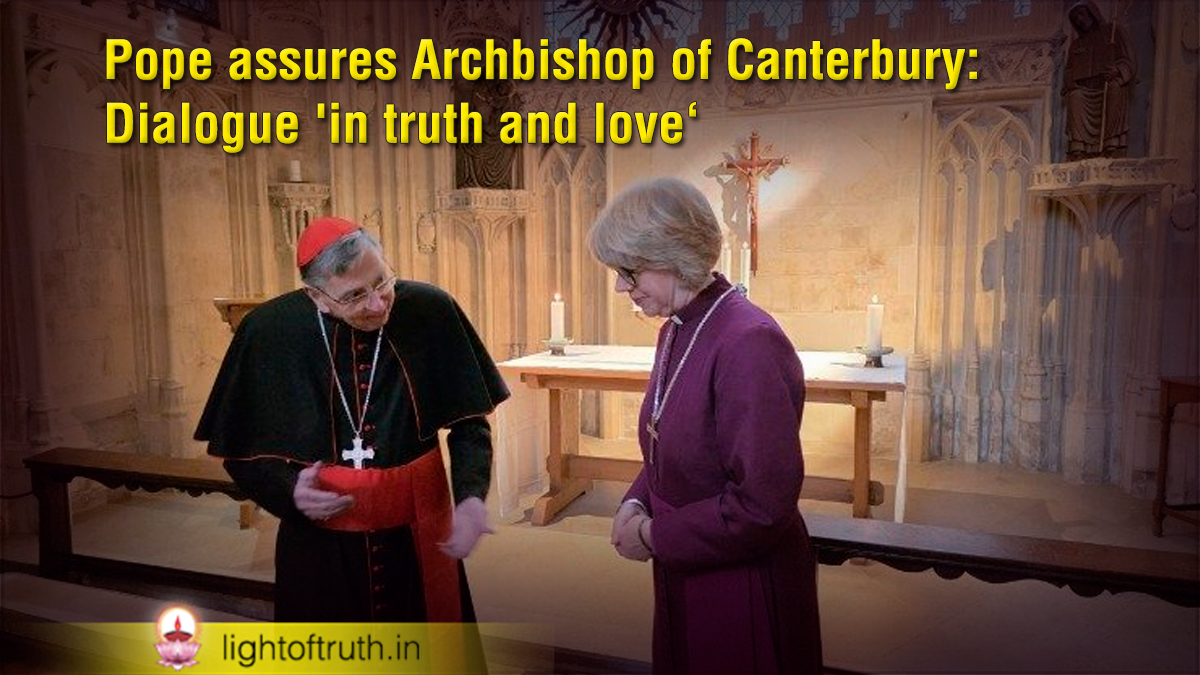
Pope assures Archbishop of Canterbury:  Dialogue ‘in truth and love‘

Pope Leo XIV sends a message to Archbishop Sarah Mullally on the occasion of her installation, recalling the progress and challenges in Catholic–Anglican relations. The Archbishop’s installation ceremony in Canterbury Cathedral took place on 25 March 2026

Pope Leo XIV has sent a message to Sarah Mullally on the occasion of her installation as Archbishop of Canterbury, assuring her of his prayers and invoking “grace, mercy, and peace… in truth and love”.

The installation service, historically known as an enthronement, took place in Canterbury Cathedral on 25 March. In the presence of some 2,000 guests, including the Prince and Princess of Wales, it marks the symbolic start of Dame Sarah’s public ministry as the Archbishop of Canterbury.

In his message, the Pope notes that the office entrusted to the new Primate of the Anglican Communion carries significant responsibilities, not only within the Diocese of Canterbury but also across the Church of England and the wider Anglican Communion. He observes that she begins her ministry “at a challenging moment in the history of the Anglican family,” and prays that she may be strengthened with wisdom and guided by the Holy Spirit, drawing inspiration from Mary, the Mother of God.

         The message recalls the historic meeting in 1966 between Pope Paul VI and Archbishop Michael Ramsey, when Catholics and Anglicans committed themselves to “a new stage in the development of fraternal relations, based upon Christian charity.” This commitment, he highlights, has borne fruit over the past sixty years.

In his message, the Pope refers to the work of the Anglican-Roman Catholic International Commission (ARCIC), established following that encounter, stating that it has contributed to greater mutual understanding and has supported a more effective common witness, particularly in the face of contemporary global challenges.

At the same time, he acknowledges that the ecumenical journey has encountered difficulties. He recalls the 2016 Joint Declaration signed by Pope Francis and Justin Welby, which noted that “new circumstances have presented new disagreements.”

These differences, he adds, do not prevent Christians from recognising one another as brothers and sisters in Christ by virtue of their common baptism.

Thus, the Pope expresses his belief that dialogue should continue “in truth and love,” so that Christians may come to know together the grace, mercy and peace of God and offer these to the world.

Pope Leo XIV writes that the unity sought by Christians is directed toward the proclamation of Christ, recalling the prayer of Jesus, “that the world may believe”. He also cites an address of Pope Francis to Anglican Primates in 2024, which stated that divisions among Christians risk hindering their common vocation to make Christ known.

The witness of a reconciled and united Christian community, he affirms, contributes to the clarity of the proclamation of the Gospel.

The Pope’s message was delivered on Thursday, 26 March in Canterbury Cathedral at the conclusion of a common prayer service presided over by Archbishop Mullally and the Pope’s envoy, Cardinal Kurt Koch, Prefect of the Dicastery for Promoting Christian Unity. The liturgy marks the 60th anniversary of the 1966 meeting between Pope Paul VI and Archbishop Michael Ramsey. During the celebration, the same kneeler used in the 1982 encounter between Pope John Paul II and Archbishop Robert Runcie was used. The 2026 Catholic delegation included Archbishop Flavio Pace, Secretary of the Dicastery for Promoting Christian Unity and Father Martin Browne, an official of the Dicastery; Cardinals Vincent Nichols and Timothy Radcliffe; Archbishop Bernard Longley of Birmingham, co-chair of ARCIC; Archbishop Richard Moth of Westminster and many other catholic Dignitaries.

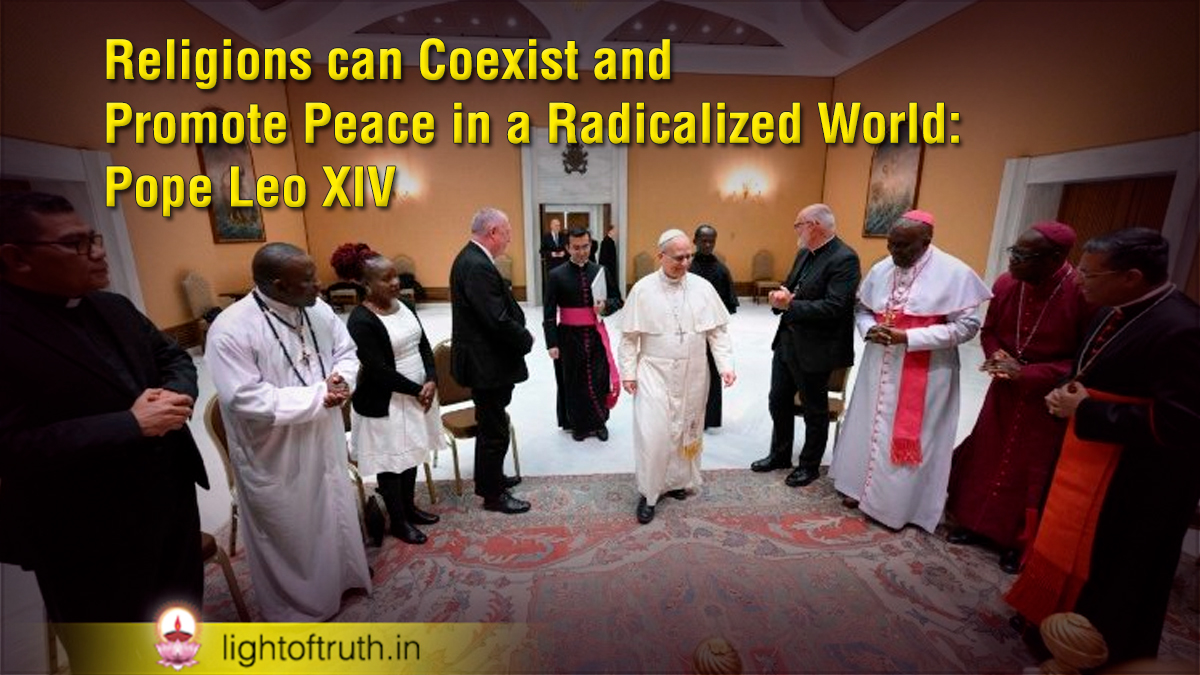
Religions can Coexist and Promote Peace in a Radicalized World: Pope Leo XIV

Pope Leo XIV praises the work of the Programme for Christian-Muslim Relations in Africa to foster fraternity between Christians and Muslims, saying that their common witness shows how religions can work together to promote peace and the common good.

“In a world increasingly marked by religious radicalization, division, and conflict, your common witness shows that it is possible to live and work together in peace and harmony, despite cultural and religious differences.”  Pope Leo XIV gave this encouragement to the delegation from the Programme for Christian-Muslim Relations in Africa (PROCMURA), headquartered in Kenya, a pan-African Christian organization founded in 1959 with the objective of building good relations between Christians and Muslims on the continent.

Quoting the Declaration Nostra Aetate on the relation of the Church to non-Christian religions, Pope Leo recalled that the Catholic Church calls for mutual understanding and respect for the followers of other religions, affirming that she “rejects nothing of what is true and holy in these religions,” for they “often reflect a ray of that truth, which enlightens all men and women.” 

“Every authentic journey toward unity and communion undertaken by Christians and by people of good will,” the Pope said, “is the work of the Holy Spirit and requires hearts open to encounter and dialogue so as to embrace one another in genuine fraternity.”

“In a world increasingly marked by religious radicalization, division, and conflict,” he stressed, “your common witness shows that it is possible to live and work together in peace and harmony, despite cultural and religious differences.”

The Pope reiterated that religions bear a great responsibility “to help our people to break free from the chains of prejudice, anger, and hatred; to help them rise above egoism and self-centeredness; to help them overcome the greed that destroys both the human spirit and the earth.”   In this way, the Pope said, we can lead our people to become prophets of our time, with “voices that denounce violence and injustice, heal division, and proclaim peace for all our brothers and sisters.” Pope Leo XIV concluded with an invitation for those present to go forward as artisans of peace, witnesses of hope, and builders of true fraternity.

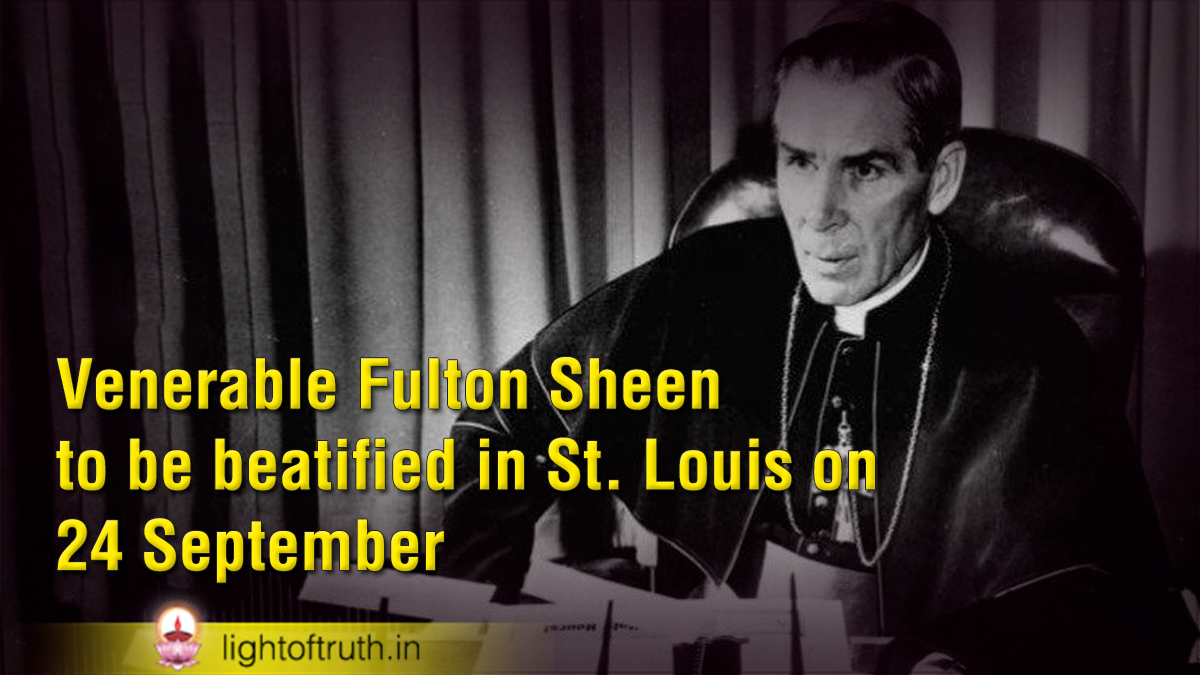
Venerable Fulton Sheen to be beatified in St. Louis on 24 September

The late American Archbishop Fulton J. Sheen will be beatified at a Mass presided over by Cardinal Luis Antonio Tagle on September 24, 2026, in St. Louis, Missouri, according to the Dicastery for the Causes of Saints.

Venerable Fulton J. Sheen of the United States is set to be beatified on Thursday, September 24, 2026, in St. Louis, Missouri. Cardinal Luis Antonio Tagle, Pro-Prefect of the Dicastery for Evangelization, will preside at the beatification Mass, representing Pope Leo XIV.

After his heroic virtue was recognized, Fulton Sheen was declared Venerable in 2012 by Pope Benedict XVI. In 2019, Pope Francis authorized a decree recognizing a miracle through his intercession. This recognition cleared Archbishop Sheen for beatification, after which he will have the title “Blessed.”

The future Blessed Fulton Sheen was known for his dynamic preaching, especially on television and radio.

Born to an Irish family in El Paso, Illinois, on May 8, 1895, Sheen discovered his call to the priesthood at the age of 24 and was ordained a priest in 1919.

He pursued higher studies at the Catholic University of America in Washington (US), the Catholic University of Leuven (Belgium), and the Pontifical University of St. Thomas Aquinas in Rome. 

He returned to the U.S. in 1926 and began teaching at the Catholic University of America, a position he held until 1950. Sheen served as the Bishop of Rochester, New York, from 1951 to 1969, and Pope Paul VI later appointed him as the Titular Archbishop of Newport, Wales, in 1969. 

A gifted teacher and speaker, Sheen’s homilies were much appreciated. In 1930, he began participating in the Sunday radio program entitled “The Catholic Hour,” which reached an estimated four million listeners at the height of its popularity.

In 1951, he began hosting a weekly television series, “Life is Worth Living,” on matters of faith that attracted some 30 million viewers.     He died in New York at the age of 84, on December 9, 1979.

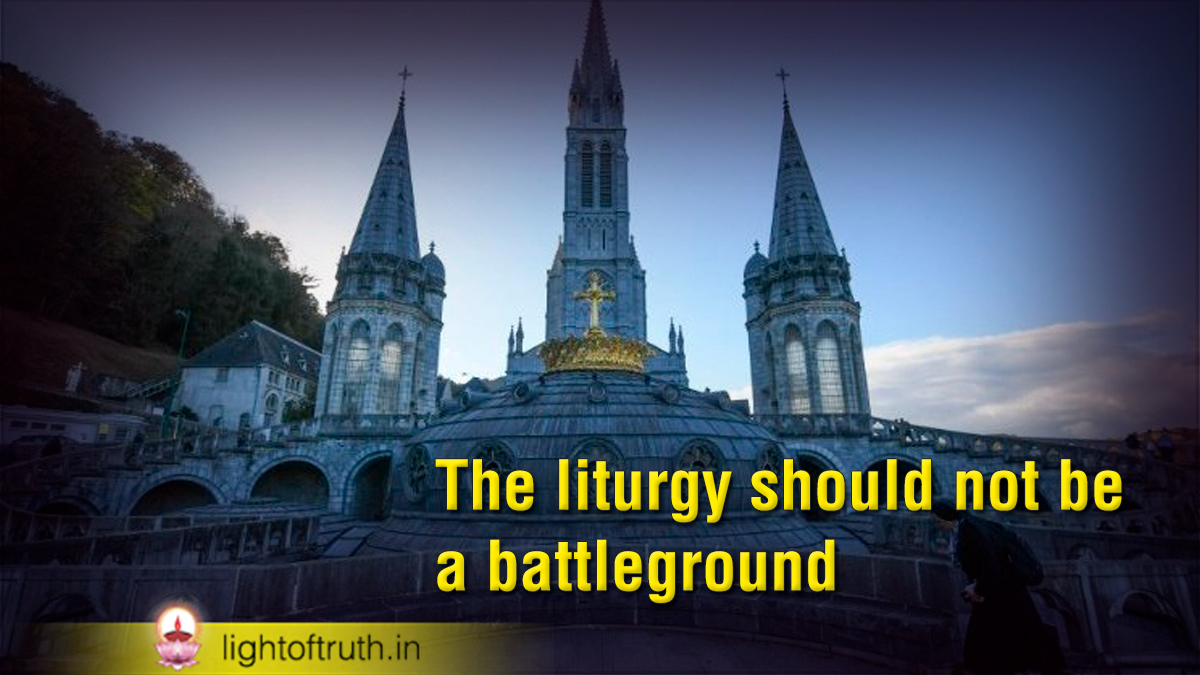
The liturgy should not be a battleground

On the study day at the Vatican Apostolic Library when the journalists asked Cardinal Pietro Parolin the Secretary of State about the Traditional Latin Mass, following the publication of the Pope’s message, signed by the Secretary of State, to the French Bishops during their plenary assembly. In the letter, Pope Leo XIV expressed concern that “a painful wound continues to open in the Church regarding the celebration of the Mass” and encouraged everyone “to generously include those sincerely attached to the Vetus Ordo.” Following this, Cardinal Parolin reiterated that “the liturgy must not become a cause of conflict and division among us.” He stressed the importance of “finding a formula that can meet the legitimate needs. I believe there can be, without making the liturgy a battleground.”