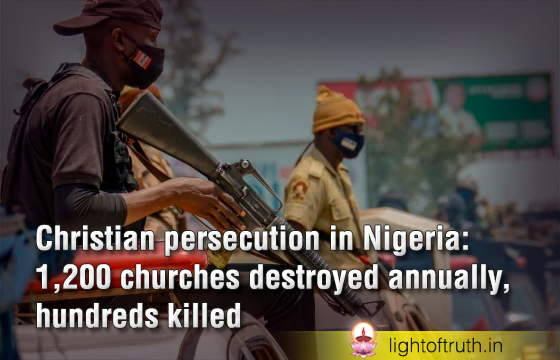
Christian persecution in Nigeria: 1,200 churches destroyed annually, hundreds killed

Violence against Catholic priests in Nigeria continues to increase, especially in the eastern part of the country. According to a report by the NGO International Society for Civil Liberties and Rule of Law (Intersociety), published in August and updated this week, at least 15 priests were kidnapped between January and September alone.

According to the Catholic Bishops’ Conference of Nigeria (CBCN), at least 145 priests have been kidnapped, 11 have been murdered, and four remain missing since 2015. However, Intersociety claims the reality is much worse. According to its counts, at least 250 Catholic clergy have been attacked in addition to another 350 clergy from other denominations.

The phenomenon, according to the report, is due to a combination of attacks by jihadist groups and organized criminal gangs operating for profit. Priests have been victims of both violent ambushes and financial extortion. 

“Many were kidnapped for ransoms reaching tens of millions of nairas [Nigreian currency] or thousands of dollars. In other cases, the attackers sought to seize luxury vehicles belonging to the clerics to sell them to criminal networks,” Intersociety details in the report.

One of the most recent cases is that of Father Wilfred Ezemba, parish priest at St. Paul’s in Agaliga-Efabo (Kogi state) who was kidnapped on Sept. 12 along with other travelers by suspected jihadists and released on Sept. 16. 
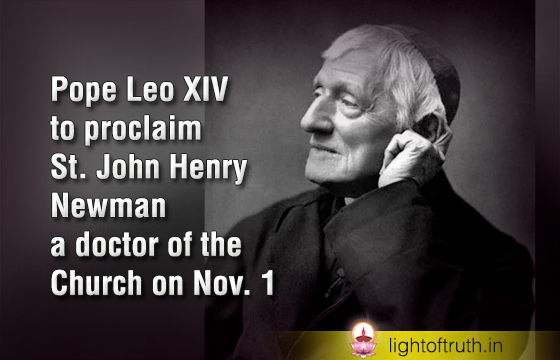
Pope Leo XIV to proclaim St. John Henry Newman a doctor of the Church on Nov. 1

Pope Leo XIV announced on 28 September that he will proclaim St. John Henry Newman a doctor of the Church on Nov. 1, the solemnity of All Saints.

“I will confer the title of doctor of the Church on St. John Henry Newman, who gave a decisive contribution to the renewal of theology and to understanding Christian doctrine in its development, in the context of the Jubilee of the World of Education,” the pope said after celebrating Mass for the Jubilee of Catechists in St. Peter’s Square.

With the proclamation, Newman will become the 38th doctor of the Church, joining a select group of saints recognized for their enduring contribution to Catholic theology and spirituality. He is especially noted for his insights on the development of doctrine and the role of conscience.

A 19th-century English theologian, Newman was first a renowned Anglican priest before entering the Catholic Church in 1845 under the guidance of Blessed Dominic Barberi. Ordained a Catholic priest two years later, he founded the Oratory of St. Philip Neri in England and was created a cardinal by Pope Leo XIII in 1879.

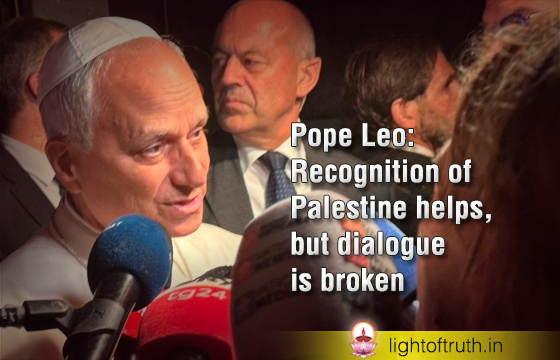
Pope Leo: Recognition of Palestine helps, but dialogue is broken

Responding to journalists’ questions on September 23 about the recognition of Palestine as a state, the Holy Father reaffirmed, “The Holy See recognized the two-state solution some time ago. That is clear: we must seek a path that respects all peoples.” Regarding that recognition, he added, “It could help, but right now there is no real willingness to listen on the part of the other side; dialogue is broken.”

Concerning the situation in Gaza, he explained: “Thank God, the parish is fine, although the incursions are getting closer and closer… This afternoon I got in touch with them.”

The journalists also asked him about the Russian incursions: “Someone is seeking an escalation. It’s getting more and more dangerous. I continue to insist on the need to lay down arms, halt military advances, and return to the negotiating table.”

In that context, he emphasized that “If Europe were truly united, I believe it could do a lot.”

When asked whether rearmament is necessary, he replied, “These are political matters, also influenced by external pressure on Europe. I prefer not to comment.” Moreover, the Pope responded to a question about the diplomatic initiatives the Holy See could undertake in the coming months, stating, “We are in constant dialogue with ambassadors. We also try to speak with heads of state when they come, always seeking a solution.”

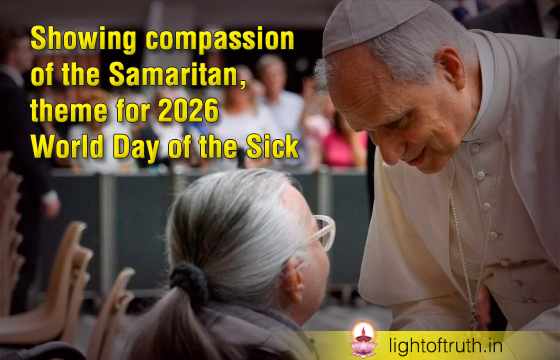
Showing compassion of the Samaritan, theme for 2026 World Day of the Sick

The compassion of the Samaritan: loving by bearing the pain of the other” is the theme chosen by Pope Leo XIV for the next World Day of the Sick marked annually on 11 February. The Dicastery for Promoting Integral Human Development released the theme on Friday 26 September through the Holy See Press Office.

The theme centres on the Gospel figure of the Samaritan, who demonstrates love by caring for the suffering man who fell in with robbers. It highlights a key dimension of love for one’s neighbour: love must be expressed through concrete acts of closeness, by taking on the suffering of others — especially those who are ill, and often also vulnerable due to poverty, isolation, or loneliness.

The Dicastery writes, in the information provided for the World Day, that “the World Day of the Sick, established by St. John Paul II in 1992, offers a privileged moment of prayer, spiritual closeness, and reflection for the entire Church and for civil society, who are all called to recognize the face of Christ in our sick and vulnerable brothers and sisters. Like the Good Samaritan that bent down to help the injured man along the road, the Christian community is also called to stop and help those who suffer and be evangelical witnesses of closeness and service to the sick and most vulnerable.”

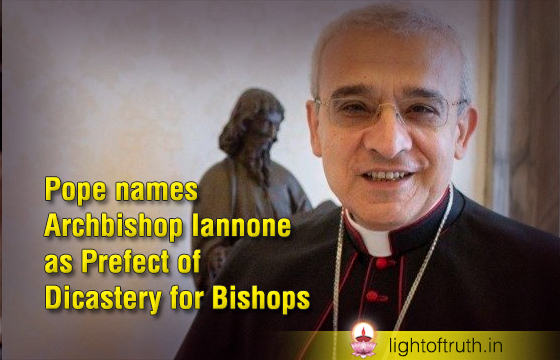
Pope names Archbishop Iannone as Prefect of Dicastery for Bishops

On Friday, 26 September, Pope Leo XIV appointed Archbishop Filippo Iannone, until now Prefect of the Dicastery for Legislative Texts, as Prefect of the Dicastery for Bishops, a role that also includes presidency of the Pontifical Commission for Latin America. The announcement of Archbishop Iannone’s appointment came in the daily Bulletin of the Holy See Press Office, which noted that the Archbishop will take up his new post on 15 October 2025. Archbishop Iannone’s appointment is the first nomination of a head of a Dicastery made by Pope Leo. The only other appointment to a senior role in a Roman Curia body had been made on May 22 – just days after his election – when he named Sister Tiziana Merletti, a nun of the Institute of the Franciscan Sisters of the Poor, as secretary of the Dicastery for Institutes of Consecrated Life and Apostolic Societies.

Archbishop Iannone, a native of Naples who will turn 68 on December 13, is a Carmelite, jurist, and canon lawyer with extensive experience in courts, pontifical universities, and the archdiocese. Archbishop Iannone is now charged with continuing the work that the future Pope had undertaken for two years. The role of Prefect of the Dicastery for Bishops is a delicate one: assisting the Pope in choosing the pastors to whom he will entrust the ecclesial communities throughout the world. After identifying priests to propose for the episcopate, the final decision rests with the Pope. To assist in this mission, Francis appointed three women as members of the Dicastery for Bishops in July 2022: Sister Raffaella Petrini, current president of the Governorate of Vatican City State; Yvonne Reungoat, former superior general of the Daughters of Mary Help of Christians; and Maria Lia Zervino, former president of the World Union of Catholic Women’s Organizations (WUFC).

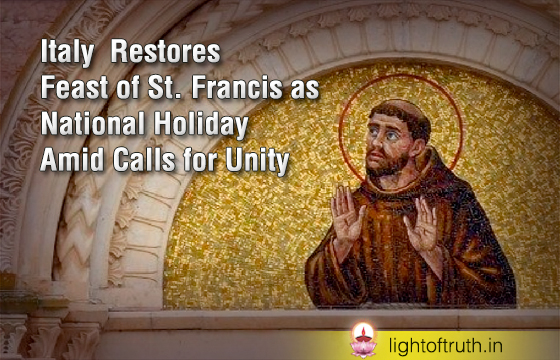
Italy  Restores Feast of St. Francis as National Holiday Amid Calls for Unity


On October 4, Assisi will once again become the beating heart of Italy’s spiritual life. This year’s feast of St. Francis, already a fixture of the Italian calendar, takes on a heightened significance as the government moves toward recognizing it as a full national holiday. Prime Minister Giorgia Meloni, accompanied by Minister of Culture Alessandro Giuli, will join pilgrims and church leaders in the Umbrian town for the annual liturgy and civic ceremonies. The timing is striking: just days after the Italian Chamber of Deputies overwhelmingly approved the bill to establish October 4 as a new public holiday in honour of the country’s patron saint. The measure now awaits approval by the Senate, with full implementation expected by 2027.

The initiative carries more than symbolic weight. Declaring a thirteenth national holiday means changes in labour contracts, wage supplements, and state spending to cover essential services on the new day off, projected at more than 10 million euros annually. Yet lawmakers across the political spectrum have backed the idea, seeing in Francis of Assisi a figure whose legacy transcends religious affiliation. In a time of cultural divides, the saint of peace, fraternity, care for creation, and solidarity has once again been cast as a unifying emblem of Italian identity.

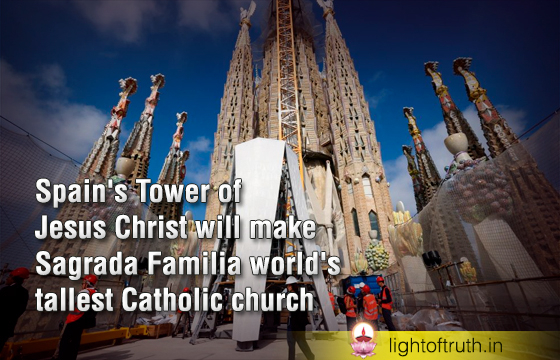
Spain’s Tower of Jesus Christ will make Sagrada Familia world’s tallest Catholic church

Over a century in the making, the Tower of Jesus Christ, designed by famed Spanish architect Antoni Gaudí, will soon crown the Basilica of the Sagrada Familia in Barcelona, making it the tallest Catholic church in the world. In a pre-recorded statement sent to OSV News Sept. 23, Jordi Faulí, the head architect overseeing the basilica’s construction, said that while the central spire and its terminal have been completed, workers are now focused on the cross that will crown it. “The cross is made up of seven large pieces that are assembled here and will then be lifted with the crane. The intention is to finish the cross in the next few months,” Faulí said.

At over 564 feet in height, the tower, upon completion, will make it the tallest Catholic church in the world, surpassing the Basilica of Our Lady of Peace in Yamoussoukro, Ivory Coast, which stands at 518 feet. It will also surpass the Ulmer Münster Lutheran church in Germany, which stands at 530 feet, making it the tallest church of any denomination in the world.