
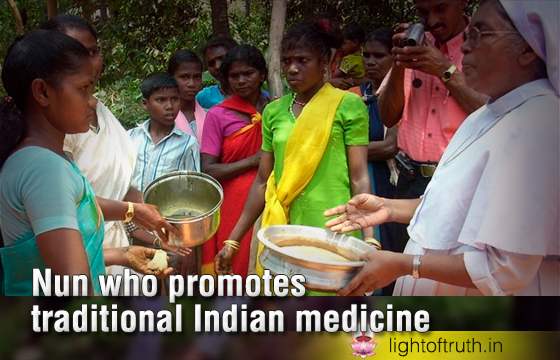
Sister Innocent Joseph Ayyankanal, a member of the Missionary Sisters of Mary Immaculate, has spent over 40 years promoting Ayurveda (traditional Indian medicine) and other forms of traditional medicine among rural and tribal communities in the Nilgiris district of Tamil Nadu and the Wayanad district of neighbouring Kerala. Ayyankanal has conducted more than 2,000 awareness classes across India in association with the Catholic Health Association of India to promote Ayurveda in rural India. She also trained nuns, priests and other health care workers, who now promote these remedies in their areas. Born into a family of vaidyas (traditional healers), she has combined her knowledge of herbal medicine with her vocation as a nun. Ayyankanal continues her mission even at 78, helping people in need and collaborating with organizations such as Shalom TV to promote traditional medicine. She now resides at the Maryknoll Convent in Kunnalady in the Nilgiris district of Tamil Nadu, where she began her health care journey among tribal people in 1975.
Daily Archives: September 3, 2025

Cow vigilantes assault leaves two catholic brothers shattered
The cows they raised were meant to be a lifeline, not a death sentence. For Johan Soren, 66, and his brother Philip Soren, 55, the sale of their two bulls and two calves—for a desperate price of 40,000 rupees — was the only way to fund the urgent medical care for Johan’s ailing wife.
But that small, necessary transaction turned into a nightmare on August 19. As the two Catholic tribal farmers walked their animals along Malipada Road, they were ambushed by a mob of nearly 16 men, who identified themselves as “Gau Rakshaks” (cow vigilantes). Their cries of protest that the animals were their own, legally sold to a trader were ignored. The mob allegedly beat the brothers, leaving them bleeding and barely conscious on the roadside.
“We told them we were selling our own cattle to save my wife’s life,” a relative recounted later. “They just laughed and said we were smugglers.” These days, the brothers lie in a hospital bed. Johan has been diagnosed with multiple fractured ribs, an injury that makes every breath a struggle. Philip’s hand is broken, shattering his ability to work their small plot of land. The fight for justice has been as brutal as the assault itself. Local police initially refused to register a formal complaint, allegedly questioning the victims’ legal right to their own cattle. It took the intervention of the Superintendent of Police on August 23 to finally force the registration of an FIR.
National conclave stresses Church’s role in anti-trafficking crusade
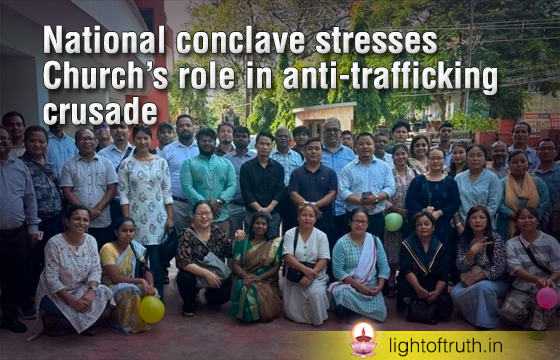
Groups working to end human trafficking in northeastern India have forged a network among Churches in the region to tackle the social menace. “When the Church stands together in faith and action, we can transform migration from a story of vulnerability into a journey of hope,” asserted Rohit Bhalla, national convener of the People Uniting to Stop Human Trafficking (PUSH) at a national conclave held at Guwahati, Assam. Northeastern India, he pointed out, is rich in faith and culture, but remains vulnerable as a source region for unsafe migration and trafficking.
Besides PUSH, the August 26-27 event at Don Bosco Inspiration, Kharguli, was attended by a network of civil society organizations, Churches, and anti-trafficking crusaders. As many as 65 delegates from 12 Churches and Christian organizations attended the program. They spent the two days in prayer, worship, and strategic dialogue to promote sustainable solutions.
The Commission for Migrants under the Conference of Catholic Bishops of India, Jesuit Refugee Service, and the Don Bosco network highlighted the Church’s shared mission to safeguard migrants and uphold the dignity of work.
While Bhalla emphasized faith communities’ role in combating trafficking, Aashima Samuel shared legal and social protection frameworks; K.A. Jayakumar highlighted development and policy perspectives; Salesian Fathers Joe Prabhu and George Mathew explored skill-building and livelihood opportunities; and Jayakumar, a retired Indian Administrative Service officer, provided governance insights. The conclave underscored the power of ecumenical collaboration in protecting vulnerable communities, strengthening livelihoods, and advancing God’s Kingdom through justice and solidarity.
7 Christians arrested in Indian statefor holding Sunday services
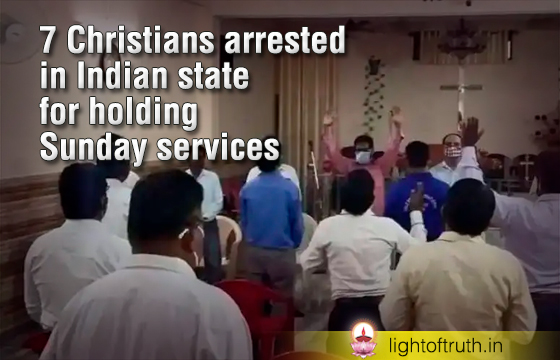
Seven Christians were jailed in a northern Indian state after Hindu vigilante groups disrupted Sunday prayer services in six places, alleging they were converting gullible people to Christianity. “This has become a pattern now to trap Christians in false conversion cases,” said Pastor Joy Mathew, who is based in Uttar Pradesh, which is India’s largest state ruled by the Bharatiya Janata Party (BJP). The state’s police have registered more than 400 anti-conversion cases against Christians after a draconian law criminalizing conversion was enacted in 2021.
The law stipulates up to 20 years imprisonment for violators. The seven arrests were made on Aug. 24 from three places, said a Church leader who did not want to be named due to fear of retribution. He said six Sunday prayer services were disrupted on that day across four districts – Mau, Ghazipur, Jaunpur and Budaun. Among those arrested were Lalmuni Chauhan and Ashish Chauhan in Mau, two others from Jaunpur and three from Budaun, whose names were yet to be ascertained, the Church leader said. All seven, accused of organizing religious conversion activity, were produced before local courts and sent to judicial custody, he added. About 80 percent of Uttar Pradesh’s more than 200 million people are Hindus, while Christians make up less than half a percent. The state recorded 97 violent incidents against Christians until the end of July this year, and 209 incidents last year, according to the ecumenical body United Christian Forum.
India’s first cinematographer nun wins prestigious media award
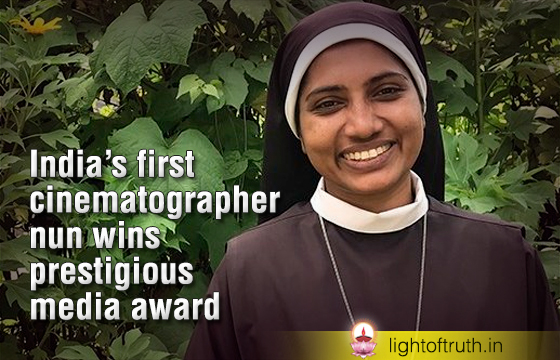
Sister Lismy Parayil, “the camera nun of India,” has won the James Alberione Award for her outstanding contributions to media production. The Indian Catholic Press Association, the oldest Catholic media forum in Asia, announced on August 19 that it has selected the Carmelite of Mary Immaculate nun for the annual award, set up in memory of the founder of the Pauline Family.
She has a prolific collection that includes over 25 short films, 250 video albums, 150 documentaries, and 100 plus interviews, Sr Lismy has made a remarkable impact in the field of media ministry. The ICPA statement says the works of Sister Lismy, as she is popularly known, are “deeply rooted in social issues, aiming to inspire moral living and foster a sense of responsibility among viewers. This recognition celebrates her exceptional contribution to raising awareness of social morality through impactful and thought-provoking cinematic storytelling.” The award will be conferred on the 40-year-old nun on September 20, during the 30th National Convention of Christian Journalists, organized by the ICPA, at Pune, western India. Earlier, Sister Lismy was featured in the “India Book of Records” — the highest recognition in visual media in the country. She was the first Catholic nun to get the honour. A panel of chief editors of record books from India, Bangladesh, Indonesia, Malaysia, Nepal, Thailand, the United States and Vietnam, selected her. Her digital platforms, including Nirmala Media TSR, the Camera Nun YouTube Channel, and related social media pages, have collectively garnered over 8.3 million views worldwide, delivering uplifting and inspirational content to audiences across all age groups.
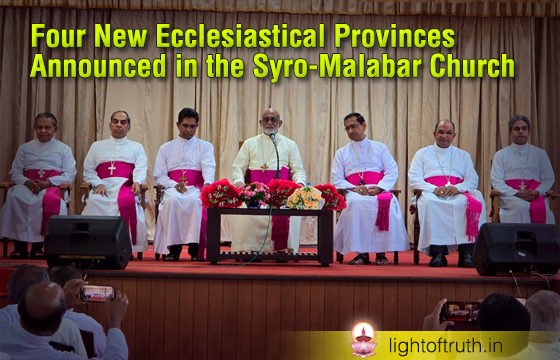
Four New Ecclesiastical Provinces Announced in the Syro-Malabar Church
His Beatitude Mar Raphael Thattil, the Major Archbishop of the Syro-Malabar Church, issued decrees erecting four new ecclesiastical provinces in the Syro-Malabar Church—Faridabad, Ujjain, Kalyan, and Shamshabad—and appointing Mar Kuriakose
Bharanikulangara, Mar Sebastian Vadakel MST, Mar Sebastian Vaniyapurackal, and Mar Prince Antony Panengadan respectively as the Metropolitan Archbishops. These decisions were announced on 28 August at a public meeting held at the Major Archiepiscopal Curia at Mount St. Thomas, Kakkanad, in the presence of the Synod Fathers, and were also made public at 12 noon (Italian time) in the Vatican.
The Eparchies of Bijnor and Gorakhpur will be suffragan eparchies of Faridabad Province. The Eparchies of Sagar, Satna, and Jagdalpur will be suffragan eparchies of Ujjain Province. The Eparchies of Chanda and Rajkot are included in Kalyan Province.The Eparchy of Adilabad will be suffragan eparchy of Shamshabad Province. Additionally, the Eparchy of Hosur in Tamil Nadu will now be the suffragan eparchy of the Archeparchy of Trichur.
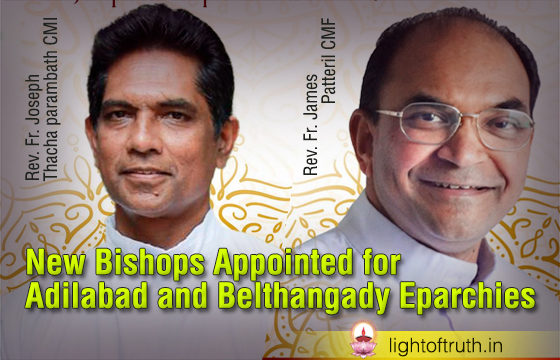
New Bishops Appointed for Adilabad and Belthangady Eparchies
His Beatitude Mar Raphael Thattil, the Major Archbishop of the Syro-Malabar Church, announced the appointments of new bishops for the Eparchies of Adilabad and Belthangady on 28 August, during a public meeting held at the Major Archiepiscopal Curia at Mount St. Thomas, Kakkanad, in the presence of the Synod Fathers.
Rev. Fr. James Patteril CMF, presently serving as the Provincial Procurator of the Würzburg Province of the Claretian Congregation in Germany, has been appointed Bishop of Belthangady. He succeeds Bishop Mar Lawrence Mukkuzhy, who resigned due to health reasons.
Rev. Fr. Joseph Thachaparambath CMI, serving as the Provincial Superior of the CMI Chanda St. Thomas Province, has been appointed Bishop of Adilabad. He succeeds Mar Prince Antony Panengadan, who has been transferred from the Eparchy of Adilabad to the then Eparchy of Shamshabad.
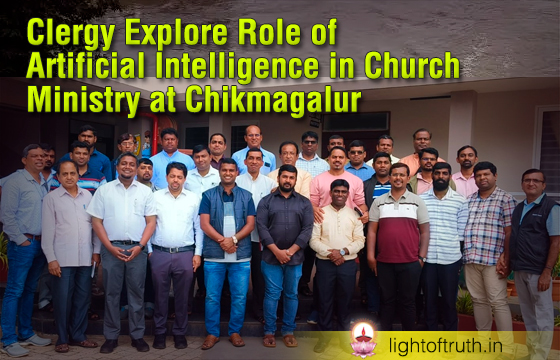
Clergy Explore Role of Artificial Intelligencein Church Ministry at Chikmagalur
The Diocese of Chik-magalur organised a one-day seminar on “Artificial Intelligence and its Rele-vance for Pastoral Mini-stry” for the clergy on 27th August at St. Joseph’s School, Cathedral Cam-pus, Chikmagalur. The seminar aimed to help the clergy understand the growing significance of Artificial Intelligence (AI) in today’s world and to explore how it can be effectively integrated into the Church’s mission, particularly in the areas of pastoral care, evangelisation, and administration. The sessions were led by two distinguished experts from St. Aloysius Deemed-to-be University, Manga-lore. Mr. Royal Praveen D’Souza, an Assistant Professor with 12 years of experience, specialising in Artificial Intelligence and Management Systems and Dr. Reji P. John, Assistant Professor of Economics. The seminar proved to be an enriching and thought-provoking experience. It enabled the clergy to recognise the potential of Artificial Intelligence as a valuable tool to support and strengthen pastoral ministry, while reaffirming that the essence of the Church’s mission continues to rest on human touch, compassion, and spiritual discernment.
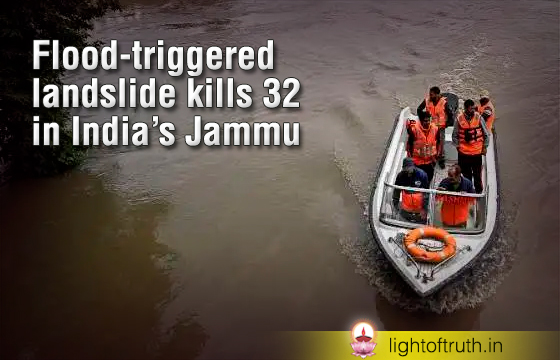
Flood-triggered landslide kills 32 in India’s Jammu
At least 32 people, mostly Hindu pilgrims on their way to a famed mountainous temple, were killed and 20 sustained injuries following a massive landslide triggered by four days of torrential rain in India’s northern Jammu-Kashmir region. Government officials warned the death toll may rise as many, mostly Hindu pilgrims to Mata Vaishno Devi temple in Jammu, are feared to be trapped under the debris. The disaster site was located near Ardhkunwari, a midway cave temple situated on the steep climb to the Vaishno Devi shrine, one of the holiest destinations for Hindus in India. The landslide struck near a restaurant, along the mountain path carved into the Trikuta Hills in Jammu. Authorities immediately suspended the pilgrimage and rushed army units, disaster response teams and local officials to the site. Continuous rainfall and the unstable slopes of the mountains, however, have slowed the rescue effort. Millions of pilgrims trek to the Vaishno Devi shrine annually, walking 12 kilometers uphill, and the route is usually thronged with devotees chanting hymns and carrying offerings. The pilgrimage route is now full of heavy machinery and soldiers frantically searching for survivors.
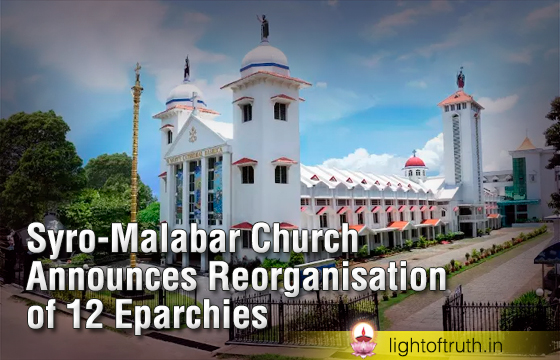
Syro-Malabar Church Announces Reorganisation of 12 Eparchies
His Beatitude Mar Raphael Thattil, the Major Archbishop of the Syro-Malabar Church, announced the reorganisation of the territories of twelve eparchies outside Kerala on 28 August, during a public meeting at the Major Archiepiscopal Curia at Mount St. Thomas, Kakkanad, in the presence of the Synod Fathers.
The Syro-Malabar Church obtained all-India jurisdiction with the erection of the Eparchy of Shamshabad on 9 October 2017. At that time, all territories in India not yet assigned to any Syro-Malabar eparchy were made part of the newly erected Eparchy by Pope Francis. Spread across twenty-three states, four union territories, and two islands, this vast jurisdiction required further administrative decisions in subsequent Synodal sessions to ensure effective pastoral care. As a result, the Synod decided to reorganize the territories of eleven eparchies by redistributing certain areas of the Shamshabad Eparchy. With the approval of the Apostolic See, the Major Archbishop has issued decrees redefining the territories of the following eparchies: Adilabad, Bijnor, Chanda, Gorakhpur, Kalyan, Jagdalpur, Rajkot, Sagar, Satna, Shamshabad, and Ujjain.