
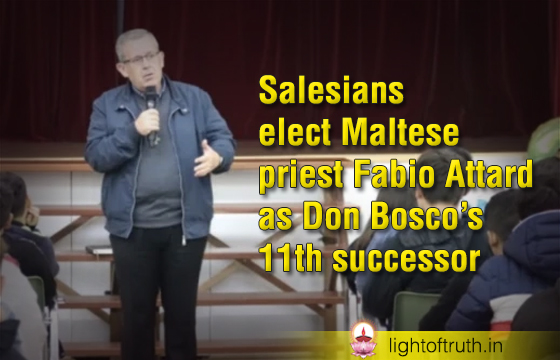
Maltese priest Fabio Attard was elected as the new rector major of the Salesian congregation during its general chapter in Turin, Italy, becoming the 11th successor of St. John Bosco. The new superior general of the order founded in 1859 succeeds Spanish Cardinal Ángel Fernández Artime, who became prefect of the Dicastery for Institutes of Consecrated Life and Societies of Apostolic Life in January.
According to the Salesians, the new rector major did not participate in the Salesian chapter meeting, so he was informed of his election by telephone, at which point he was asked for his required acceptance. “His words were heard in the hall and, moved to tears, he thanked the brothers for their trust and especially for their trust in God in taking on this new task,” the Salesians said in a statement.
This is the first time that the new rector major is not among the members of the general chapter, “so the profession of faith upon accepting the office and the greeting from the chapter members and the mother general of the Salesians Daughters of Mary Help of Christians will take place throughout the day, when the new rector major can make it to Turin.” Attard will now have six years to lead the Salesian family, which will begin with the work remaining at the general chapter, which will last until April 12.
The priest’s election came two days after his 66th birthday. Born in Gozo, Malta, he made his profession as a Salesian in September 1980 in Dublin, Ireland, where he completed his novitiate.
Both his diaconal and priestly ordinations took place in Rome in 1986 and 1987, respectively.
After leading several Salesian apostolates in Malta, he founded the Institute for Pastoral Formation of the Archdiocese of Malta in 2005.
With a licentiate in moral theology from the Alphonsianum in Rome, Attard participated in the general chapter held in 2008 as delegate for the Irish province and was entrusted with youth ministry until April 2020, when Artime asked him to create a continuing formation project for Salesians in Europe.
Daily Archives: March 29, 2025
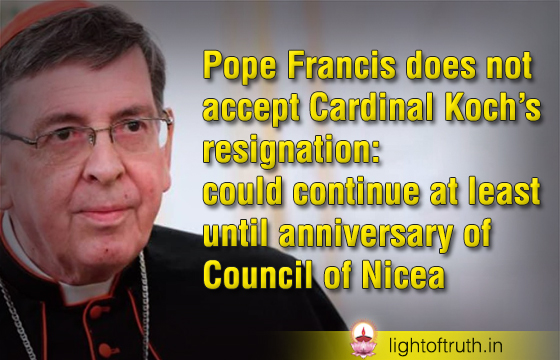
Pope Francis does not accept Cardinal Koch’s resignation: could continue at least until anniversary of Council of Nicea
At 75, the customary age for resignation under canon law, Swiss Cardinal Kurt Koch offered his resignation to Pope Francis. The Pope, however, declined the request–at least for now. In a recent interview with Vatican News, Koch revealed that Francis had responded with a standard phrase meaning that he would remain in office until further notice. “The Holy Father will decide in due time,” Koch said. Koch has served as the head of the Dicastery for the Promotion of Christian Unity since 2010, overseeing the Vatican’s efforts to foster dialogue and collaboration among Christian denominations. His extended tenure suggests that Francis values continuity in the Church’s ecumenical work at a time when unity is both a theological and practical challenge. Koch’s office engages with diverse Christian communities, navi-gating theological and cultural differences that shape ecumenical dialogue. As he explains, discussions vary greatly depending on the group involved. “We share a deep theological heritage with the Eastern Churches but are shaped by different cultural traditions,” Koch observed.
“With Protestant communities, we have more cultural similarities but fewer theological commonalities.”
This contrast highlights the complex nature of Christian unity—sometimes bound by shared beliefs, sometimes by shared history, but often hindered by both. Despite these challenges, Koch remains hopeful that more believers will recognize the importance of unity, citing Jesus’ own prayer for his followers to be one.
Observers speculate that Koch will continue in his role at least through May 2025, when Christian leaders will mark the anniversary of the First Council of Nicea in Iznik, Turkey. The historic council, convened in 325 AD, produced the Nicene Creed—a foundational statement of Christian belief still used by many denominations today. Koch sees the event as an opportunity for churches to commemorate their shared history. “It is a wonderful occasion for all Christian communities to reflect together on this ancient confession of faith,” he said. The symbolic significance of gathering in Nicea is undeniable, even if little remains of the original council site. Pope Francis has expressed interest in attending the event, but his participation remains uncertain due to health concerns. The Vatican has not confirmed any travel plans, and at a recent press conference, medical officials offered a cautious response: “The trip is not confirmed.” Koch, however, remains optimistic. “I hope it will be possible,” he said. “It would be a powerful gesture to celebrate together in Nicea.”
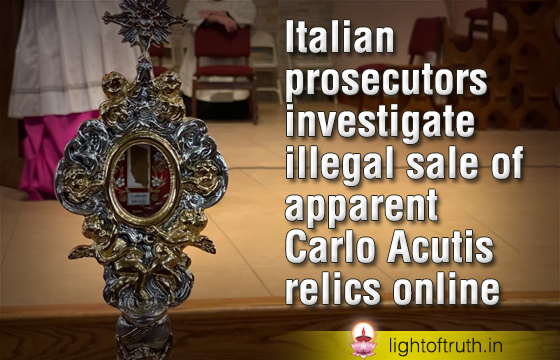
Italian prosecutors investigate illegal sale of apparent Carlo Acutis relics online
Italian prosecutors are in-vestigating the illegal online sale of alleged relics of Blessed Carlo Acutis, who will be declared the first millennial saint next month. The investigation by the Perugia Public Prosecutor’s Office was prompted by a complaint by the bishop of Assisi, the city where Acutis’ tomb is located for public veneration.
“On the internet, there is a marketplace for relics concerning various saints, such as our St. Francis, complete with a price list. Something impossible to accept,” Bishop Domenico Sorrentino of Assisi-Nocera Umbra-Gualdo Tadino said in a statement on March 26. Sorrentino filed a formal complaint with Italian authorities after learning of an internet auction of an alleged first-class relic of Acutis’ hair, which sold online for 2,000 euros by an anonymous user.
“We do not know whether the relics are real or fake,” the bishop said. “But if it were also all fabricated, if there was deception, we would be not only in the midst of a fraud but also of an insult to religious belief.” According to canon law of the Catholic Church, the sale of first- and second-class relics is strictly forbidden. Relics can only be given away by their owners, and some very significant relics, such as a heart, arm, etc., cannot be given away without the permission of the Vatican. Acutis’ canonization Mass is scheduled to take place in St. Peter’s Square on April 27 during the Church’s Jubilee of Teenagers.
Pew study shows people not sticking with faith they were raised in
New research shows a widespread trend of people either leaving the religion they were raised in or completely dropping religion, with Christianity taking a particularly big hit. At least one-fifth of all adults in many countries around the world are no longer a part of the religion they were raised in, a new report from Pew Research Center shows. Christianity and Buddhism have seen the highest rates of disaffiliation, the survey results show.
This trend varies substantially among countries. Half of people in South Korea, for example, are no longer the religion they were raised in, whereas in Poland, for example, that’s only the case for 5% of people. In parts of Europe, the difference between the number of people who have left Christianity – whether or not they adopted another religious tradition – compared to those who have joined Christianity’s numbers is stark. Pew said that Christianity was the religion in most countries that had the highest ratios of people who are leaving the religion compared to those joining. In Italy, for example, 28.4 people have left the religion for every person who has joined.
People are also leaving religion altogether. In 21 of the 36 countries Pew looked at, more people have joined the group of people considered religiously unaffiliated than left that group. In Italy, for example, 28.7 people became religiously unaffiliated for every one person who left that category. In the U.S., that ratio was 5.9 to 1. Hungary was an outlier. For every one person who became religiously unaffiliated, 1.9 people left that category, Pew’s research showed.
Pew said that the trends it found didn’t differ or didn’t differ much among age, education level or gender for most of the countries it surveyed. And the biggest trend among age groups in most instances is people moving from affiliating with one religion to disaffiliating with religion overall, which has been more of a trend among younger people, Pew said.
“These age patterns might be signs of secularization, indicating that countries like Spain, Canada, Italy and the U.S. are gradually becoming less religious,” Pew said in its report. But age differences in religious affiliation it found could also be “from people becoming more religious as they grow older.”
Only a few countries are seeing more people join Christianity than drop it, including the Philippines, Ghana, Hungary, Sri Lanka and Singapore, the study showed. In looking at net losses for Christianity, Spain stands out among 27 countries analyzed: Pew said the country has seen the highest net losses of Christians — in proportion to its population.
The survey found, however, that more broadly, most adults who grew up Christian still affiliate with that tradition. The number of people considered religiously unaffiliated has grown on a net basis but when people who were raised unaffiliated leave that group, they’re largely switching to Christianity, according to Pew.
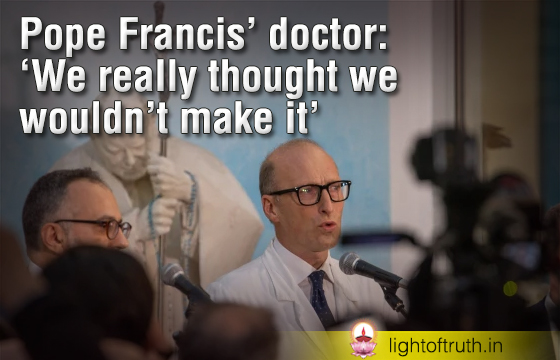
Pope Francis’ doctor: ‘We really thought we wouldn’t make it’
The head of the medical team that treated Pope Francis during the 38 days he spent at Rome’s Gemelli Polyclinic Hospital, Dr. Sergio Alfieri, revealed that one of the most critical moments of his hospitalization was when they had to choose between continuing the therapy or letting the pope die. “We had to choose whether to stop and let him go, or push it and try every drug and therapy possible, running the extremely high risk of damaging other organs,” he said in an interview with the Italian newspaper Il Corriere della Sera.
In the interview, Alfieri described in detail the doctors’ response to the respiratory crisis suffered by the pope on Feb. 28. According to the medical report published that day, Pope Francis suffered an isolated attack of bron-chospasm, a severe coughing fit that suddenly worsened his clinical condition, after days of moderate optimism at the Vatican.
Although the pope never lost consciousness and cooperated with the specialists’ therapeutic manoeuvres, the alarms went off, and doctors opted to place him on a non-invasive mechanical ventilation mask to help him breathe. “For the first time, I saw tears in the eyes of some people who were close to him. People who, I’ve come to understand during this period of hospitalization, truly love him, like a father.
We were all aware that the situation had worsened further and there was a risk that he might not make it,” Alfieri explained.
However, despite the risk of causing irreversible kidney and bone marrow damage due to the medical treatment he underwent, they decided to act. “We really thought we wouldn’t make it,” he said. It was a difficult decision, as Alfieri recounted, ultimately supported by the decision of the pope himself, who, through his personal health assistant, Massimiliano Strappetti, his personal nurse at the Vatican, gave a clear order: “‘Try everything, let’s not give up.’ And no one gave up.” In the end, Pope Francis responded to the treatment. However, after his recovery, there was another moment of intense concern.
While eating, the pope suffered an episode of vomiting, and the gastric juices ended up entering his lungs. “We were just coming out of the toughest period, and while eating, Pope Francis vomited and inhaled it. That was the second truly critical moment because, in these cases, if you don’t act quickly, there’s a risk of sudden death, in addition to complications in the lungs, which were already the most compromised organs,” Alfieri related.
The doctor explained that, despite the seriousness of the situation, Pope Francis was always fully aware, “even when his condition worsened.” “He was aware, like us, that he might not survive the night,” the doctor stated.
He added: “We saw the man who was suffering. However, from the first day he asked us to tell him the truth and wanted us to tell the truth about his condition.” In this regard, the director of the medical-surgical department at Gemelli Polyclinic Hospital expressed the desire for transparency that prompted the Vatican to report on Pope Francis’ health. “We communicated the medical information to the secretaries, and they added other information that the pope later approved. Nothing has ever been modified or omitted,” he noted.
In the interview, Alfieri also highlighted the pope’s incredible strength, both physical and mental: “In the past, when we spoke, I would ask him how he managed to keep up this pace, and he always replied, ‘I have a method and rules.’ Beyond a very strong heart, he has incredible resources.” In addition to the pope’s stamina, the Gemelli medical coordinator added that the prayers offered by faithful around the world in recent days also contributed to his recovery. “There is a scientific publication that says prayer strengthens the sick. In this case, the whole world began to pray. I can say that twice the situation was lost, and then it happened like a miracle. Of course, he was a very cooperative patient. He underwent all the therapies without ever complaining,” he stated.
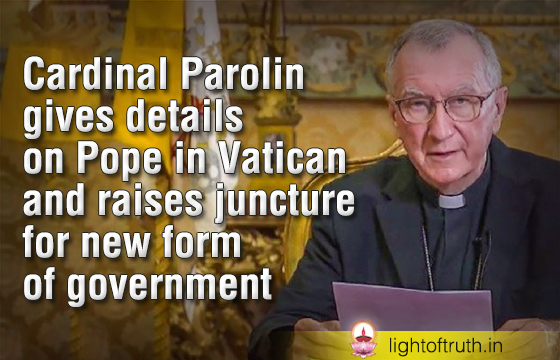
Cardinal Parolin gives details on Pope in Vatican and raises juncture for new form of government
As Holy Week approaches, the Vatican remains uncertain about Pope Francis’ ability to preside over key liturgical events, given his ongoing recovery from a serious respiratory infection. Vatican Secretary of State Cardinal Pietro Parolin acknowledged that the pontiff might not be able to govern the Church as he once did, suggesting that alternative ways to fulfill his role will need to be considered. Speaking on March 27 at an event in Sacrofano, near Rome, Parolin shared that he continuously receives messages from people praying for the pope’s full recovery. “Perhaps he won’t be able to work as before, and in that case, we must find different ways for him to continue leading the Church,” he said.
Since his release from the hospital on March 23, Pope Francis has remained secluded in the Vatican, avoiding public engagements. “He is resting, he is not seeing anyone, and as far as I know, he has no scheduled audiences,” Parolin confirmed. The emphasis, he stressed, is on allowing the pope the necessary time to heal. “The only solution is to remain calm and refrain from any public activity for now.” Despite the pope’s health concerns, the Vatican has yet to clarify how the Holy Week liturgies will be conducted. The official schedule has been published, but no presiding clergy have been named, leaving open the possibility that Francis may not participate in person. Vatican insiders suggest that a contingency plan is being developed, possibly involving multiple cardinals leading different ceremonies in his place. Parolin acknowledged the uncertainty, stating, “We will see whether the pope can preside over the celebrations or if he will delegate certain cardinals to act on his behalf.”
Given medical recommendations for at least two months of convalescence, a more extended period of reduced activity for the pontiff seems likely. At 88, Pope Francis has faced increasing health struggles in recent years, including surgeries and hospitalizations. His latest bout with bilateral pneumonia has raised questions about his long-term ability to maintain the demanding responsibilities of the papacy. While he has dismissed past speculation about resignation, the evolving situation may require adjustments in how he exercises his leadership.

Jesuits extend reparations offer to victims of alleged Rupnik abuse
The Society of Jesus is offering reparations to about 20 women who say they were sexually, psychologically, and spiritually abused by the disgraced ex-Jesuit artist Father Marko Rupnik. Rupnik is accused of having committed serious sexual, psychological, and spiritual abuse of dozens of religious sisters under his spiritual care over decades. His case is currently under investigation by the Vatican.
Father Johan Versuchen, Rupnik’s former superior and current general counsellor and delegate for the Interprovincial Houses and Works of the Society of Jesus in Rome, said he sent a letter to the women who have come forward with accusations against Rupnik, offering an open invitation to reparations, according to The Associated Press.
While the letters were not made public out of respect to the alleged victims, some excerpts were shared by Laura Sgrò, a lawyer for the alleged victims, Religion News Service reported. In the letters, Versuchen reportedly lamented that Rupnik had not publicly taken responsibility for his actions nor repented. He told The Associated Press that in the letters he invited alleged victims to share what they needed and how the order can meet that need.
Versuchen also reportedly offered to start a “process of healing” and shared that the Jesuit order is “uneasy” with the situation and aware that “the various kinds of violence suffered at the time are compounded by the pain caused by the lack of listening and justice for many years.” Sgrò thanked the Jesuits for the gesture of reparation and called on the Vatican in the statement to follow “the example of the Society of Jesus and bring Marko Rupnik to trial as soon as possible, restoring dignity to the victims.” ”There really can be no more delay now; justice just has to be done,” she said.
In Sgrò’s statement, the alleged victims thanked Versuchen for “acknowledging the mistakes made thus far” and having “finally welcomed and embraced the victims of Marko Rupnik, offering them the support that had been lacking until now.”
The Jesuits want to protect the privacy of the alleged victims and do not plan to share future information on dialogue with them, Versuchen told RNS. ”Any eventual journey toward reparation will depend entirely on the person who was invited,” Versuchen told RNS. “We wrote the letter because we, too, need reparation and healing,” he continued. “We have a lot to learn from them, and to do better in the future, to avoid any type of abuse in the company of Jesus.”
Diocese promotes day of ‘unplugging’ from screens, devices for Lent
The Diocese of Arlington, Virginia, is promoting a ”Dio-cesan Day of Unplugging” – intentionally eliminating screen time or time spent consuming digital media – on March 28 as a Lenten fasting discipline to encourage Catholics to spend more time with God as opposed to spending time on their smart devices. Noting that fasting is a “practice of self-discipline with a penitential focus,” the diocese, which is led by Bishop Michael Burbidge, called “unplugging” from the addicting influence of the internet, phones, and social media a “worthwhile and challenging type of fasting.”
Citing studies suggesting most people spend more than two hours a day on social media, the diocese said such statistics beg the questions: Are we spending more time with our devices than with God? And are we investing more time on social media than on nurturing in-person relationships within our communities? “When we fast from food or luxuries, we create space for God. Our fast reminds us of our need for God and brings us back into relationship with him.
Fasting also invites us to renew our relationships with one another in our communities,” the diocesan announcement says.
As suggestions for alternative activities to engage in rather than screen time on March 28, the diocese suggested numerous prayerful activities including attending daily Mass; making a Holy Hour or even a holy “five minutes”; praying a rosary or Divine Mercy chaplet for a loved one or the souls in purgatory; reading Scripture, the catechism, or a classic spiritual book; walking in nature; journaling; or attending the Stations of the Cross.
Works of charity would also be a good idea, the announcement says, suggesting Catholics take advantage of volunteer opportunities at their parish or local Catholic Charities, spend fellowship time with their community, or offer to grocery shop for an ill, elderly, or pregnant neighbour.
The Catholic day of “unplugging” was inspired by the Global Day of Unplugging promoted March 7–8 by the nonprofit Unplug Collective. Pope Francis is promoting screen time fasts this year as part of the ongoing Jubilee Year of Hope. As part of the special year, by the pope’s decree, Catholics worldwide can obtain an indulgence through various acts of penance. Francis’ decree specifically mentions as an option for obtaining a plenary indulgence “abstaining for at least one day a week from ‘futile distractions,’ such as social media or television.”
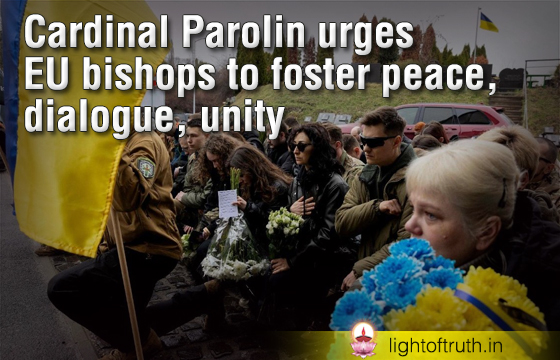
Cardinal Parolin urges EU bishops to foster peace, dialogue, unity
Addressing the Plenary Assembly of the Commission of the Bishops’ Conferences of the European Union (COMECE), Cardinal Pietro Parolin, Vatican Secretary of State, reaffirmed the Holy See’s commitment to fostering diplomacy as a means of conflict resolution.
Speaking to the delegates gathered from 26 – 28 March in Nemi, a town in the Alban Hills outside Rome, the Cardinal also urged political leaders to “set aside divisions and ideological barriers” in favour of genuine dialogue. He underscored that Europe, rooted in a deep Christian tradition, has a particular responsibility to be a beacon of peace and solidarity in an increasingly fragmented world.
Cardinal Parolin highlighted the multiple crises affecting the continent, from geopolitical tensions to economic instability and migration challenges. He warned against the temptation to retreat into nationalistic or isolationist policies, stressing that “the European project must continue to be one of integration, not division; of bridges, not walls.” Quoting Pope Francis, he reminded those present that “war is always a defeat for humanity” and called upon European leaders to intensify diplomatic efforts to end conflicts, particularly in Ukraine and the Middle East. “Dialogue remains the only viable path,” he said, insisting that the Church’s role is to promote reconciliation and understanding in the face of hostilities.
The Secretary of State dedicated much attention to the importance of solidarity in addressing social and economic inequalities, and said that the Church must continue advocating for policies that place the dignity of the human person at the centre of economic and social systems. “The European Union was built on the principles of solidarity, respect for human dignity, and justice. These values must not be abandoned in times of difficulty but rather strengthened,” he stated. He also called for greater attention to the needs of migrants and refugees, urging policymakers to adopt humane and fair immigration policies.
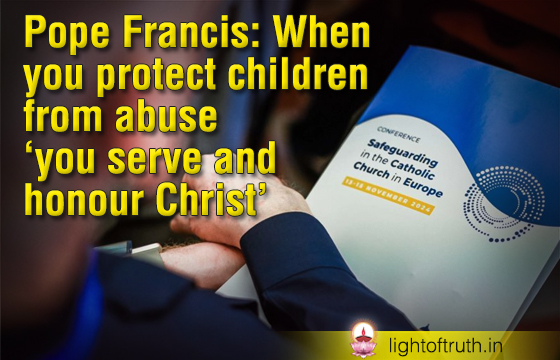
Pope Francis: When you protect children from abuse ‘you serve and honour Christ’
In a written message on March 25 to the Vatican’s commission for the protection of minors from sexual abuse, Pope Francis urged the group to continue to “keep watch while the world sleeps,” and to care for victims and survivors by listening “with the ear of the heart” to their experiences. “Abuse prevention,” he said, “is not a blanket to be spread over emergencies but one of the foundations on which to build communities faithful to the Gospel.”
Pope Francis’ message was sent to participants in the March 24–28 plenary assembly of the Pontifical Commission for the Protection of Minors (PCPM), which he established in 2014. With the reform of the Roman Curia in 2022, the commission — whose mission is to help local Churches around the world to safeguard minors and vulnerable adults from sexual abuse — became part of the Dicastery for the Doctrine of the Faith.
The PCPM released its first annual report on Church policies and procedures for safeguarding in 2024. During its 10 years of work, the pontifical commission has “enabled a safety network to grow within the Church,” the pope said. He also encouraged the group to “keep going!” “Continue to be sentinels that keep watch while the world sleeps. May the Holy Spirit, teacher of living memory, preserve us from the temptation to file away grief instead of healing it,” he said.
Relating the PCPM’s service to “oxygen” for the local Churches and religious communities, Francis asked the group to increase its joint work with the departments of the Roman Curia and to build alliances with civil authorities, experts, and associations outside of the Catholic Church.
He also requested that they “offer hospitality and care for the wounds of the soul to victims and survivors, in the style of the good Samaritan. To listen with the ear of the heart, so that every testimony finds not registers to be compiled but the depths of mercy from which to be reborn.”