

An Indian Catholic bishop has stressed the need to maintain harmonious relations with the majority Sikh community in northern Punjab state amid reports of rising conversions to Christianity. A Sikh youth group in the state has launched an awareness campaign to stop conversions and the establishment of new churches. “We are aware of the campaign, it is the result of activities of some house churches and their ministries that have damaged the reputation of mainstream churches,” said Bishop Agnelo Rufino Gracias, the apostolic administrator of Jullundur diocese. He told on Jan. 16 that the campaign to counter conversions “is a wakeup call for all of us to keep intact the rapport we have made with the Sikh community.”
The Sikh Youth Federation-Bhindran-wala said it aimed to expose the truth regarding various allurements, promises of miraculous healing, and other fraudulent practices adopted by Christian groups to convert people, reported the Times of India newspaper on Jan 15. Its president Bhai Ranjit Singh said, “The rise in conversions and establishment of new churches, particularly in the districts of Amritsar, Gurdaspur, and Pathankot, prompted us to act.” He said there was an urgent need to engage with Sikh and Hindu people in the state and “understand why they are changing their faith, and encourage them to remain committed to their own religion.”
Gracias, the Auxiliary Bishop Emeritus of Bombay who was appointed apostolic administrator of Jullundur diocese in 2023, said that “there is nothing wrong with the campaign” by the Sikh youth group. “It may have been disturbed by the house church ministries that are very aggressive, but as far as the Catholic Church is concerned it does not believe in forced conversion,” the prelate said. Gracias further said that because of a few house church pastors “we cannot and should not make our relations complicated with the Sikh people.”
Sanwar Bhatti, president of the Protestant United Church of Northern India Trust Association, said the campaign by the Sikh youth group has been going on for the past six months or so. “It will have no impact on our relations with the Sikh community. We have shared a good rapport with them in the past and present, and will continue to do so in future,” he told. Bhatti said the activities of certain church ministries are creating a misunderstanding among Christians and Sikhs in the state. “But we have to sit together and find a solution,” he added.
Daily Archives: January 31, 2025

Indian court jails first Christians under anti-conversion law
In a first in India, a court has jailed a Christian couple for five years for attempting to convert people in a northern state, considered a hotbed of anti-Christian activities.
A special court in Uttar Pradesh’s Ambedkar Nagar district, which deals with cri-mes against socially poor castes, convicted Pastor Jose Pappa-chan and his wife, Sheeja Pappachan on Jan. 22.
They were sentenced to five years imprisonment and each fined 25,000 rupees. “This is the first time we have en-countered such a sentence for a suspected conversion attempt,” said A.C. Michael, a Christian leader who monitors anti-Chri-stian activities in the country.
He said the verdict and punishment “for a suspected attempt to convert will not stand the scrutiny of a higher court.” An attempt to convert is “not a recognized crime under the law,” Michael said.
Pastor Joy Mathew, who has been assisting the couple, said the judgment was “biased.” “We will challenge it in the High Court, the top court in the state,” Mathew told.
“There was no evidence on record to substantiate the con-version charges, but still, they were convicted,” he said.
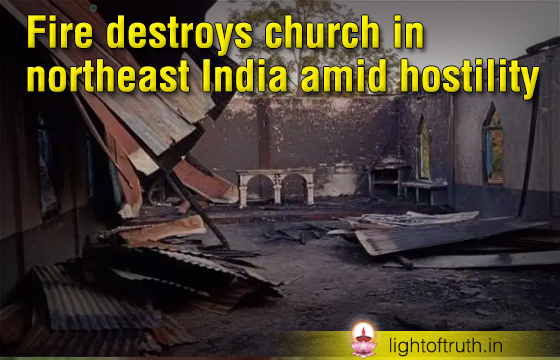
Fire destroys church in northeast India amid hostility
A fire has burnt down a village Church in India’s north-eastern Assam state amid right-wing Hindu group’s campaigns against Christian missionaries, but police are yet to confirm if it was an arson attack or an accident.
Tezpur diocesan Father Ambrose Musahary told that the church of his St. Teresa parish in Jhakar Gao village had been “burnt down to ashes.” The five-decade-old church in the Udalguri district has about 160 Catholic families, “most of them coming from Indigenous backgrounds,” the priest said.
The priest added that Hindus and Christians in the village lived in peace, and “we never had any disturbance or hatred among different communities.”
Bishop Michael Akasius Toppo of Tezpur, who visited the spot on Jan. 17, told that police and Church officials “are not sure whether someone deliberately set the church on fire or it was an accident.” “We have no evidence” for either case and “we can say anything about it” only after the police investigation is completed, the bishop said.
The fire happened three days after the parish celebrated the first Mass of two newly ordain-ed diocesan priests who belong to the parish’s indigenous families.

Bible course transforms faith life in Goa archdiocese
Bible study classes are transforming people’s lives besides deepening their understanding of the Scri-ptures, say the graduates of this year’s Bible course conducted by the Archdiocese of Goa and Daman. “Little did I know that it would change my daily walk with Christ. It was one of the best decisions we ever made and it turned out to be a life changing experience,” said Rupa Colaco, a dentist who was among the 133 graduates who received the certificate on January 26 at a program in the Aldona parish. As many as 925 graduates received the certificates at various centres and parishes in the archdiocese on the day marking the Sunday of the Word of God. The participants came different walks of life – teachers, parents, children, youth, catechists, nurses and doctors, said Father Mariano D’Costa, the director of Diocesan Centre for Biblical Apostolate that conducts the annual nine-month course. Doctor Colaco, who received baptism at the age of 16 after an encounter with Christ, said she had “a profoundly enriching experience that impacted my spiritual growth.” The course has “deepened my understanding of the Scriptures and its relevance in my life,” added the 44-year-old woman, who attended the classes with her three children aged 11, 13, and 16. Selma, another graduate of this year, described the course as the “best” that changed her life as a nurse as well as her family life.
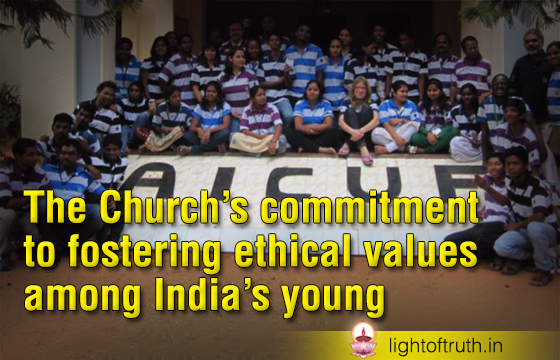
The Church’s commitment to fostering ethical values among India’s young
In our rapidly evolving world, the Church’s role in nurturing ethical values among young people is more crucial than ever. In India, various Catholic religious orders, notably the Jesuits, Salesians of Don Bosco, and the Holy Cross Fathers have establi-shed numerous youth programs and educational initiatives aimed at shaping the moral character of the next generation. Through organizations like the All India Catholic University Federation (AICUF) and a network of schools and colleges, the Church strives to develop leaders grounded in ethical principles, compassion, and a commitment to social justice. India’s former president Dr. A.P.J. Abdul Kalam once remarked, “The ignited mind of the youth is the most powerful resource on Earth.” His emphasis on the potential of young people aligns with the Church’s vision of investing in youth to create a more just and ethical society. By focusing on education, mentorship, and character formation, the Church seeks to empower young individuals to become ethical leaders and respon-sible citizens.

BEC animators undergo media training at Bandel pilgrim center
Basic Ecclesial Community (BEC) animators from eastern India are atte-nding a media training to strengthen their groups in parishes.
As many as 24 representatives from 13 eastern India dioceses are attending the January 27-31 program at Bandel Basilica Retreat Centre, about 40 km from north of Kolkata.
Media has central place in the lives of all Christians presently, said Sister Christin Joseph from Kolkata. So, we want to train our BEC anima-tors how best they can use the social media to proclaim the Gospel, added the Holy Cross nun who is involved in BEC promotion for the past three decades in eastern India.
Jesuit Father Sebastian Kanekattil, one of the facilitators and a media expert from Patna, said the training will enable the participants to under-stand the great influence of social media among youth.
Besides the training, the partici-pants will have a chance to make pilgrimage to the Bandel Basilica during this Jubilee year, said Father Sameer Kerketta from Hazaribag diocese in Jharkhand.
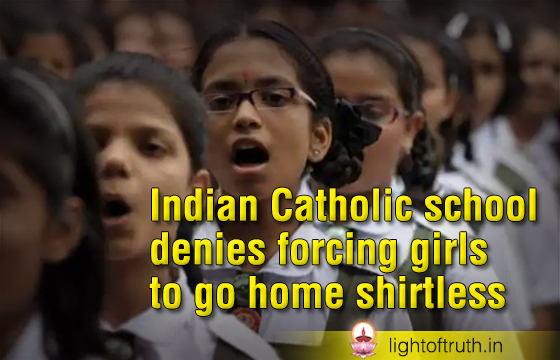
Indian Catholic school denies forcing girls to go home shirtless
Catholic officials in the eastern Indian state of Jharkhand have accused the media of trying to tarnish Church-run institutions after a school was accused of forcing about 80 teenage girls to return home in their blazers without shirts. Media reports accused Carmel School in Digwadih city, Dhanbad district, of confiscating the shirts of the tenth-grade girls on Jan. 9 as they celebrated Pen Day, the final school day before board exams. They were supposedly taken from the girls because they were writing messages on each other’s shirts to mark the end of their academic year. The Sisters of the Apostolic Carmel congre-gation, which runs the school, denied the media reports.
Sister Maria Kirti, Councillor for Edu-cation of the congregation’s Northern Province, said an initial inquiry showed that the students were “wearing an extra shirt over their school uniform on which they were writing the messages.” “At the time of dismissal, the students were only requested to return [home] in their original uniform,” Kirti said in a statement on Jan. 13. The media reports said the school principal disapproved of the celebration and told them to remove their shirts autographed by friends to create lasting memories. Social media videos reportedly showed the girls in tears as the school authorities ignored their repeated pleas to keep the shirts, sparking a public outcry. The nun blamed a section of the media for publishing unverified and inaccurate reports that “do not fully reflect the facts” that triggered a public uproar and maligned the image of the reputed school. She said her religious order had asked the school to conduct an internal inquiry to ascertain the facts and recommend corrective measures. She said the school principal has been ordered to “stay away from all administrative responsibilities” until the inquiry is completed. Meanwhile, on Jan. 12, the parents of the students filed a complaint with the National Commission for Protection of Child Rights, prompting an official investigation.

Become Christ’s followers, not his fans: Indian bishops told
Apostolic Nuncio to India and Nepal Archbishop Leopoldo Girelli on January 28 urged India’s Latin rite bishops to become the disciples of Christ and not just his fans. When Jesus worked miracles, he had many fans watching him, but only a few chose to follow him generally, said the nuncio in his homily at the opening Mass of the 36th plenary assembly of the Conference of Catholic Bishops of India (CCBI).
The CCBI, the largest national episcopal conference in Asia and the fourth largest globally, represents 132 dioceses and 209 bishops in India. The January 28-February 4 plenary on the theme, “Discerning synodal pathways for mission,” is being held at the Xavier Institute of Management University in Bhubaneswar, the capital of Odisha state in eastern India. The plenary is poised to be a landmark event, fostering collaboration and renewal as the Church discerns its future path in mission and synodality, says a press statement issued by the conference’s deputy secretary general Father Stephen Alathara.
Reminding the bishops that that their episcopal mission in India, the nuncio urged them to pray to the Holy Spirit for a greater opening to respond faithfully to the tasks and responsibilities of the Church. The nuncio referred to the Gospel of the day, where Jesus denounces his sentimental attachments with his mother and embraces universal brotherhood, symbolically opening the door to people of all ethnicities and social statuses. He pointed out that unity comes from journeying together.
The nuncio applauded the Indian Church’s contribution towards the development of society. The current challenge of the Church is to engage with those who are deeply afflicted through climate change, poverty, and digital media, and those who remain excluded from our ecclesiastical structure, he said. Archbishop Girelli expressed his concern about the emerging challenges in India. He affirmed that India is a land of the young, but finding a job for all is a challenge, and that leads to migration. He stressed that the church has a role to play in addressing the causes of migration.
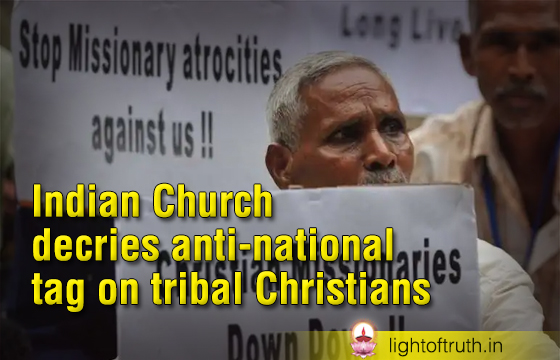
Indian Church decries anti-national tag on tribal Christians
An official of the Indian bishops’ conference has questioned a Hindu leader’s claim that former Indian president Pranab Mukherjee supported converting tribal Christians to Hinduism to save them from becoming anti-nationals. The Catholic Bishops’ Conference of India called the claim “fabricated” on Jan. 17, two days after the media published the statements of Mohan Bhagwat, the head of the powerful Hindu group Rashtriya Swayamsevak Sangh (RSS). In a statement, the bishops’ conference questioned the motive behind publishing a “fabricated personal conversation being attributed to a former president of India.” Bhagwat told a public function in central Indian Indore city on Jan. 13 that Mukherjee supported the campaign to convert Christians during a private conversation with him in 2017. Mukherjee died in 2020.
The bishops’ statement questioned the media ethics of “posthumous publication” of statements attributed to a pre-sident by “an organization with questionable credibility.” It also questioned why Bhagwat “did not speak” about this when Mukherjee was alive. “It is unfortunate” that RSS, which was banned thrice and often associated with violence in India “as seen over the past several decades, is allowed with impunity to call the non-violent, peace-loving and service-oriented Christian community as anti-nationals,” said the statement issued by the bishops’ public relations officer Father Robinson Rodrigues. The RSS is seen as the umbrella organization of all Hindu groups working to make India a nation of Hindu hegemony.
Hindu group Vishwa Hindu Parishad (VHP or World Hindu Council) spearheads a campaign called Ghar Wapsi (homecoming) in northern India to convert Christians to Hinduism, claiming Hinduism is the “home” religion of all Indians.

Growing violence ‘threatens’ Christian existence in India
Indian Christians face an existential threat if the government fails to act immediately to stop the spiralling incidents of hate crimes, says an ecumenical Christian group. Incidents of anti-Christian violence rose steeply from 127 in 2014 to 834 in 2024, revealed the latest report released by the United Christian Forum (UCF) on Jan. 24. “If the trend is not stopped immediately by political will and concerted government action, it will threaten the identity and existence of the Indian Christian community in their motherland,” the New Delhi-based body of several Christian denominations said in a statement. A.C. Michael, a UCF office-bearer, said practicing the Christian faith in the country is going to be a challenging task unless the government reins in the right-wing Hindu groups. “Chri-stians are being treated like they do not belong to this country,” Michael told. Michael, a former member of the Delhi state’s minority commission, said that the Church’s charitable works were falsely portrayed as “a façade for religious conversion through false narratives” by the right-wing organizations.
Michael Williams, president of UCF, said the attacks against the community have become “more frequent, brutal, and systematic.” “Christians who have long been a peaceful and integral part of India’s diverse society are now living in fear,” he said. Williams said the data collected by UCF wasn’t just numbers. “They are the stories of real people, individual lives shattered, families torn apart, and communities destroyed because of their faith,” he added. The findings of the latest report are “very disturbing” as there has been no let-up in violence against Christians in states like northern Uttar Pradesh and Chhattisgarh in central India.